













The stone archway at the village entrance, a symbol of the countryside, not only exudes a unique charm but also carries rich historical and cultural connotations. Below is a detailed analysis of the stone archway at the village entrance:
I. Historical Background and Location
The stone archway at the village entrance originated from ancient village路口s, initially serving as a symbol of a transportation hub, indicating directions and mileage markers. Over time, it has gradually evolved into a symbol of the countryside, rich in cultural connotations and historical value. For instance, the stone archway at the entrance of Jiuxiang Town in Hanyuan County is located on the ancient official horse road of the Southern Silk Road, once known as the "First Archway Out of Chengdu's South Gate."
II. Architectural Features
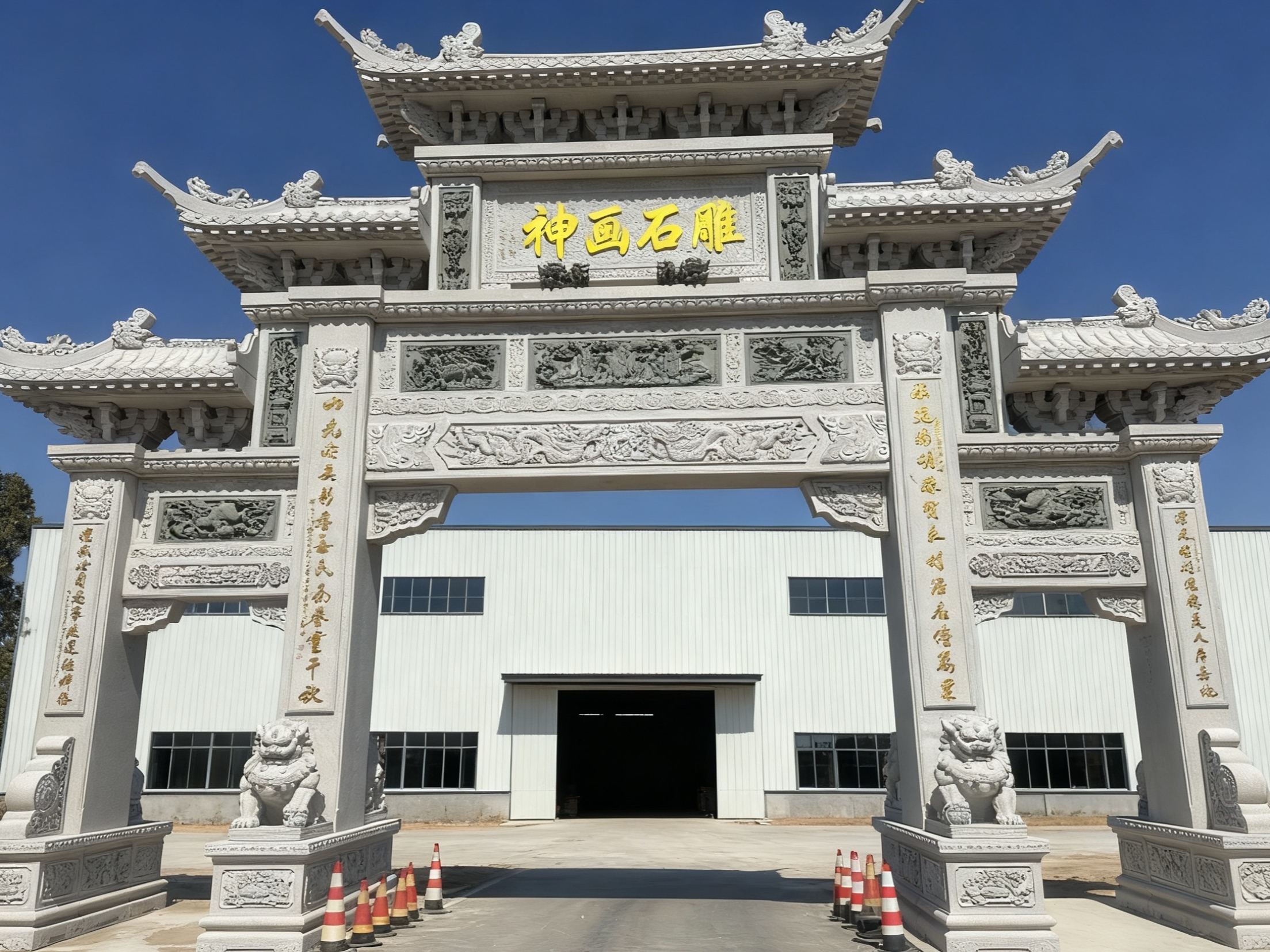
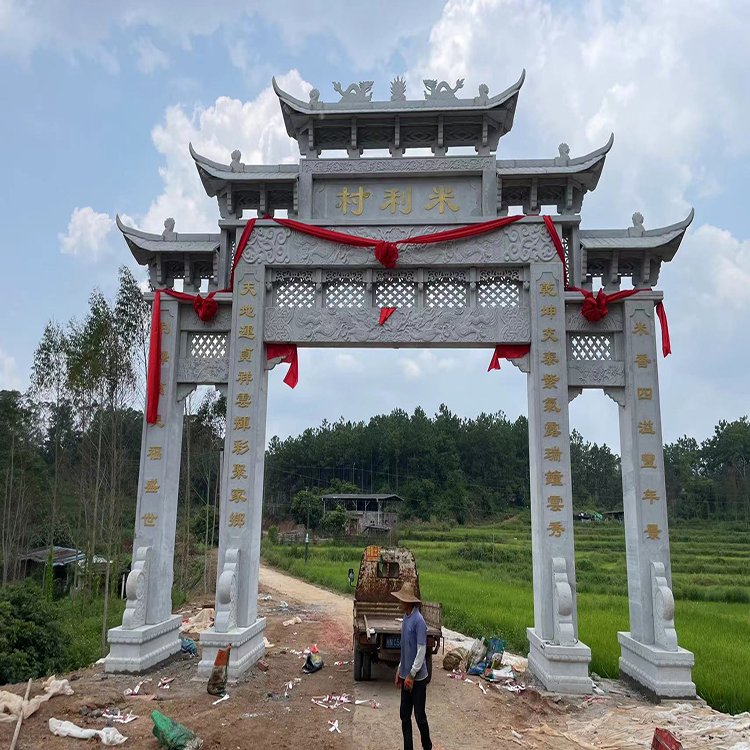
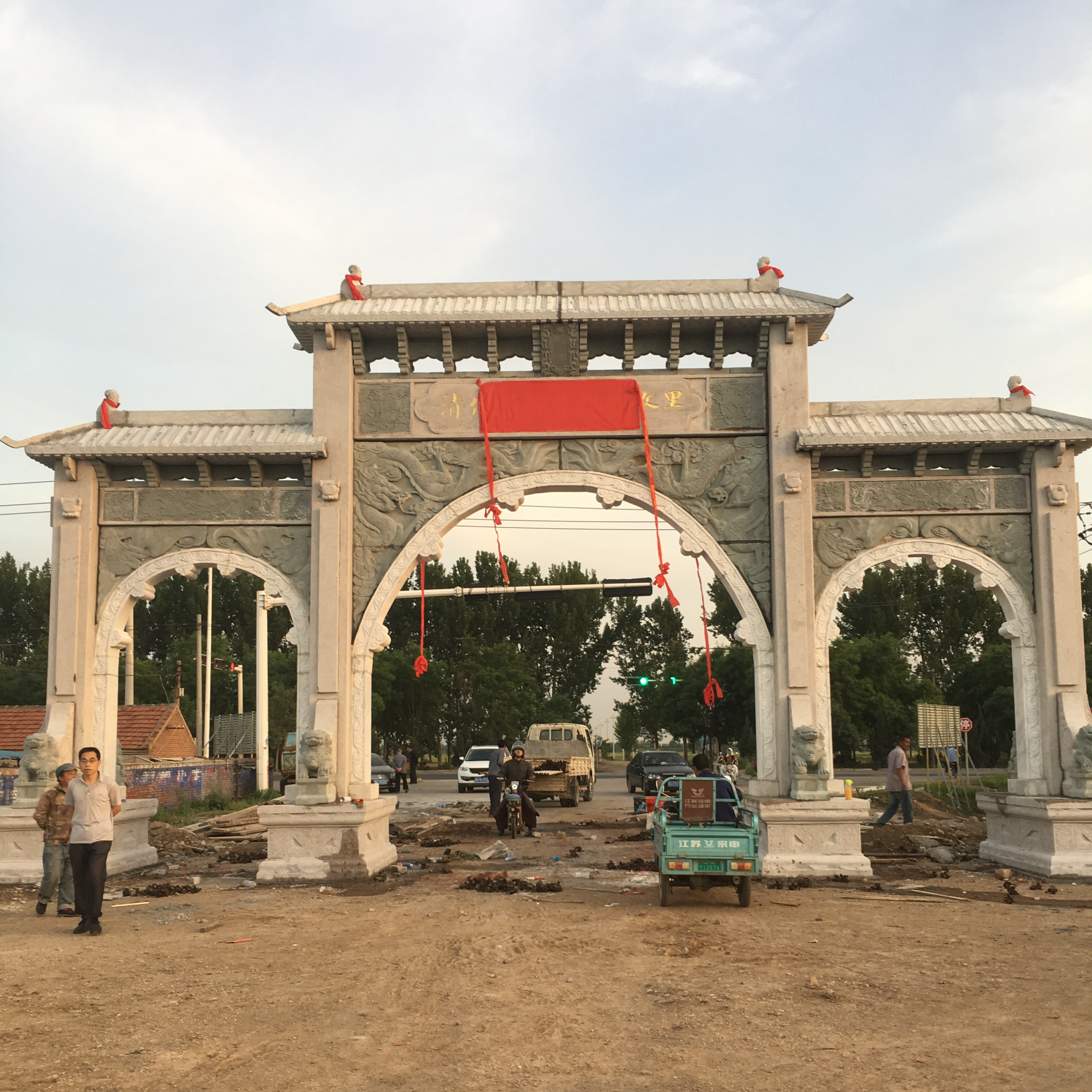
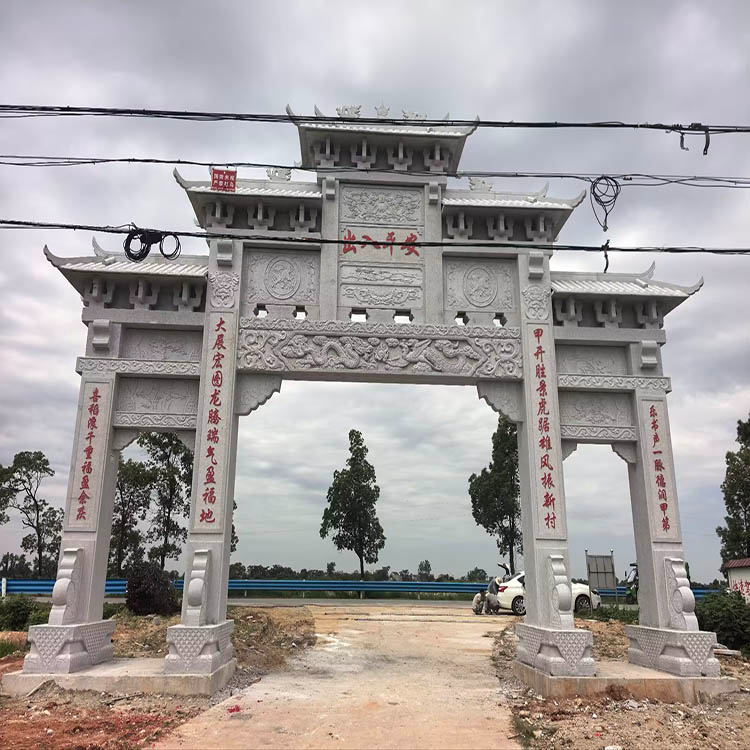
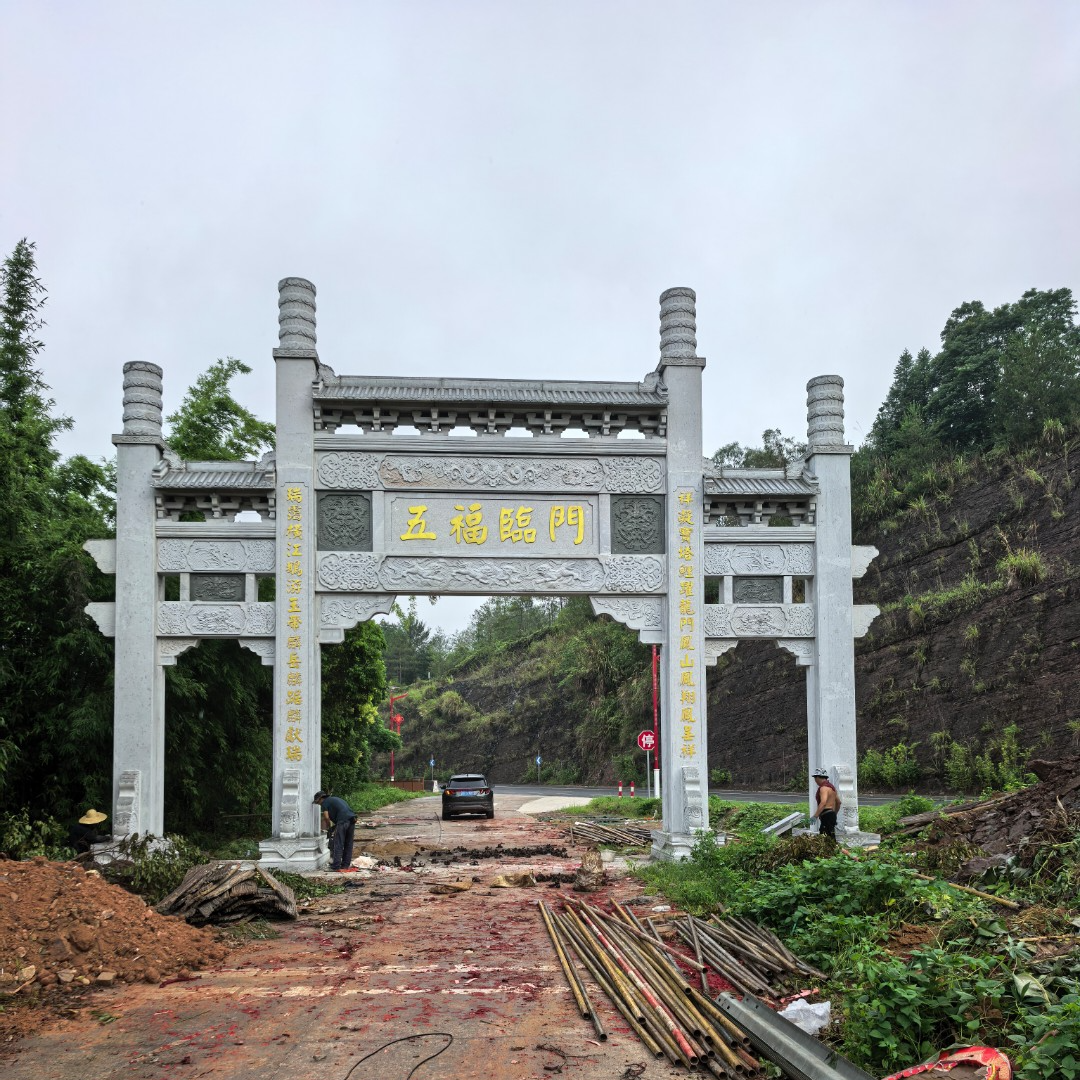
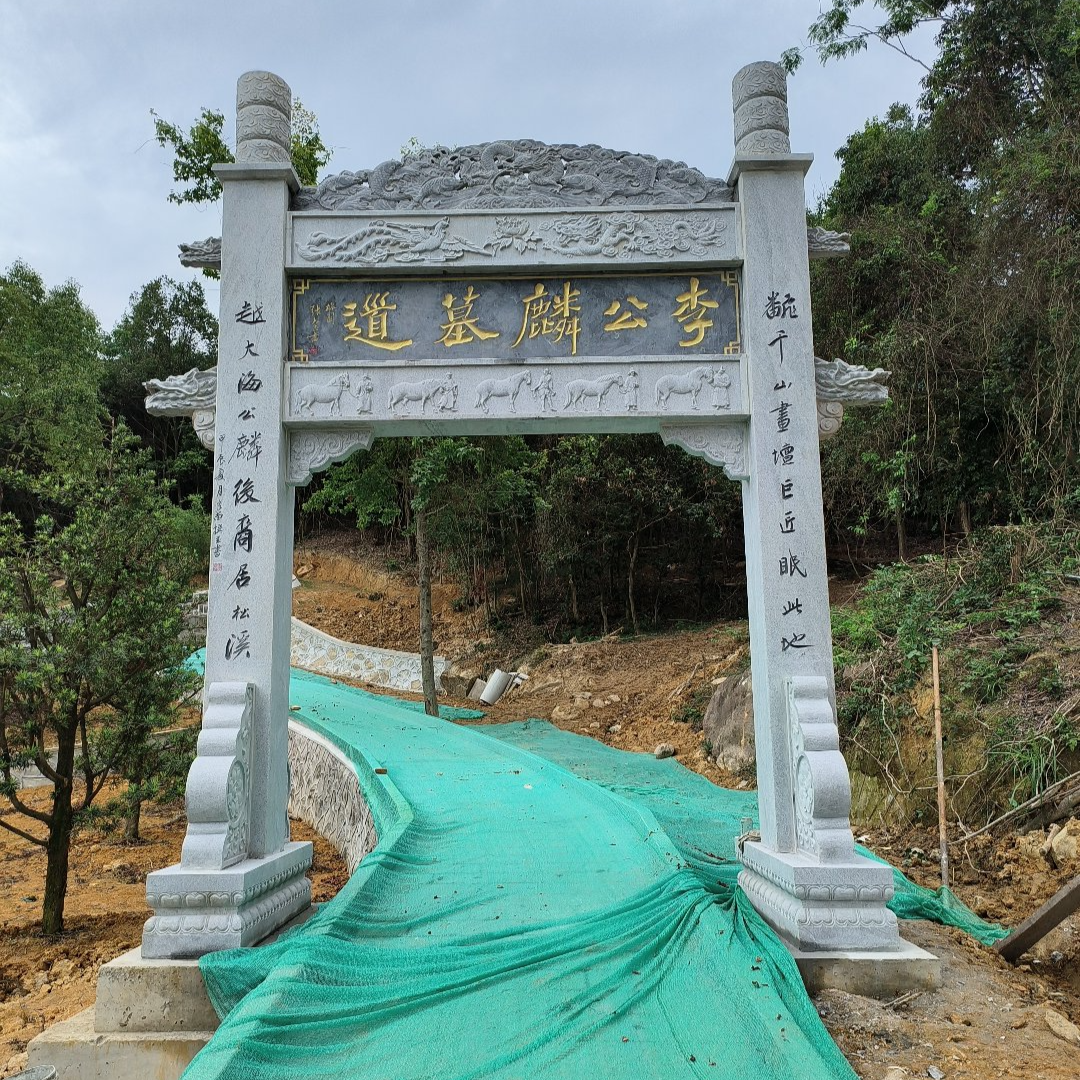
Structural Form:The stone archway at the village entrance is typically composed of four pillars and three gates, featuring a sturdy structure and a simple yet elegant design. These archways are made up of stone pillars, crossbeams, and rooftops, all supporting each other to create a stable and powerful sense of beauty.
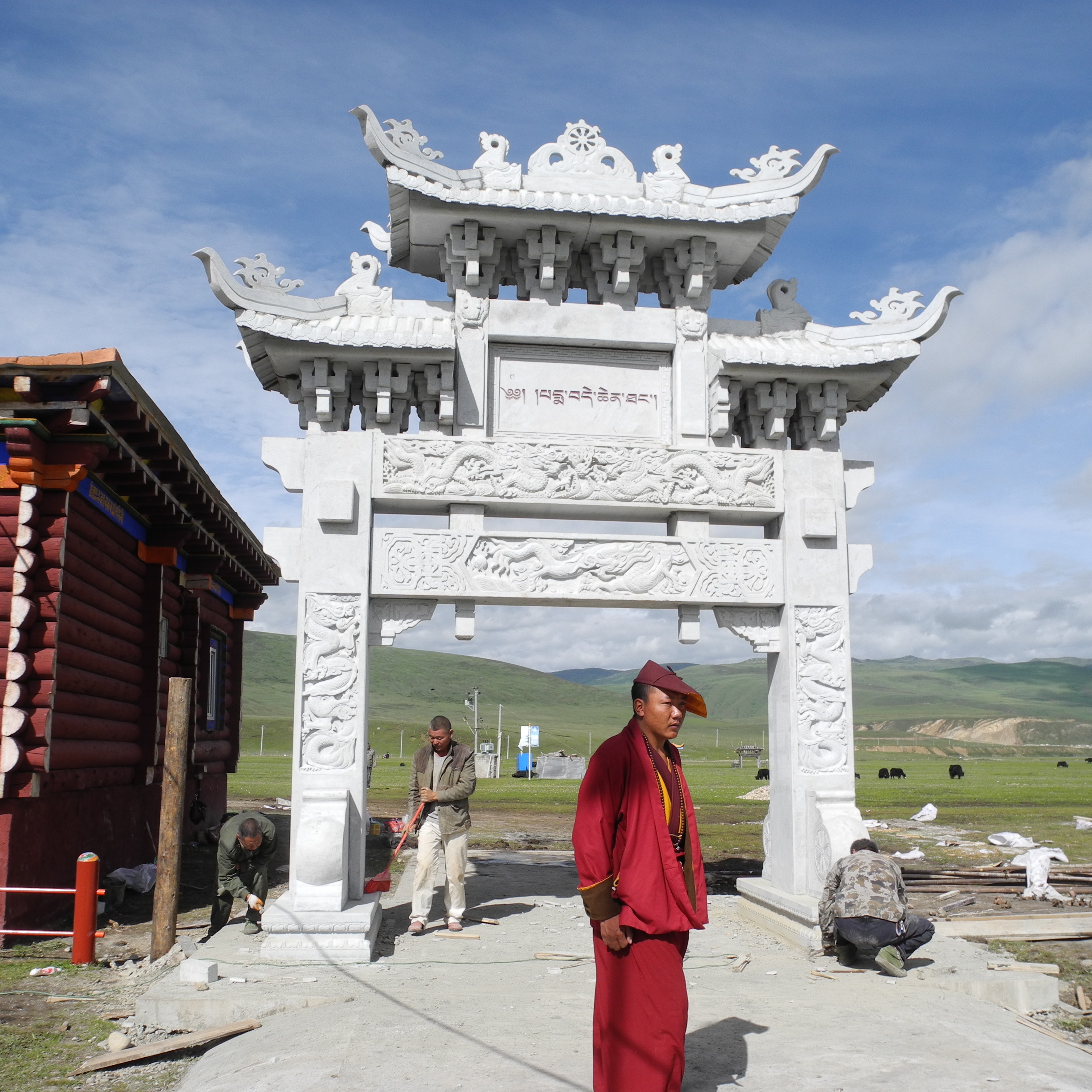
Carving ArtThe carved art of the stone archway at the village entrance is one of its significant features. The carving themes are diverse, encompassing myths, historical tales, and folk customs, reflecting people's yearning and pursuit of a better life. The carving techniques are rich and varied, including bas-relief,镂雕, and line carving, which make the works distinct in layers and vividly lifelike.
Regional Characteristics:Village stone archways at the entrances of different regions exhibit varying architectural characteristics. Southern archways are typically light and delicate, whereas northern ones appear robust and generous. These features reflect the local cultural traditions, customs, and geographical environment.
Section 3: Cultural Significance
The stone archway at the village entrance, as a symbol of the countryside, represents more than just a building—it's a cultural icon and historical memory. It holds a story of history and rural memories, witnessing the development and transformation of the village and the inheritance of humanistic spirit. At the same time, it is also an important carrier of traditional culture, reflecting the cultural level and artistic aesthetics of the society at that time.
4. Actual Applications & Pricing
Village entrance stone archways are commonly constructed in rural areas, serving as the gateway and nameplate of the village. They come in various styles, including single-story, three-story, and simple upturned designs. As for pricing, a simple single-story archway without a canopy costs around 50,000, while one with a canopy is about 70,000. The price difference is mainly due to the carving techniques and the amount of stone used.
In summary, the stone archway at the village entrance, as a symbol of the countryside, boasts unique architectural features and carving art, while also carrying rich historical and cultural significance. It serves not only as a symbol and memory of the countryside but also as one of the important carriers of traditional culture.