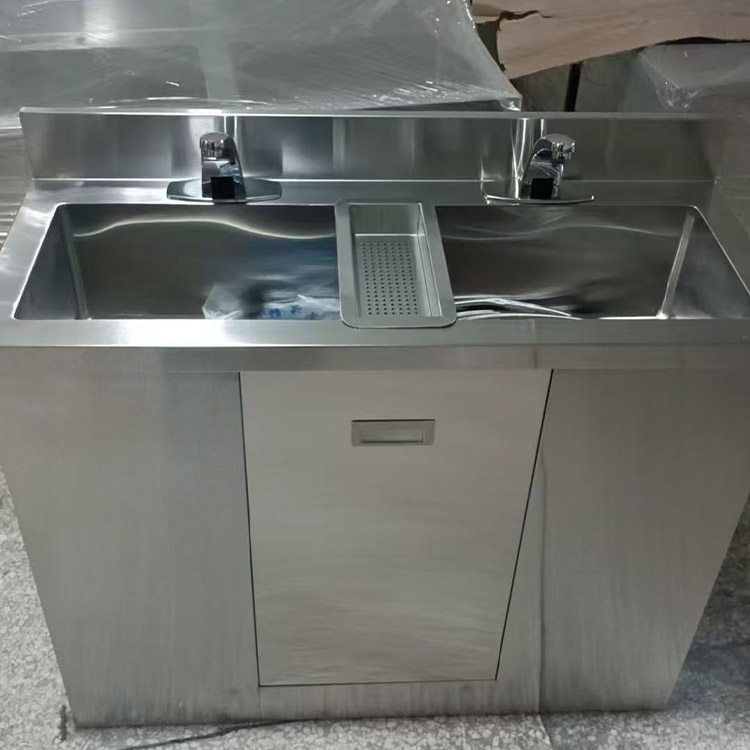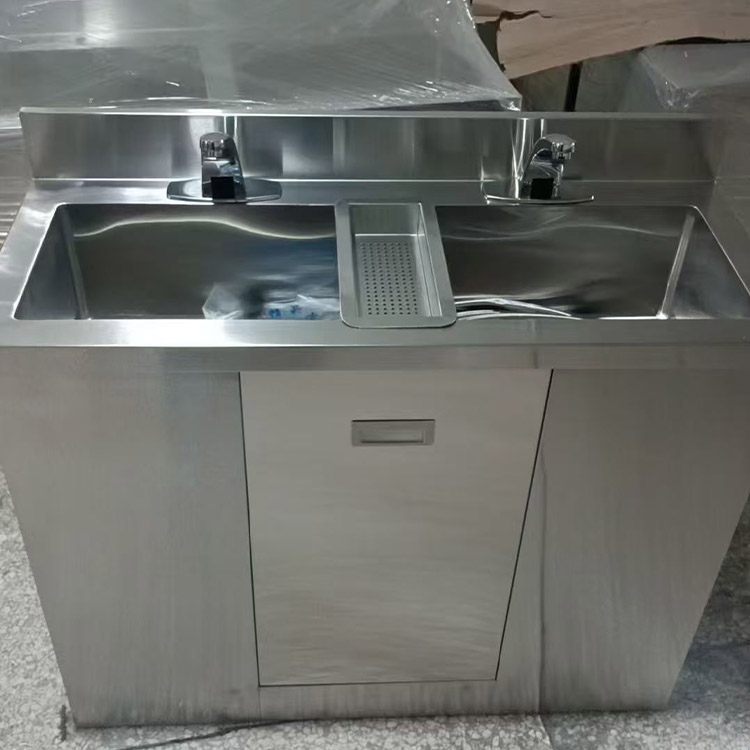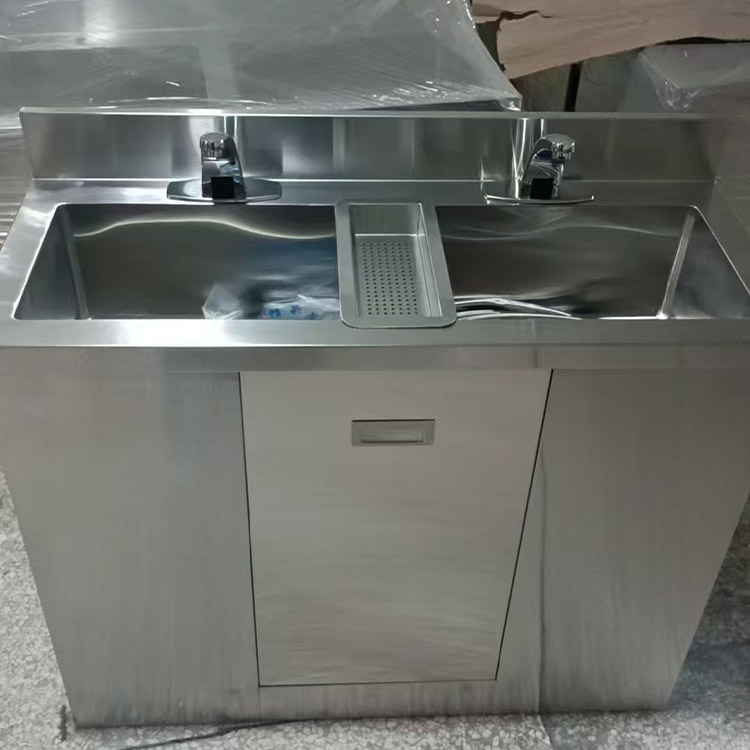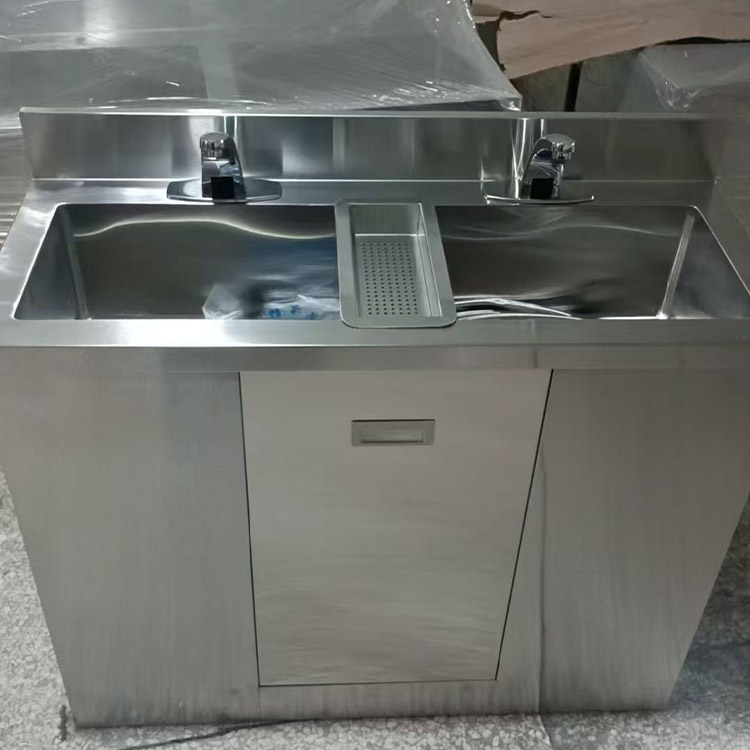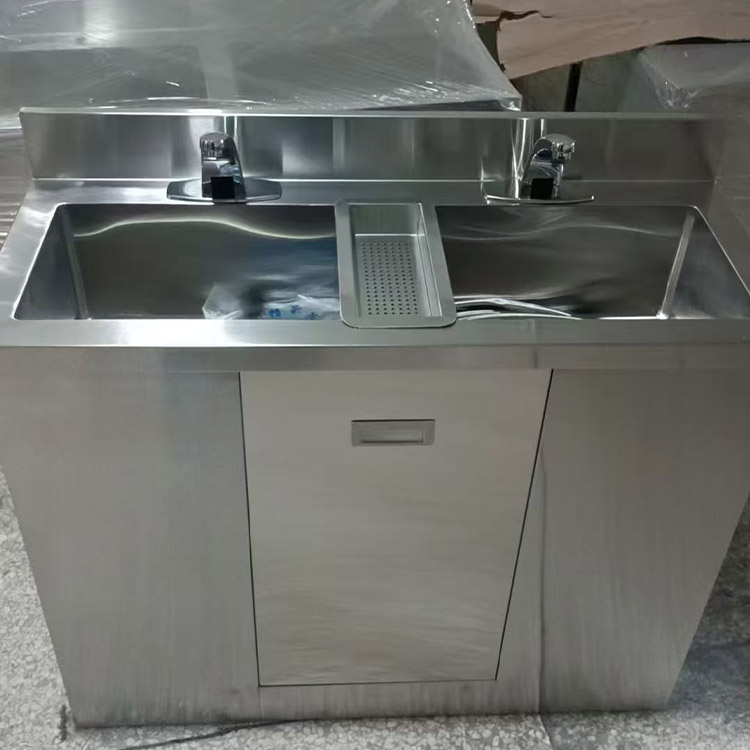


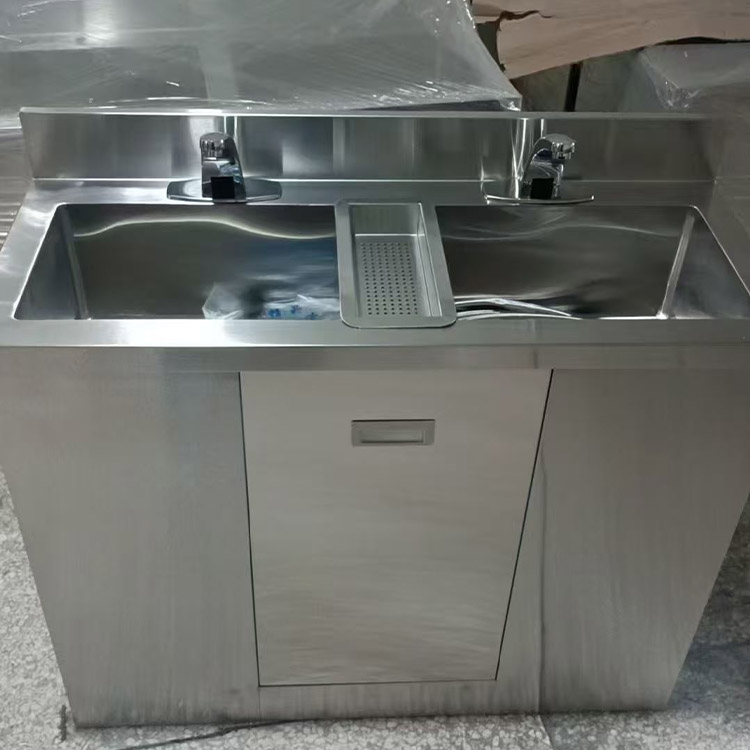
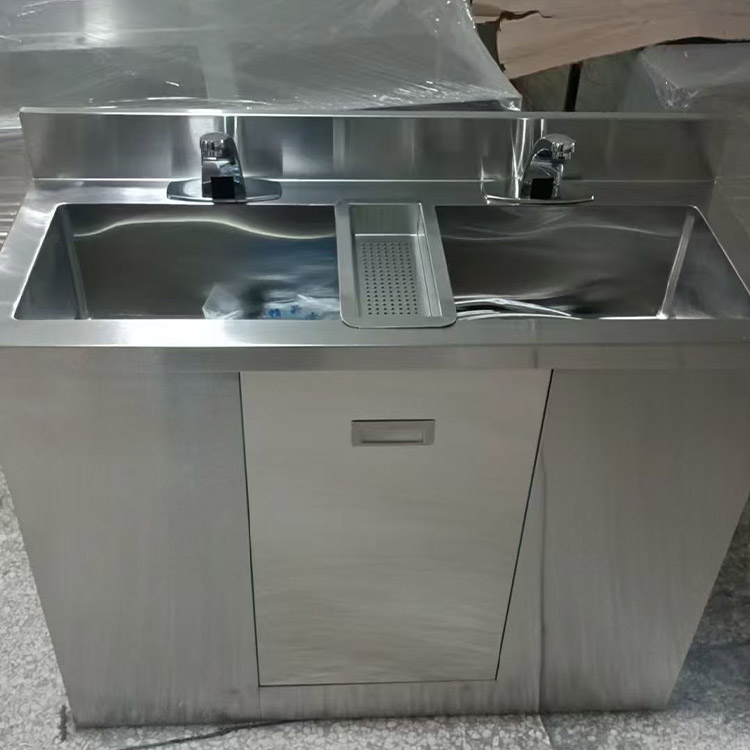








The wide application of stainless steel washbasins is mainly due to the following major advantages brought by their material characteristics:
Durable and Corrosion-Resistant: High-quality stainless steel (such as the commonly used 304 stainless steel) inherently boasts excellent corrosion and rust resistance. This allows the sink to withstand the侵蚀 of moisture, cleaning agents, etc., resulting in a long service life.
Easy to clean and maintain: The stainless steel surface is smooth and poreless, making it resistant to dirt and bacteria growth. Routine cleaning is a breeze, often requiring just a damp cloth or neutral cleaning agent to restore it to its original shine.
Sanitation and Safety: Stainless steel material is harmless and does not release harmful substances. When paired with touchless faucets such as sensor, foot-operated, or knee-operated models, it effectively prevents cross-contamination, making it particularly suitable for high-sanitation environments like hospitals and laboratories.
Aesthetically pleasing and practical: Stainless steel washbasin designs typically feature a minimalist style, with the metallic texture seamlessly blending into modern interior decor. Additionally, they offer excellent fire resistance and high-temperature tolerance.
Environmental and Economic: Stainless steel materials are 100% recyclable, aligning with eco-friendly principles. While the initial investment may be higher, their durability leads to lower maintenance and replacement costs in the long run.
Common Application Scenarios
Healthcare Facilities: Such as hospital operating rooms, sterile rooms, laboratories, etc. This is the primary application scenario for medical grade stainless steel washbasins, where there is an extremely high requirement for preventing cross-infection.
Commercial Catering: Includes restaurant kitchens, school canteens, food processing plants, etc. The double-compartment design facilitates the separation of ingredient washing and utensil rinsing. The stainless steel material also meets food hygiene standards.
Industrial sectors: such as factory workshops, laboratories, and chemical industries. These environments prioritize the corrosion resistance and durability of sinks.
Public Facilities and Homes: Stainless steel washbasins are commonly found in public restrooms, schools, offices, as well as home kitchens and bathrooms, primarily due to their durability and ease of cleaning.
Shopping Considerations
When selecting a stainless steel washbasin, consider the following points:
Material Consideration: 304 stainless steel is the first choice due to its excellent corrosion and heat resistance, widely used. In more corrosive special industrial environments, higher-grade 316 stainless steel may be required.
Control Methods: Choose based on hygiene requirements. Motion-activated (no touch), foot-operated (controlled by foot), and knee-activated (switch activated by knee touch) all avoid touching the tap, ensuring better hygiene.
Design and Craftsmanship:
Splashproof Design: Pay attention to whether the sink features a curved edge or slanted design, which helps to minimize water splashing during use.
Noise reduction: Some products feature a double-chamber design to reduce the noise generated by water flow impact.
Process Details: Inspect the welds for smoothness and even surface treatment, as this affects the product's aesthetics and durability.
Dimensions and Configurations: Choose the appropriate size and number of seats (such as single, double, etc.) based on available space and number of users. Select as needed: soap dispensers, mirrors, mirror lights, and more.
Installation & After-Sales: Understand the installation requirements, confirm if installation service is included, and clarify the after-sales warranty policy.
Installation and Maintenance Recommendations
Installation: Recommended to be performed by professionals to ensure proper and secure connections of supply and drainage pipes. Especially for flush installations, pre-checking the countertop hole sizes is necessary.
Daily Cleaning: Clean promptly after use to prevent surface scratches from hard objects. Typically, a wipe with clean water or a neutral cleaner is sufficient; avoid using steel wool or other abrasive tools.
Regular Inspections: Regularly inspect faucets and drainage systems to ensure proper operation.
In summary, a stainless steel washbasin is a practical facility that combines durability, hygiene, and ease of cleaning. As long as you carefully select the material, style, and functionality based on the actual usage scenario and requirements, it will provide you with reliable and comfortable service for a long time.