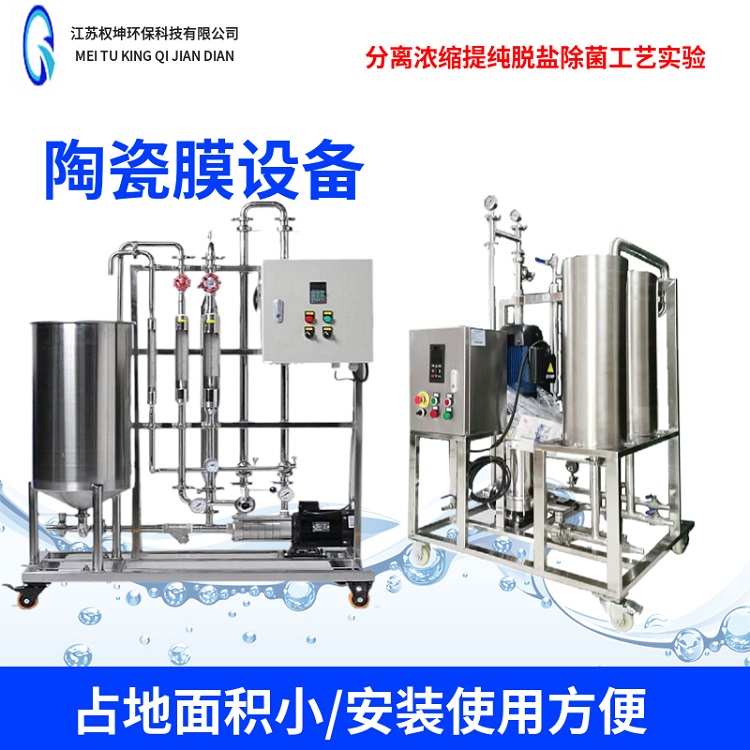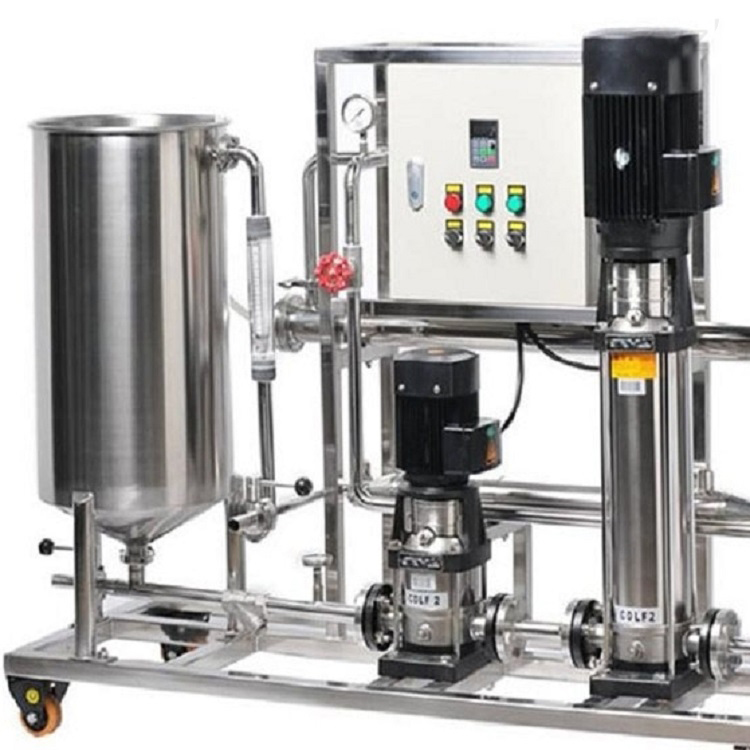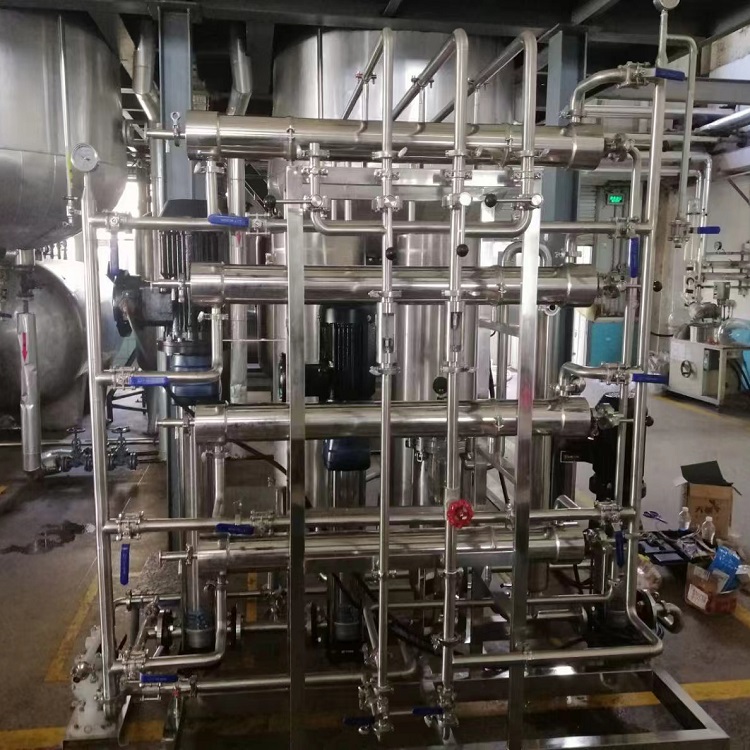

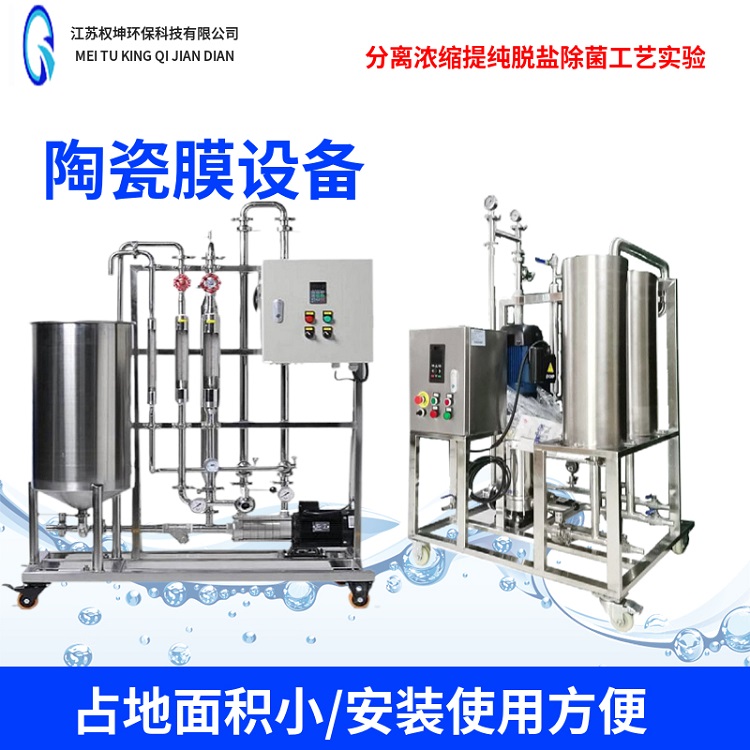

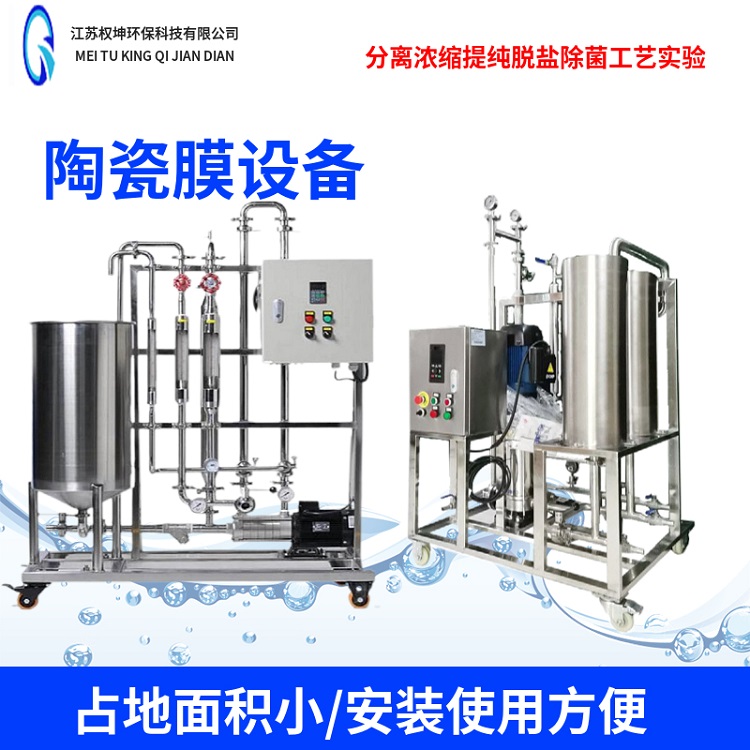
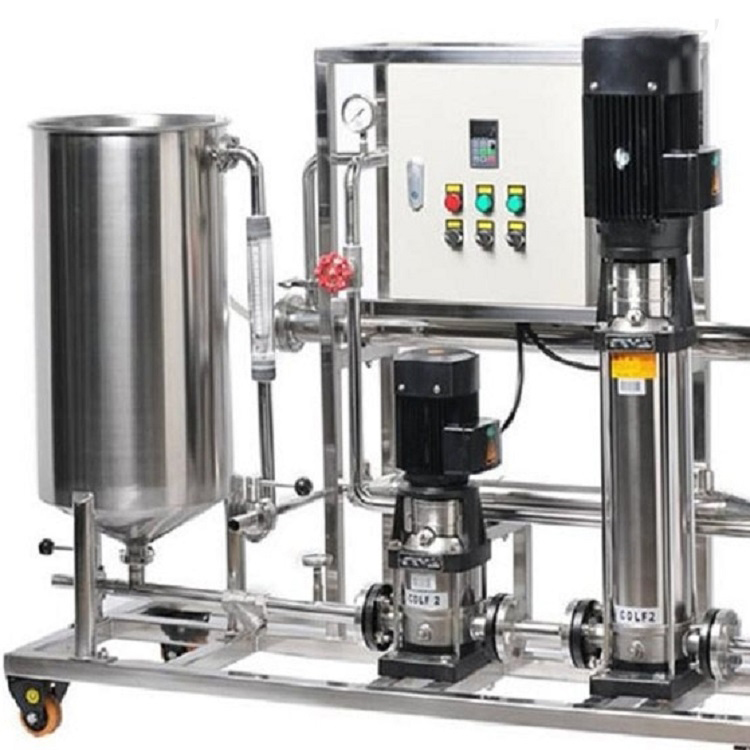
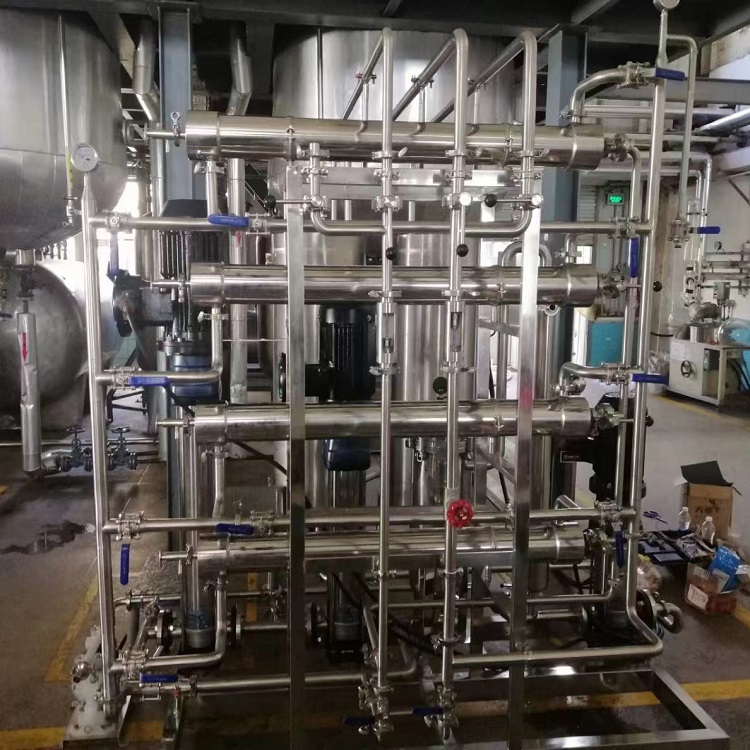












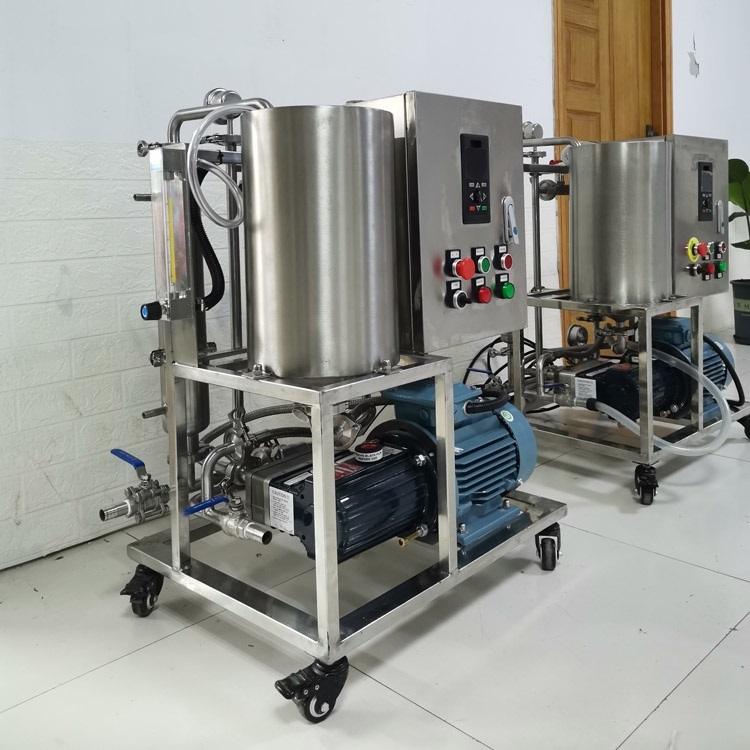
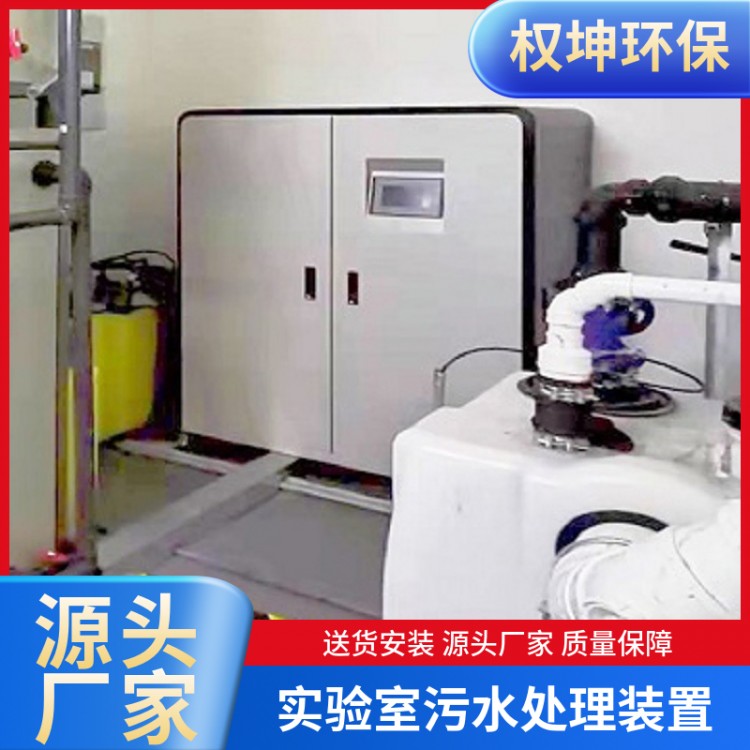
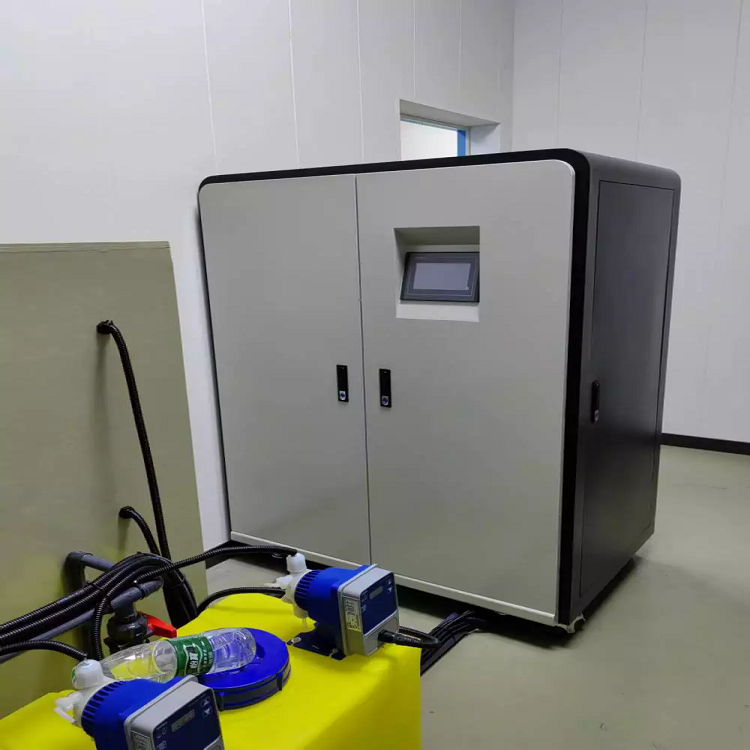
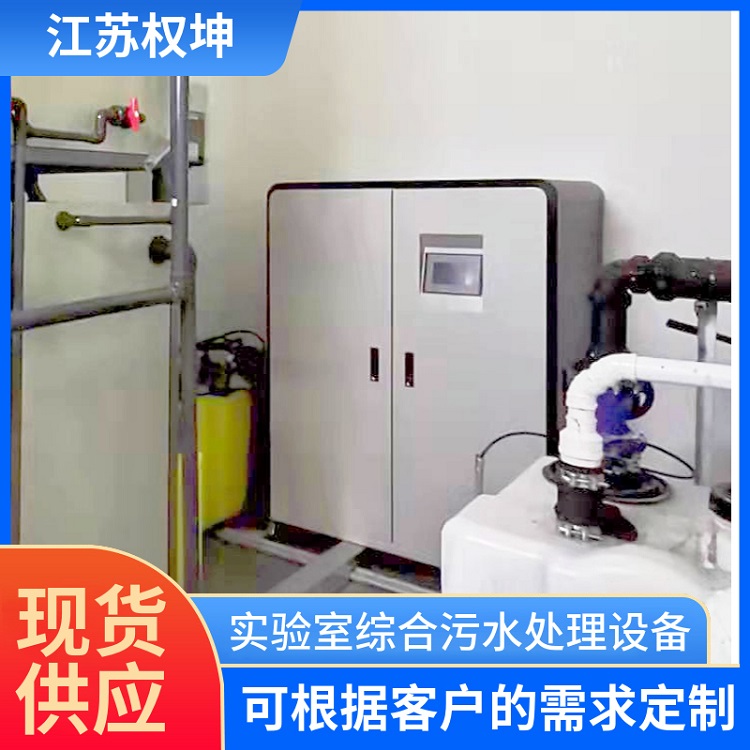
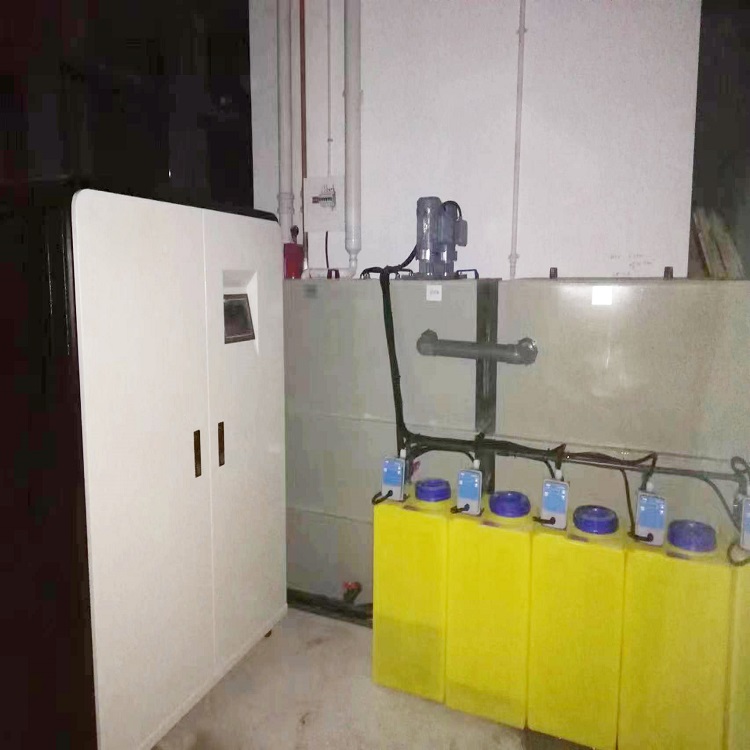
Mini-trial Membrane Separation Nanofiltration Equipment - Waste Water Treatment Nanofiltration Membrane Equipment - Customizable as Required
Nanofiltration membranes are functional semi-permeable membranes that allow solvent molecules or certain low-molecular-weight solutes or low-valence ions to pass through. They are a special and promising type of separation membrane, named for their ability to retain substances at a size of about a nanometer. These membranes retain organic molecules with a molecular weight of approximately 150-500, and their salt retention capacity ranges from 2-98%. They desalinate monovalent anion salt solutions more effectively than divalent anion salt solutions. They are used for removing organic matter and color from surface water, reducing the hardness of groundwater, partially removing soluble salts, concentrating fruit juices, and separating valuable substances. Nanofiltration membranes are mostly composite membranes, with their surface separation layer composed of polyelectrolytes, thus having a certain retention rate for inorganic salts.
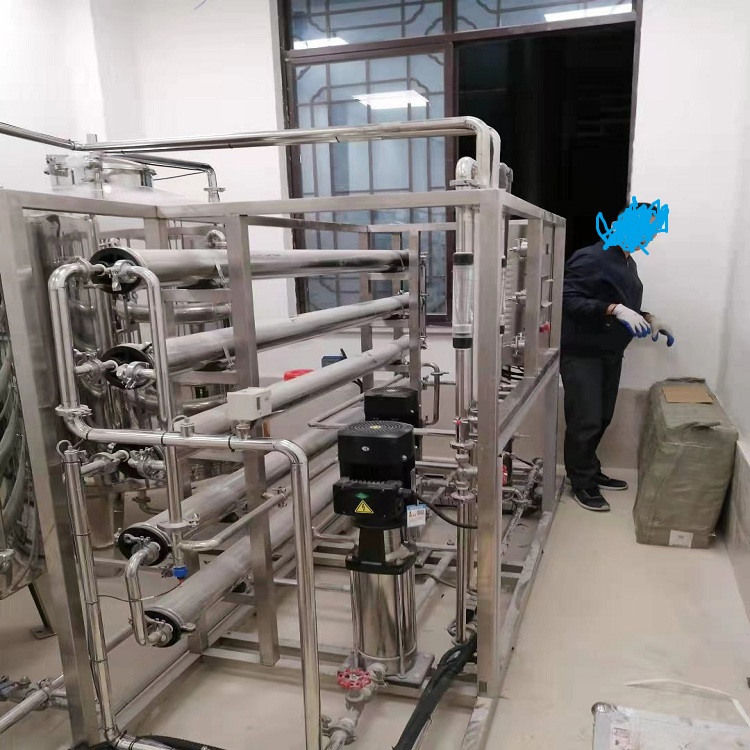
Nanofiltration (NF) Features:
However, the nanofiltration membrane has a charge, which is an important reason why it maintains high desalination performance even at low pressure. This is also true for membranes that can retain molecules with a molecular weight of hundreds, as they can remove inorganic salts. Its main characteristics are as follows:
Permits small molecule organics and monovalent ions to pass through.
2. Can retain organic substances with a molecular weight greater than 100 and polyvalent ions.
3. Operates under high temperatures, acidic, alkaline conditions, etc., with resistance to contamination.
4. Low operating pressure, high membrane flux, and low equipment operating costs.
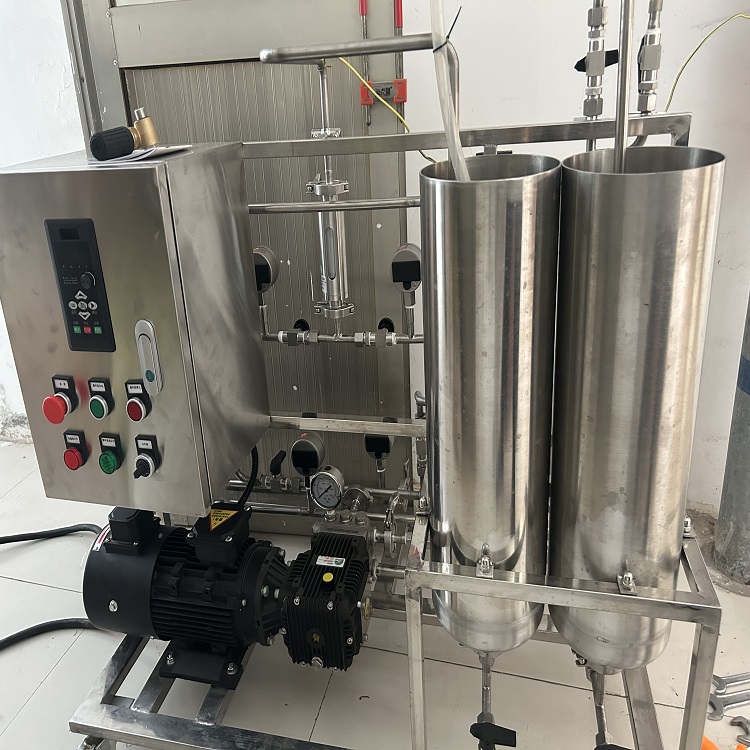
The primary function of reverse osmosis equipment is to remove harmful ions from drinking water, including:
1. Remove nitrates and nitrites from water: Currently, many municipal water plants are facing the issue of increasing concentrations of nitrates and nitrites in water resources. When the nitrate level in drinking water exceeds 50mg/L, infants under 6 months old are prone to iron-deficiency anemia, and nitrites are widely recognized as carcinogenic substances.
2. Arsenic Removal from Water: Excessive arsenic intake in drinking water can lead to skin cancer. Research conducted by the U.S. Environmental Protection Agency shows that reducing the arsenic content in drinking water from the previous 0.05 mg/L to 0.002 mg/L can lower the cancer incidence rate from 1.34% to below 0.01%.
3. Reduce Fluoride in Water: If the fluoride content in drinking water exceeds 2mg/L, it can lead to dental and skeletal fluorosis.
4. Heavy Metal Pollutants: Most of the cadmium, hexavalent chromium, copper, lead, manganese, mercury, and nickel in drinking water quality standards come from pollution caused by industrial waste leakage and industrial wastewater discharge. Nanofiltration membranes can effectively remove these heavy metal pollutants.
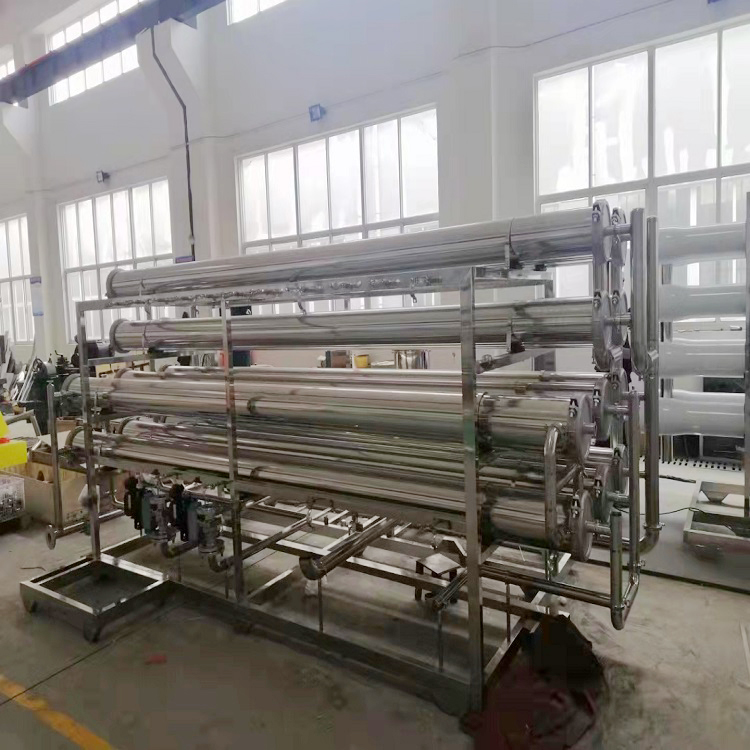 Mini Trial Membrane Separation Nanofiltration Equipment - Waste Water Treatment Nanofiltration Membrane Equipment - Customizable as Required
Nanofiltration equipment performance features:
1, 2 micron filters
2. Insufficient pressure protection, high-level shutdown protection.
3. Auto-start at low water level, water shuts off automatically.
4. Pre-filter system with low cost of operation;
5. Easy installation, user-friendly, one-button operation.
6. Integrated design, occupies a large local footprint.