













Shanghai Concentrated Extraction Equipment - Ultrafiltration Separation Equipment, Nanofiltration Equipment - Powerful Manufacturer
Nanofiltration (NF): The filtration precision falls between ultrafiltration and reverse osmosis, with a lower desalination rate. It is also a membrane separation technique that requires electricity and pressure, resulting in a lower water recovery rate. In other words, the process of making water using nanofiltration membranes will inevitably waste nearly 30% of tap water.
Process Flow:
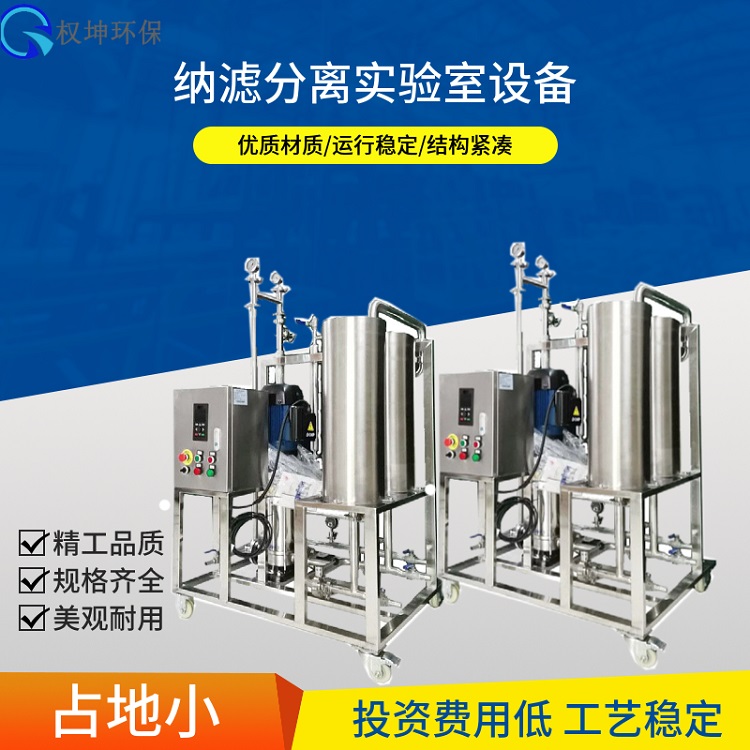
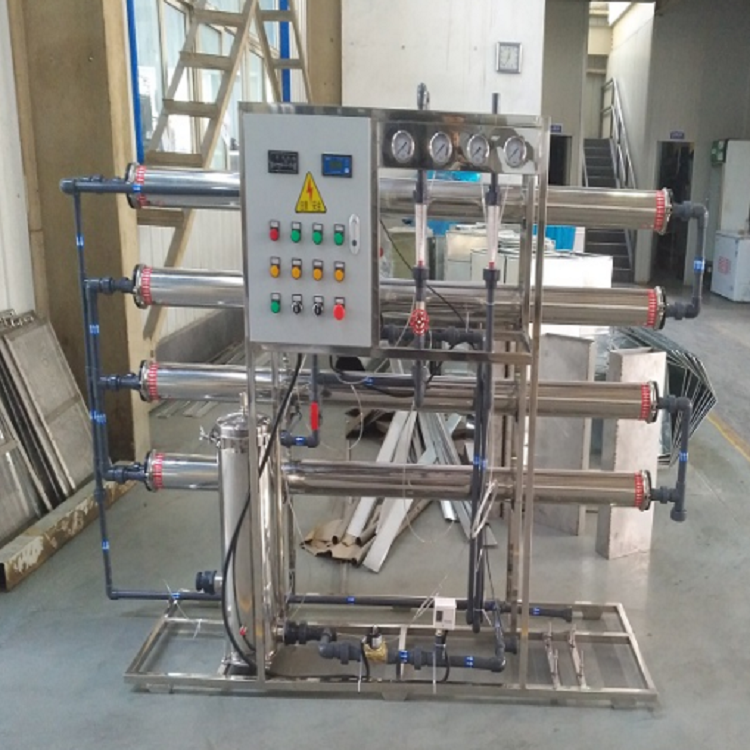
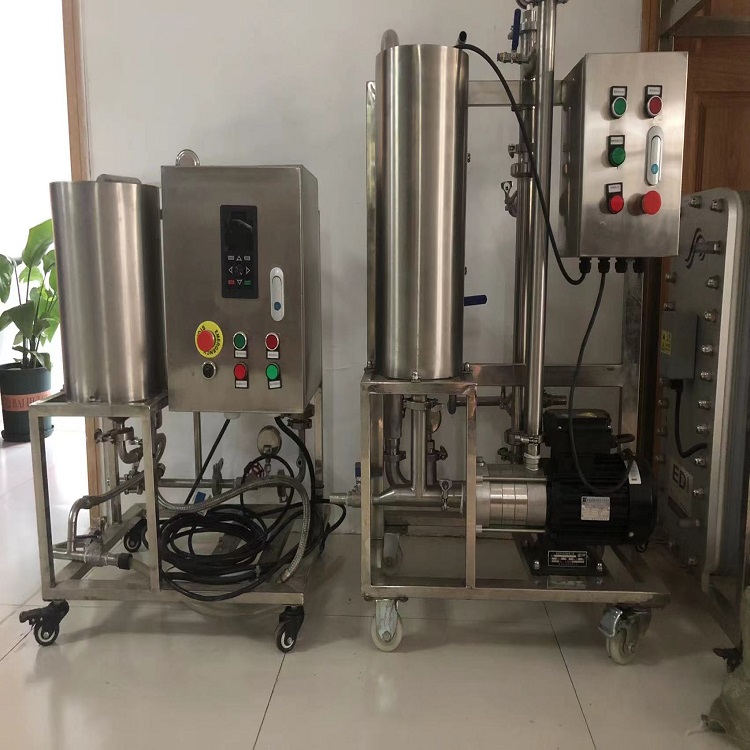
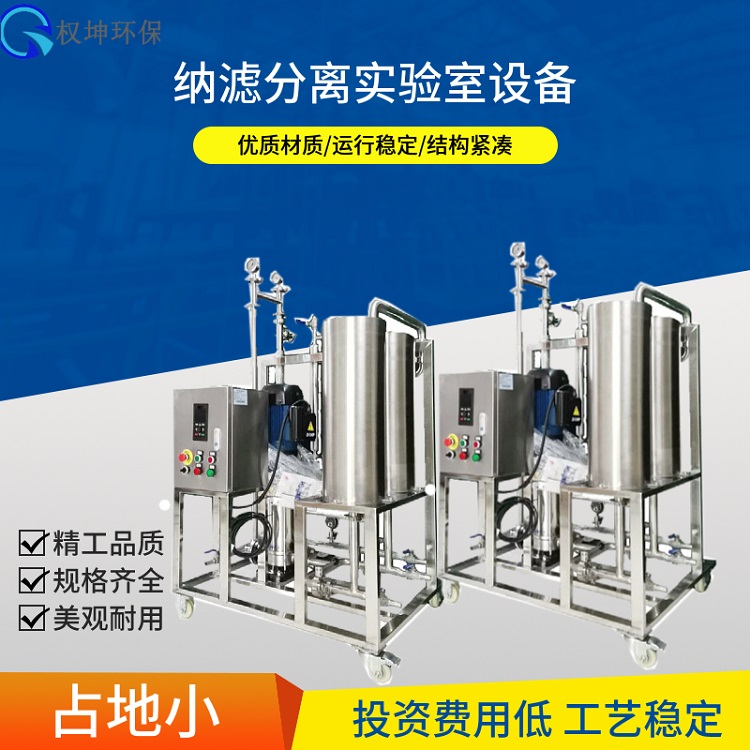
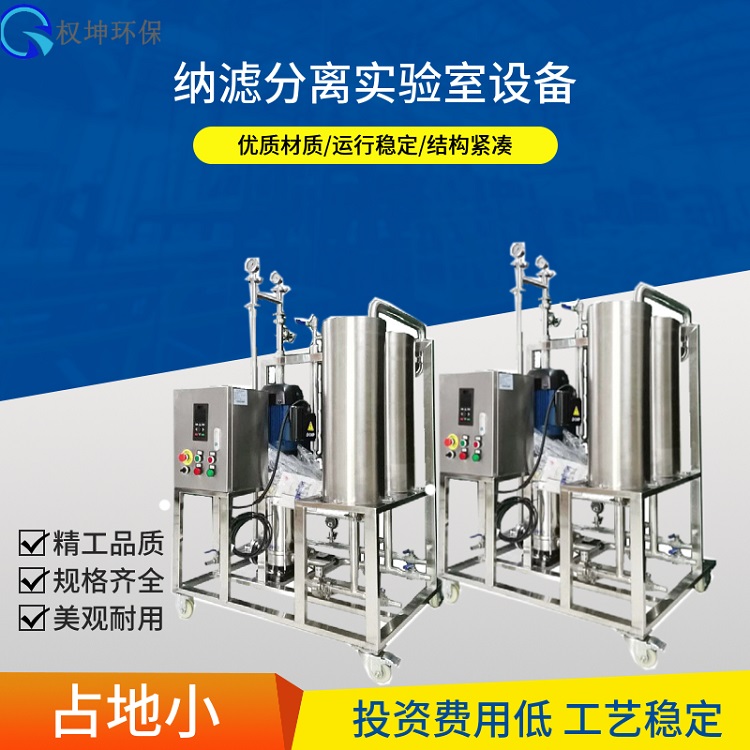
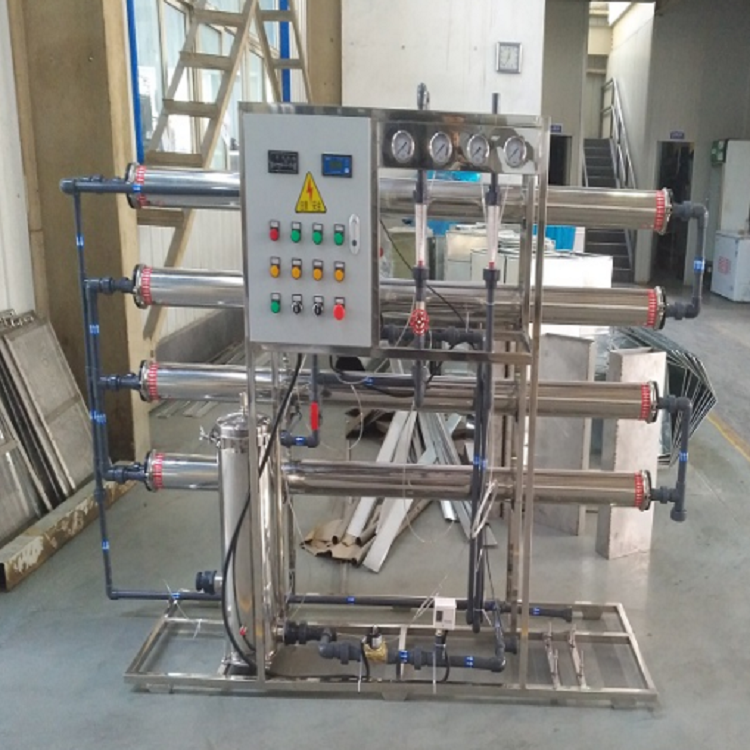
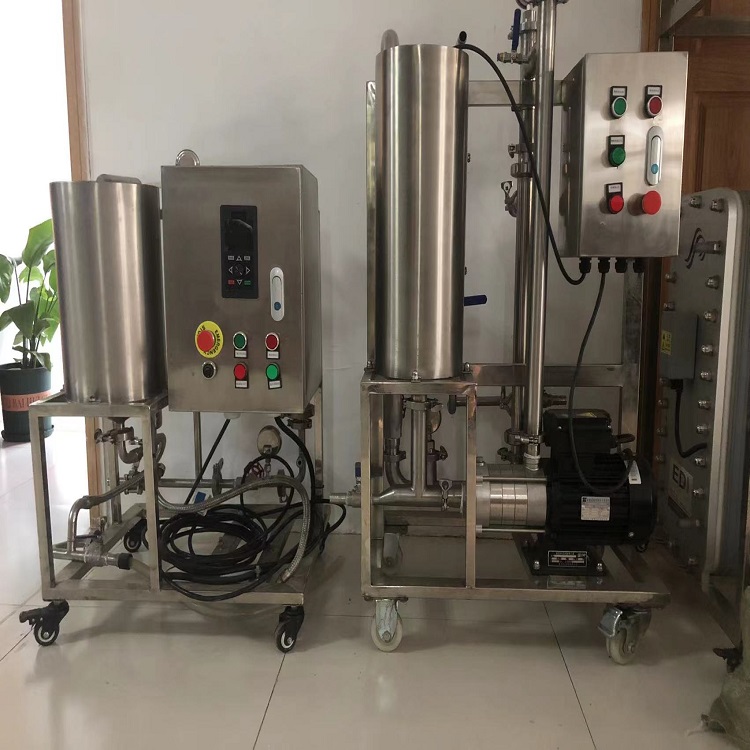
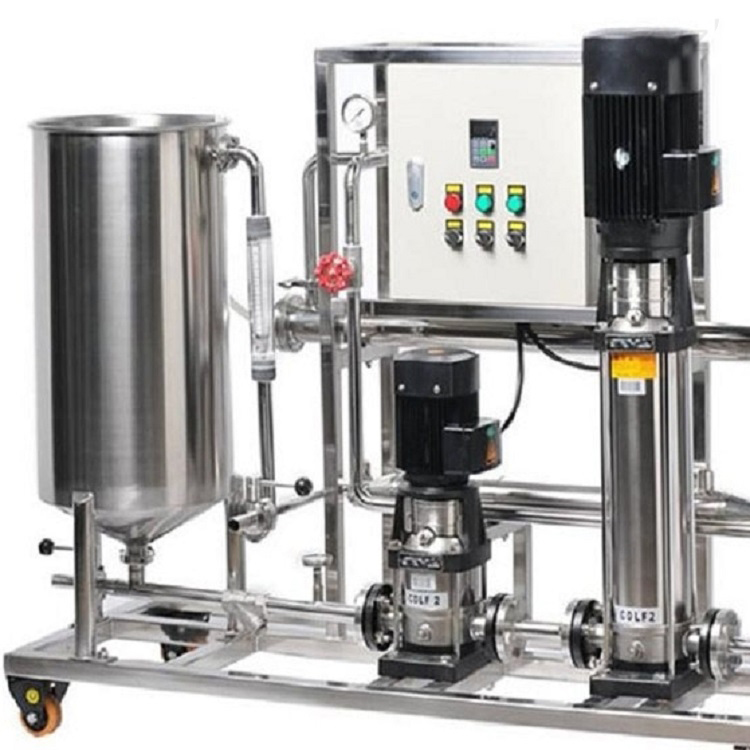
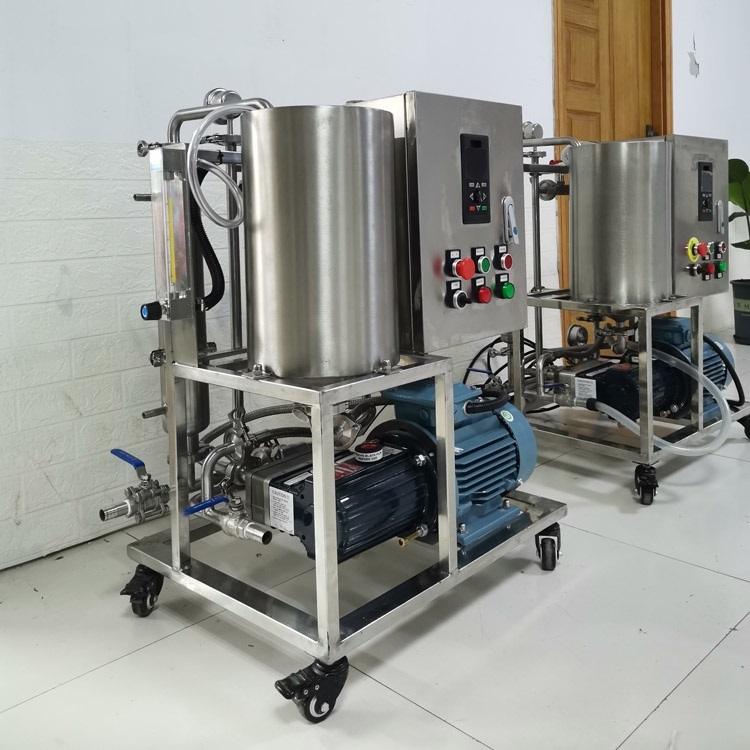
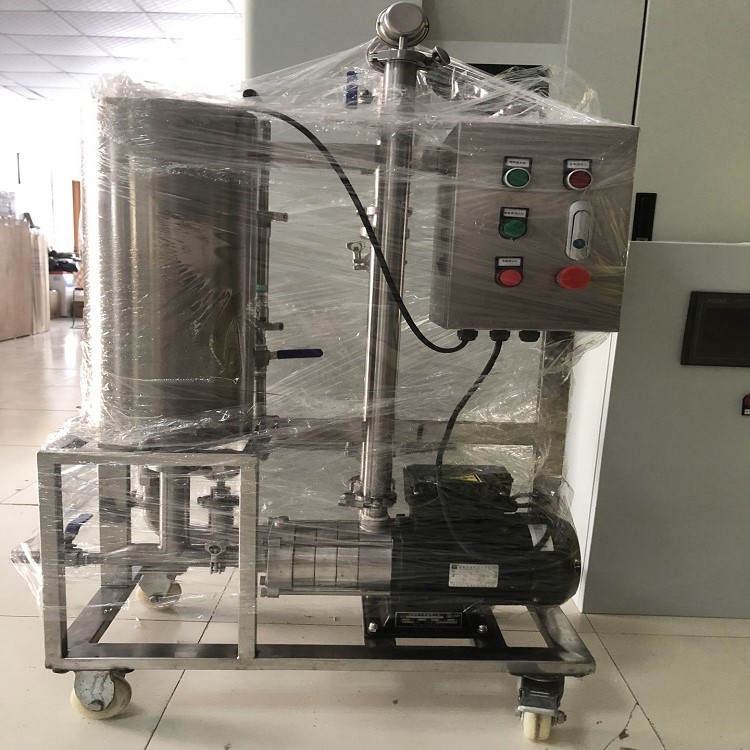
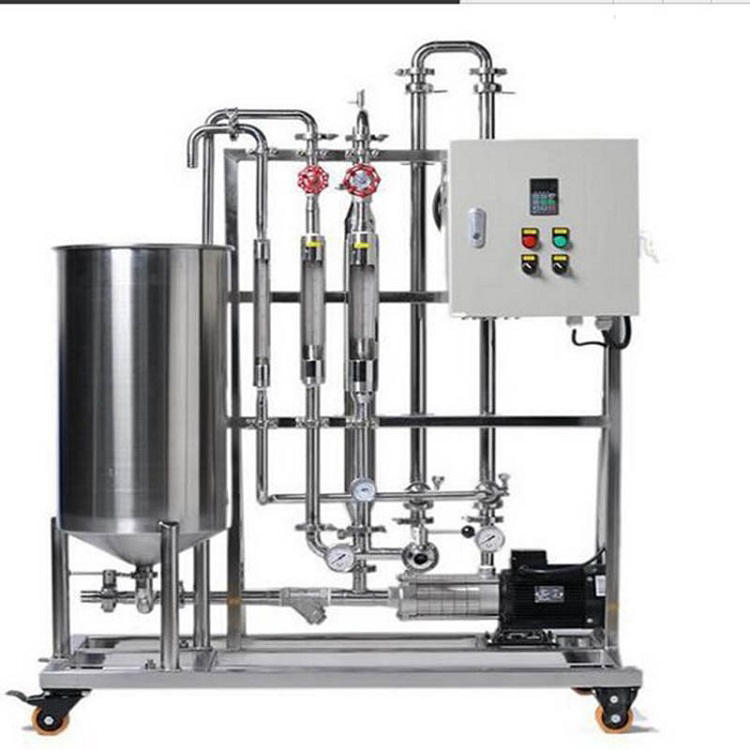
Membrane concentration equipment is typically categorized based on different membrane elements, including microfiltration, ultrafiltration, nanofiltration, and reverse osmosis experimental equipment, crossflow experimental equipment, tangential flow filtration experimental equipment, and multi-stage membrane experimental equipment. The processes all rely on the lifting force of the pump after the raw liquid tank, in conjunction with the pore size of the membrane elements, to achieve separation, purification, and concentration.

Descriptive Overview and Working Principle of Reverse Osmosis Membrane:
Nanofiltration is a liquid-liquid separation method that allows salts and small molecule substances to pass through a nanofiltration membrane under the force of pressure difference, while retaining larger molecule substances, also known as selective reverse osmosis. Nanofiltration membranes have a relatively small rejection molecular weight of 150-1000 MWCO, positioned between ultrafiltration and reverse osmosis, and can be used for the concentration and purification of large molecule substances in solutions.
Reverse osmosis membranes typically employ crossflow filtration. The crossflow method avoids clogging during dead-end filtration processes: the feed fluid flows over the membrane surface, where, under pressure, the liquid and small molecules pass through the membrane, while colloids and large molecules are retained; the sufficient fluid velocity can strip the retained substances from the membrane surface, and continuous stripping reduces membrane contamination, thus maintaining a high membrane permeate flux over a longer period. Crossflow filtration has been proven to be an effective, reliable, and economically beneficial membrane separation technique.
The wrong flow process simultaneously avoids the reliance on filter cake for filtration during dead-end filtration, with separation occurring on the membrane surface rather than within the filter cake, ensuring a uniform and stable filtrate quality throughout the process. The quality of the filtrate depends on the membrane itself, keeping the production process under complete effective control.
Application Fields:
Concentration of natural plant pigments (such as purple sweet potato pigment, amaranth red pigment, etc.)
Antibiotic drugs低温 concentration and ash removal.
Concentration of syrups, purification of oligosaccharides.
De-salting and concentration of soy peptide, corn peptide, and other peptide substances.
Recycling and utilization of acidic, alkaline, and alcoholic substances.
Desalination and concentration of fermentation broth
Waste water treatment from aquaculture, reuse of leachate from garbage landfills, etc.
Shanghai Concentrate Extraction Equipment - Ultrafiltration Separation Equipment, Nanofiltration Equipment - Powerful Manufacturer
Key Features:
1. Utilizes cross-flow technology for easy flow, excellent resistance to clogging, and strong anti-pollution capabilities.
2. Uniform bore distribution, high separation accuracy, stable filtration.
3. No auxiliary filter required, system operates stably.
4. Acid and alkali resistant, easy to operate, and excellent regeneration performance;
5. Long lifespan, low comprehensive cost of equipment, high cost-performance ratio.