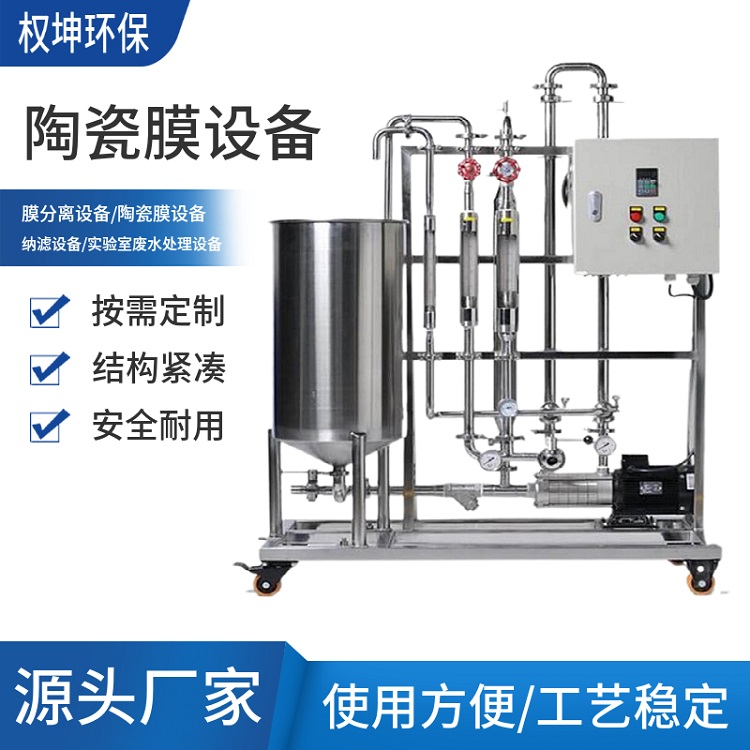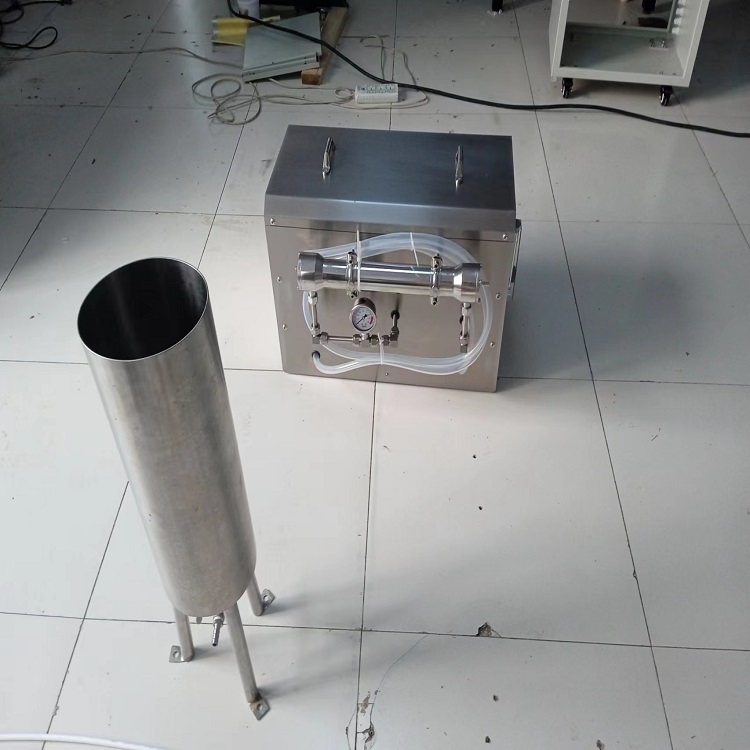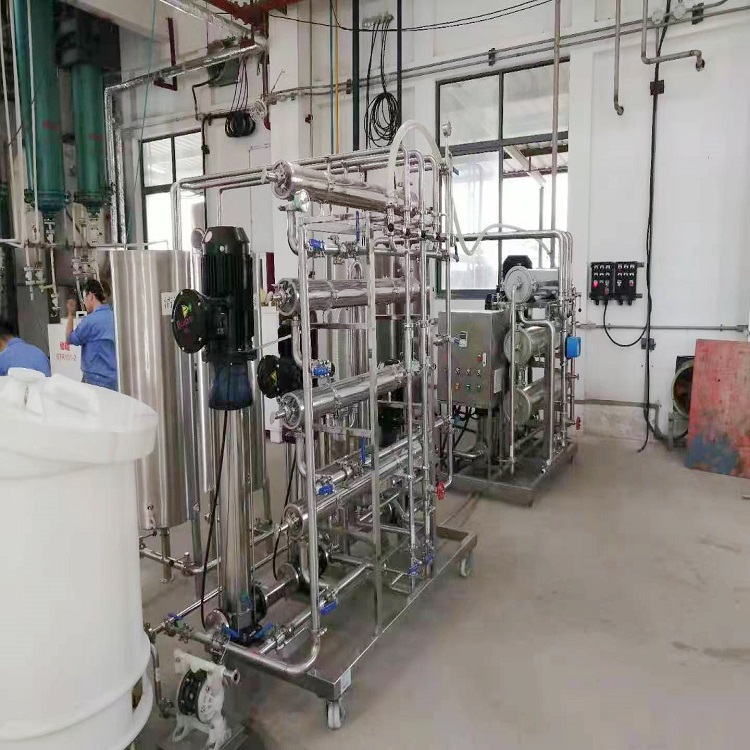

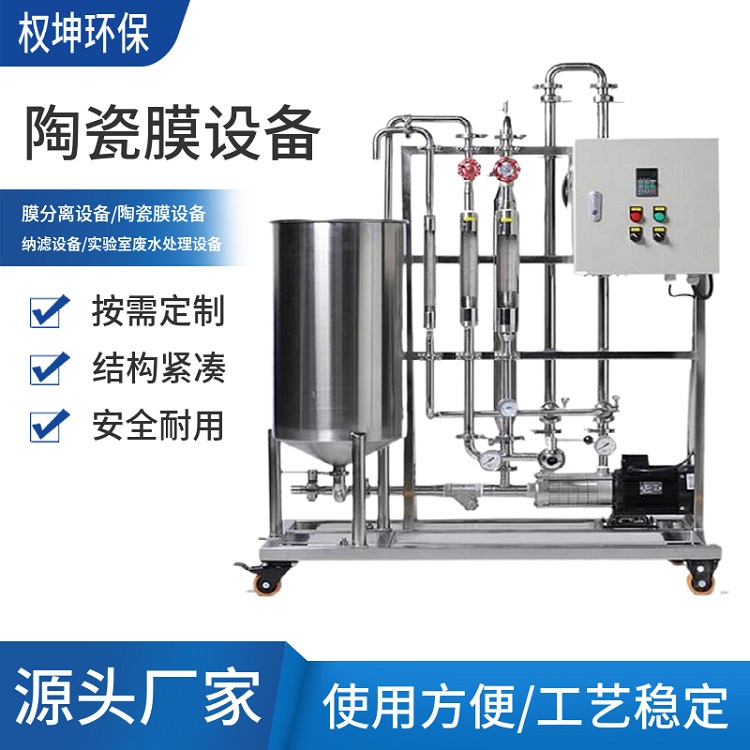

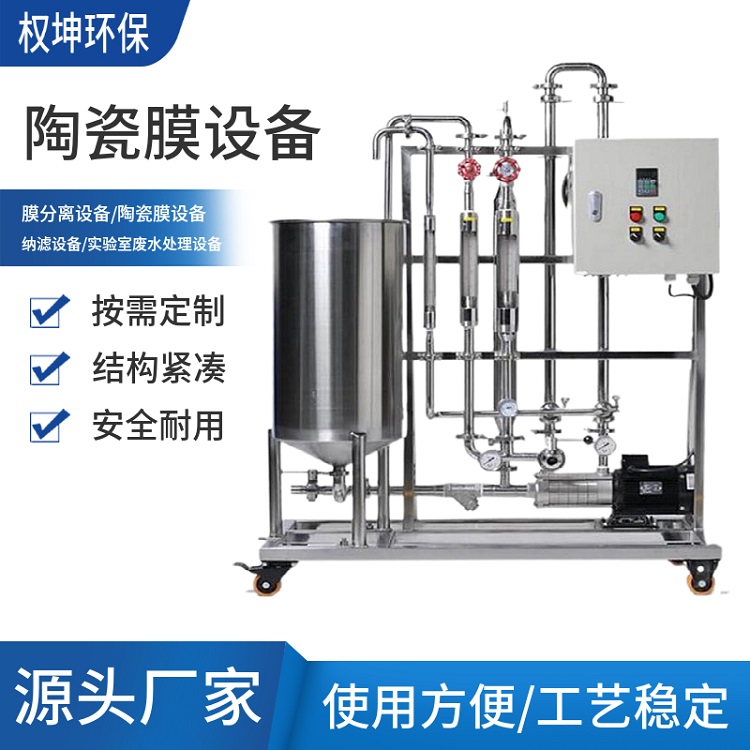












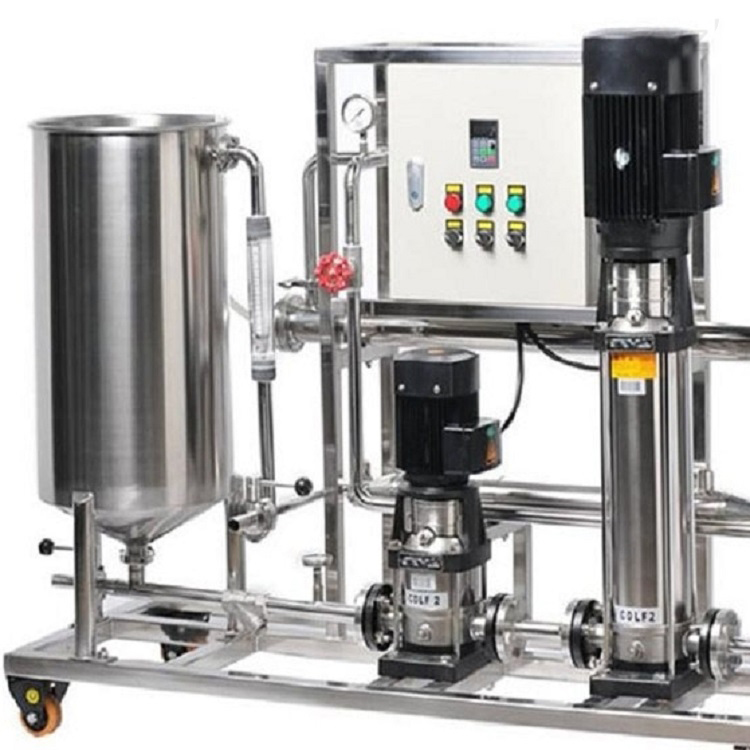
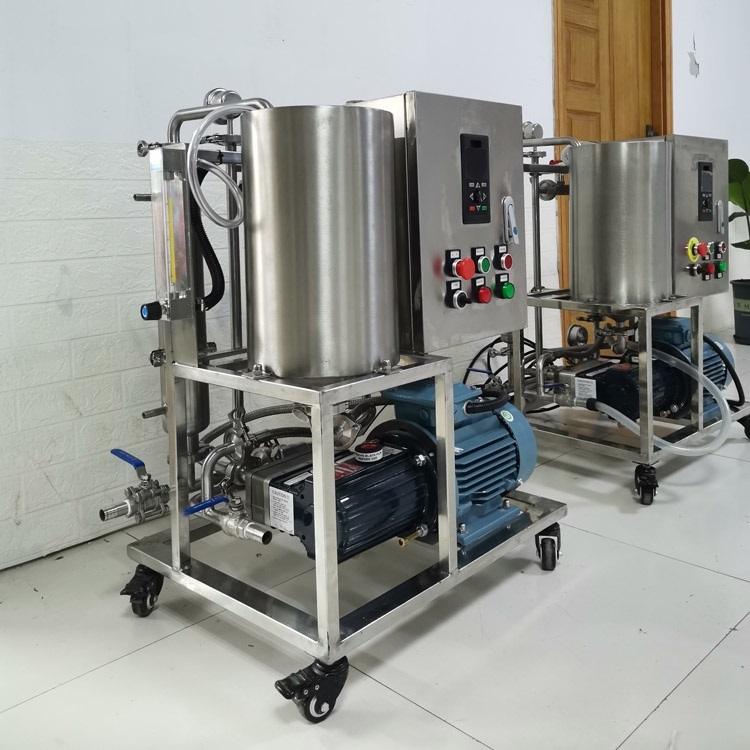
Rotary Ceramic Membrane Ultrafiltration Equipment - Extract Concentration Membrane Concentration Equipment - Quankun
Ceramic membranes are asymmetric separation membranes made from ceramic materials such as alumina, zirconia, and titania. They come in either single-tubular or multi-channel shapes, with micropores covering the tube walls. Under the action of pressure drop, the liquid inside the membrane tubes flows in a crosswise manner. The portion smaller than the diameter of the membrane pores passes through the pores into the permeate side, becoming filtrate. The substance larger than the pore diameter is blocked by the membrane, becoming the concentrate, thereby achieving separation and concentration of substances.

Advantages of inorganic ceramic membranes:
Good chemical stability, resistant to acids, alkalis, organic solvents, and strong acids.
2) Can be sterilized and disinfected using high temperatures, steam, and hot water.
3) High mechanical strength and excellent wear resistance;
4) Narrow aperture distribution, high separation accuracy, even capable of nanometer-level filtration.
5) Easy to clean, suitable for online cleaning or high-temperature sterilization, and reversible cleaning.

Basic Technical Parameters:
Film pore diameter: 1.4m, 200nm, 50m, 30nm, 20nm, 10mm, 5nm, 2nm available for customization
Length: Available in various optional sizes
Internal Pressure Strength: 1.0 Mpa
Applicable pH range: 0-14
Operating Temperature: -10 ~ 150°F

Rotary Ceramic Membrane Ultrafiltration Equipment - Extract Concentration Membrane Concentration Equipment - Quankun
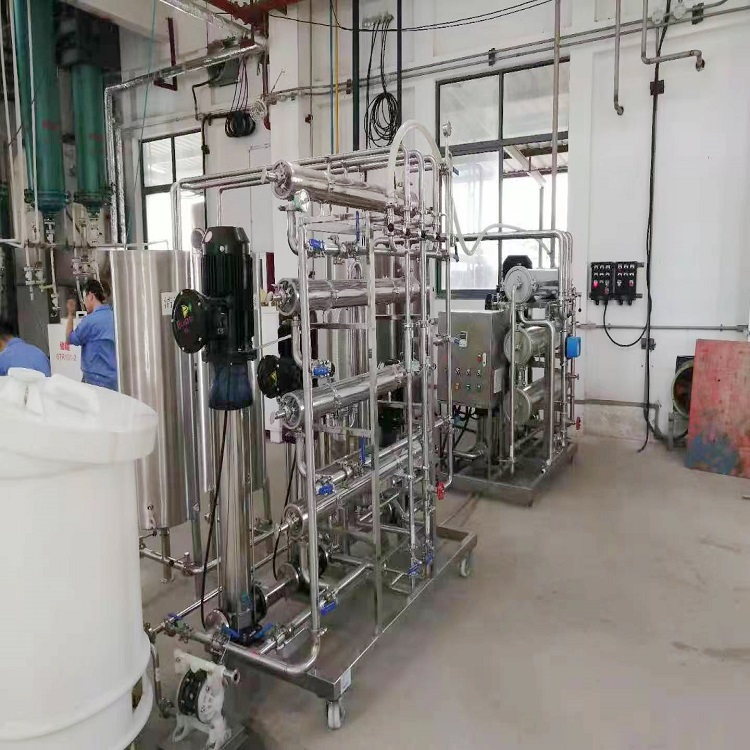
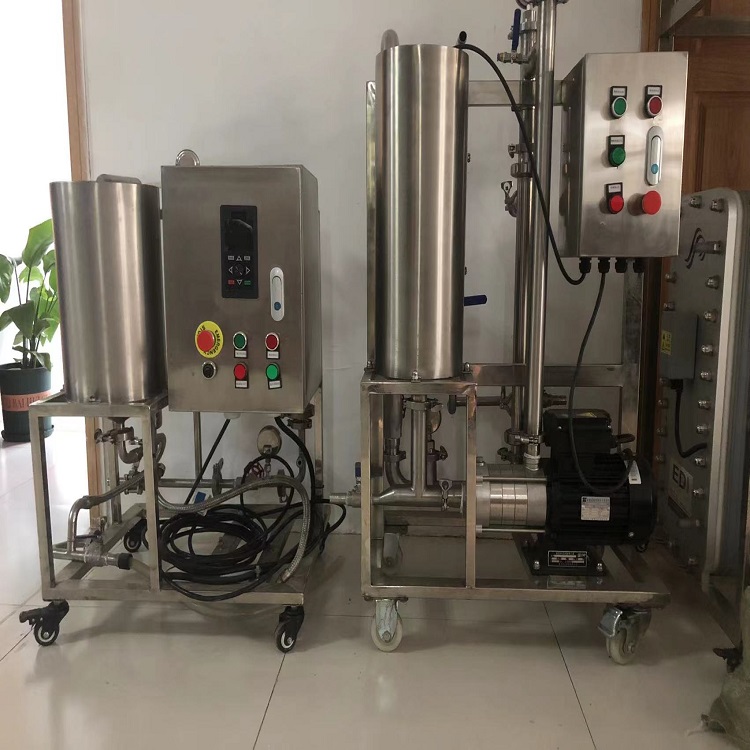
Ceramic membrane equipment is used in crossflow filtration integrated units for both inorganic ceramic membranes and organic tube membranes. It is widely applied in various fields such as microfilters, ultrafiltration applications, food and beverage processing, deep processing of plants (medicinal), biopharmaceuticals, fermentation, fine chemicals, and more. It can be used for separation, purification, purification, concentration, sterilization, and other processes in the production. Typical applications include clarification of traditional Chinese medicine pharmaceutical liquids, removal of impurities, recovery of microorganisms from fermentation broth, protein recovery, clarification of substances with high solid content or water bodies, concentration of metal nanomaterial powders, cutting of emulsions, and purification of oily wastewater.