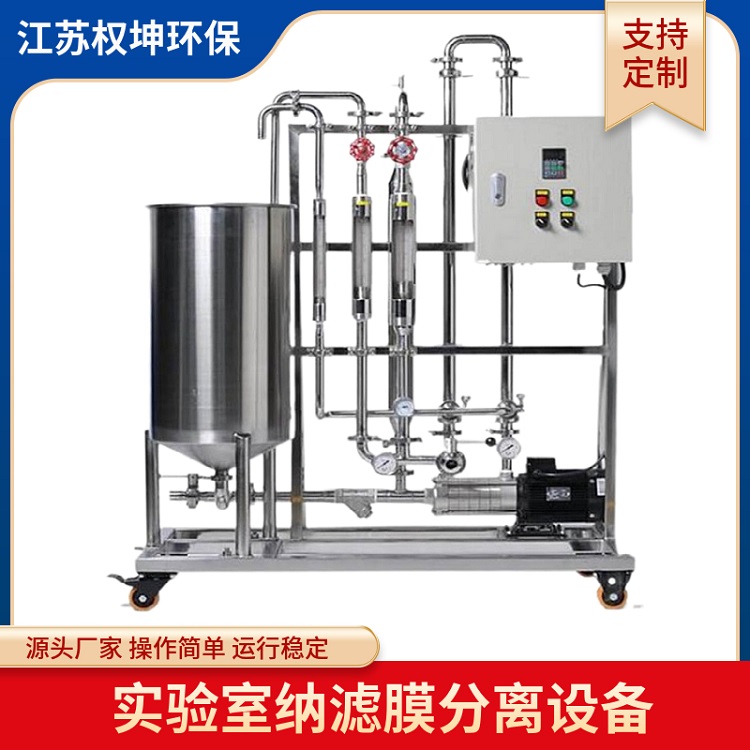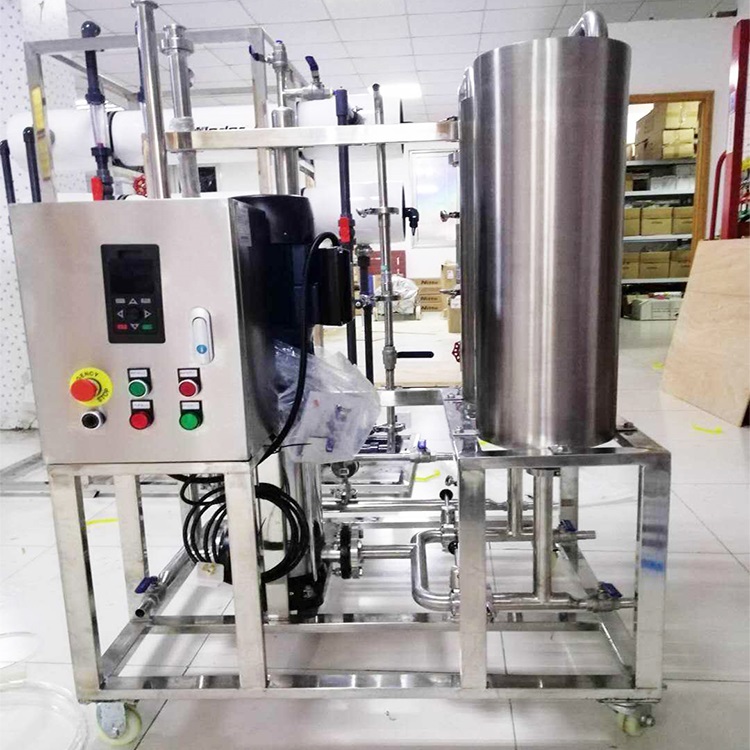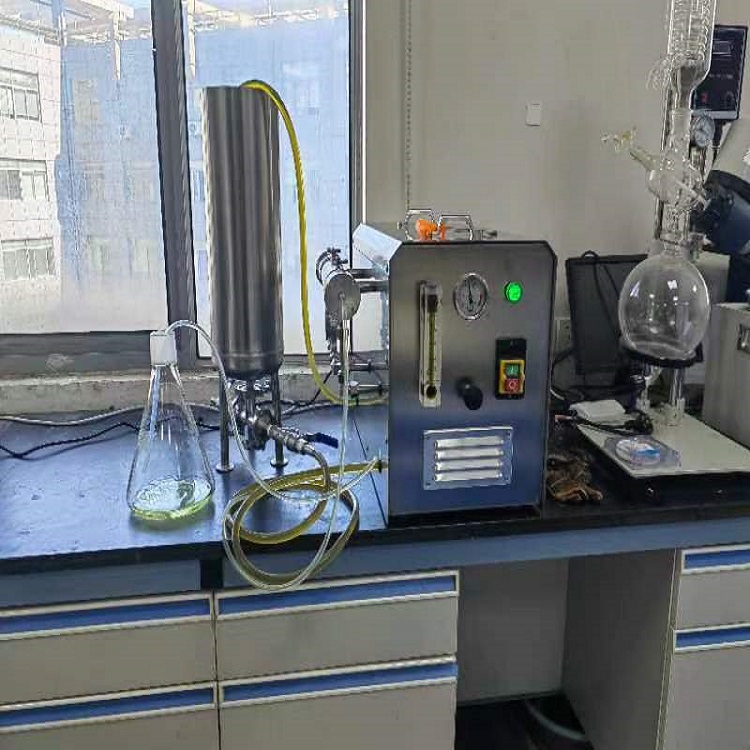

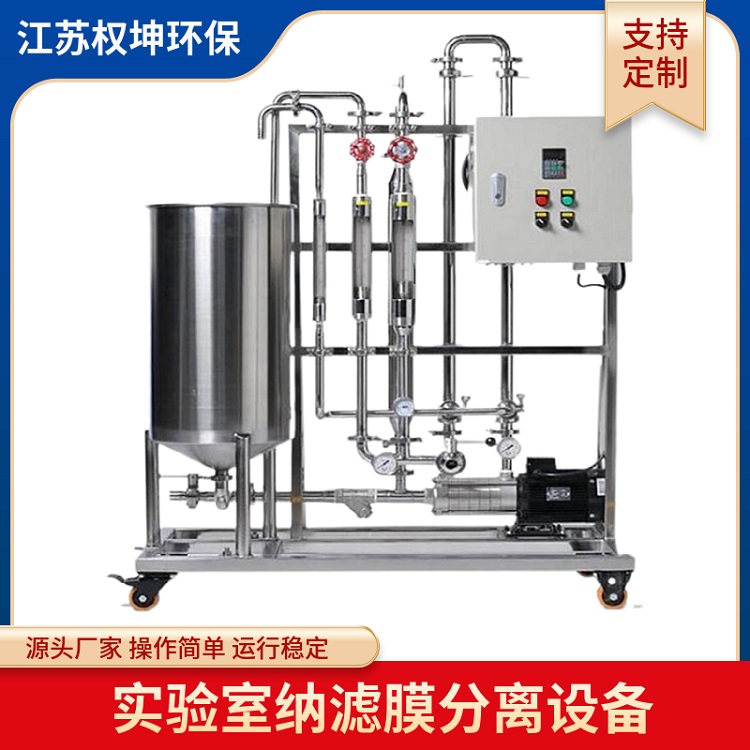

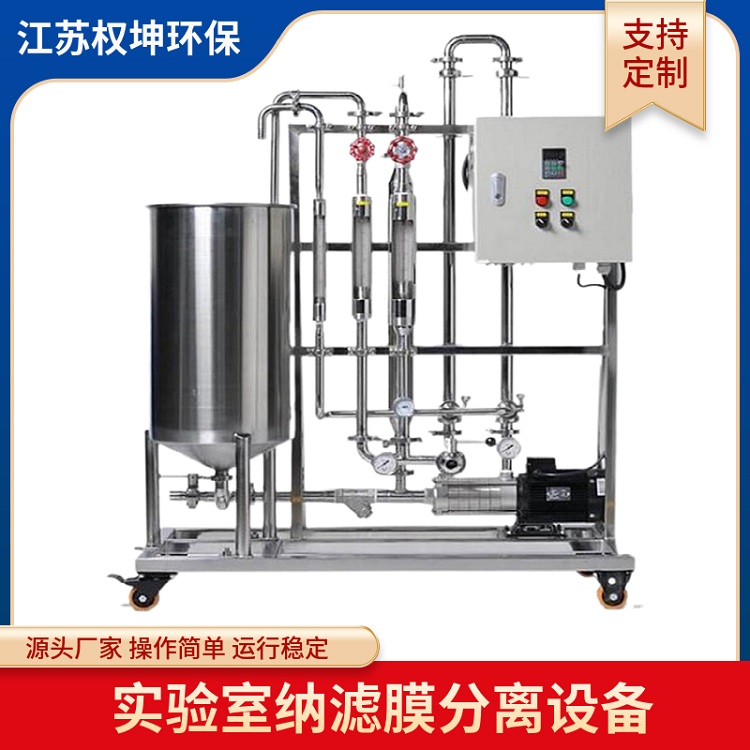
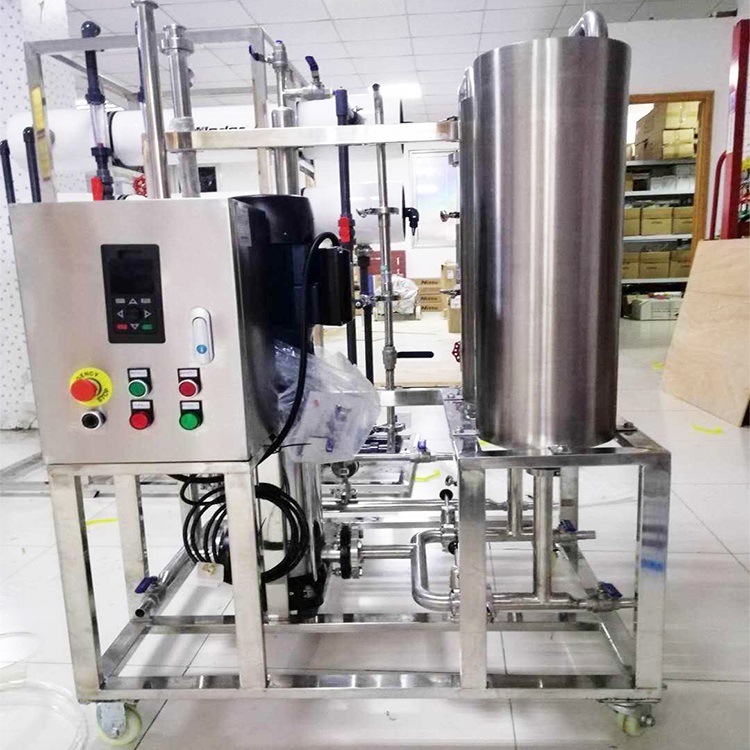
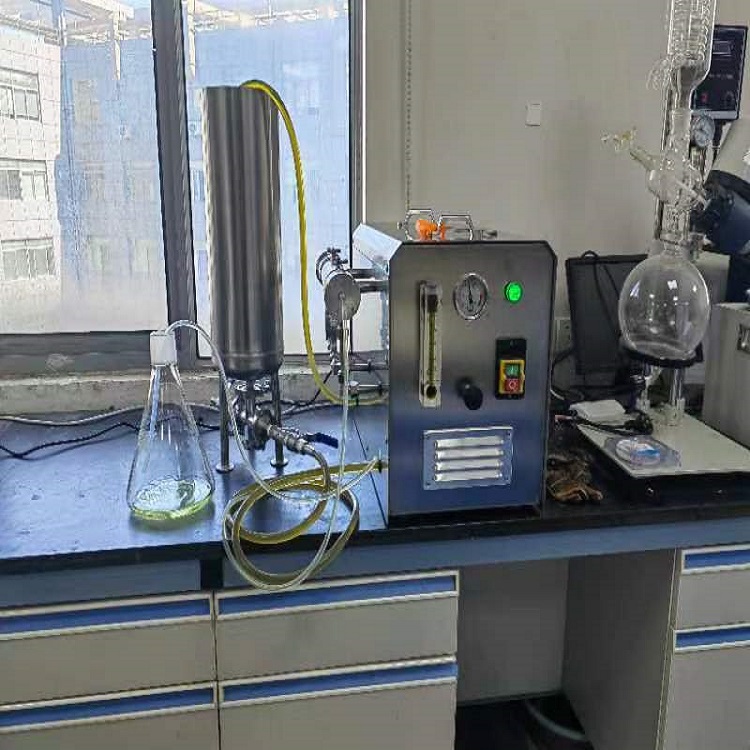












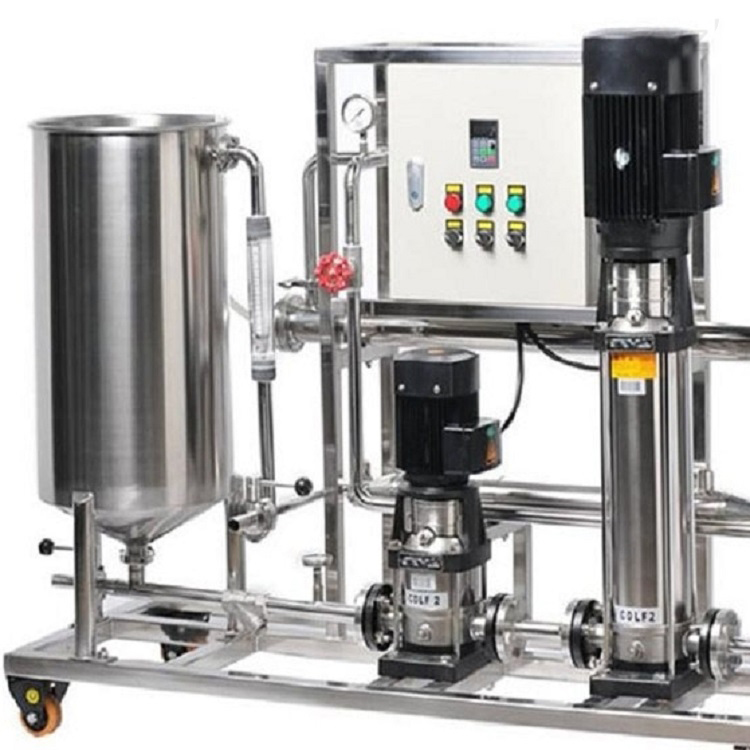
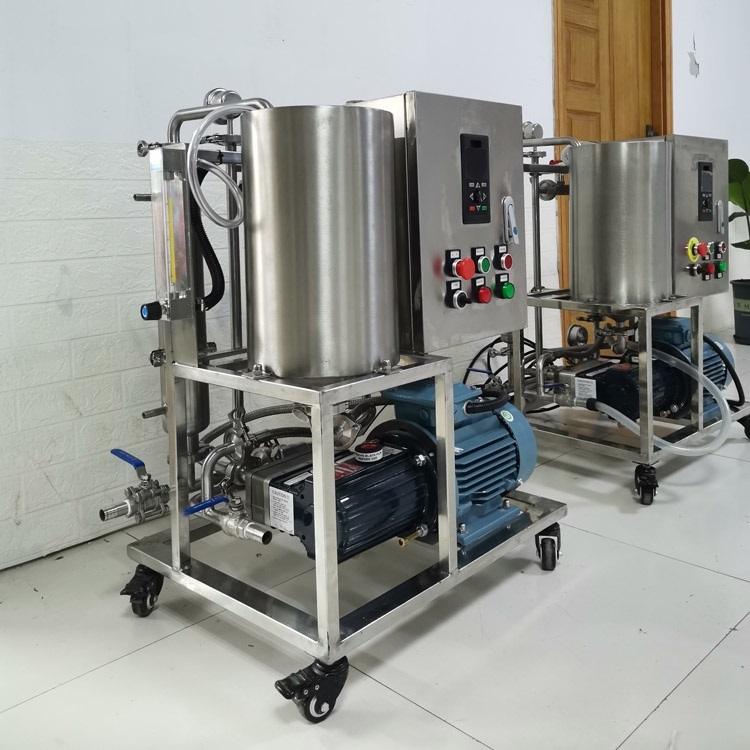
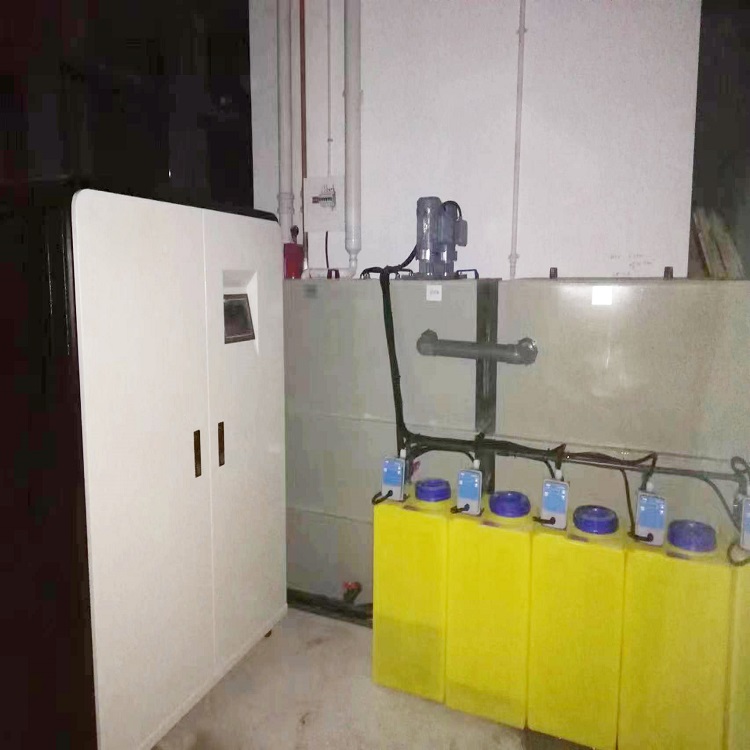
Nanofiltration Filtration System - Concentrate Juice Membrane Separation Equipment - Nanofiltration Fruit Jam Filtration Clarification Equipment
Equipment Advantages:
1. Heat stability: Filter material maintains stability without cracking after 10 cycles at 250°C.
2. Excellent resistance to chemical media corrosion, withstands various acids, bases, salts, most organic solvents below 70°C, odorless, non-toxic, no foreign matter leaching; suitable for various medium filtration.
3. Excellent mechanical strength and hole stability for high-pressure medium filtration.
4. High filtration accuracy (up to 0.1 microns) and speed, excellent cleaning and regeneration performance, suitable for precision filters for various media.
5. Self-cleaning with good performance, non-toxic, odorless, and has excellent resistance to microbial侵蚀.
6. High Filtration Efficiency: Oil removal rate reaches 80-95%, and the removal rate of particles larger than 0.5μm reaches over 98%.
7. Filtration Precision and Flow Rate: Dependent on factors such as the average pore diameter, wall thickness of the microporous medium, filtration pressure difference, and material parameters. It requires experimentation and calculation for accurate determination, and can be filtered at a flow rate of 5-10 m/s.
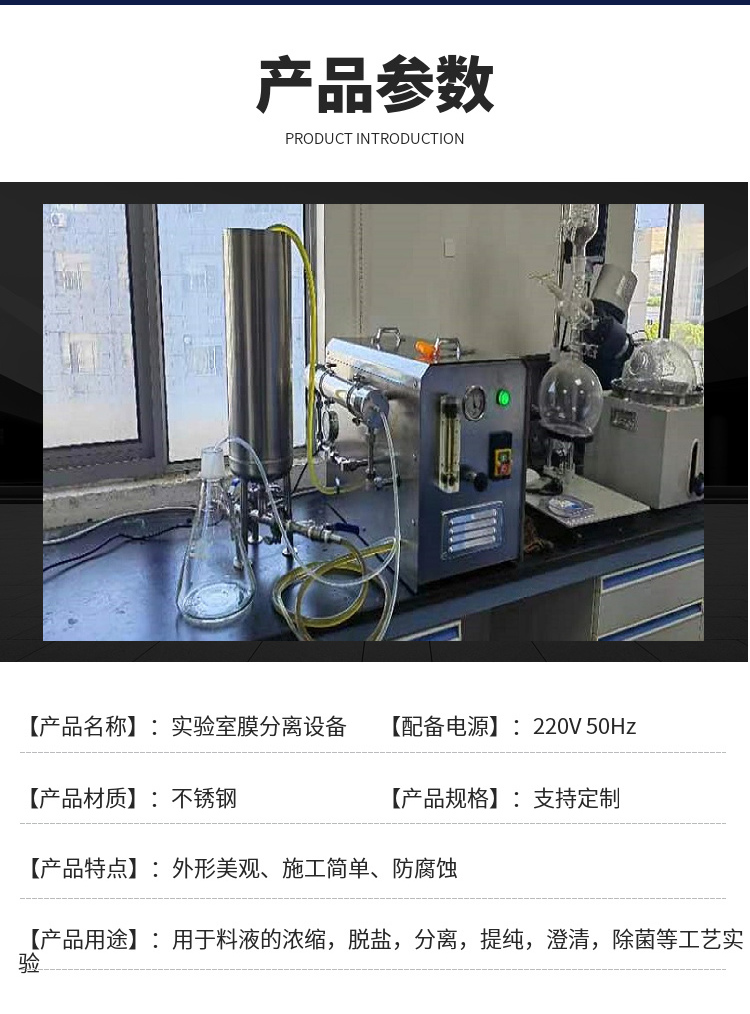
Basic Principles of Membrane Separation Technology:
Membrane separation technology is based on the different transmission behaviors of substances through membrane materials, utilizing the selective permeability of the membrane to achieve separation. Common membrane separation techniques include reverse osmosis, ultrafiltration, nanofiltration, and microfiltration. These technologies utilize membranes with varying pore sizes and surface properties to screen and separate molecules of different sizes and properties. By controlling operational conditions such as pressure, temperature, and pH value, efficient separation and purification of target components can be achieved.
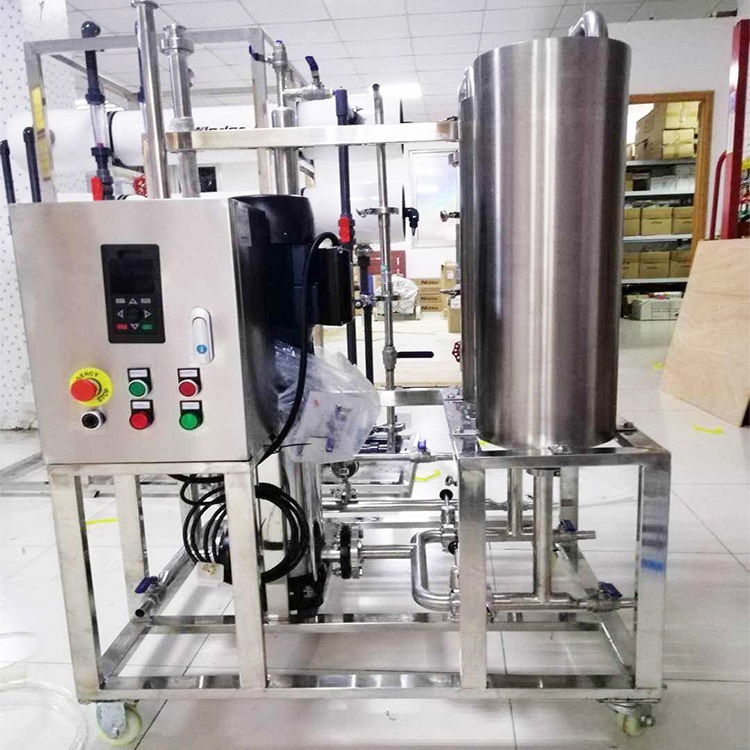
Types and Characteristics of Membrane Separation Equipment:
Membrane separation equipment can be categorized into various types based on its application fields and separation principles, such as plate-and-frame, roll, spiral, and tubular designs. Each type has its unique features and is suitable for different separation tasks. For instance, plate-and-frame equipment is ideal for small batch and high-concentration material separation, while roll-type equipment is more suitable for large-scale, continuous production processes. Additionally, membrane separation equipment can be divided into two main categories—organic membranes and inorganic membranes—depending on the properties of the membrane material. Organic membranes offer good flexibility and processability, making them suitable for various separation scenarios; in contrast, inorganic membranes possess higher thermal and chemical stability, making them ideal for harsh environments such as high temperatures, pressures, or strong acids and bases.
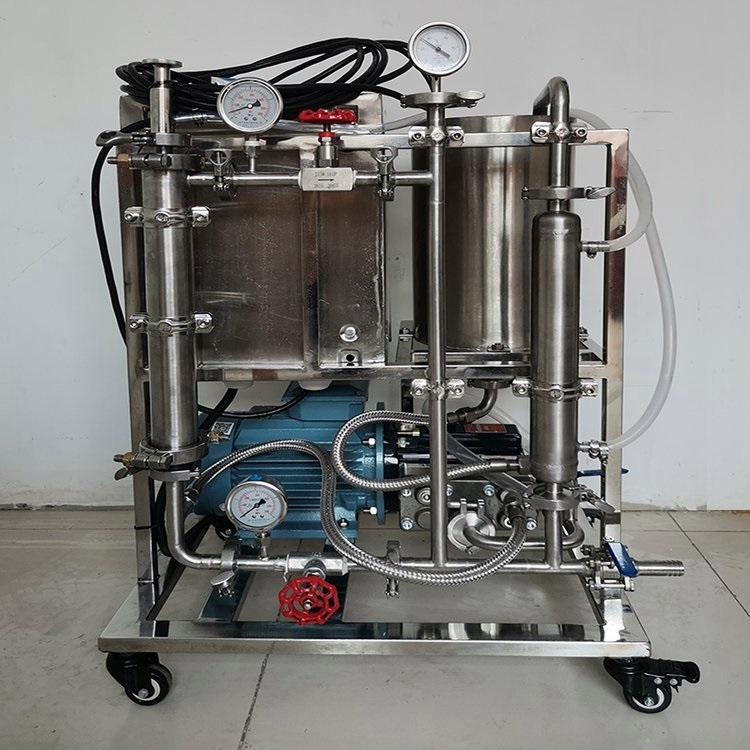
Process Flow:
Membrane concentration equipment is typically categorized by different membrane elements, including microfiltration, ultrafiltration, nanofiltration, reverse osmosis lab equipment, crossflow lab equipment, tangential flow filtration lab equipment, and multi-stage membrane lab equipment. The processes all rely on the boosting power of a pump after the raw liquid tank, in conjunction with the pore size of the membrane elements, to achieve separation, purification, and concentration.
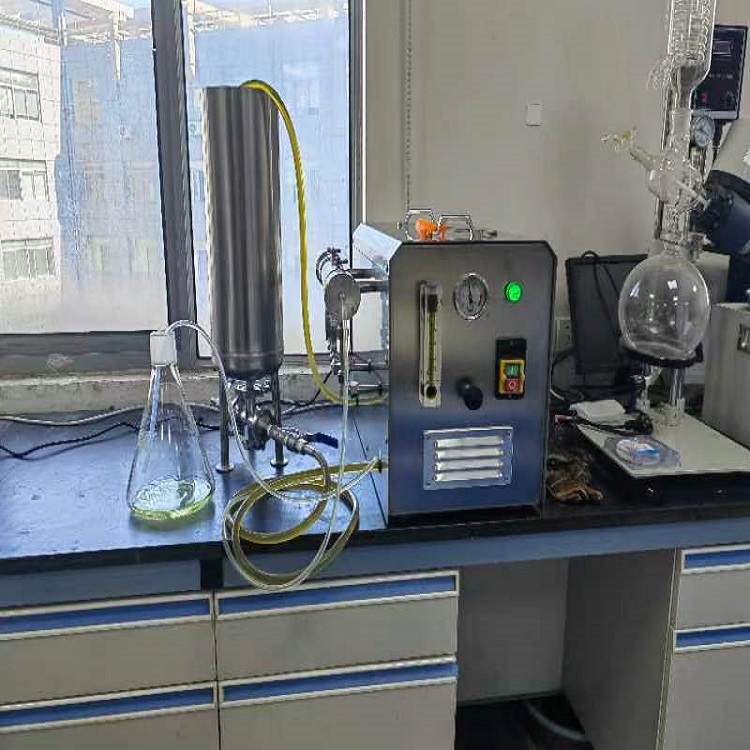
Reverse Osmosis Filtration System - Concentrate Juice Membrane Separation Equipment - Ultrafiltration Jam Filtration Clarification Equipment
Nanofiltration principle:
Just like ultrafiltration and reverse osmosis membrane separation processes, nanofiltration is also a membrane separation process driven by pressure difference, and it is an irreversible process. Its separation mechanism can be described using the charge model (including spatial charge model and fixed charge model), the pore model, as well as the electrostatic repulsion and steric hindrance models proposed recently. Compared to other membrane separation processes, one advantage of nanofiltration is its ability to retain low molecular weight organic substances that pass through ultrafiltration membranes, while also dialyzing the inorganic salts retained by reverse osmosis membranes—effectively allowing simultaneous concentration and desalination.