






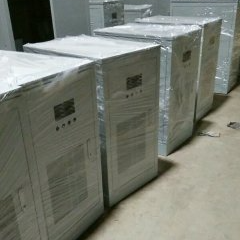
One, Integrated Functionality and Modular Design
Multi-system integration capability
Electrical Control: Integrates circuit breakers, contactors, relays, and other components to facilitate motor start/stop, circuit on/off, and overload protection functions.
Automated Control: Equipped with built-in PLC/DCS controllers, supporting logical operations, PID tuning, data collection, and communication (such as Modbus, Profinet protocols).
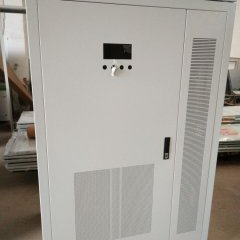
Human-Machine Interface: Equipped with a touchscreen (HMI) or button panel, it displays operating parameters (voltage, current, temperature, etc.) in real time, supporting parameter settings and fault inquiries.
Modular scalability
Standard Unit Assembly: Utilizes drawer-type or轨式 modules (e.g., Siemens SIMATIC S7-1200 modules), allowing flexible addition or subtraction of I/O points, power modules, or communication interfaces.
Cross-scenario Adaptability: Quickly adapt to different industry needs such as chemical industry, coal mines, and data centers by replacing functional modules (e.g., explosion-proof module, redundant power module).
High Reliability and Security Protection
Electrical Safety Design
Protection Level: Cabinets typically reach IP54~IP66, dust-proof and splash-proof (outdoor cabinets up to IP66), suitable for harsh environments (such as high temperatures, high humidity, and salt雾).
Insulation and grounding: Utilizing double insulation materials (such as glass fiber reinforced polyester) and equipotential grounding to prevent electric leakage and lightning damage.
Redundancy and fault-tolerance mechanisms
Dual Power Supply: Automatic switching between main and backup power sources (switching time ≤ 20ms), ensuring continuous operation of critical equipment (such as hospital ICU, nuclear power plants).
Redundant Controller: Dual PLC hot standby (e.g., Rockwell ControlLogix redundant system), seamless take-over by the backup controller in case of main control failure, system availability up to 99.999%.
Fault self-diagnosis and protection
Real-time Monitoring: Monitors overload, short circuits, overheating, and other anomalies through current transformers and temperature sensors, triggering alarms or automatic shutdown.
Fault Record: Built-in "black box" feature logs the most recent 1,000 fault logs (time, code, parameters), facilitating quick issue identification.
III. Efficient Heat Dissipation and Energy Consumption Optimization
Smart Temperature Control System
Thermal Management Technology:
Natural Ventilation:散热孔和导流板在低负载时进行散热,energy consumption is 0.
Forced air cooling: At medium load, the axial fan (airflow 200~1000 m³/h) is activated, reducing the cabinet temperature by 15~20℃.
Air Conditioning Cooling: Industrial air conditioners (cooling capacity 1~5kW) are used for high load or high-temperature environments (such as data centers) to maintain the cabinet temperature ≤35℃.
Dynamic Adjustment: Automatically switches to cooling mode based on the cabinet temperature, saving energy by 30%~50% compared to traditional fixed cooling solutions.
Energy Efficiency Optimization Strategies
Standby Power Consumption Control: Automatically shuts down unnecessary loads (such as HMI backlight) during non-operational periods, reducing standby power consumption to below 10W.
Harmonic Suppression: Equipped with an active power filter (APF), it reduces the total harmonic distortion (THD) from 25% to below 5%, preventing grid pollution.
IV. Flexible Deployment and Convenient Maintenance
Installation and Space Optimization
Compact design: Cabinet depth 400~800mm, supports wall-mounted, floor-standing, or rack-mounted installation, saving space by over 30%.
Cable Management: Utilizing cable ties, conduits, and labels to achieve clear separation of power and data cables, ensuring a tidy cable layout, and improving maintenance efficiency by 50%.
Remote Operations and Maintenance Support
Remote Monitoring: Real-time upload of equipment status via 4G/5G or industrial Ethernet (e.g., Schneider EcoStruxure platform).
Predictive Maintenance: Utilizes AI algorithms to analyze historical data and issue 72-hour early warnings for potential failures (such as capacitor aging, fan jamming).