




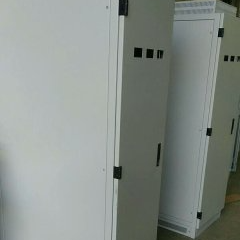
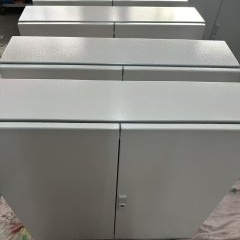
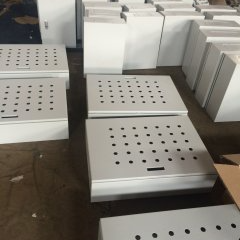
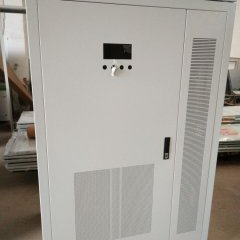
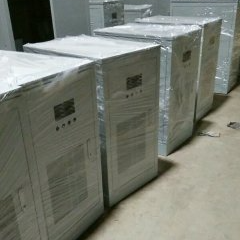
TS and Cabinet Parallel Connection (TS and Cab) refers to the physical connection and electrical synchronization of multiple TS cabinets to achieve a power distribution solution with large capacity power supply, redundancy backup, and centralized management. Its features revolve around system scalability, high reliability, and ease of maintenance. The following analysis is conducted from dimensions such as technical architecture, functional advantages, and application scenarios.
TS and Container Function and Technical Features
High-capacity power supply and flexible expansion
Current superposition: Achieved by paralleling busbars or cables, the rated current of multiple TS cabinets can be superimposed (e.g., 4 x 630A TS cabinets in parallel can reach a total capacity of 2520A).
Modular Expansion: Supports online addition or removal of racks (e.g., expanding from 4 racks to 8 racks) without downtime, meeting dynamic load requirements for data centers, factory expansion, etc.
Redundancy and fault-tolerant design
Dual Power Input: Each TS cabinet is equipped with an ATS (Automatic Transfer Switch), ensuring seamless connection of the backup power supply in case of main power failure, with a switching time ≤20ms.
N+1 redundancy: When 5 TS cabinets are connected in parallel, 4 are in use for actual load, with the 5th as a backup, achieving system availability of 99.999%.
Centralized Monitoring and Intelligent Management
Unified Communication: Upload data from multiple cabinets to SCADA systems (e.g., Schneider EcoStruxure) via Ethernet/RS485 bus for real-time monitoring of parameters such as voltage, current, and power factor.
Energy Efficiency Analysis: Smart meters are integrated into each TS cabinet, tracking energy consumption across circuits, generating load curves, and optimizing power distribution strategies.