















Here are the detailed installation steps and precautions:
Preparation Before Installation
1. Basic Construction
Basic Requirements:
Material: Concrete (C25 or above), with surface anti-corrosion treatment (such as epoxy resin coating or asphalt anti-corrosion).
Size: Diameter ≥ Tank Diameter + 0.5m, Thickness ≥ 20cm (to be calculated by structural engineer for load-bearing capacity).
Flatness: Horizontal error ≤ 3mm/m², to prevent uneven stress and deformation of the storage tank.
Drainage Design: A drainage channel is installed around the base to prevent water accumulation and corrosion.
Optional: Impermeable dike
Volume ≥ 110% of the total tank capacity (i.e., ≥ 55m³) to prevent leakage and environmental pollution.
2. Tank Acceptance
Inspection Items:
No cracks, scratches, or deformation on appearance.
Flanges and interfaces are undamaged, with complete sealing washers.
Enclosed documents (Certificate of Compliance, Material Report, Pressure Test Report).
3. Tool and Personnel Preparation
Tools: Cranes (over 10 tons), nylon slings (anti-scratch), level, wrenches, PE welding torch (for on-site welding if required).
Personnel: At least 2 installers + 1 technical supervisor
Section II: Tank Installation Steps
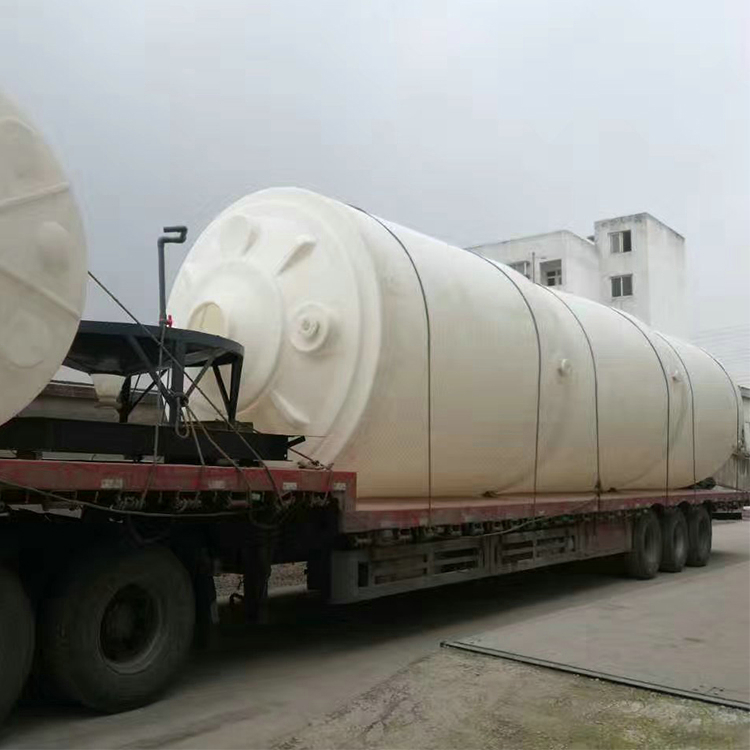
1. Hoisting into place
Lifting Method:
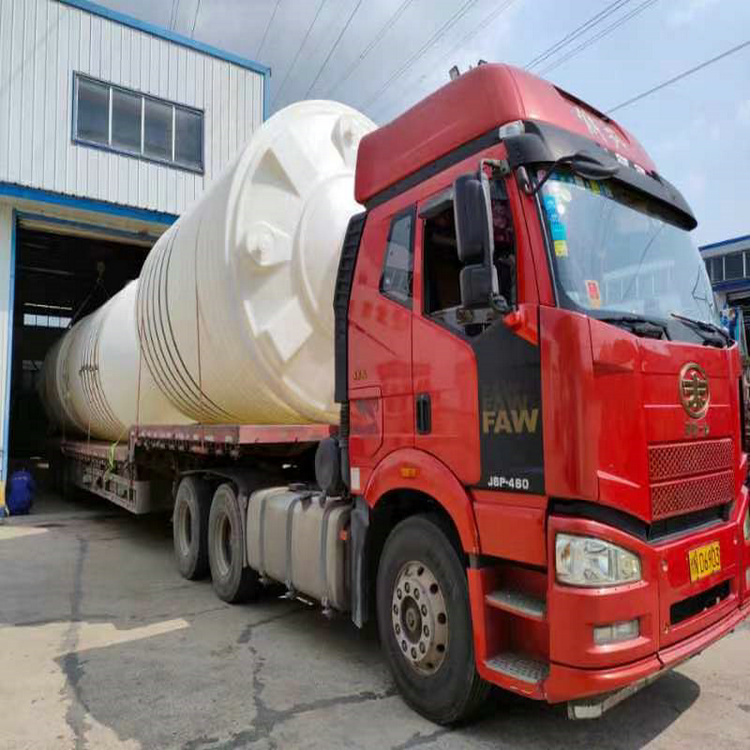
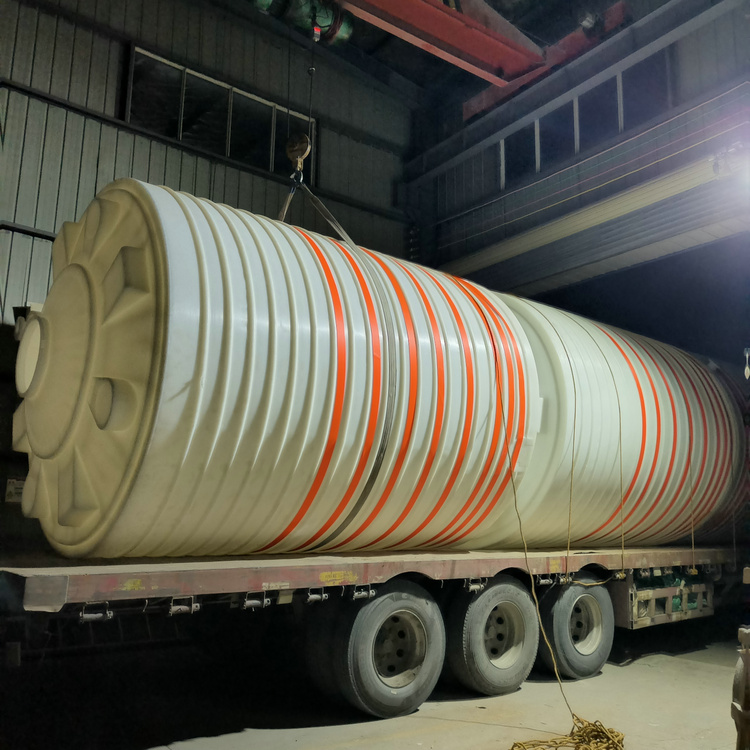
Use nylon straps (prohibit steel wire rope from contacting the drum directly to avoid scratching).
Select lifting points at the tank's dedicated lifting lugs or reinforced ribs; strictly prohibit lifting directly from flanges or pipes.
Slowly hoist, after lifting off the ground, hover to check balance, ensure no tilt.
Placement Adjustment:
The tank bottom is lined with rubber pads or PE boards (anti-slip, anti-corrosion).
Adjust with a level to ensure overall levelness (error ≤5mm).
2. Pipe and fitting connections
Inlet/Outlet Tube:
Use PP/PE/PVDF material piping to prevent metal corrosion.
The flange connection employs EPDM or PTFE gaskets, and bolts require anti-corrosion treatment (such as plastic coating).
It is recommended to install acid-resistant valves (such as lined fluoro ball valves) at the discharge outlet, and to set up a filter (to prevent crystallization blockage).
Exhaust and Safety Equipment:
Breathing valve installed at the top (to prevent vacuum or overpressure).
Level gauge selection: magnetic flip indicator or radar type (to avoid metal contact with the solution).
3. Fastening and Reinforcement
Wind and earthquake resistance
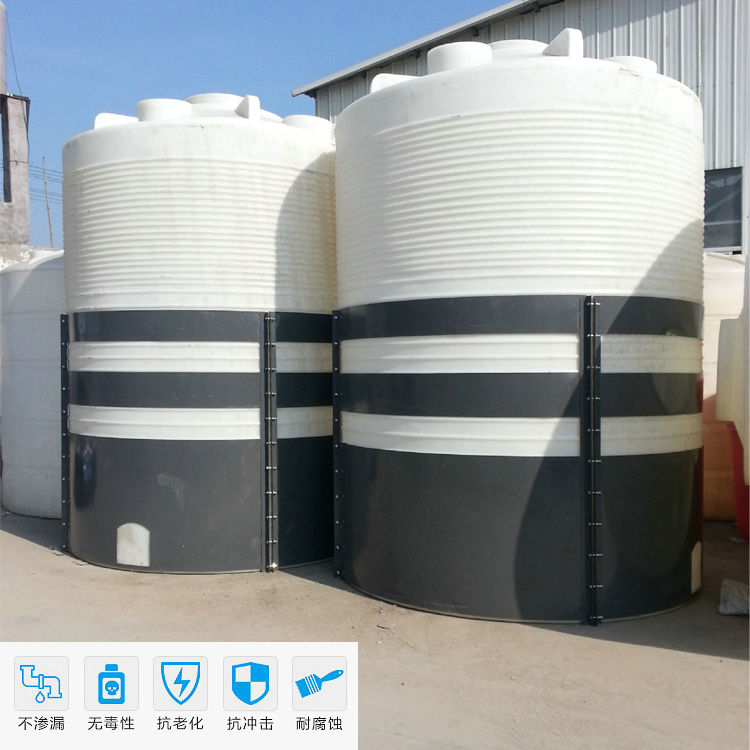
External steel collars (304 stainless steel or carbon steel with anti-corrosion coating) are added around the tank, secured to the concrete foundation.
Earthquake-prone areas require additional anchor bolts for stabilization.
Ultraviolet Protection (PE/PP Tanks)
Outer surface wrapped with aluminum foil tape or coated with anti-UV paint (extends lifespan).
3. Post-installation Inspection and Testing
1. Sealing Integrity Test
Water Pressure Test:
Fill with water, let stand for 24 hours, and inspect the canister and interfaces for no leakage.
Check for bubbles at the flange connection with soap water.
2. System trial operation
Fill liquid:
First, inject a small amount of solution (10% to 20% capacity), and then operate at full load after observing for 24 hours without any abnormalities.
Inspect the level gauge, valves, pumps, and other auxiliary equipment for proper operation.
Section 4: Safety and Maintenance Precautions
1. Safety Protection
Corrosion resistance:
Operators wear acid-resistant gloves and safety goggles.
Flush with large amounts of water in case of leakage (diluting FeCl3 with water can reduce its corrosiveness).
Fire and explosion proof
Keep away from heat sources. Welding operations are prohibited near the storage tank (HCl gas is flammable).
2. Routine Maintenance
Monthly Inspection:
Dome for expansion and cracks (especially in low temperatures during winter).
Is the flange gasket worn out, and are the bolts loose?
Annual comprehensive inspection:
Wall thickness measurement (ultrasonic testing), to prevent long-term corrosion thinning.
V. Comparison of 50m3 Storage Tank Installation Solutions
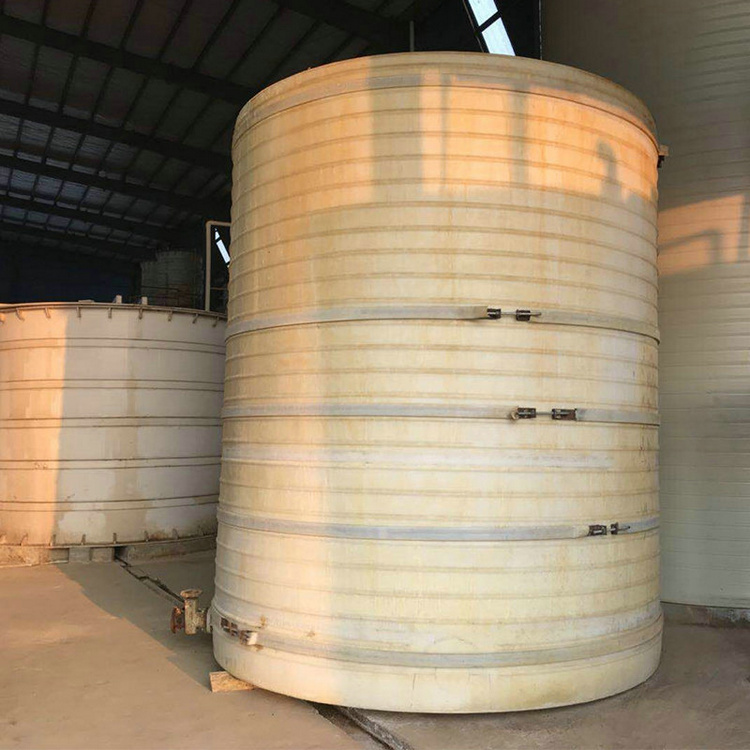
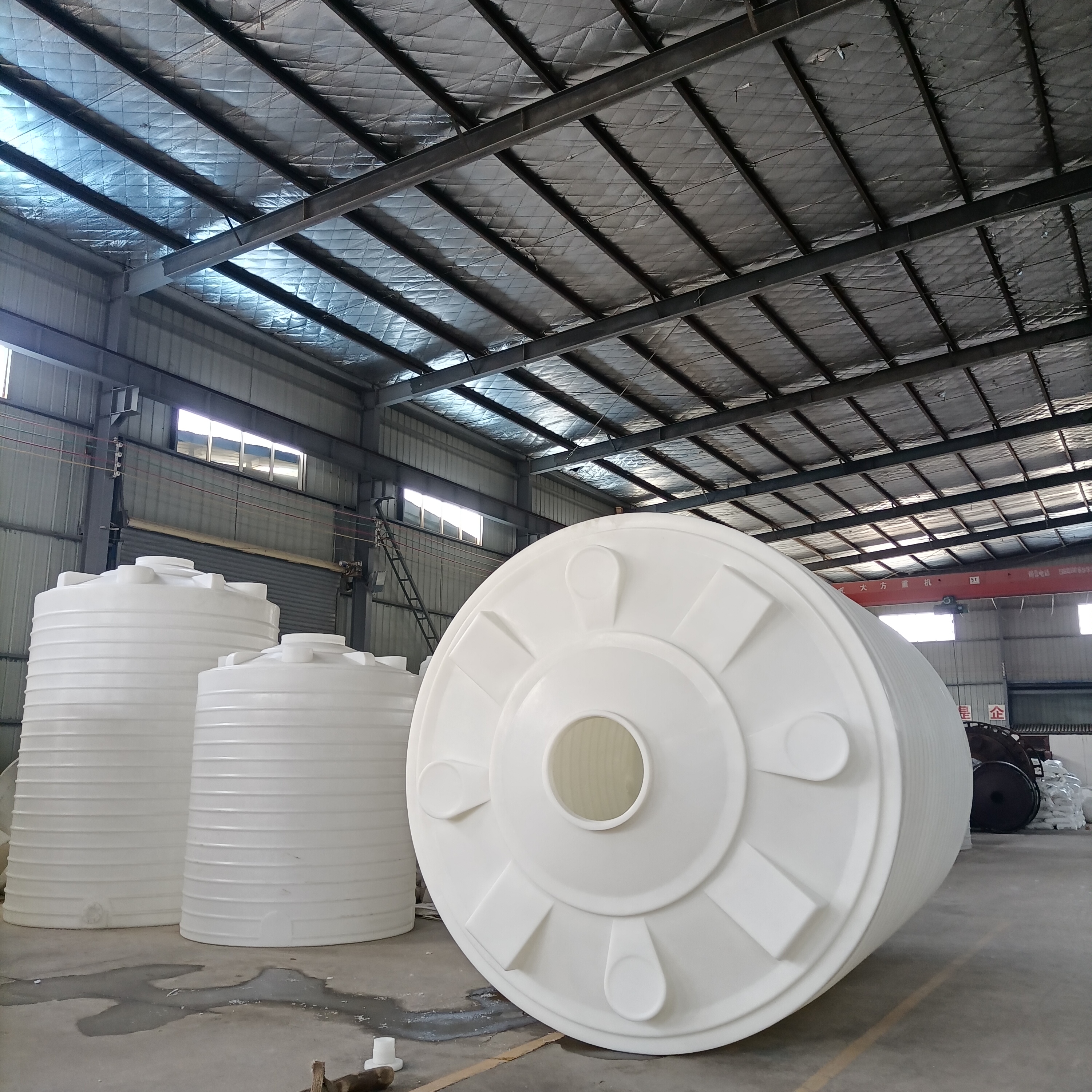
HDPE Rotomolded Storage Tanks, Steel Lined Plastic Storage Tanks, FRP Storage Tanks
Low installation difficulty (overall hoisting), moderate (requires welding lining), high (requires construction)
Excellent corrosion resistance (seamless), Good (seams prone to leakage), Excellent (resin matching required)
Low cost ($30,000~$60,000), Medium cost ($80,000~$120,000), High cost ($150,000~$200,000)
Recommended scenarios: room temperature, low concentration (<30%) under pressure, high concentration required for high temperature, special corrosive environments
Summary
Focus on the flatness of the foundation, lifting safety, pipeline anticorrosion, and sealing tests for the installation of 50m3 storage tanks. HDPE rotational molding tanks are cost-effective and durable, but for high concentration or high-temperature conditions, steel-lined plastic or glass fiber reinforced plastic should be chosen. Regular maintenance can extend the lifespan of the tank to over 10 years.











