




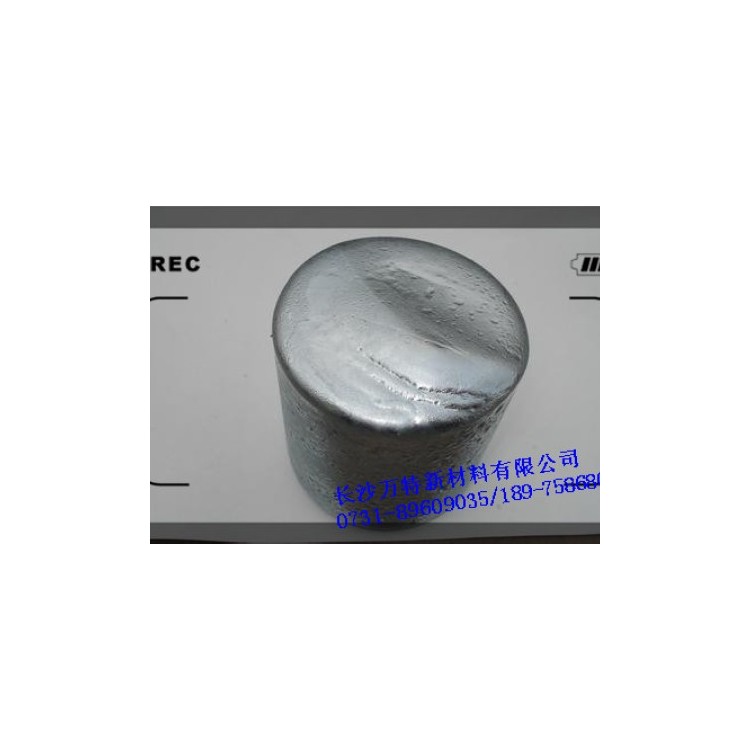
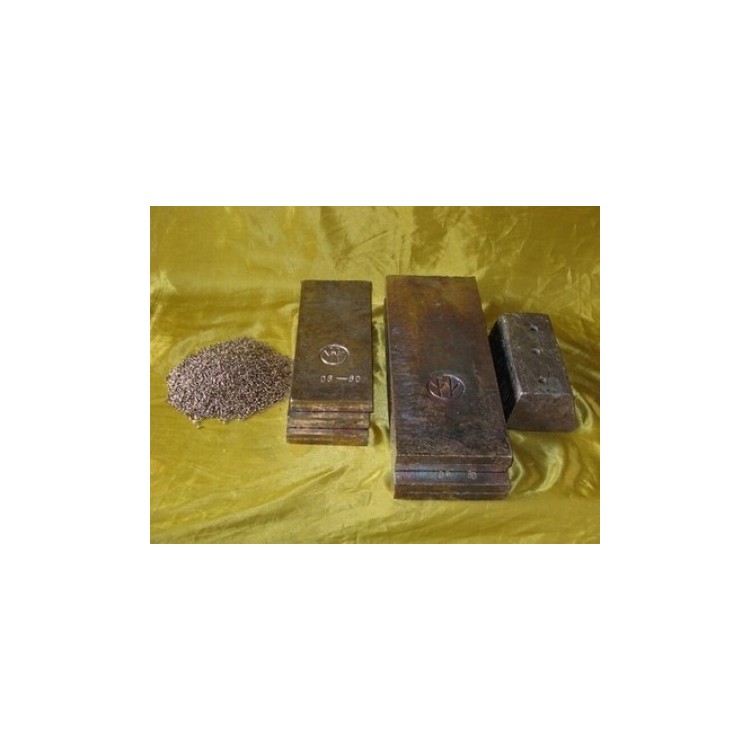
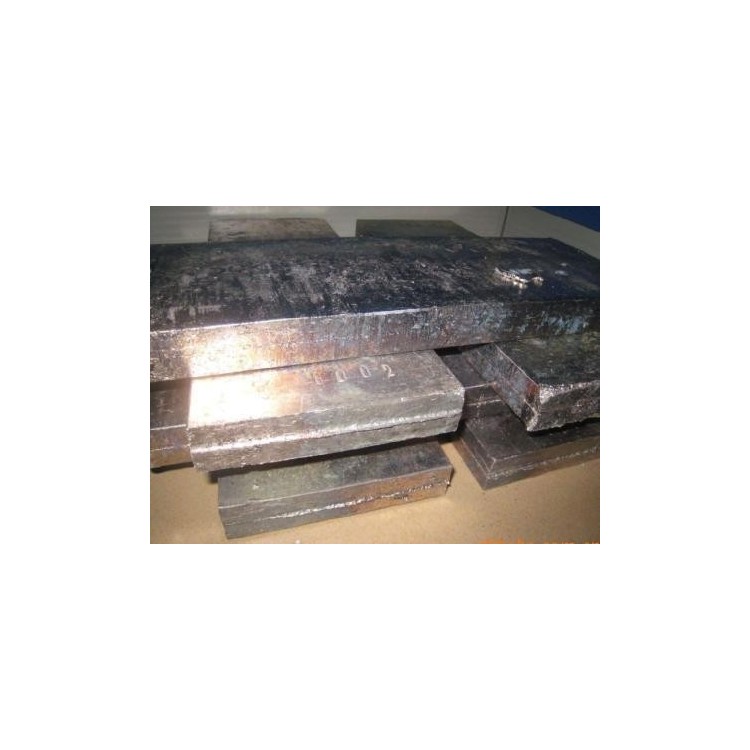
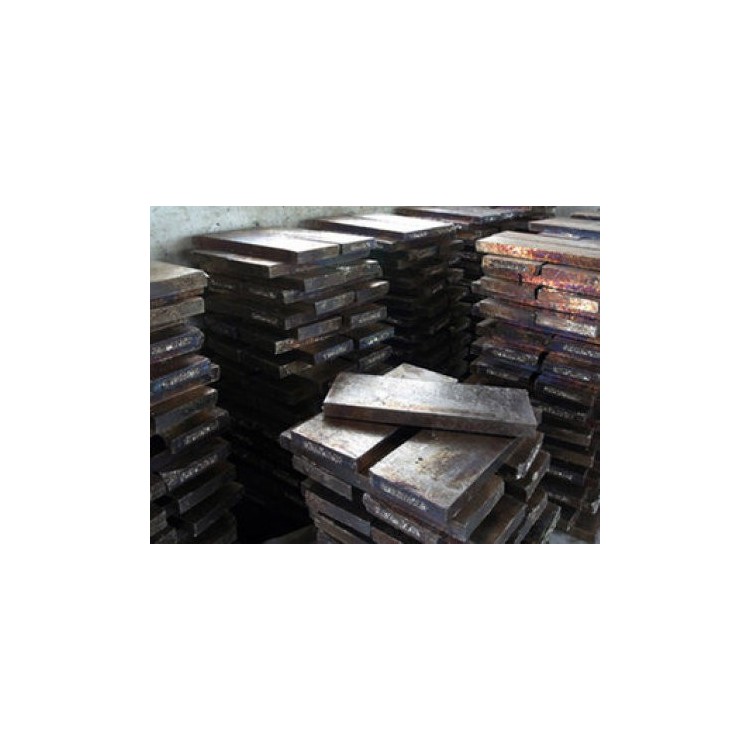
Product Name | MetalIndium ingots |
Appearance | Silver-white metal |
Specs | 500+/-50gEach ingot |
Molecular Formula | In |
Resistor | 8.37 mΩ cm |
Melting Point | 156.61℃ |
Boiling Point | 2060℃ |
Relative Density | d7.30 |
CAS No. | 7440-74-6 |
EINECS No. | 231-180-0 |
Indium is known as the "vitamin of alloys," and indium alloys can be used as soldering materials. Indium is an important new additive element for lead-free solders, and the global trend towards lead-free soldering is favorable for the application of indium solder alloys. The low melting point of indium alloys can also be utilized to produce special alloys, used in circuit protection devices of fire protection systems and thermal control devices of automatic control systems; bearing alloys made with a small amount of indium have a lifespan 4-5 times longer than that of general bearing alloys. Indium alloys can also be used in dental, steel, and non-ferrous metal corrosion-resistant decorative parts, and metalization of plastics.
Indium, with its strong corrosion resistance and reflective properties, can be used to make mirrors on warships or passenger ships. Indium is sensitive to neutron radiation and can be used as a monitoring dosage material in the atomic energy industry. Currently, the amount of indium used in the atomic energy industry is roughly comparable to its usage in the electronics industry.
Indium can act as an additive in lead-acid batteries and as a corrosion inhibitor in mercury-free alkaline batteries, enabling the batteries to become environmentally friendly products. The use of indium in preventing fogging layers is continually increasing. Initially used in the automotive manufacturing industry for its coating, it may eventually be widespread in industrial and civil construction. Sony Corporation of Japan has invented a new cathode that replaces scandium with indium, thereby reducing the cost of each electron to about one-tenth of that of scandium-coated electrons. Consequently, indium's application in televisions for high-power output and long life expectancy holds promising prospects.
In the optoelectronics field, indium and its compound semiconductors have a wide range of applications. Among the III-V compound semiconductors based on indium, such as InSb, InP, and InAs, InSb was the first to be researched and applied. InP, however, is highly valued and has promising applications, particularly in microwave to millimeter-wave communications, as a laser source for fiber-optic communications, and as a material for heterojunction solar cells, showing promising prospects for indium applications. InSb and InAs are also important in infrared detection and photomagnetic devices. In solar cells, indium compound thin films are emerging as a force to be reckoned with, thanks to their high conversion rates, low cost, and portability. Copper indium selenide (CIS) and other I-II-VI ternary compound thin film semiconductors, with their low cost, good performance, and simple processing, will be a significant direction for the development of solar cell industries in the future, driving increased indium usage in this field. The new industry centered around information technology has already taken off, with indium tin oxide (ITO) being a crucial material for all types of flat-panel displays. Currently, about 75% of the world's indium is consumed in this sector, and there is still much room for growth. Moreover, as the extraction and processing technologies for indium continue to improve and production costs decrease, the applications of indium are expanding further.
Indium is a silver-gray, extremely soft fusible metal. Melting point: 156.61°C. Boiling point: 2060°C. Relative density: d7.30. Liquid indium can wet glass and will adhere to surfaces it contacts, leaving black marks.
Indium has slight radioactivity, with two main isotopes: In-113 is a stable nucleus, while In-115 undergoes β-decay. Therefore, direct contact should be avoided as much as possible during use.
Ingot indium, due to its strong light penetration and conductivity, is mainly used in the production of ITO targets (used for producing LCDs and flat screens). This application is the primary consumption field for indium ingot, accounting for 70% of the total indium consumption.
The next few consumer sectors are: the electronics semiconductor field, accounting for 12% of consumption; the solder and alloy field, also taking up 12%; and the research industry, accounting for 6%. Additionally, due to its softer nature, it is also used for filling gaps in industries requiring metal filling, such as vacuum gap filling materials at higher temperatures.
Medically, indium colloids are used for liver, spleen, and bone marrow scans. Indium-DTPA is used for brain and kidney scans. For lung scans, indium-Fe(OH)3 particles are employed. Placental scans utilize indium-Fe-ascorbic acid. Liver blood pool scans are done using indium-transferrin.
Gallium and Indium Alloys compoundedLiquid MetalA solid solution alloy is formed, which becomes liquid at room temperature with a surface tension of 500 millinewtons per meter. This means that, without any external force, when the alloy is placed on a flat surface, it maintains a near-spherical shape. Upon the application of a small amount of current, the surface tension of the sphere decreases, and the metal stretches across the surface. If the charge changes from negative to positive, the liquid metal reverts to a spherical shape. Adjusting the voltage can also modify the metal's surface tension and viscosity, allowing for different structural transformations. This research can also be applied to help repair severed human nerves, preventing long-term disability. Researchers claim that this breakthrough aids in the construction of circuits and self-healing structures.