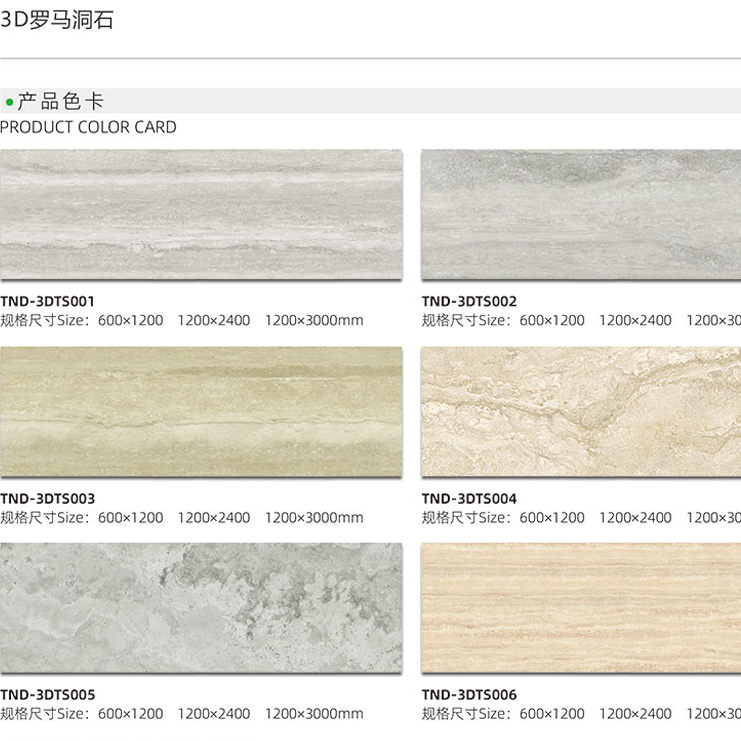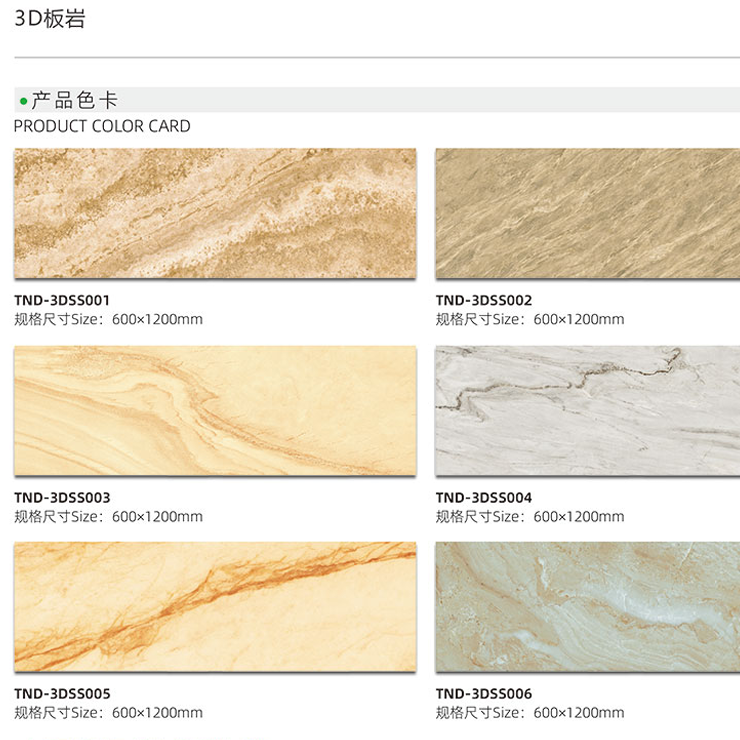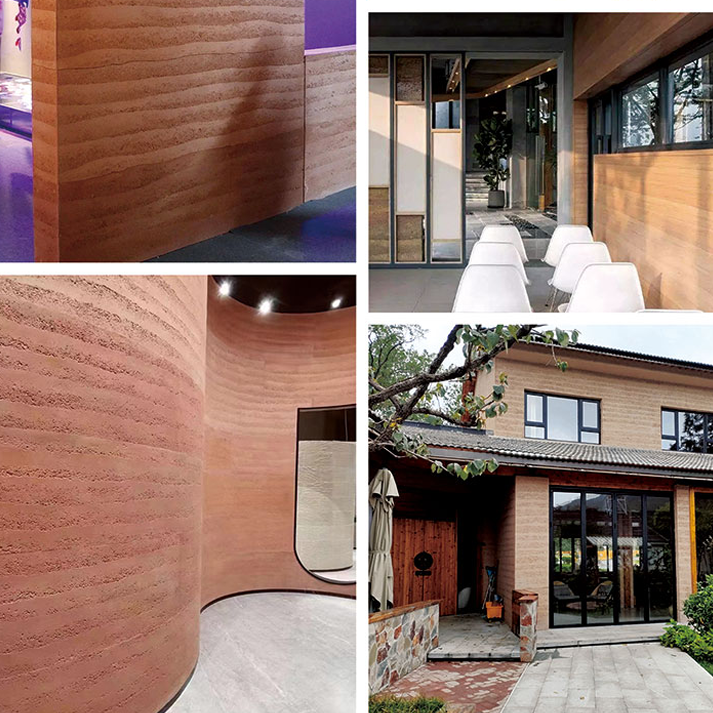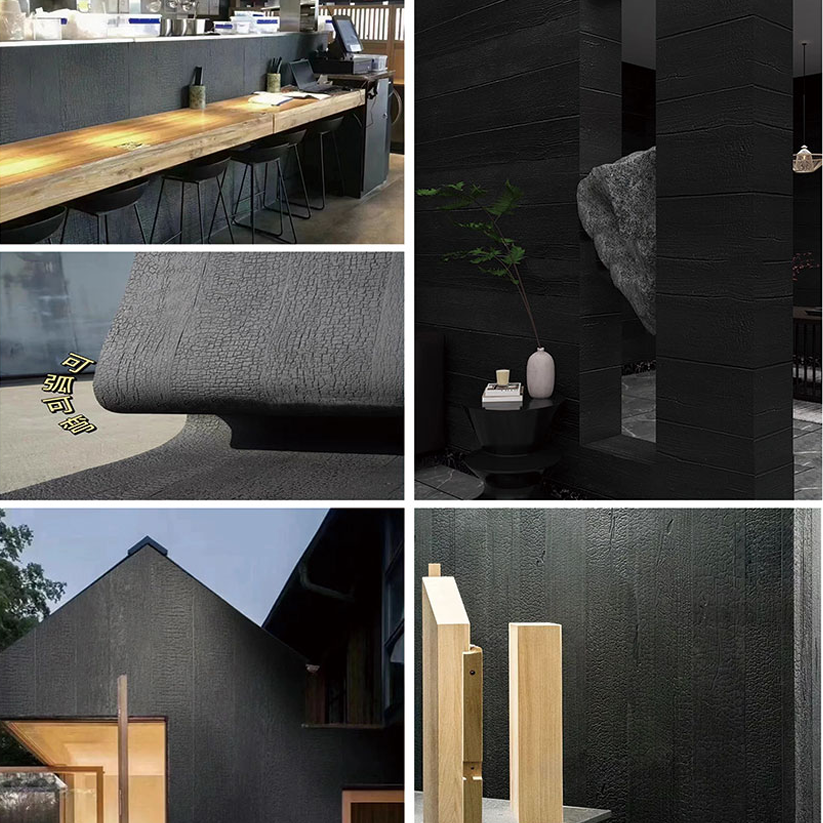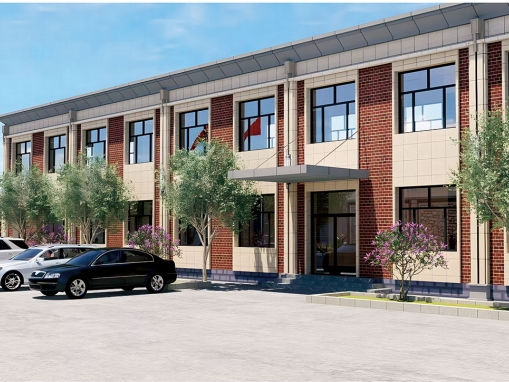




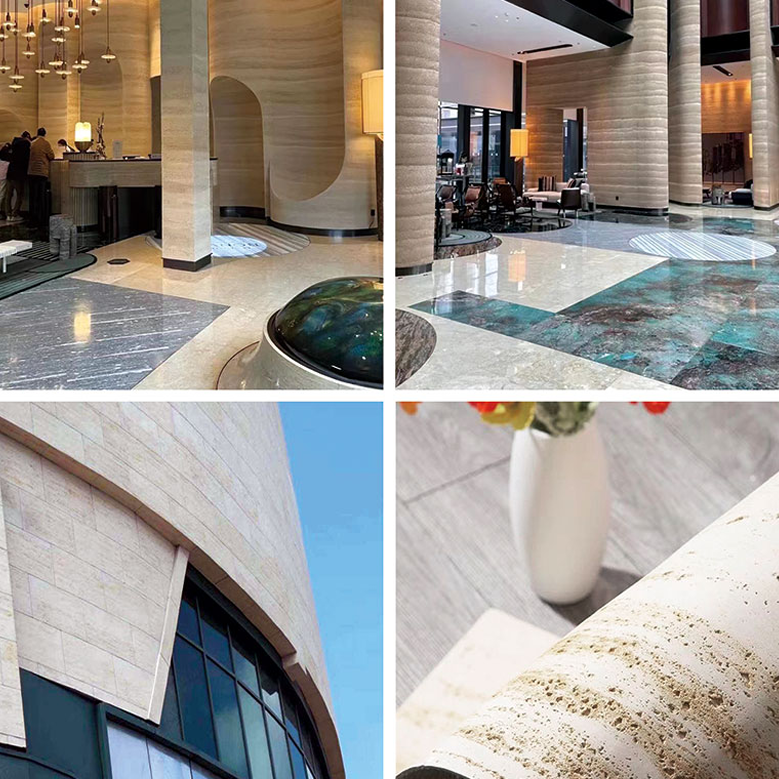





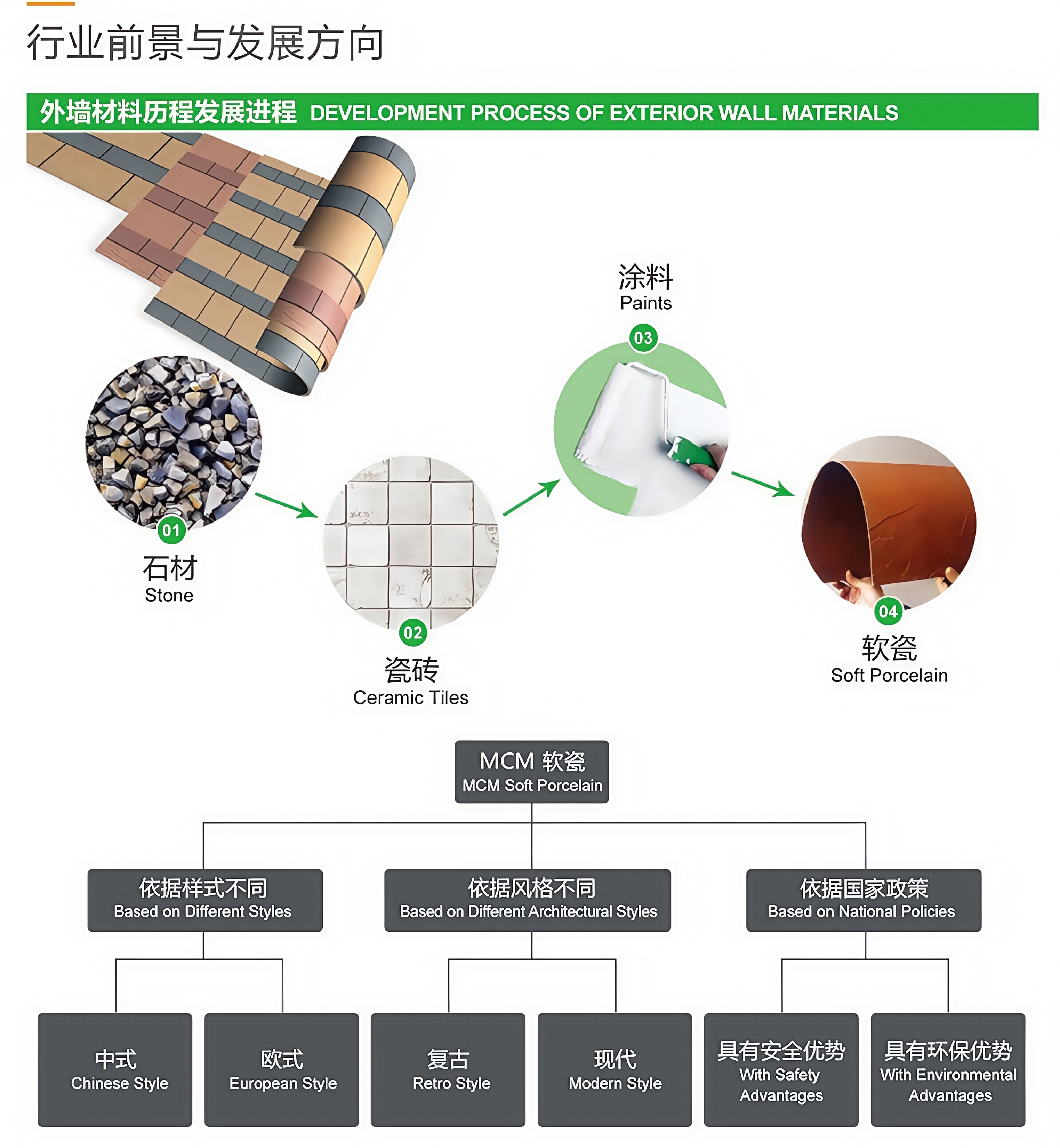
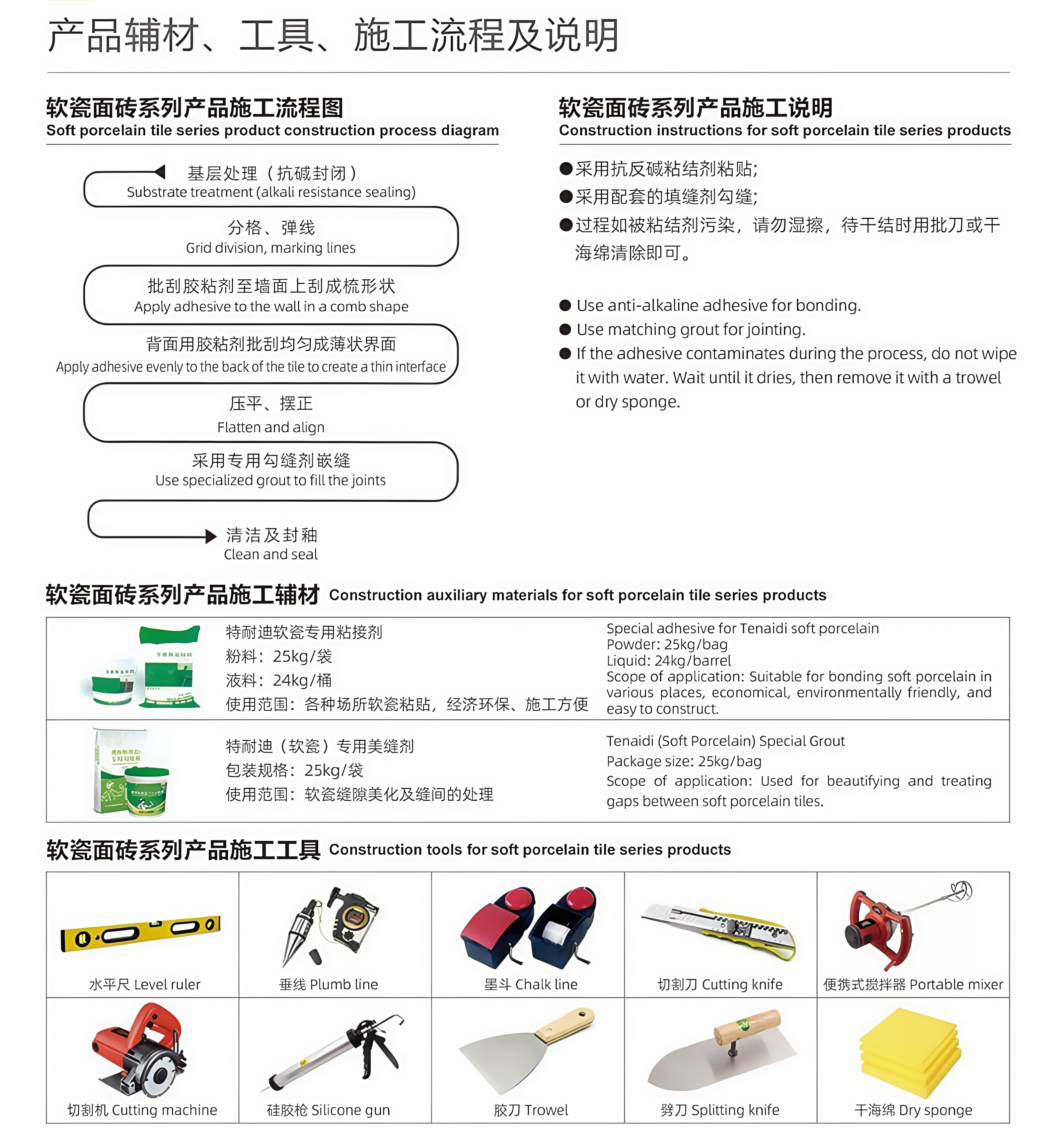
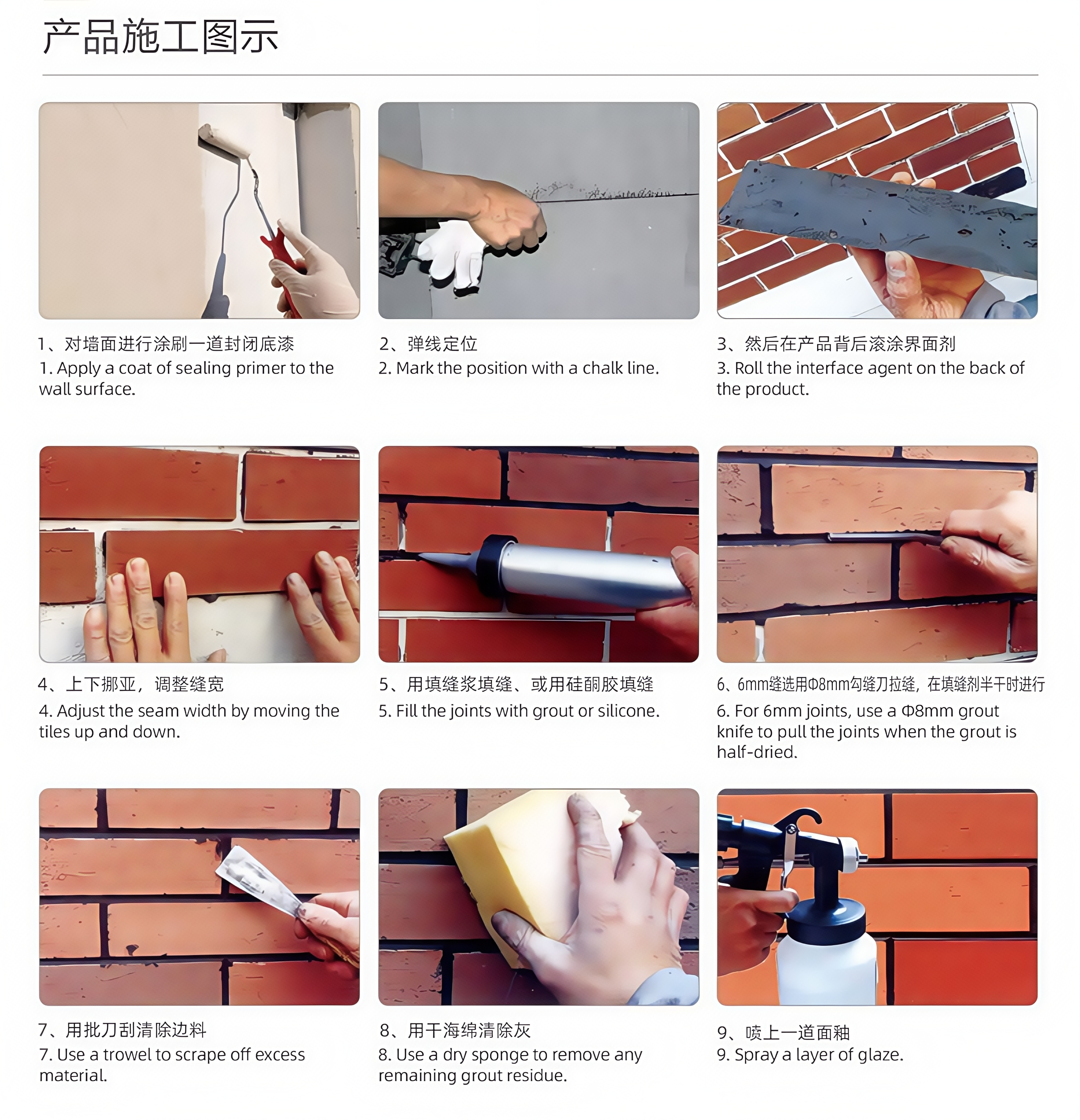
 China is experiencing rapid economic development and urbanization, with newly added building area reaching 1.6 to 2 billion square meters annually. Building energy conservation has become a key focus of China's energy-saving efforts. As the pace of urbanization accelerates, the number of buildings is increasing: the total area of existing buildings exceeds 40 billion square meters, with an additional 30 billion square meters expected to be added by 2030. 99% of existing buildings are non-energy-efficient, and due to the country's high emphasis on building thermal insulation and energy conservation, they require energy-saving renovations. With the light weight, significant energy-saving effects, minimal damage to building structures, cost reduction, and non-impact on usage during renovations, external wall thermal insulation systems have become the primary method for building energy conservation. The surface layer of the external thermal insulation system also requires materials for protection and decoration, with the decorative materials needing to be flexible, well-compatible with the thermal insulation system, and have excellent breathability. In this field, the market still lacks products that excel in performance, cost, and environmental protection. With the further development of China's economic buildings, the external wall decorative materials have made significant progress in recent years, increasingly becoming an important indicator of the national standard of living. MCM soft ceramic, as an important type of new external wall decorative material, not only can be used for special occasions and decorative requirements on both interior and exterior walls but also is an important part of external wall protection and decoration.
Technical Description:
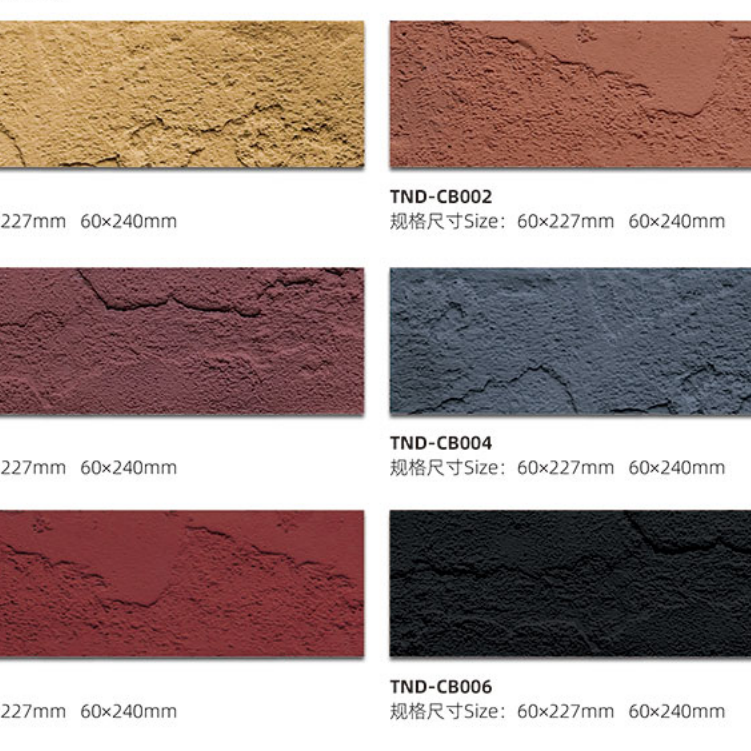
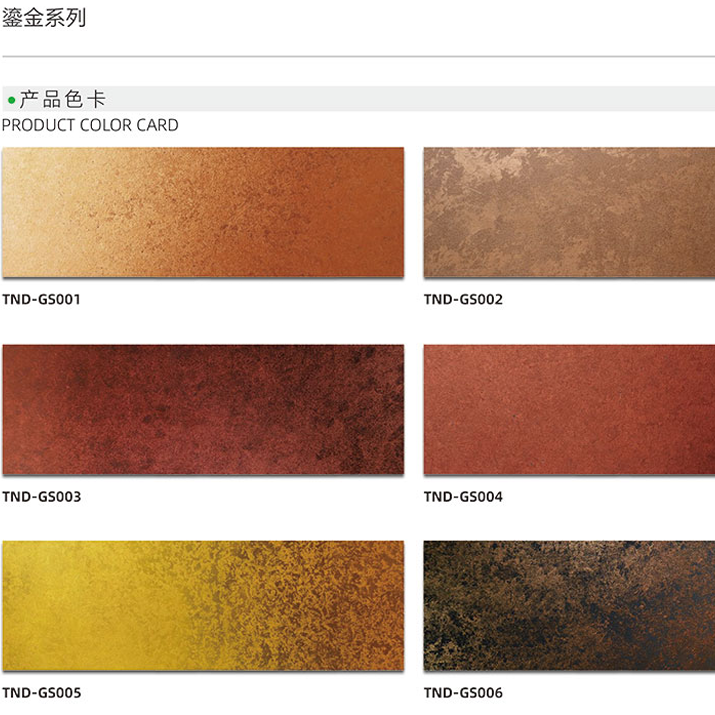
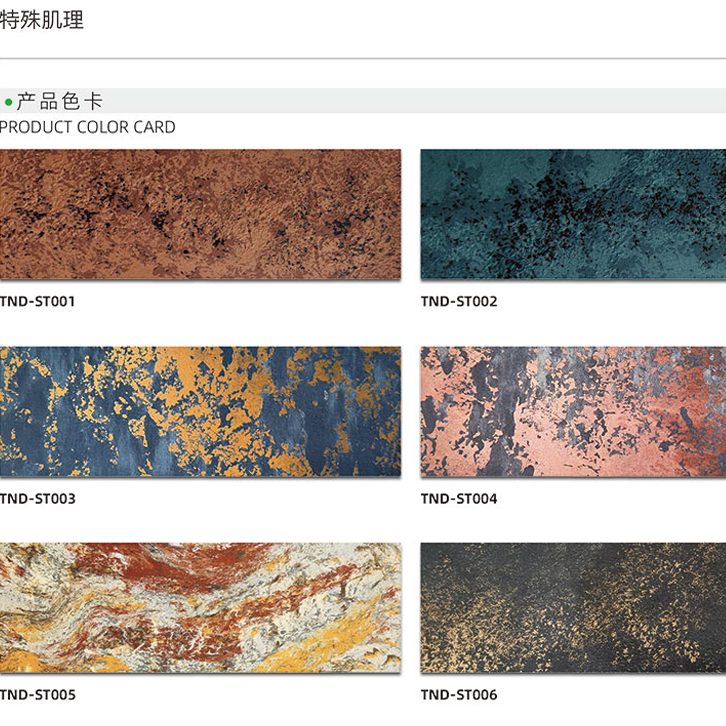
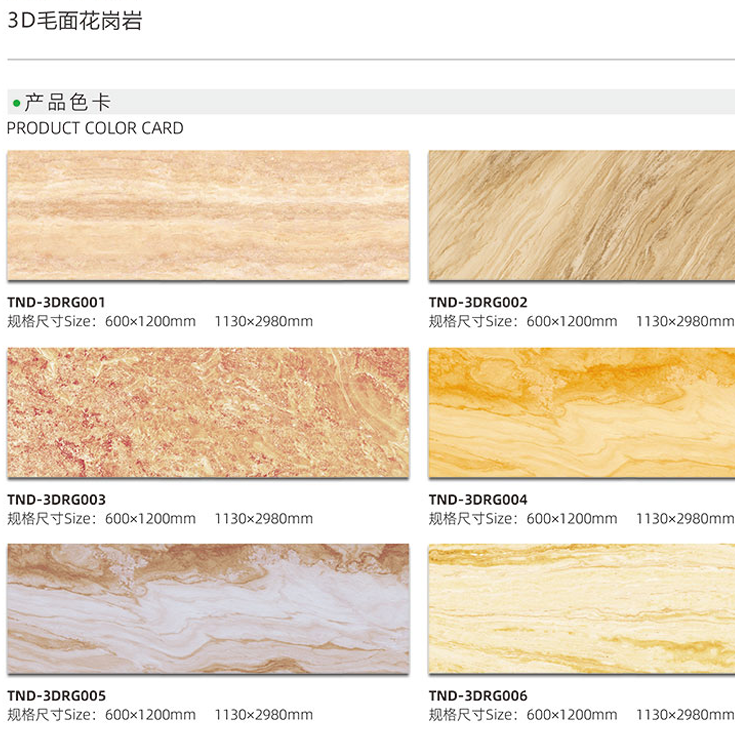
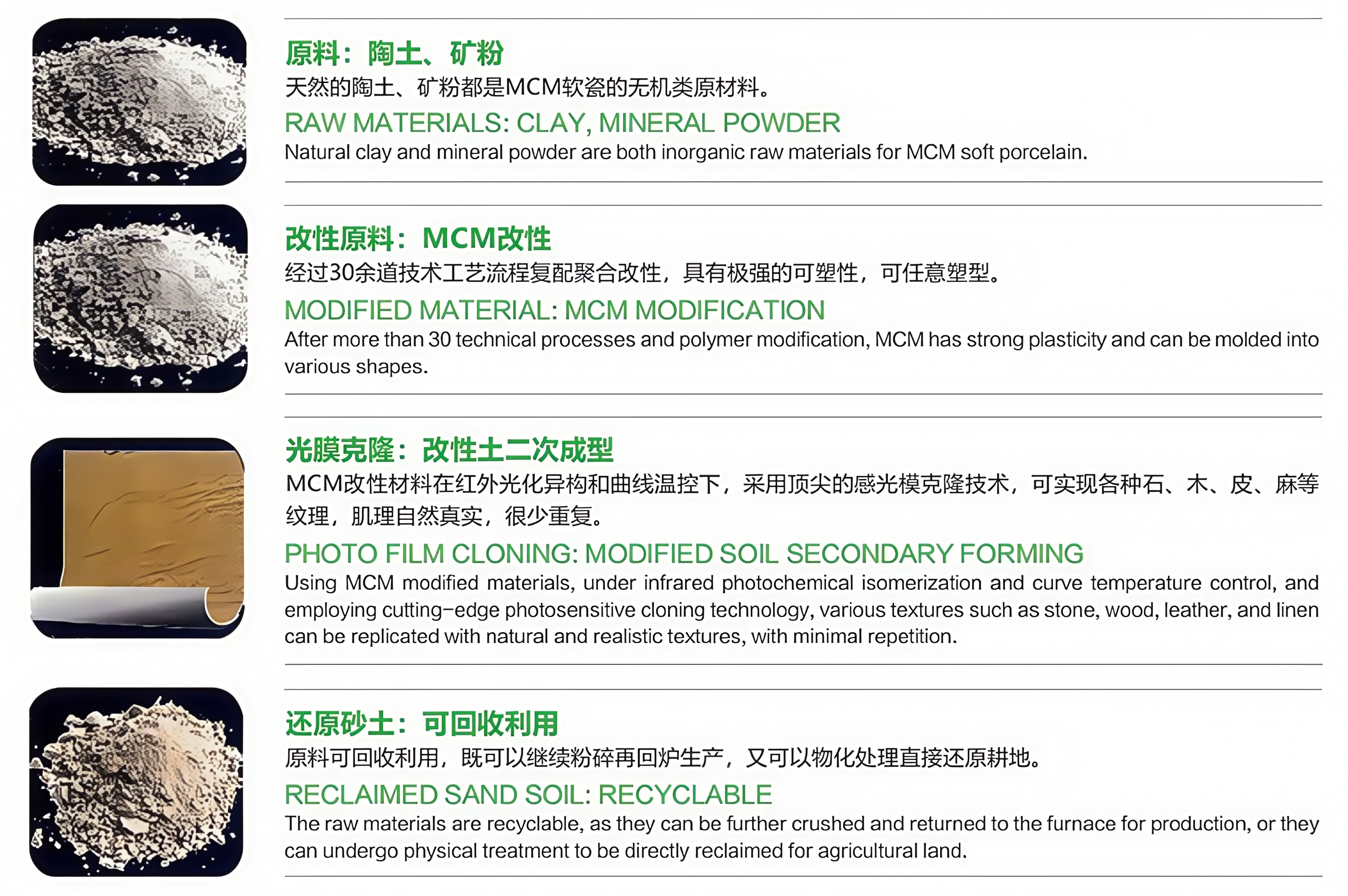
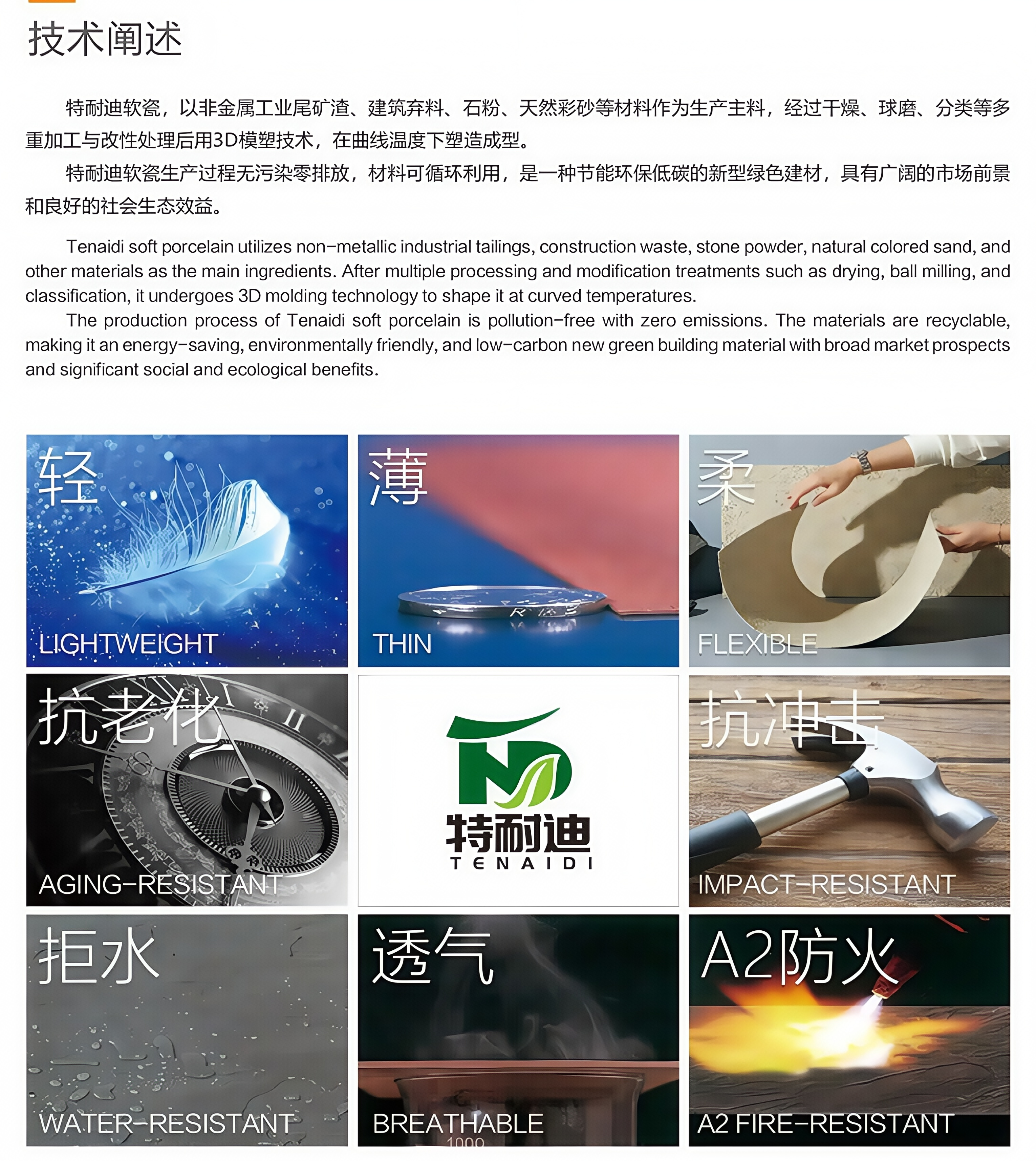
Ternady Soft Tile, made primarily from non-metallic industrial tailings, construction waste, stone powder, and natural colored sand, undergoes a multi-step process including drying, ball milling, and classification. It is then shaped into form through 3D molding technology at a curved temperature.
The production process of TenaDi Soft Tile is pollution-free and zero-emission, with materials that are recyclable. It is a new type of green building material that saves energy, protects the environment, and reduces carbon emissions, boasting broad market prospects and excellent social ecological benefits.