










Product Description
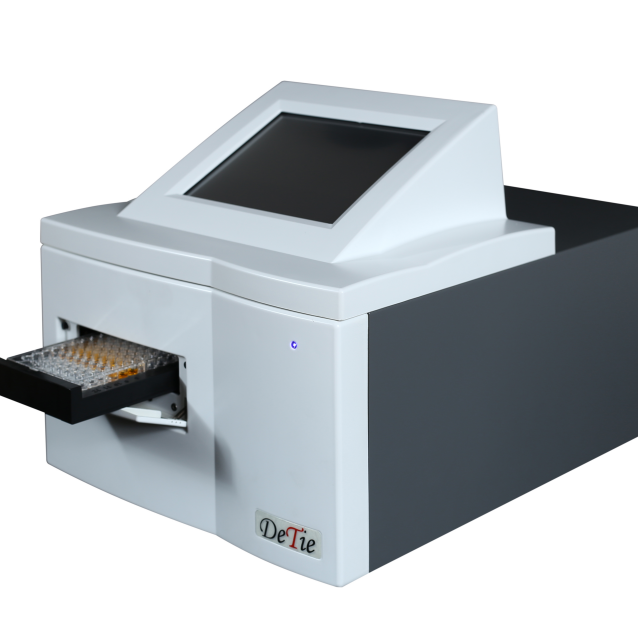
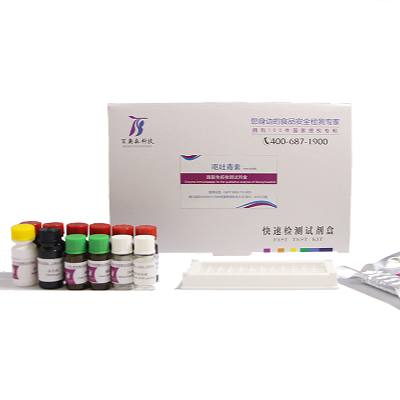
HBS-6096A Fungal ToxinEnzyme-linked immunosorbent assay detector(ELISA)Testing technology, applicable with 48T or 96T test kits for qualitative or quantitative analysis. Primarily used for detecting the content of fungal toxins such as aflatoxin B1, aflatoxin M1, zearalenone, vomitoxin, T2 toxin, ochratoxin, etc., in various feed, feed raw materials, dairy products, oils, and other sample types.
Product Features
Industrial-grade color LCD display, touch screen operation
Eight-channel fiber optic measurement system, imported detector
Three linear vibration plate functions, adjustable speed and time
Wide voltage input design, suitable for global voltages
Unique Open-Ended Cut-Off Judgment Formula, Set as You Choose
End-point method, two-point method, dynamics, single/dual wavelength testing mode
Specific mycotoxin measurement methods, rapid detection for mold toxins in food, feed, etc.
HBS-6096 Full Product Line, suitable for Deutsche Bahn AGThree yearsWarranty Service Standards
Key Technical Parameters:
Light Source: Imported Halogen Lamps, Energy-Saving Design
Measurement Channels: Vertical 8 optical paths.
Wavelength Range: 400 - 900 nm
Standard Filters: Includes four standard filters at 405, 450, 492, and 630nm, with additional wavelengths available upon request. Maximum capacity of 15 filters.
Reading Range: 0.000 - 4.000 Abs (405nm)
Linear Range: 0.000 - 3.000 Abs (405nm)
Repeatability: CV ≤ 0.3%
Stability: ≤±0.003 Abs
Indication Error: ≤±0.01 Abs
Wavelength Error: ≤±2nm
Resolution: 0.001Abs (Display, Printing), Internal Calculation 0.0001Abs
Vibration Plate Function: 3 levels of vibration plate strength (from weak to strong) available, vibration time adjustable from 0 to 255 seconds, ±2 seconds error
8-inch color LCD display, touch screen input
Power Input: Wide Voltage Design AC100V-240V 50-60Hz
Product Quality: Approximately 11 Kg
Dimensions: 433mm (L) x 320mm (W) x 308mm (H)
Common methods for mycotoxin detection
1. Thin-layer chromatography
The TLC method involves extracting mycotoxins from different samples using appropriate solvents, purifying them through column chromatography, and then separating them on a thin-layer plate. By utilizing the fluorescence of mycotoxins, the content is determined by comparing the intensity of the fluorescence spots to standards. The pre-treatment of samples in the TLC method is cumbersome, and the extraction and purification are not ideal, with a high level of impurities in the extract that can affect the fluorescence intensity of the spots during development.
Section II: Chromatography Method
Chromatography methods, including thin-layer chromatography, gas chromatography, and liquid chromatography, have always been significant chemical analysis techniques for mycotoxins. Currently, liquid chromatography remains the most common method for analyzing mycotoxins, including liquid chromatography-mass spectrometry. This method is rapid and accurate, but requires expensive equipment, limiting its use to professional testing institutions for research, investigation, and monitoring purposes. It has not been widely adopted in enterprises and at the grassroots level, and its lagging effects significantly reduce its guidance for production practices.
Section 3: Immunochemical Detection Method: (Enzyme-Linked Immunosorbent Assay)
Immunological detection methods are biochemical analyses established based on the selective reactions between antibodies and antigens or haptens. They typically offer high selectivity and extremely low detection limits, and are widely used in the determination of various antigens, hapten, or antibodies. Generally, they can be categorized into non-radioactive immunological methods such as fluorescence immunology, luminescent immunology, immunoassays, and electrochemical immunology, as well as radioactive immunology. Among these, the enzyme-linked immunosorbent assay (ELISA) and colloidal gold immunoassay are the most commonly applied in feed mycotoxin detection.
Immunological testing methods, due to their rapidity, sensitivity, accuracy, quantifiability, ease of operation, non-requirement for expensive equipment, and low purity requirements for samples, are suitable for enterprises such as feed mills, grain and oil/food processing plants, and farms for raw material or finished product testing, as well as for on-site inspections by industrial and commercial quality supervision departments.













