








Dust removal equipment:
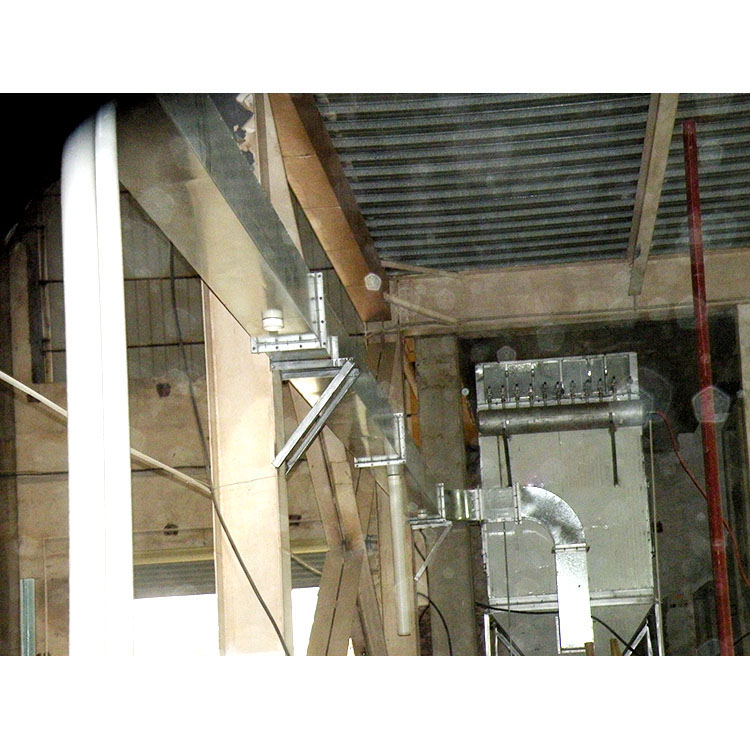
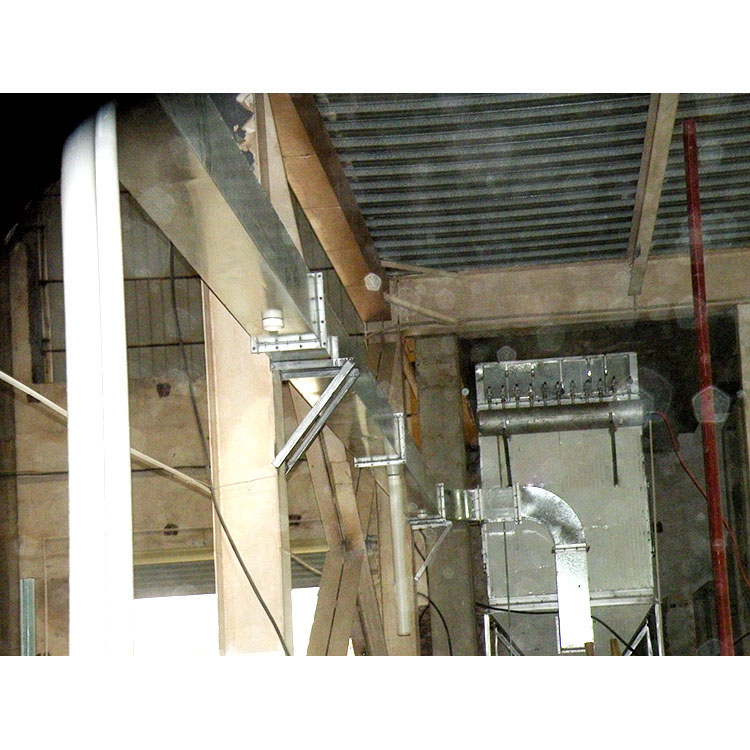
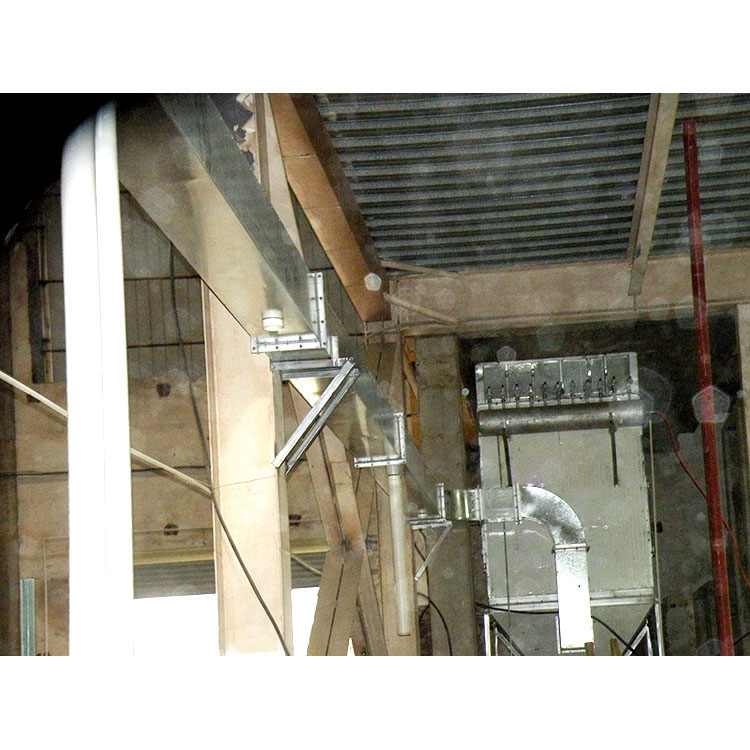
1. Bag Dust Collector: The bag dust collector is a dry dust removal device. It is suitable for capturing fine, dry, and non-fibrous dust. The filter bags are made of woven filter fabric or non-woven felt, using the filtering effect of fiber fabrics to filter dusty gases. When dusty gases enter the bag dust collector, particles with large size and high density settle to the bottom due to gravity, falling into the ash hopper. Gases containing finer dust are retained by the filter material as they pass through, resulting in purified gas.
Working Principle
The dust removal equipment includes bag filters and granular bed filters. The former typically uses filter bags made of organic or inorganic fiber fabrics as the filtration layer, while the latter employs a filtration layer composed of particles of various sizes, such as quartz sand, river sand,陶粒 (ceramic beads), slag, graphite, carbon black, and ultrafine powder, etc.
With the repeated attachment of powder to the outer surface of the filter bag, the powder layer continues to thicken, causing the resistance value of the bag dust collector to increase accordingly; upon receiving a command, the diaphragm of the pulse valve opens during the submersion on both sides, allowing compressed air from the high-pressure air tank to flow through. If there is no dust or it is reduced to a certain extent, the mechanical cleaning operation will cease.
The bag dust collector's main body structure is composed of the upper housing, middle housing, lower housing (ash hopper), cleaning system, and discharge mechanism, etc.
The performance of a bag dust collector depends crucially on the correct selection of filter bag material, as well as the cleaning system, which plays a decisive role. The cleaning method is one of the distinguishing features of a bag dust collector and a crucial aspect of its operation. It is a medium-efficiency dust collector suitable for purifying high-temperature烟气, and is a widely used type, often applied in boiler烟气dust removal, multi-stage dust removal, and pre-dust removal. Its main drawback is the relatively low efficiency in removing fine particles (less than 5μm).
2. Cyclone Dust Collector: A type of dust removal equipment, the cyclone dust collector operates by causing the dusty air stream to rotate, separating and trapping dust particles on the wall of the collector with the help of centrifugal force. Gravity then assists in depositing the dust particles into the ash hopper.
3. Water Film Dust Collector: Dusty gas is introduced into the lower part of the body in a tangential direction, rotates and rises. Dust particles are separated by centrifugal force and thrown to the inner wall of the cylinder, where they are adsorbed by the water film layer flowing on the inner wall of the cylinder, and then flow to the bottom cone with the water stream, and are discharged through the dust outlet. The formation of the water film is achieved by several nozzles arranged at the upper part of the cylinder, which spray water tangentially to the wall. This way, a thin, rotating downward water film is always covered on the inner wall of the cylinder, aiming to enhance the dust removal efficiency. This wet-type dust collector has a simple structure, low metal consumption, and low water consumption. However, its drawbacks include a high height, difficulty in arrangement, and the phenomenon of water carryover observed during actual operation.