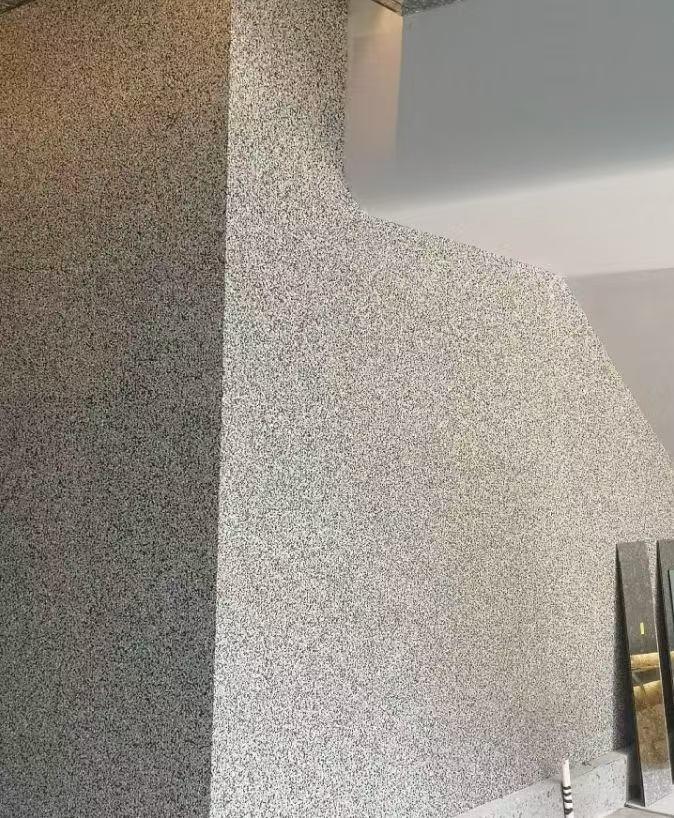

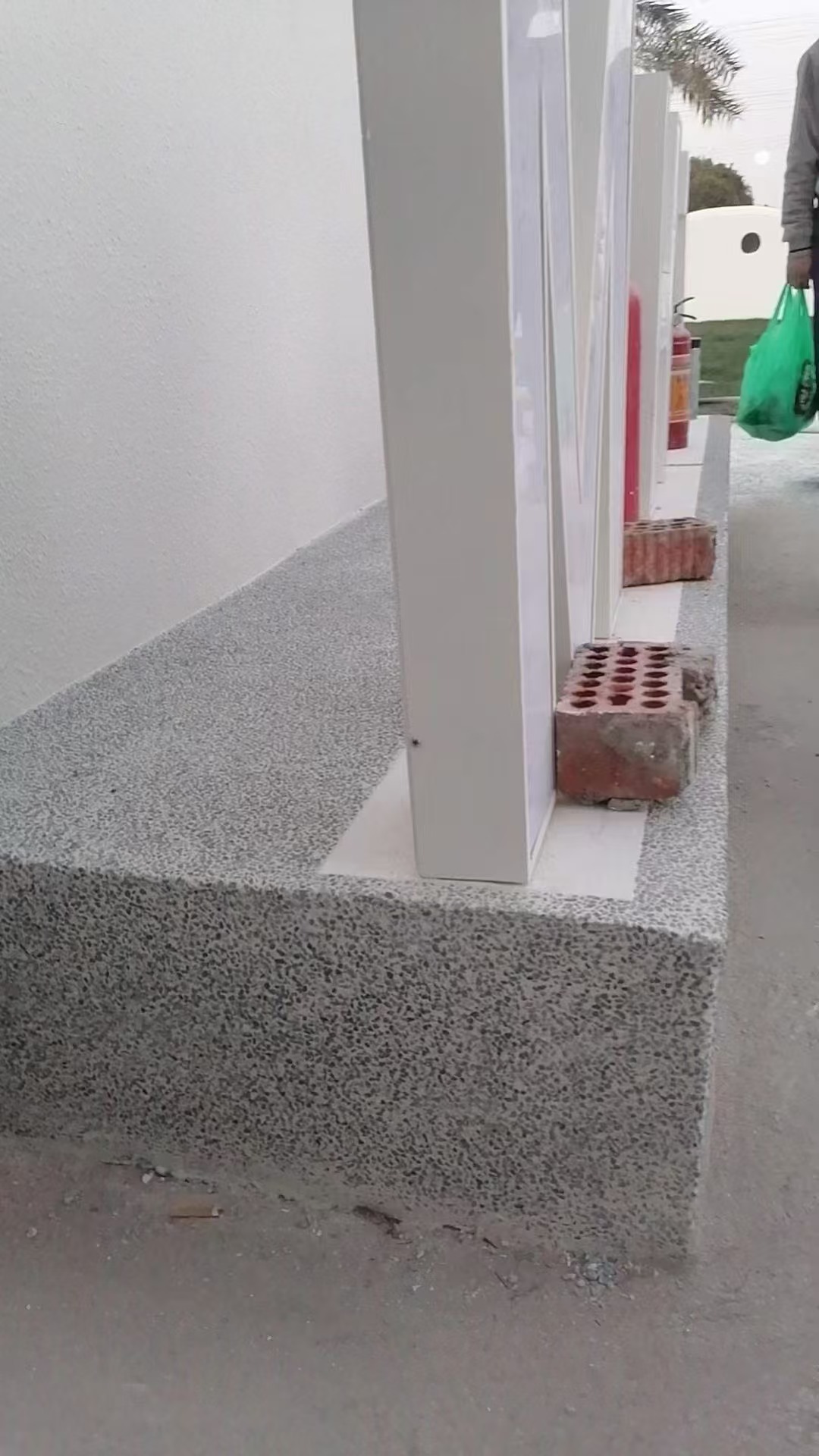


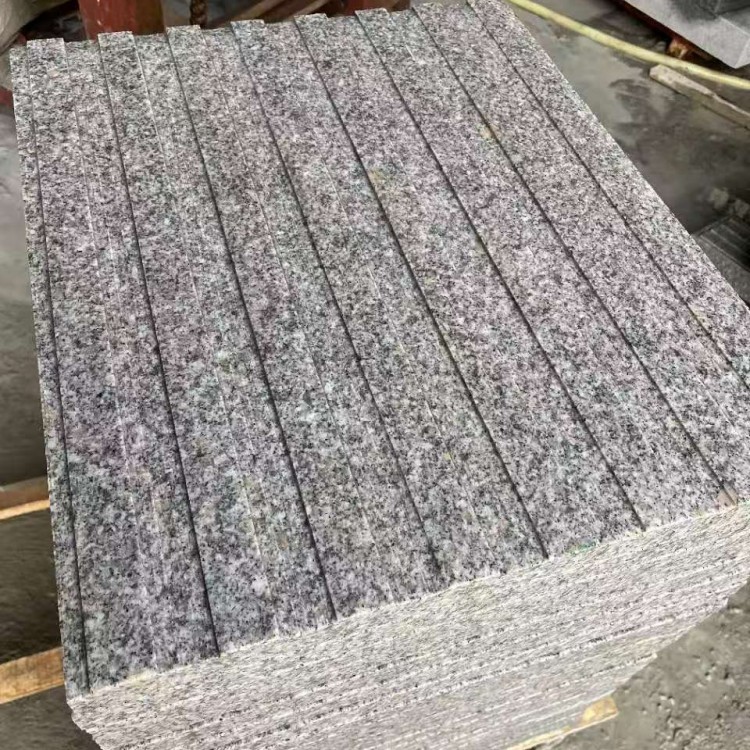













Water-washed stone involves a mixture of cement and aggregates. After leveling and quick drying, the cement on the surface of the aggregates is washed away, revealing the aggregate surface. This technique, which has become increasingly common in recent years, is essentially similar to the sandblasting method used in the 1960s. While wall construction can be more challenging, quality is easily ensured. Groundwork, on the other hand, is less difficult but prone to cracking and localized settling. Therefore, it is crucial to ensure the stability of the foundation in design and construction. Reinforced concrete foundation slabs may be necessary, and it is generally recommended to set settlement joints every 5 to 6 meters.

Water-washed stone construction requirements1. Washed stone is uniformly mixed and fixed with original color cement, using slag cement with a strength of 32.5N or higher, or common Portland cement.2, Optimal particle size is 5-8mm, with clay content not exceeding 1%.3. Prior to large-scale application of water-washed stone, a sample should be made to determine the mix ratio and construction technique.

Process of washed stone
1. Clear the grassroots level:
Clean the dust, grease, and debris from the base. If uneven, level it; wash the grease with a 10% lye solution and let it dry.
2. Apply base mortar layer:
Apply a base coat of cement slurry, applying the undercoat mortar in layers; level the undercoat mortar with a straightedge and roughen it with a wooden trowel. After the mortar has set, water it for curing.
3. Stipple finish surface layer
Apply a coat of plain cement mortar, then apply the aggregate mortar in two layers. The finish should be 1mm higher than the sides of the ground. Subsequently, flatten and compact the aggregate mortar layer.
4. Maintenance and Care:
Dip the brush in water, brush off the surface mud, recompact and smooth it, repeating the process 3 to 4 times; once the surface is clean and the stones are exposed, rinse with clean water and seal it, assigning a dedicated person for maintenance. If mud residue is found on the stone surface, use oxalic acid to scrub it clean, ensure timely dilution and disposal into the drain, not into the green areas.

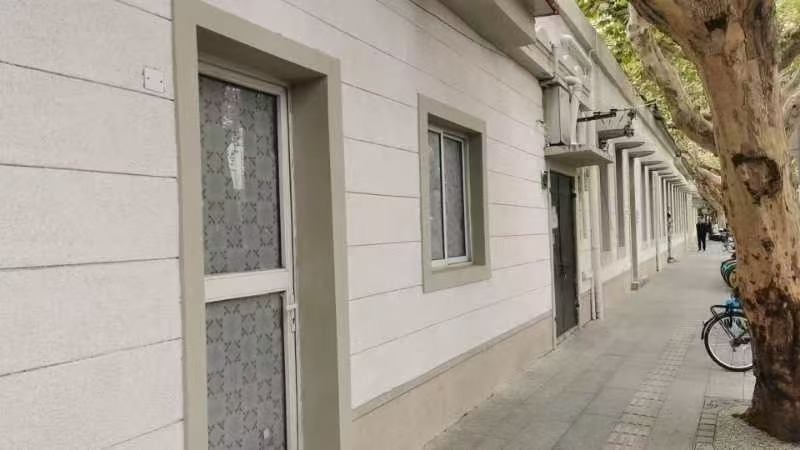
Water-washed stone is a construction technique that has become increasingly popular in recent years. It primarily involves mixing natural river or sea pebbles or gravels with cement in proportion and applying the mixture to the base layer. After being flattened with a load-bearing tool, the surface adhesives are treated to reveal the original appearance of the stones. Due to the diverse colors and shapes of its raw materials, it can be used to decorate various patterns and designs. It is applied in both indoor decoration and outdoor landscape shaping. Some large-area exterior wall renovations also use water-washed stone, conveying a sense of natural simplicity.