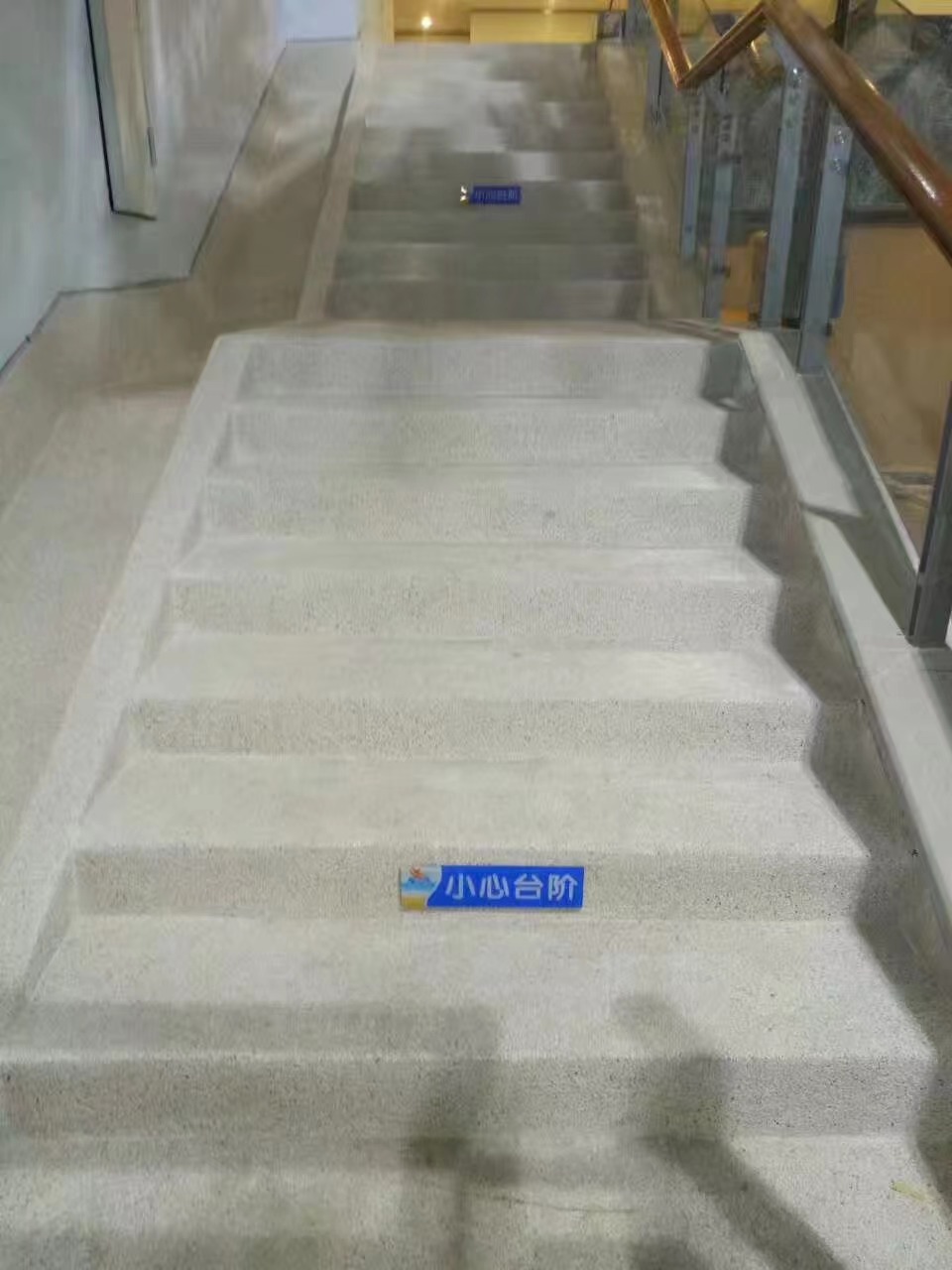

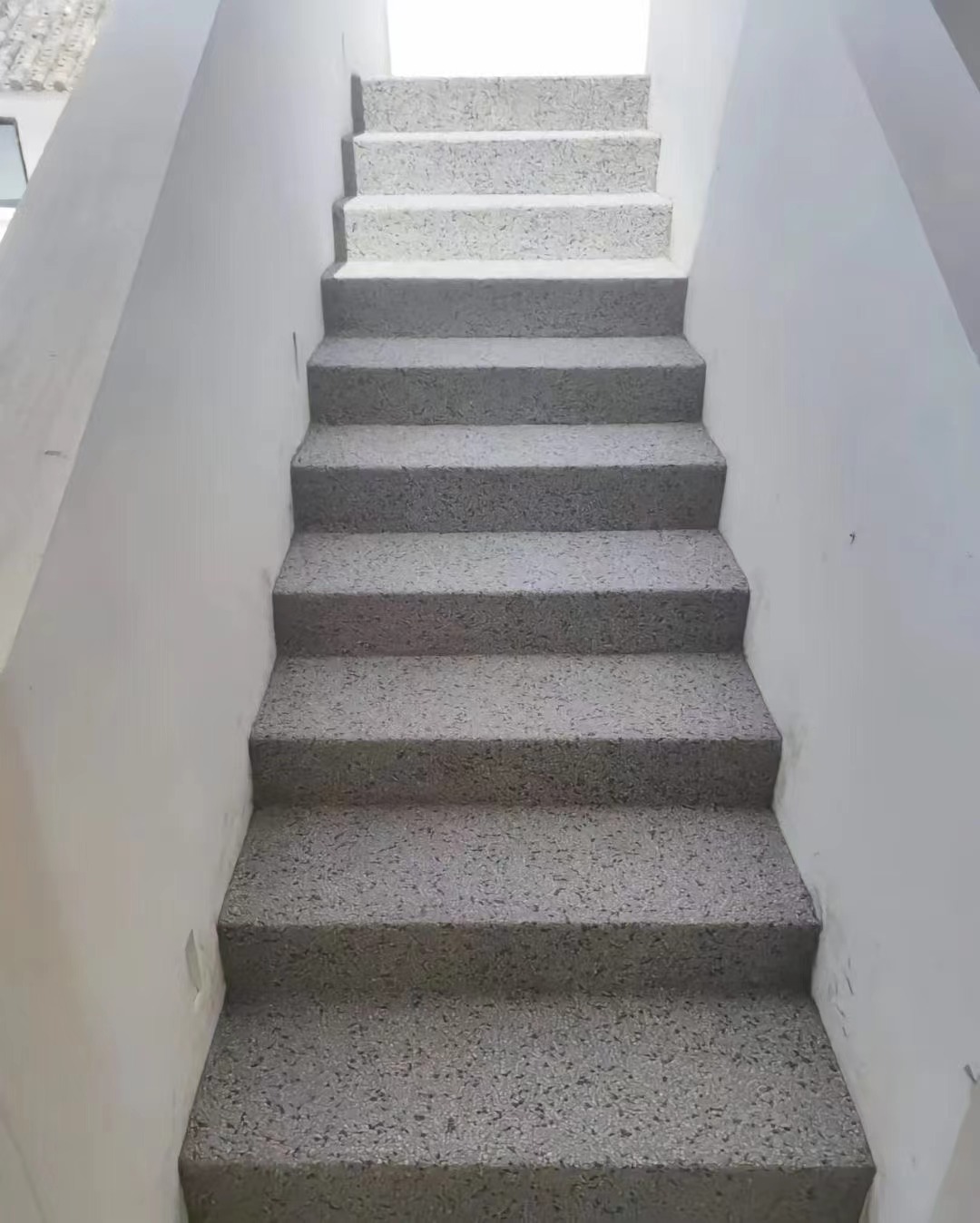
















Water-washed stone is a construction technique that has been increasingly popular in recent years. It primarily involves mixing natural river or sea pebbles or gravels with cement in a certain proportion, applying the mixture to the base, flattening it with a load-bearing tool, and then treating the surface adhesive to reveal the original appearance of the stones.

Due to the various colors and shapes of its raw materials, it can be used to create a wide range of patterns and designs, making it extensively applied in interior decoration and outdoor landscape shaping. Some large-area exterior wall finishes also use water-washed stone, exuding a natural and simple feel.

1. Before construction, clean the subgrade by removing dirt and debris, which is done by rinsing with water.
2. Transport the washed stone mixture, stirred by the mixer, to the site.
3. Spread the washed stone mixture evenly, slightly elevated above the curbs on both sides.
4. After laying is complete, use a sturdy, straight wooden ruler to level the surface.
5. Level the road surface with an iron trowel until cement float is visible.
6. Remove cement float from the pavement with an absorbent sponge, applying even pressure with your hand.
7. Paving completed

Protective Maintenance:
To maintain the road surface during hot weather, it's necessary to water and care for it on an irregular basis. After 3 to 5 days, depending on the need, cutting and sealing can be performed. If required, a sealing protective agent can be sprayed and brushed for a brighter and shinier finish (based on road safety and anti-slip requirements). During the maintenance stage, it is mandatory to prohibit unauthorized entry or construction activities of other projects.