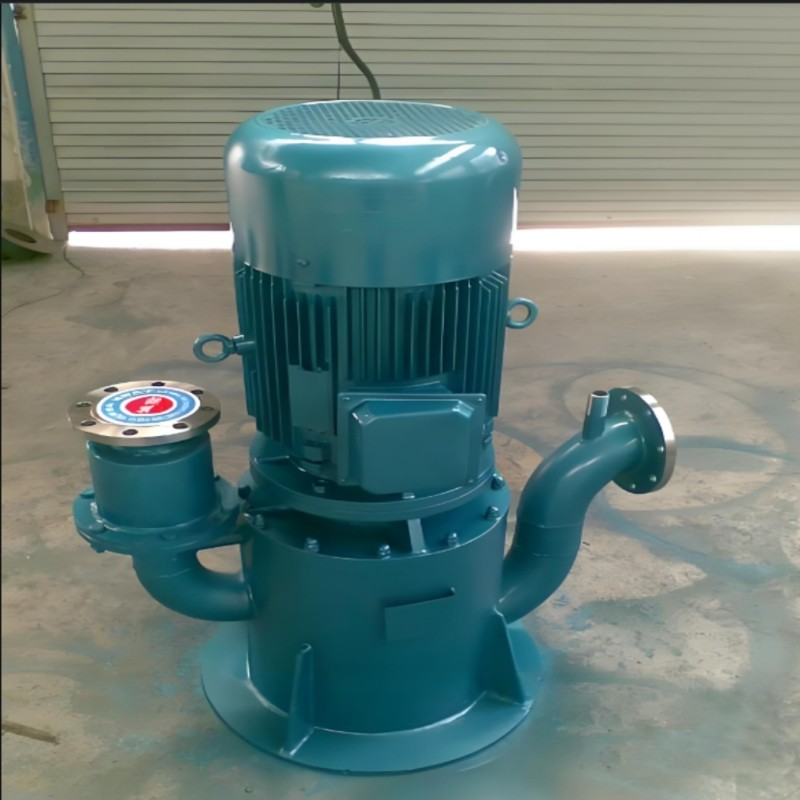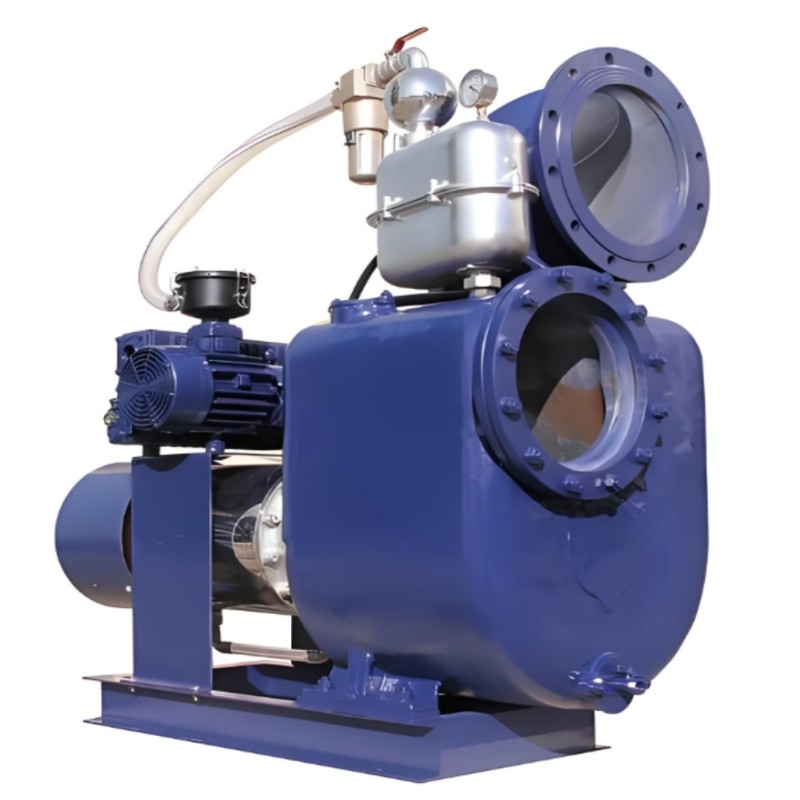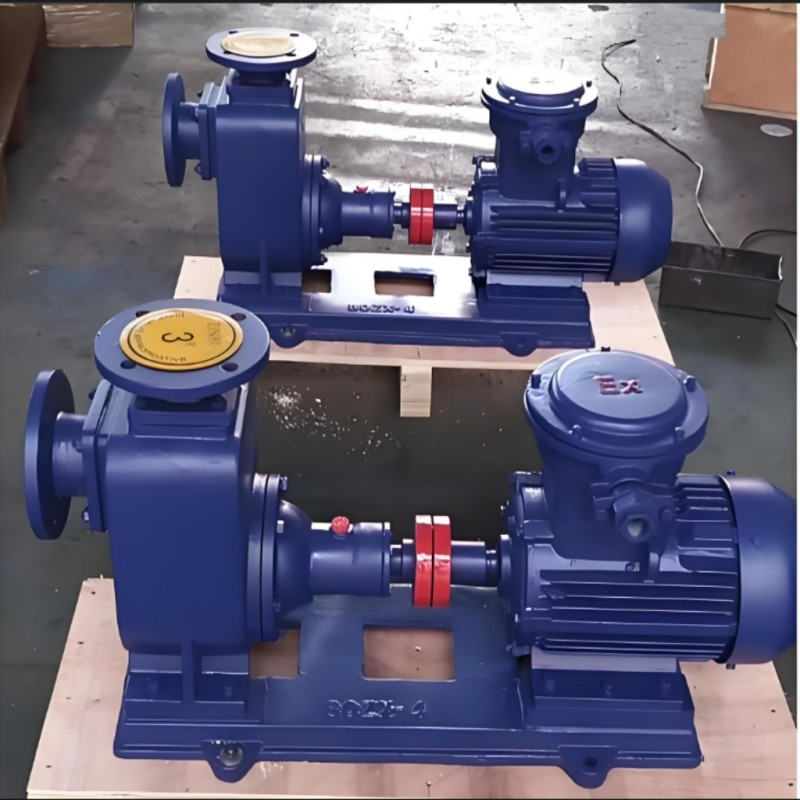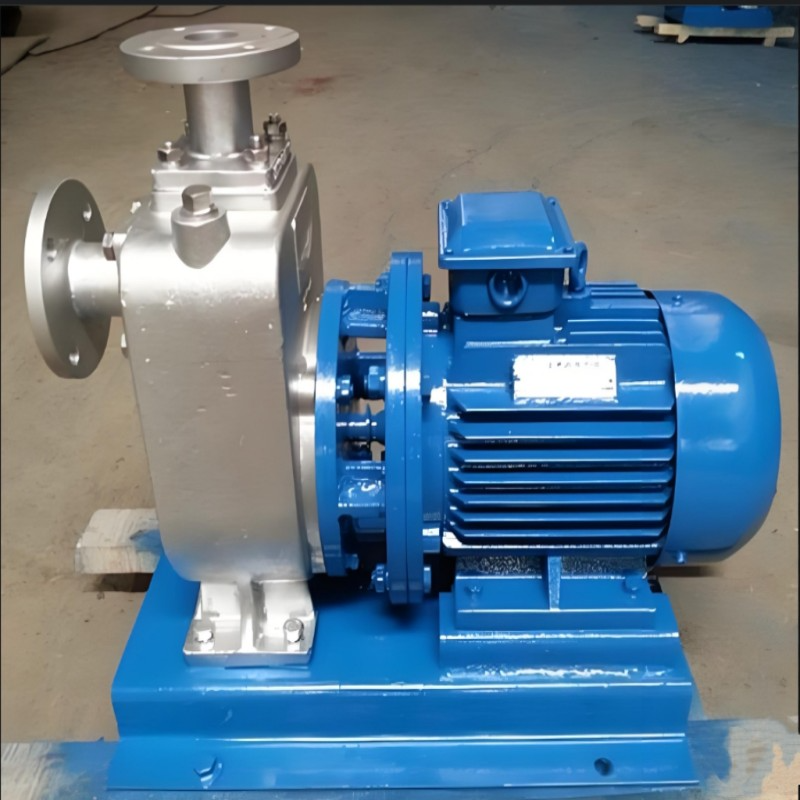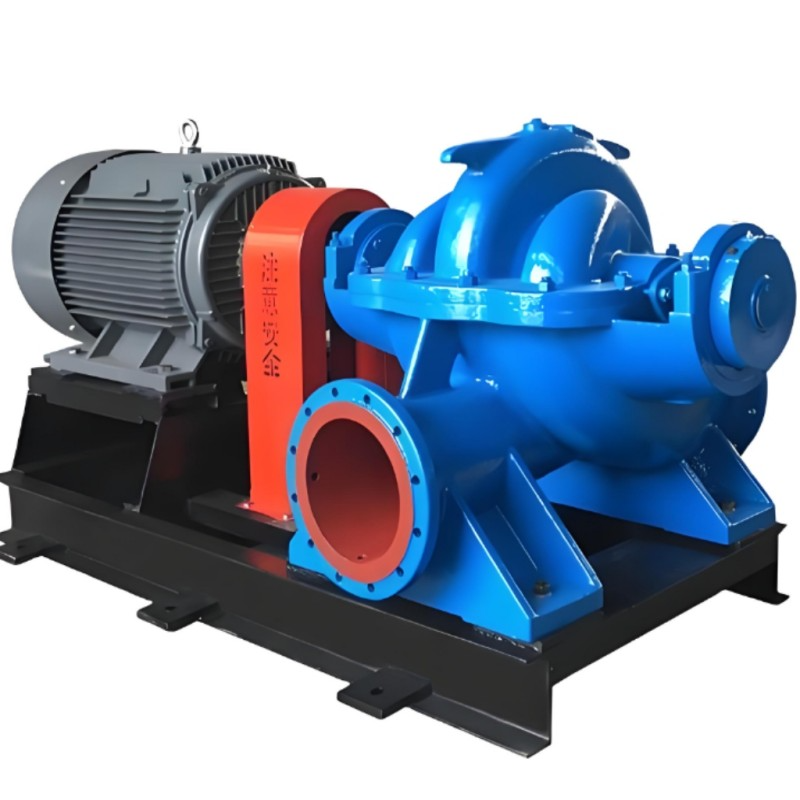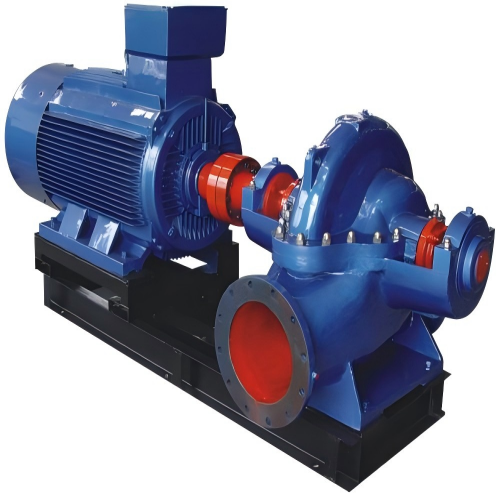


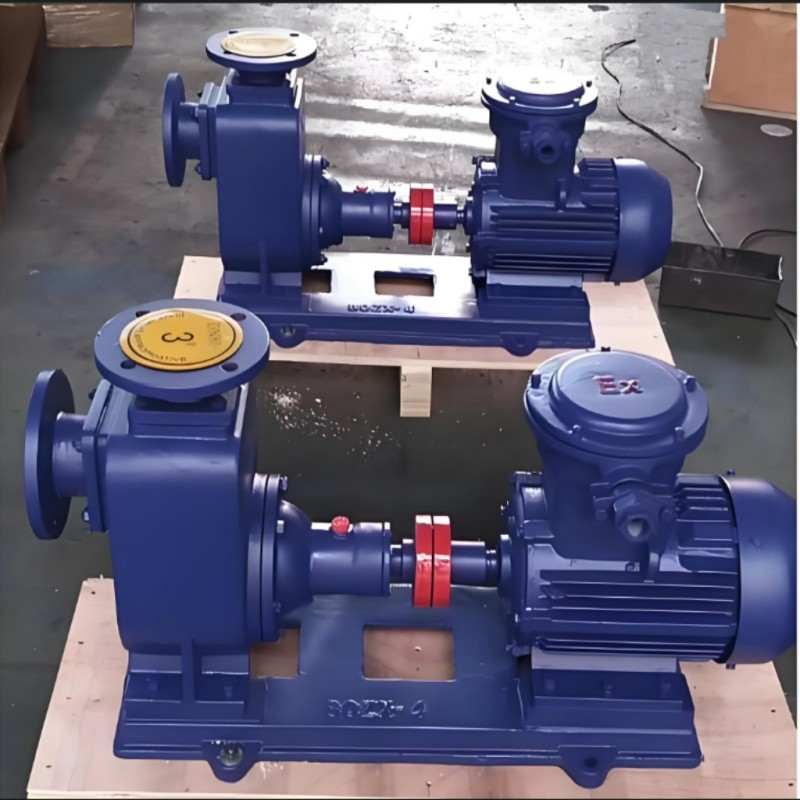
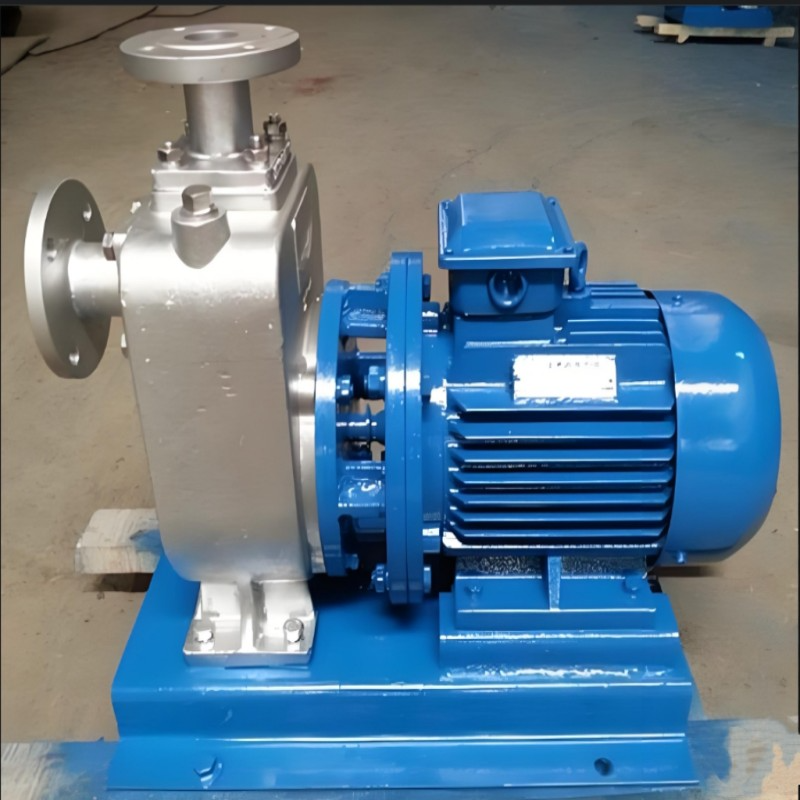
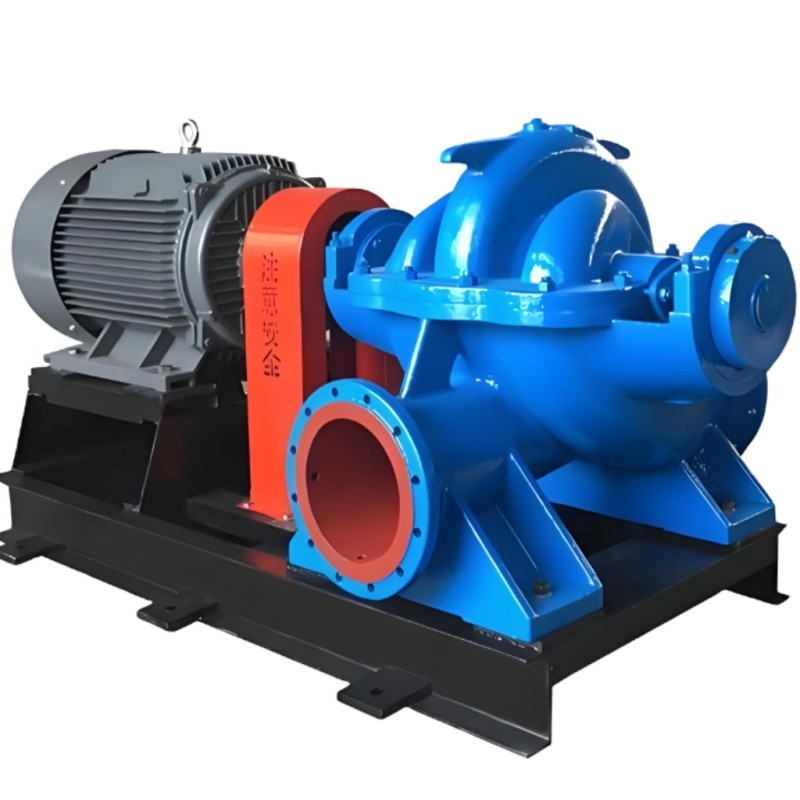





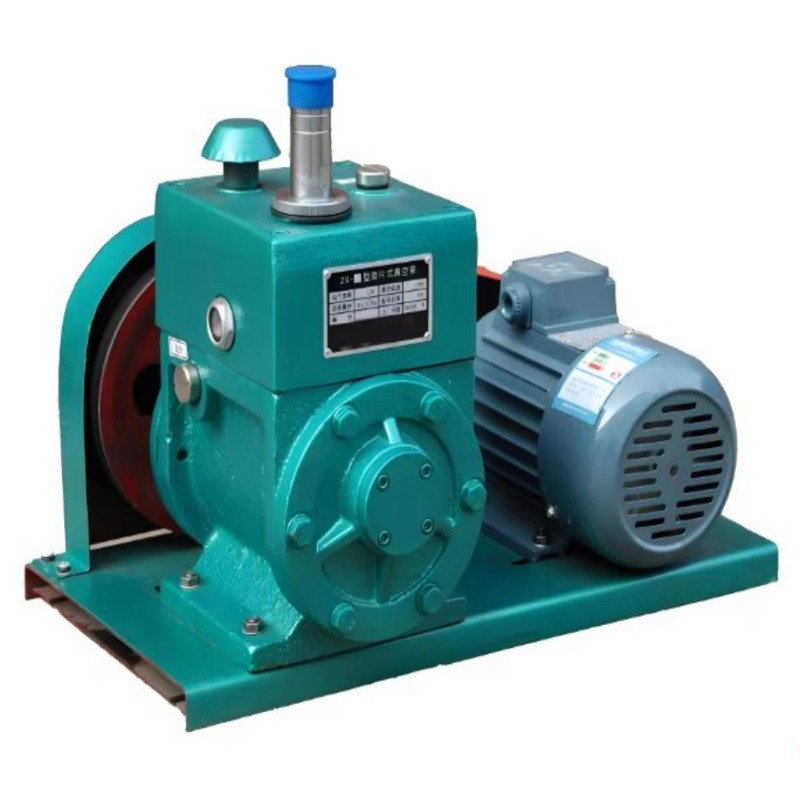
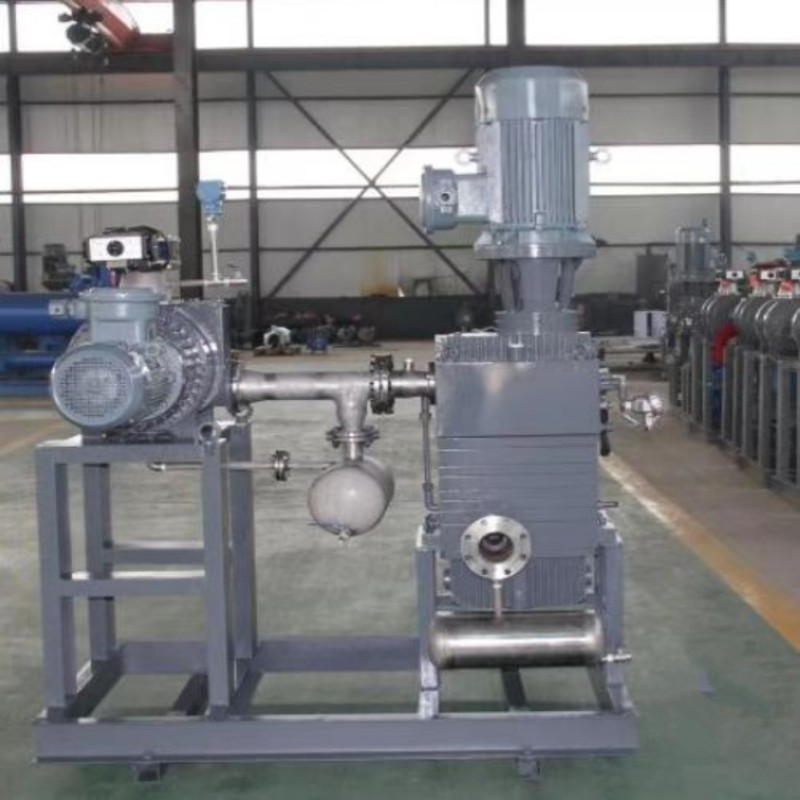
The suction and discharge ports of this type of pump are below the axis of the pump shaft, forming a horizontal direction perpendicular to the shaft axis. No need to dismantle the inlet and outlet water pipes or the motor for maintenance. From the direction of the transmission, the pump rotates clockwise (can also be rotated counterclockwise upon customer request). The main components of the pump include: pump body, pump cover, impeller, shaft, double-suction sealing ring, shaft sleeve, etc. The material for the shaft is high-quality carbon steel, while the rest of the main components are made of cast iron.
The pump body and cover form the impeller's working chamber. On the inlet and outlet flanges, there are pipe screw holes for installing vacuum and pressure gauges. At the bottom of the inlet and outlet flanges, there are pipe screw holes for draining. The impeller, which has passed static balance testing, is fixed on the shaft with sleeve and two side shaft nuts, and its axial position can be adjusted by the sleeve nut. The axial force of the impeller is balanced by the blade arrangement and two-way water entry. The pump shaft is supported by two single-row spherical roller bearings. The bearings are mounted in bearing housings and installed at both ends of the pump body, lubricated with grease. The double-suction sealing ring is used to reduce water leakage from the pressurized chamber back to the suction chamber. The pump is directly driven by an electric motor via an elastic coupling, and can also be driven by an internal combustion engine if necessary. The shaft seal is a soft packing seal, which can also be modified to a mechanical seal according to customer requirements. To prevent air from entering the pump and cool the lubricating sealing chamber, a packing ring is installed between the packing. During operation, a small amount of high-pressure water is channeled through trapezoidal grooves on the pump cover into the packing chamber, serving as a water seal.