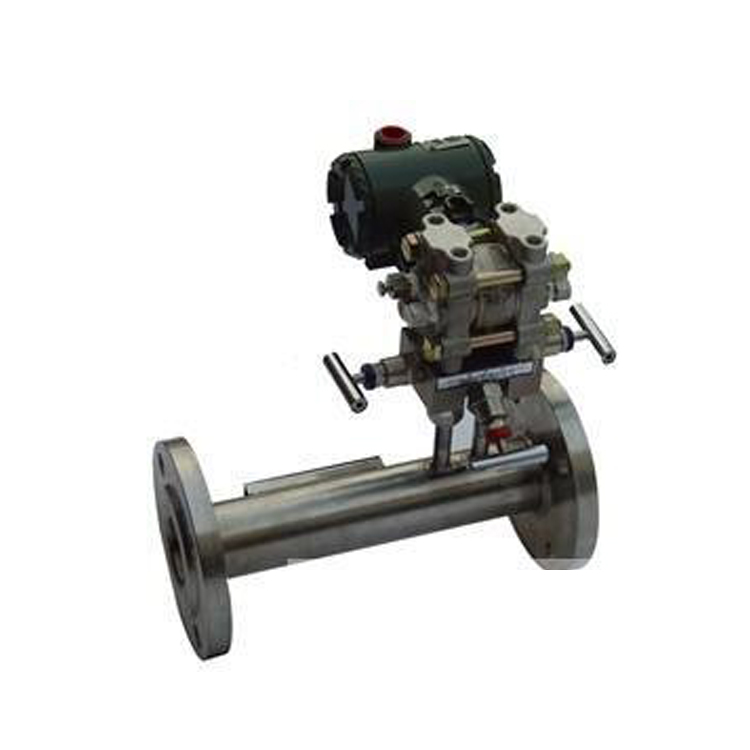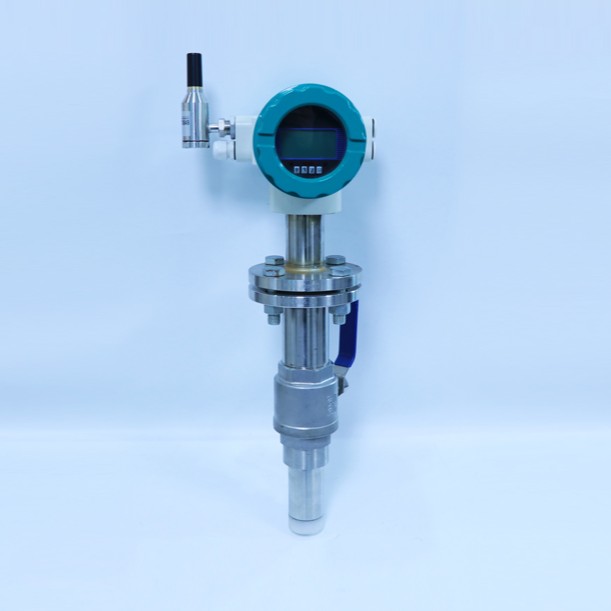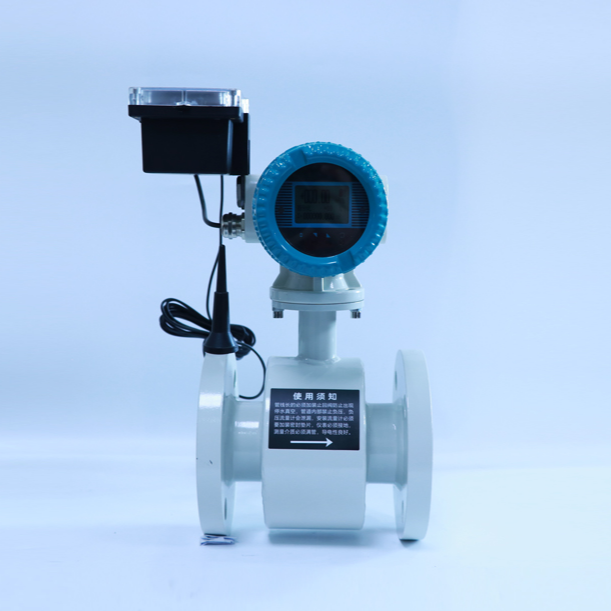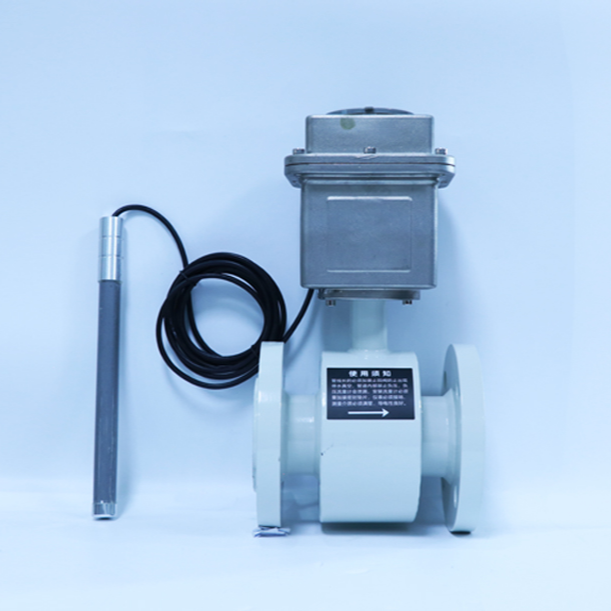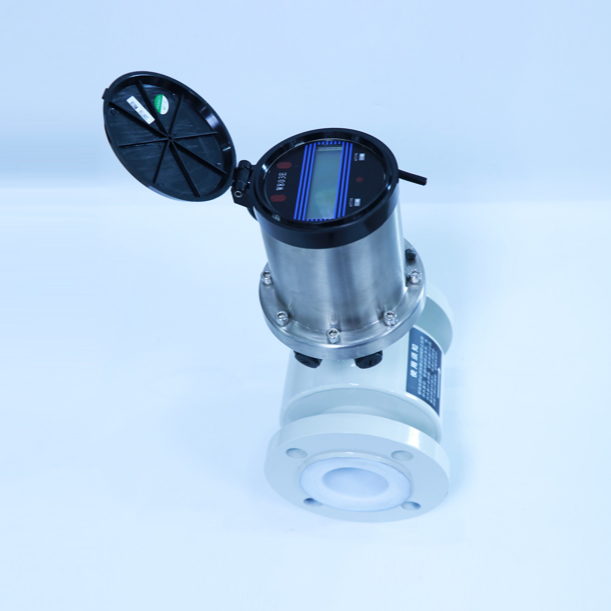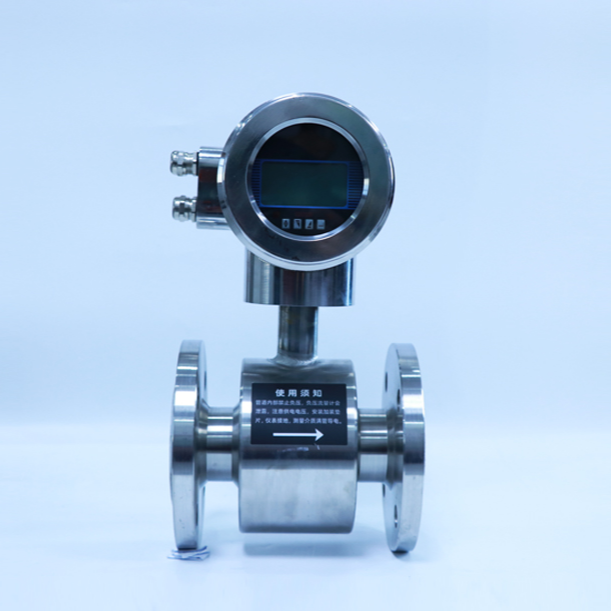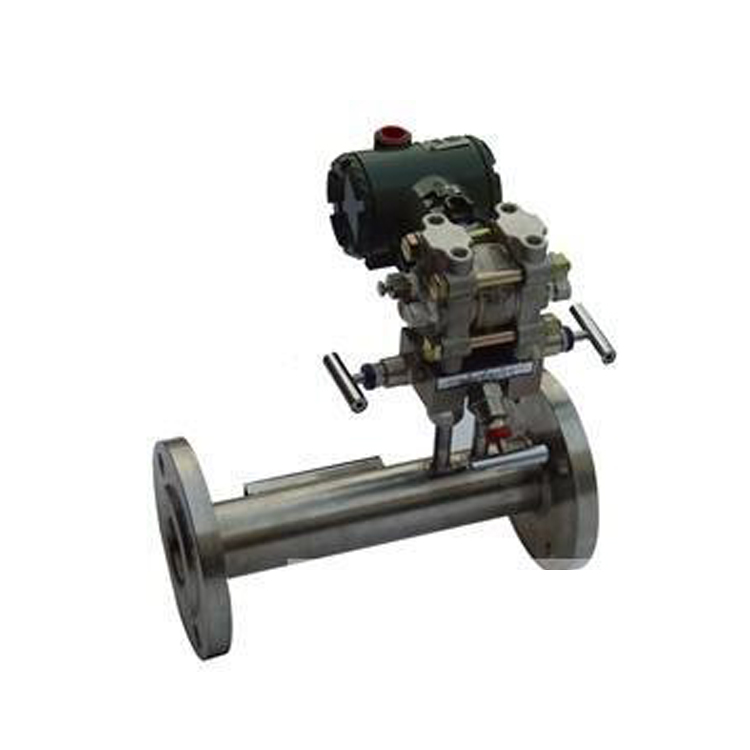

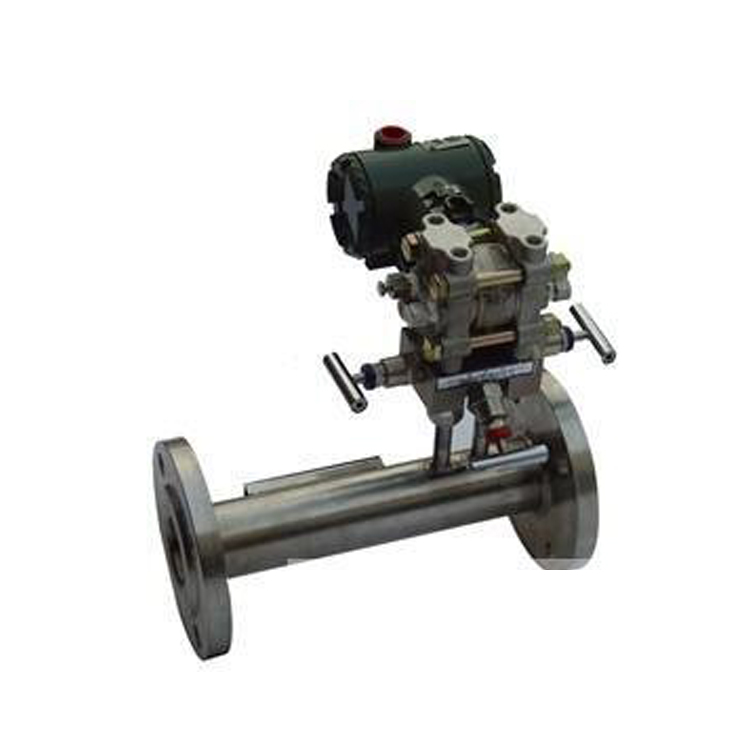







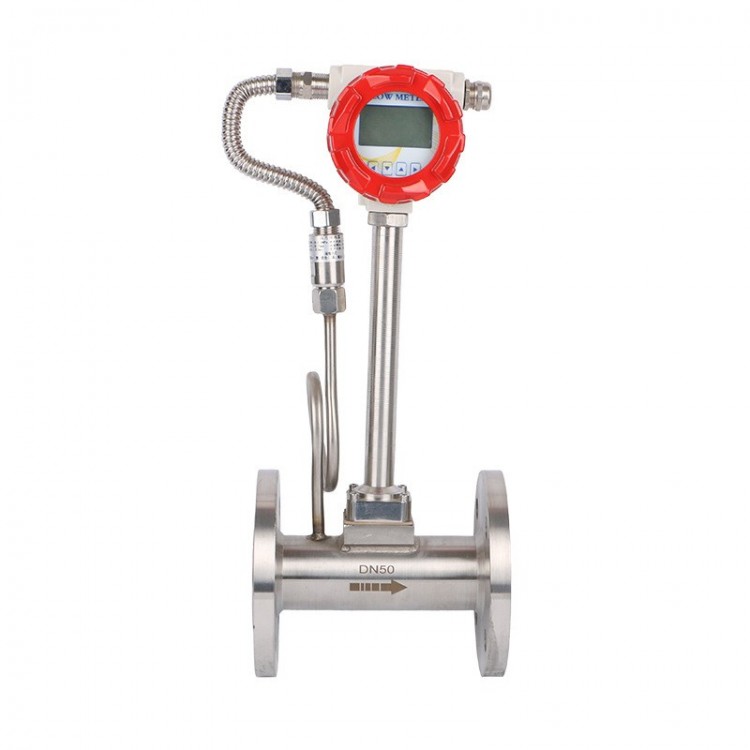
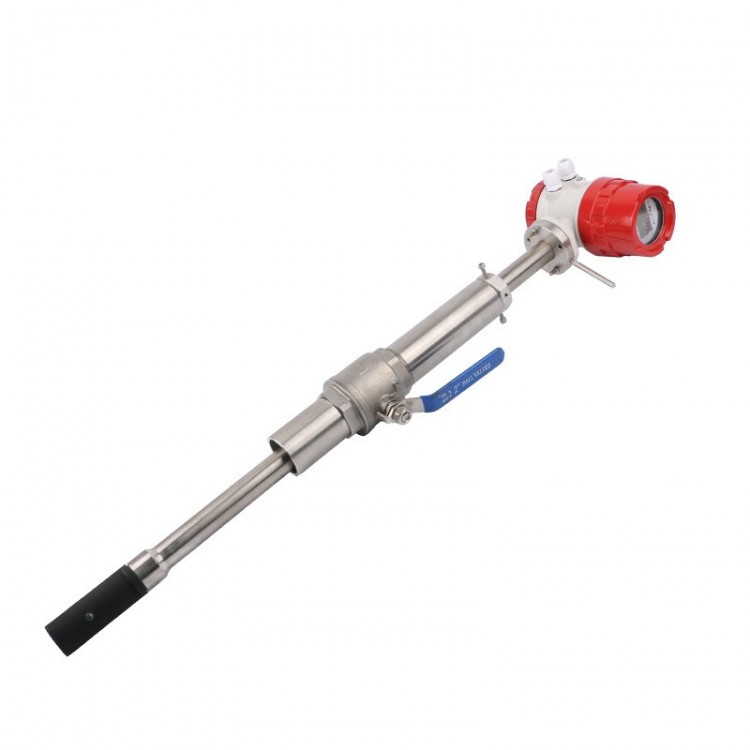
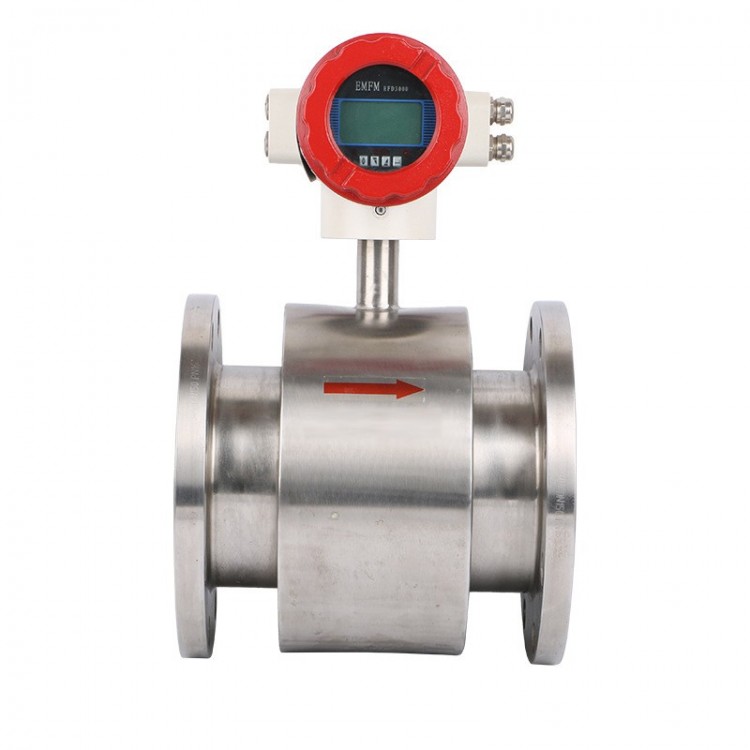
The LRD-VZ series V-cone flowmeter is a differential pressure flowmeter developed by our company since the 1980s, marking a significant leap in differential pressure flow measurement. It utilizes the throttle effect generated by the V-cone in the flow field to measure flow by detecting the upstream and downstream pressure differences. Compared to conventional throttle elements, it alters the throttle configuration from central orifice throttling to annular throttling. Field testing has proven that the V-cone flowmeter, when compared to other flow instruments, offers high long-term accuracy, excellent stability, minimal constraints from installation conditions, wear resistance, a wide measurement range, low pressure loss, and suitability for dirty media. Moreover, the V-cone itself acts as a flow field rectifier, making it a superior new flowmeter with unique performance characteristics. The V-cone flowmeter, composed of a V-cone sensor and a differential pressure transmitter, can accurately measure the flow of various media within a wide range of Reynolds numbers (8×10^3 ≤ Re ≤ 5×10^7).
Main Technical Parameters of LRD-VZ Type V Cone Flow Meters:
·Accuracy Grade: 0.5 grade (The accuracy of differential pressure flow transmitter should be higher than 0.2 grade, including 0.2 grade)
(β: 0.45-0.85, when β < 0.55 and the scale ratio is 4:1, accuracy grade: ≤0.30)
· Repeatability: 0.1%
·Working Pressure: 0~40 MPa (multiple pressure grades available for selection)
Operating Temperature: -40 to 850°C
·Ambient Temperature: -40~65°C
· Installation requirements for straight pipe sections: Front 0-3D straight pipe, rear 0-1D straight pipe section
· Range ratio to width: Typically 10:1, suitable parameters can achieve up to 50:1
·Low pressure loss: At the same beta value, the pressure loss is 1/3 to 1/5 of the orifice plate
· Bore sizes from DN25 to DN2000
Technical Features of LRD-VZ Type V-Cone Flow Meters:
Low installation requirements: 0-3D straight pipe ahead, 0-1D straight pipe section behind.
2. Range ratio: Typically 10:1, the appropriate parameters can achieve up to 50:1.
3. Low pressure loss: At the same β value, the pressure loss is 1/3 to 1/5 of the orifice plate.
4. Wear-resistant: The streamlined conical shape, after throttling, creates a vacuum layer effect on the surface of the cone, making it less prone to wear.
5. Non-clogging, non-adhering: The conical thorough blowing design prevents the retention of residues, condensates, or particles in the fluid.
6. Excellent Long-Term Stability: β value remains constant over the long term, ensuring precise long-term measurements.
7. High Precision: 0.5 Grade
8. Repetition is better than 0.1%.
9. Signal Stability: "Signal Fluctuation" is 1/10 of the orifice plate.
10. Wide β Value Range: The unique geometric shape of the V-cone flow sensor allows for a broad range of β values.
11. Wide bore range: DN25 - DN2000
12. Capable of measuring high-temperature, high-pressure media: working temperature up to 850°C, maximum pressure 40 MPa.
13. Measurable dirty media (coke oven gas, blast furnace gas, raw oil, residue oil, etc.)
14. Capable of measuring two-phase gas-liquid media (wet gas, condensate water, etc.)
1. Flanged LRD-VZS
Connection Type: Flange (Socket Weld and Blind Flange)
Bore: DN15 to DN2000
Pressure Taking Method: Socket Weld, Flange, Thread
Pressure: 0~40 MPa
Temperature: -40~850℃
Material: 304 Stainless Steel, 316L Stainless Steel, 20# Carbon Steel (see selection chart for details)
Application: Liquid, Gas, Steam
Applicable Medium: Widely used in flow measurement for industries such as municipal, power, chemical, petrochemical, metallurgy, and food processing, nearly applicable to all gas and liquid mediums.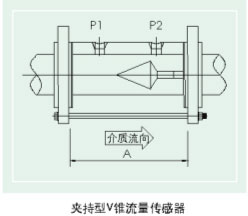
Flanged V-cone Flow Sensor
2. Direct Weld LRD-VZZ
Connection Method: Directly welded to the process pipeline
Bore Size: DN15 - DN2000
Pressure Taking Method: Socket Weld, Flange, Thread
Pressure: 0~40 MPa
Temperature: -40~850℃
Material: 304 Stainless Steel, 316L Stainless Steel, 20# Carbon Steel (see selection table for details)
Applications: Oil pipelines, gas pipelines, steam networks, high-pressure process pipelines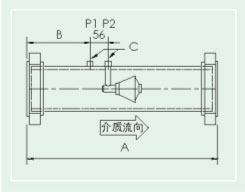
3. Clamping Type LRD-VZD
Connection Type: Flanged Face Clamp
Bore: DN15 - DN150
Pressure Taking Method: Socket Weld, Threaded
Pressure: 0~40 MPa
Temperature: -40 to 850℃
Material: 304 Stainless Steel, 316L Stainless Steel, 20# Carbon Steel (see selection table)
Application: Liquids, Gases, Steam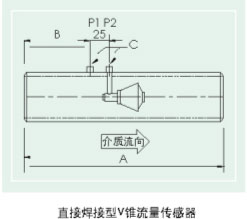
V-cone sensor and differential pressure transmitter-based V-cone flowmeter
Based on different customer requirements, the supply of flow detection instruments using V-cone sensors and differential pressure transmitters is divided into two categories:
V-cone sensor
The detection part only (V-cone and measurement pipe) that provides differential pressure signals is supplied, not the differential pressure transmitter, three-valve group, or flow display. The output signal is differential pressure. The user is responsible for the matching.
2. V-cone flow meter
Composed of a V-cone sensor and a differential pressure transmitter. Available in two types of structures: split-body installation and integrated installation.
The split-type installation consists of a separate V-cone sensor and a differential pressure transmitter. The connection between the pressure-tapping pipe of the V-cone sensor and the differential pressure transmitter is completed by the user themselves. The differential pressure transmitter can be supplied as a matching set.
Integrated installation is when the differential pressure transmitter, triple valve assembly, and V-cone sensor are already connected as a unit at the factory. After purchasing the integrated V-cone flow meter, there is no need to connect a pressure line. Flow totalizers, pressure transmitters, and temperature transmitters can be supplied as a matching set if required.
Fluids that can be successfully measured:
1. Gas
Coal Gas: Coke Oven Gas, Blast Furnace Gas, City Gas
Natural Gas: Includes natural gas with moisture content above 5%
A variety of hydrocarbon gases: alkanes, olefins, etc.
All kinds of gas production: hydrogen, helium, argon, oxygen, nitrogen, etc.
Corrosive gases: Wet chloride gases, etc.
Air: Includes humid air, dusty air, compressed air, etc.
Flue gases: Exhaust gases emitted from various boilers and heating furnaces
2. Steam: Saturated Steam, Superheated Steam
3. Liquid
Oils: Crude Oil, Fuel Oil, Water-Emulsified Oil, Diesel, Hydraulic Oil, etc.
Water: raw water, drinking water, process water, wastewater, etc.
A variety of aqueous solutions: acids, alkalis, saline solutions, etc.
Organic Chemicals: Methanol, Ethylene Glycol, Xylene, etc.
4. Special Fluids
Oil + HC Gas + Sand
Aerated water: H2O + N2 + air; H2O + CO2, etc.