








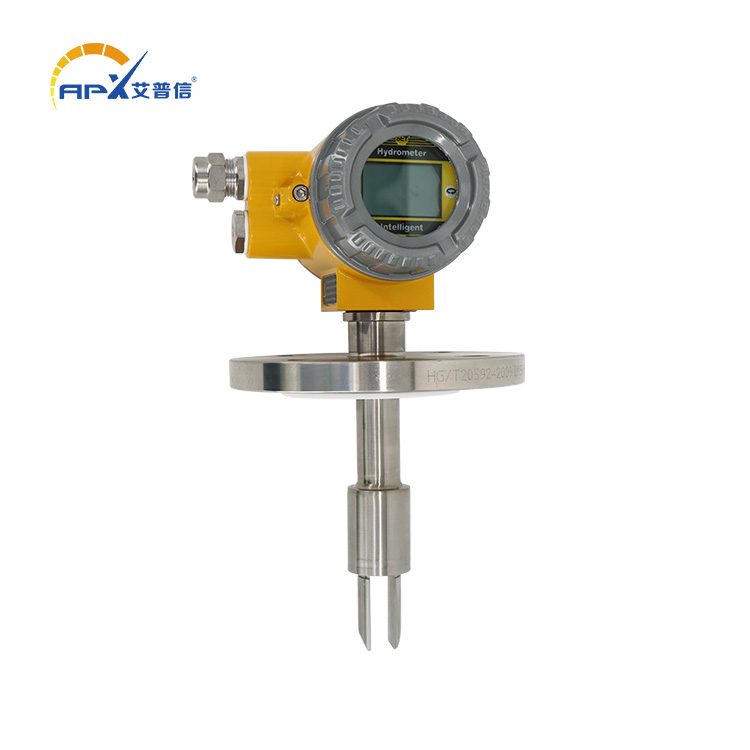
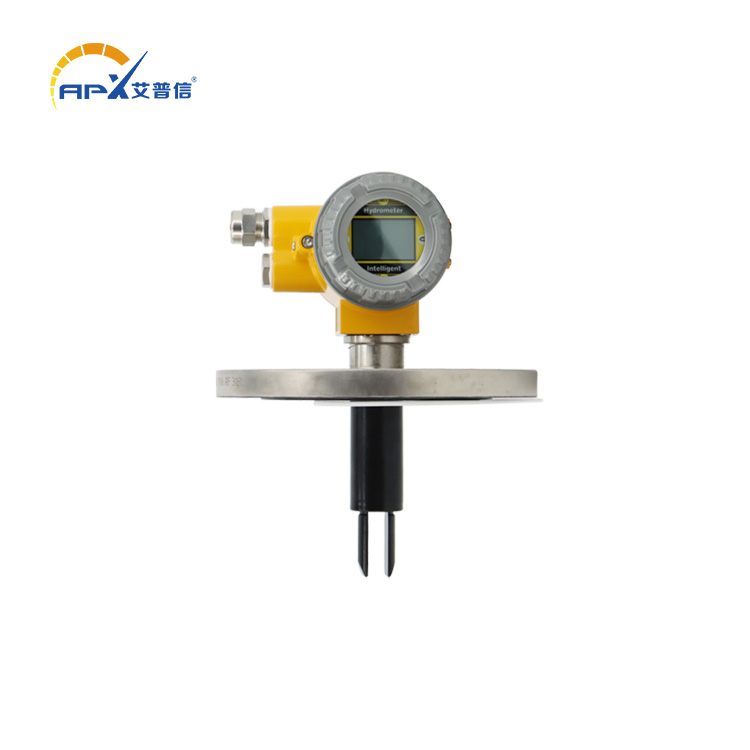
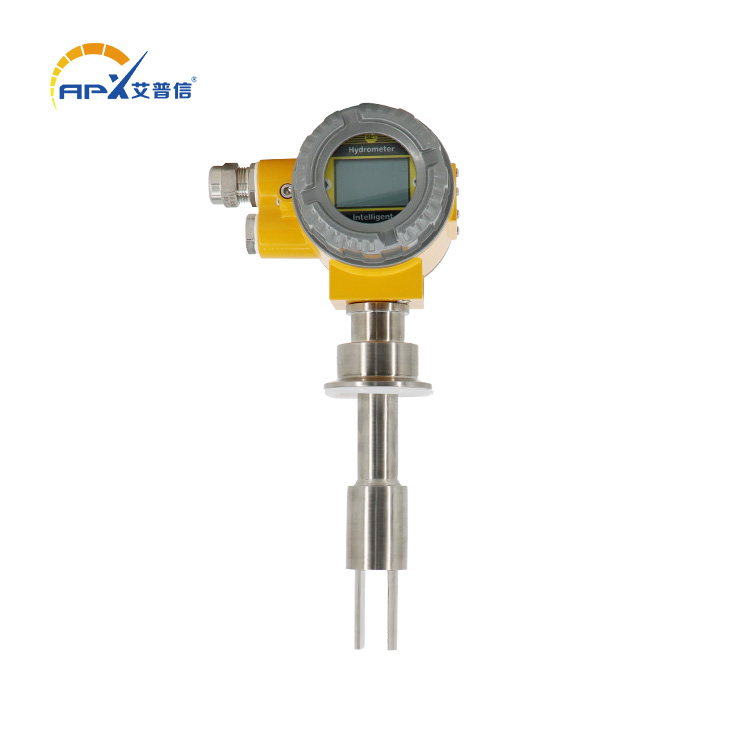
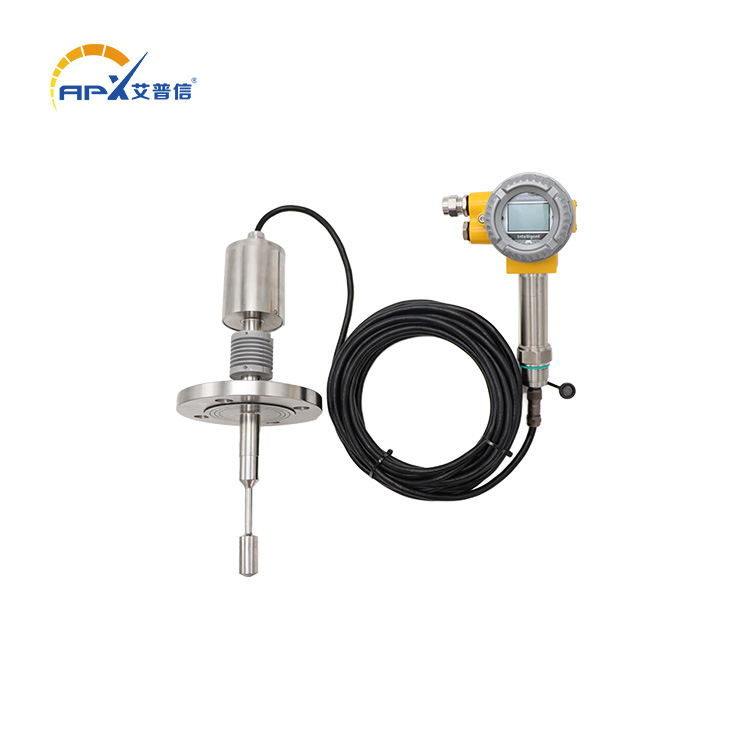
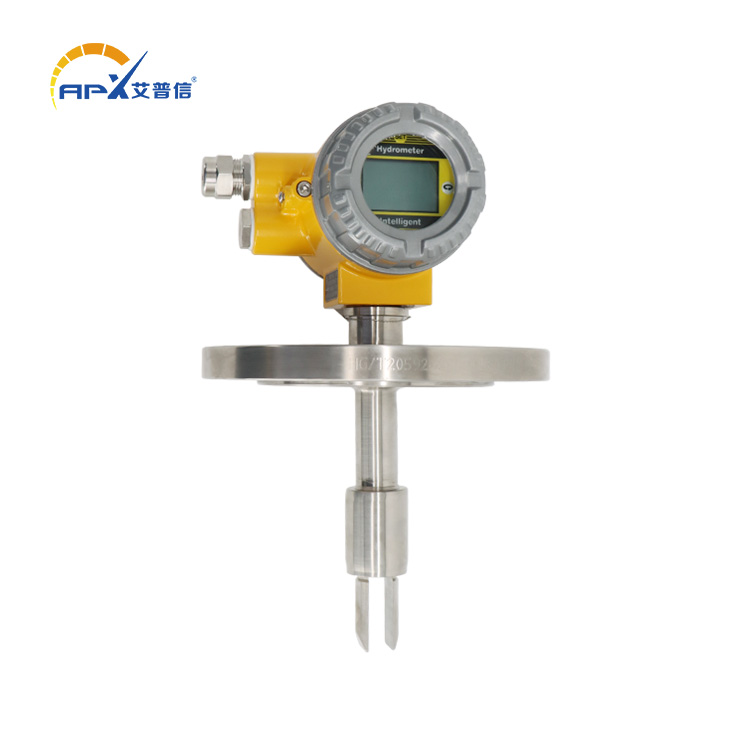
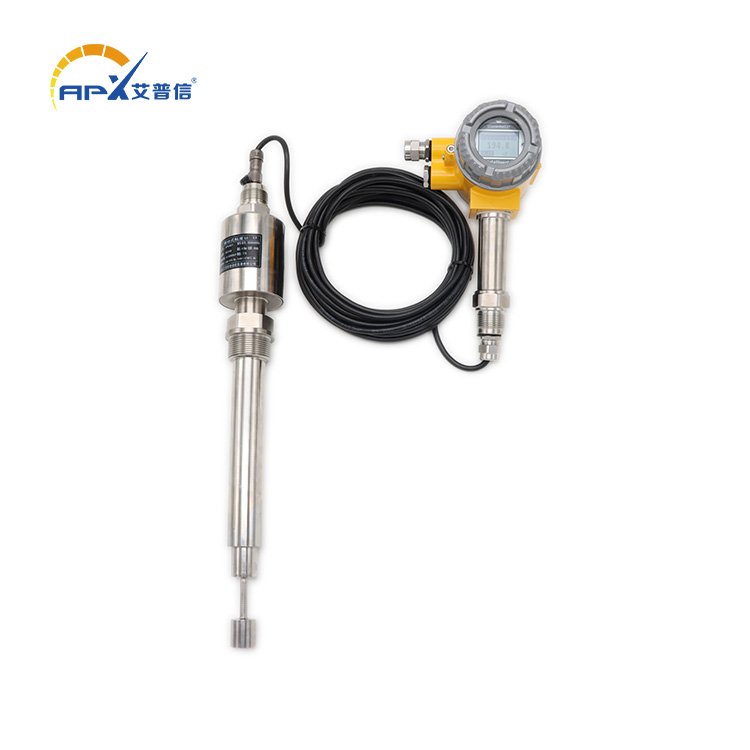
Liaoning Professional Manufacturer Offers Low-Price Wholesale Single Rod Level Switch APX505
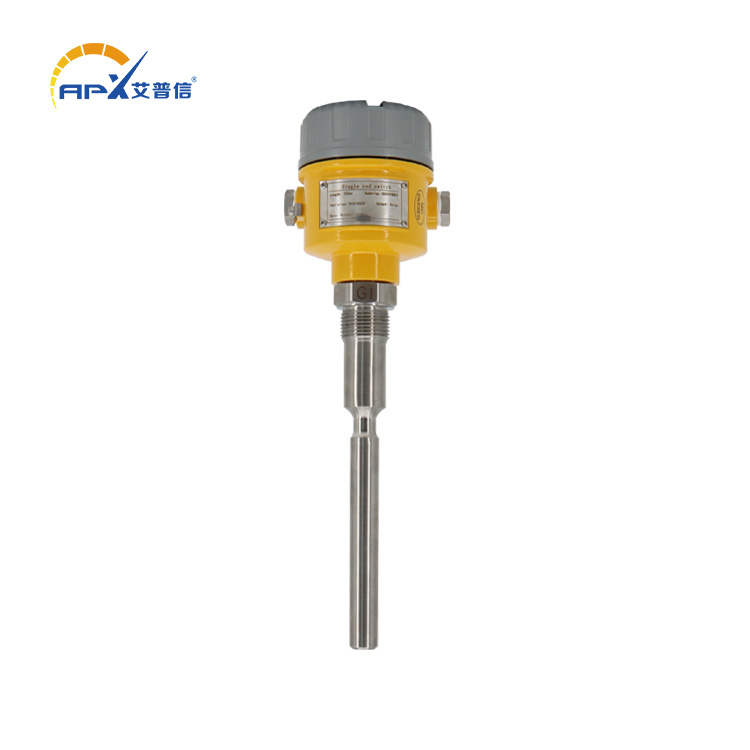
The single-bobbin vibration position switch operates by exciting vibration through the resonance of a piezoelectric crystal. When subjected to material damping, the amplitude sharply decreases and the frequency and phase undergo significant changes, which are detected by the internal electronic circuit. After processing, these changes are converted into switch signals for output. This product can detect, control, and alarm for the high and low levels of material tanks, and is suitable for various liquids, powders, and granular solids. It is practical, simple, reliable, and generally maintenance-free, with both the fork and output indicating their operational status using LED indicators. Status indication can be adjusted according to preference, and it comes with three input methods (DC 24V, AC 110V, and AC 220V) and various output options (DC current output, relay contact output, and DC voltage output). All types feature high or low fault alarm modes and selectable instrument switch sensitivity. Technical specifications
Medium temperature range: -20℃ to 220℃
Ambient Temperature: -20℃ to 80℃
Ambient Humidity: ≤95%RH
Tested Medium: Liquid, Powder, or Granular Solids
Tested Medium Density: Solids ≥ 0.1 g/cm³
Liquid ≥ 0.7 g/cm³
Tested Solid Particle Size: ≤10mm
Liquid Viscosity: <1000 mm²/s
Resting angle of the medium being tested: ≥200
Pressure Range: ≤1 MPa
Shell Material: Die-Cast Aluminum Alloy
Material of Fork: 1Cr18Ni9Ti
Shell protection grade: IP65
Connection Type: 1″ NPT Thread
Flange (user selected)
Electrical Parameters:
Supply Voltage: DC 24V; AC 220V 50Hz
2. Output Signal: Relay Output: 5A 220V AC
3A 24V DC
3. Power Consumption: ≤2W
Vibrating Frequency of Tuning Fork: 300 ± 50 Hz
Environmental Vibration Level: V.L.4 acceleration not exceeding 1g
Switch Signal Action Time: 1-60 Secs
Electrical Connections
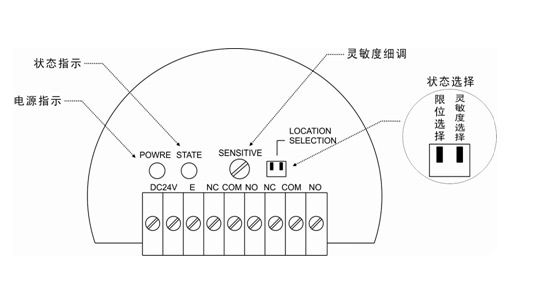
After powering on, the equipment takes a 5-second delay to enter normal operation. For upper limit alarm, switch the limit selection to the top position, and for lower limit alarm, switch it to the bottom position. Positioning the sensitivity selector to the top is for high sensitivity, and to the bottom for low sensitivity.
Counter-clockwise adjustment increases sensitivity, clockwise adjustment decreases sensitivity.