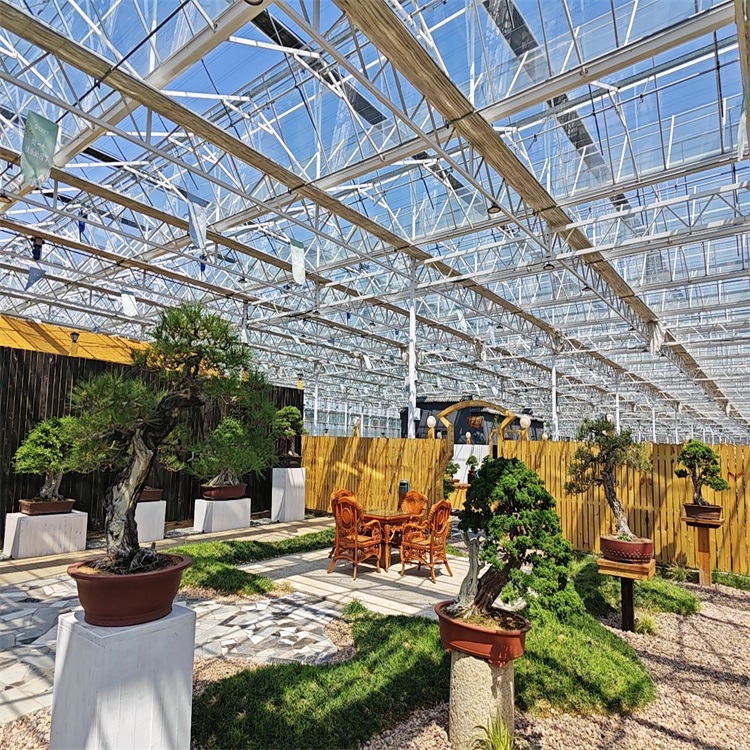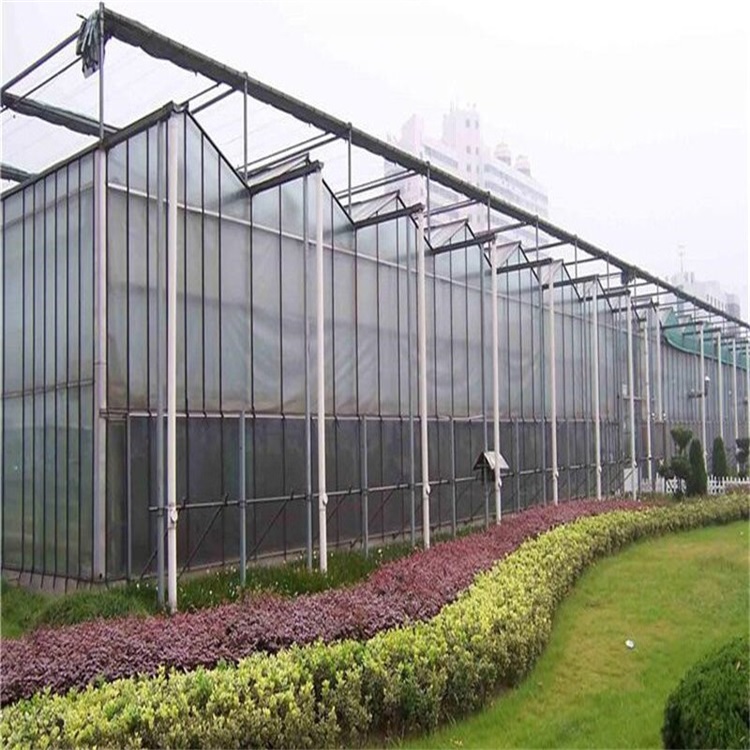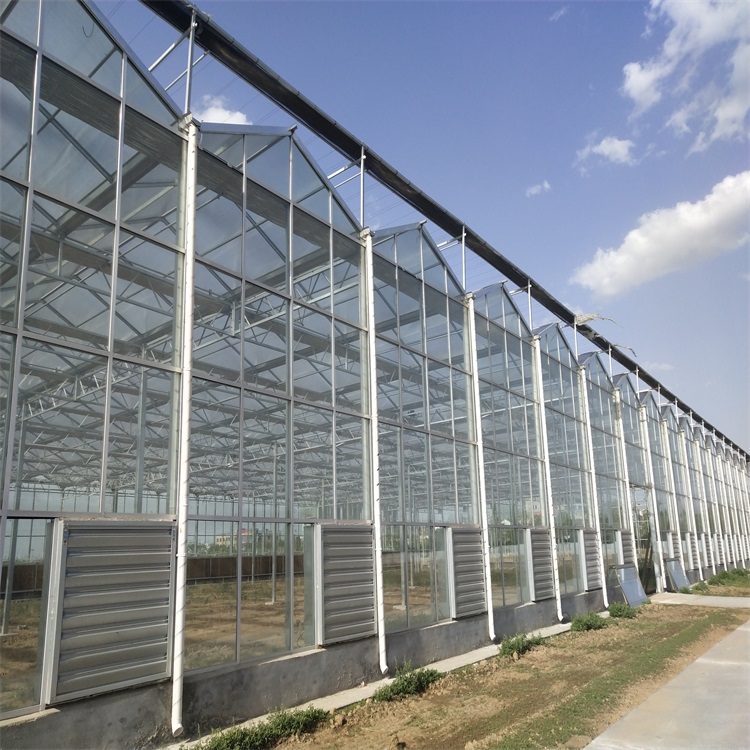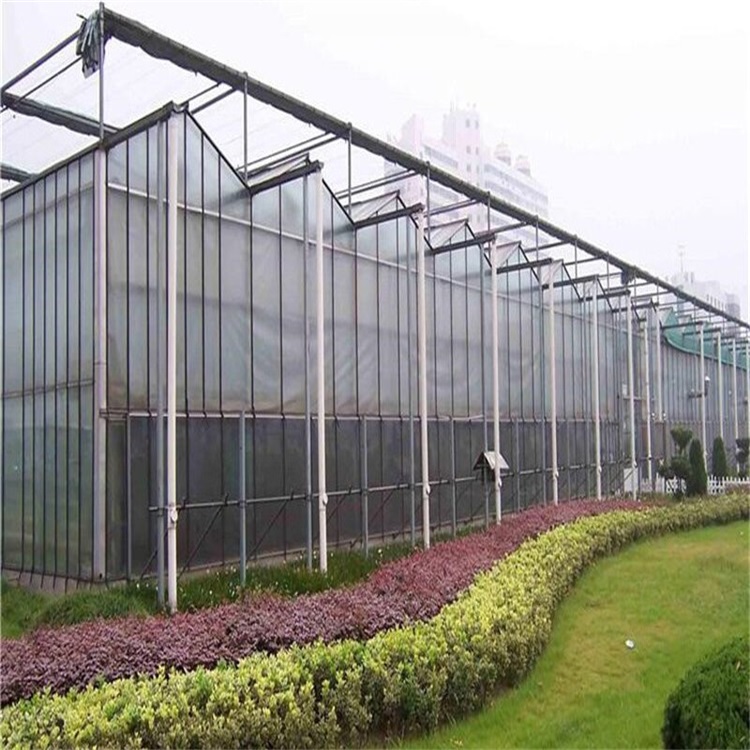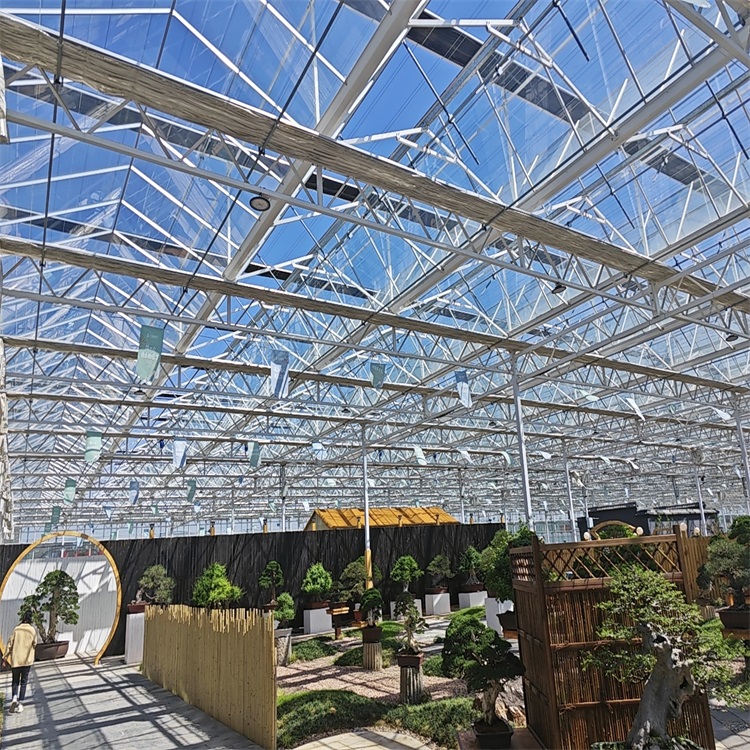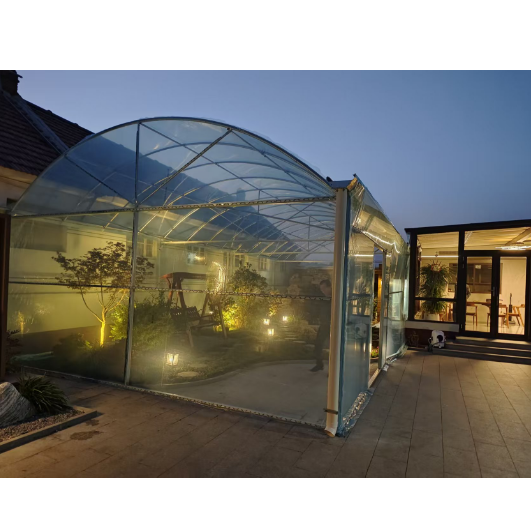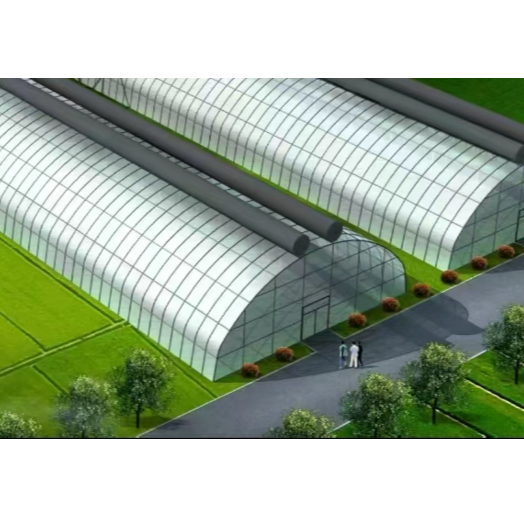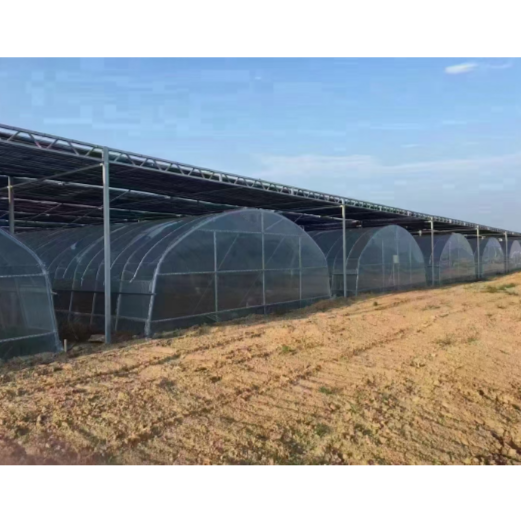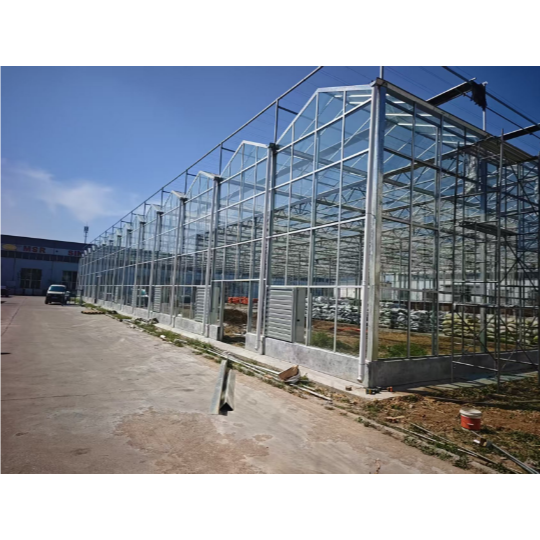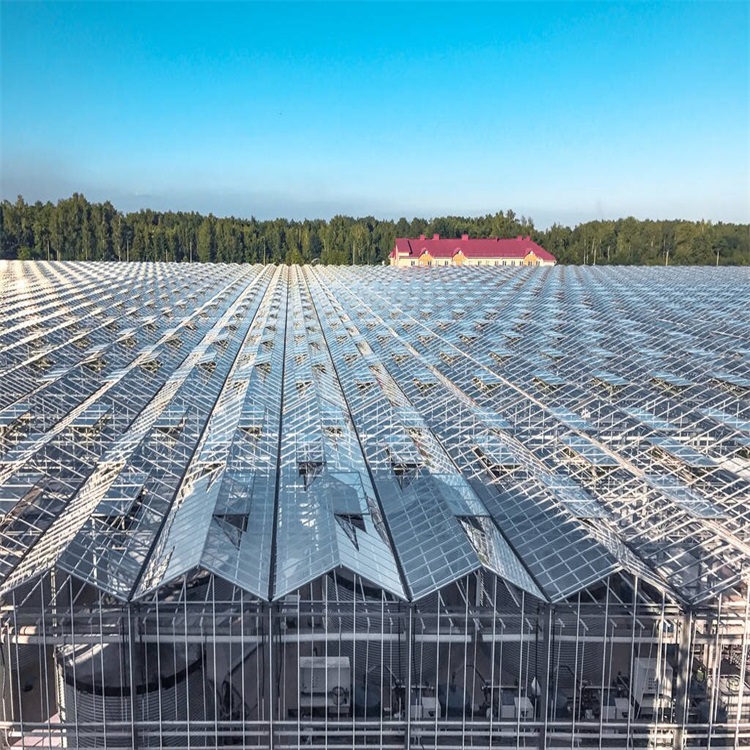

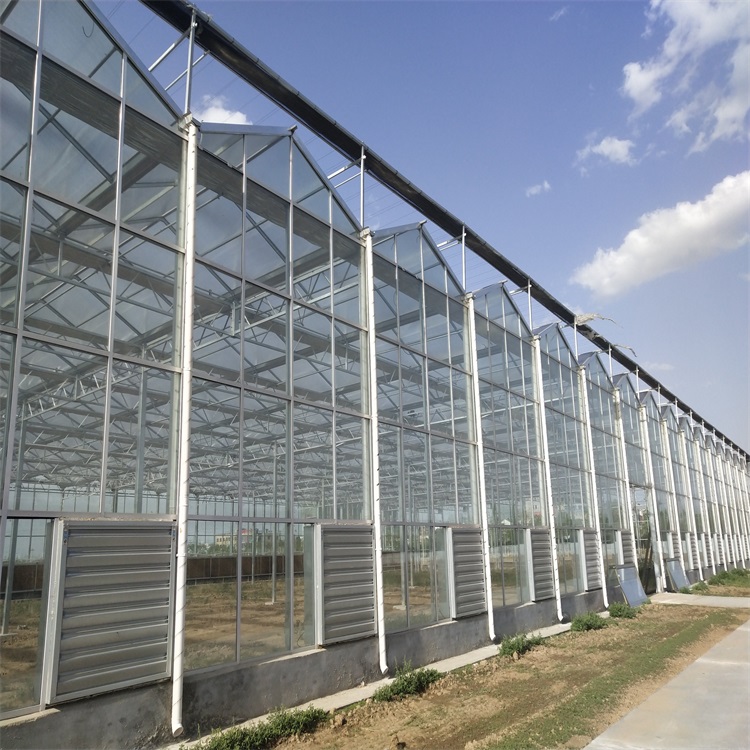


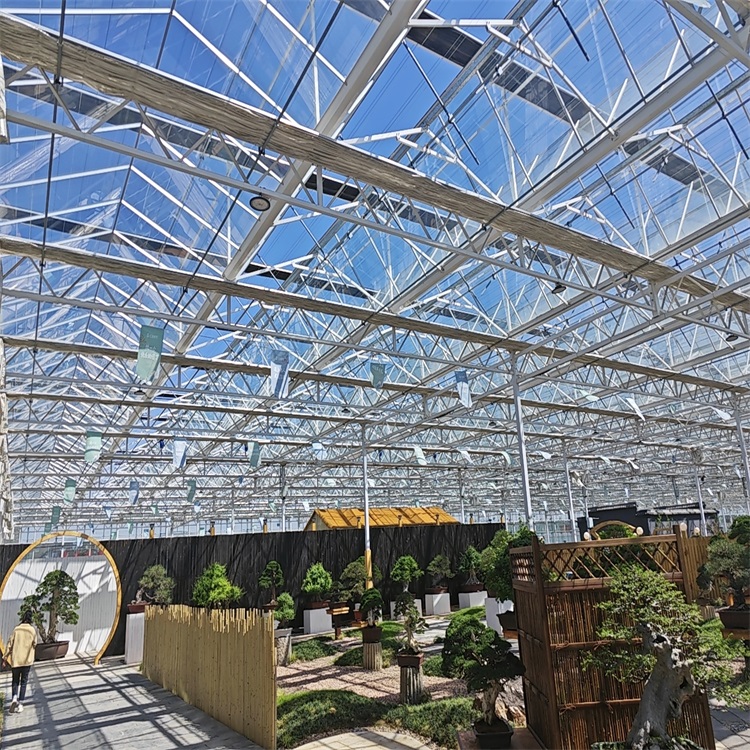









Glass greenhouses refer to greenhouses using glass as the light transmission material, a type of greenhouse tunnel. In cultivation facilities, glass greenhouses are the longest-lasting form and are suitable for use in various regions and under different climatic conditions.
The glass greenhouse features a modern and innovative appearance, stable structure, smooth visuals, and extremely high light transmission rates, up to over 90%. It boasts strong resistance to wind and snow. The covering materials include domestic single-layer float glass or double-layer insulating glass, which provides even lighting and high intensity. It is highly resistant to corrosion and flame retardant, with over 90% light transmission and does not degrade over time. Double-layer insulating glass offers superior anti-condensation properties and better thermal insulation compared to single-layer glass. The greenhouse's top and sides are connected with specialized aluminum profiles.
The area and usage can be freely allocated by the greenhouse owner, and they are categorized into various uses such as vegetable glass greenhouses, flower glass greenhouses, seedling glass greenhouses, ecological glass greenhouses, research glass greenhouses, three-dimensional glass greenhouses, irregular glass greenhouse, leisure glass greenhouses, and intelligent glass greenhouses, among others. The smallest models are for courtyard leisure use, with heights exceeding 10 meters, spans up to 16 meters, and widths up to 10 meters. They offer one-touch control for intelligence, and the winter heating for glass greenhouses can be achieved through multiple heating methods, with moderate energy consumption costs.