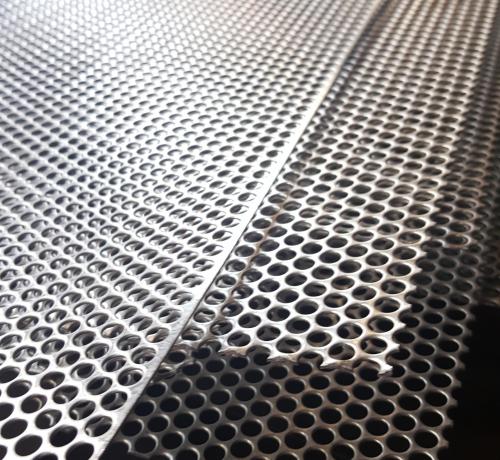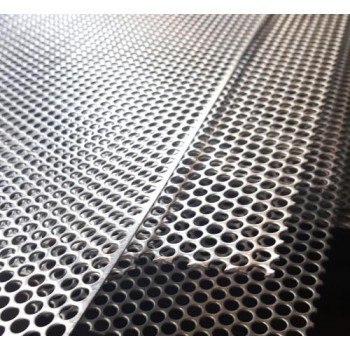

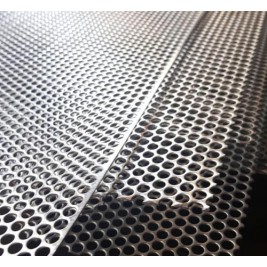







perforated metalIt refers to drilling holes of different shapes on the same material to adapt to different needs.
Most of the original materials used include: stainless steel, low-carbon steel plate, galvanized PVC、 Cold rolled coils, etc.
Hole type: rectangular hole, square hole, diamond hole, circular hole, hexagonal hole, cross hole, triangular hole, elongated hole, waist hole, plum blossom hole, fish scale hole, patterned hole, pentagonal star hole, irregular hole, bulging hole, etc.
Basic Parameters:
1. Roll thickness 0.2mm-1.0mm
2. Aperture 1.5mm-10mm
3. Sheet thickness 0.2mm-20mm; Width * length ≤ 1.5m * 5m
4. Aperture 0.5mm-200mm
Punching method:
1. Continuous punching in the same direction: The method of stacking rectangular punching mesh molds can be used to process long holes, cut edges, etc.
2. Continuous forming: A forming processing method with a larger scale than punching mesh molds, such as large-scale louvers, rolling ribs, rolling steps, and other processing methods.
3. Erosion: A processing method that uses a small circular die to continuously punch curved shapes with a small step distance.
4. Multi directional continuous punching: a processing method that uses small punching mesh molds to process large holes.
5. Single forming: a processing method of shallow drawing and forming in one go according to the shape of the mold.
6. Single punch: Single punch punching, including straight line spreading, arc spreading, circular spreading, and grid hole punching.
7. Array forming: a method of processing multiple identical or different workpieces on a large board.
Characteristics of punched mesh:
Easy to process and shape, capable of spray painting or polishing, easy to install, visible appearance, various thicknesses of boards, multiple selection of aperture and placement methods. Outstanding sound absorption, lighter weight, longer service life, accurate scale.