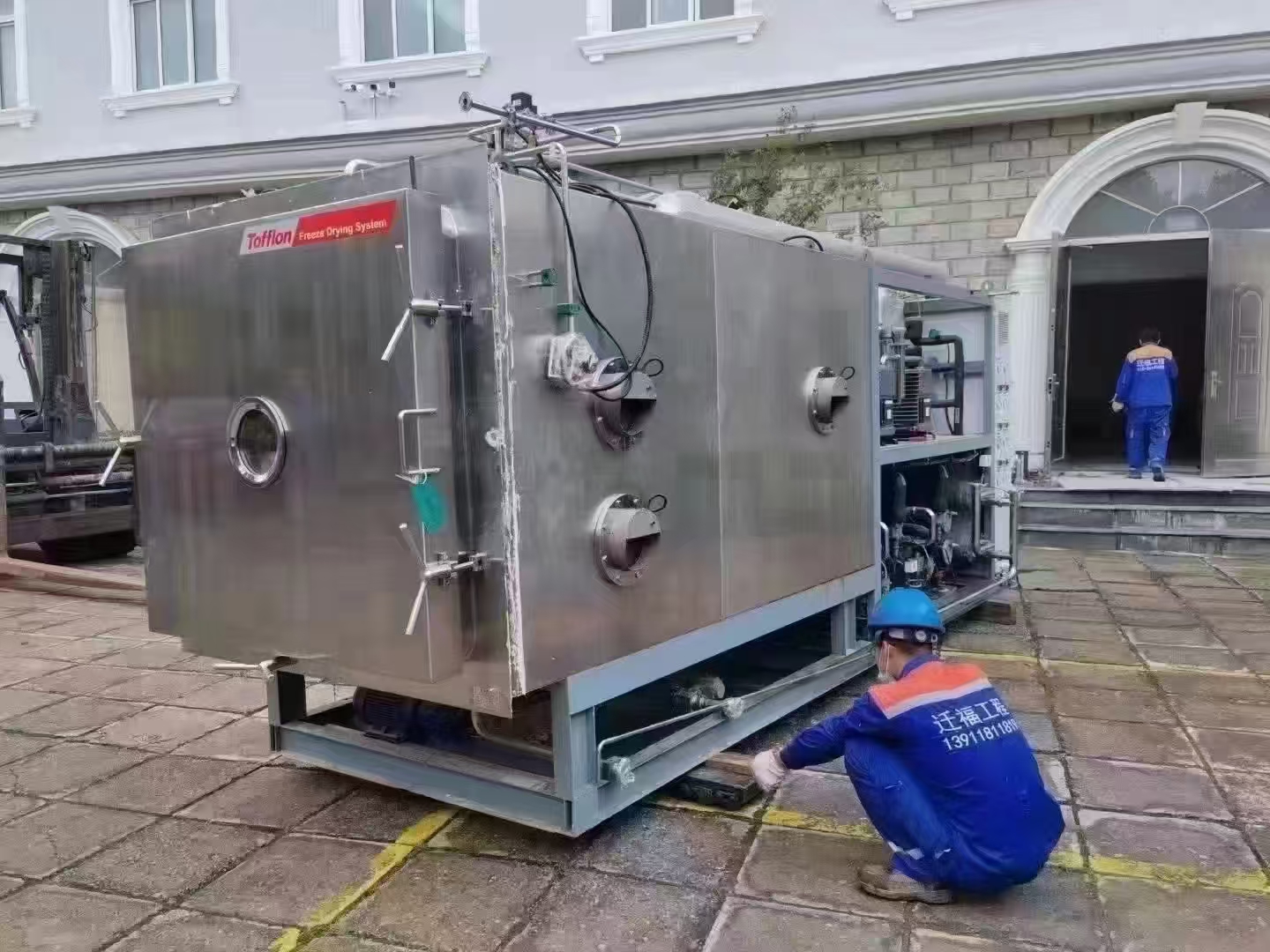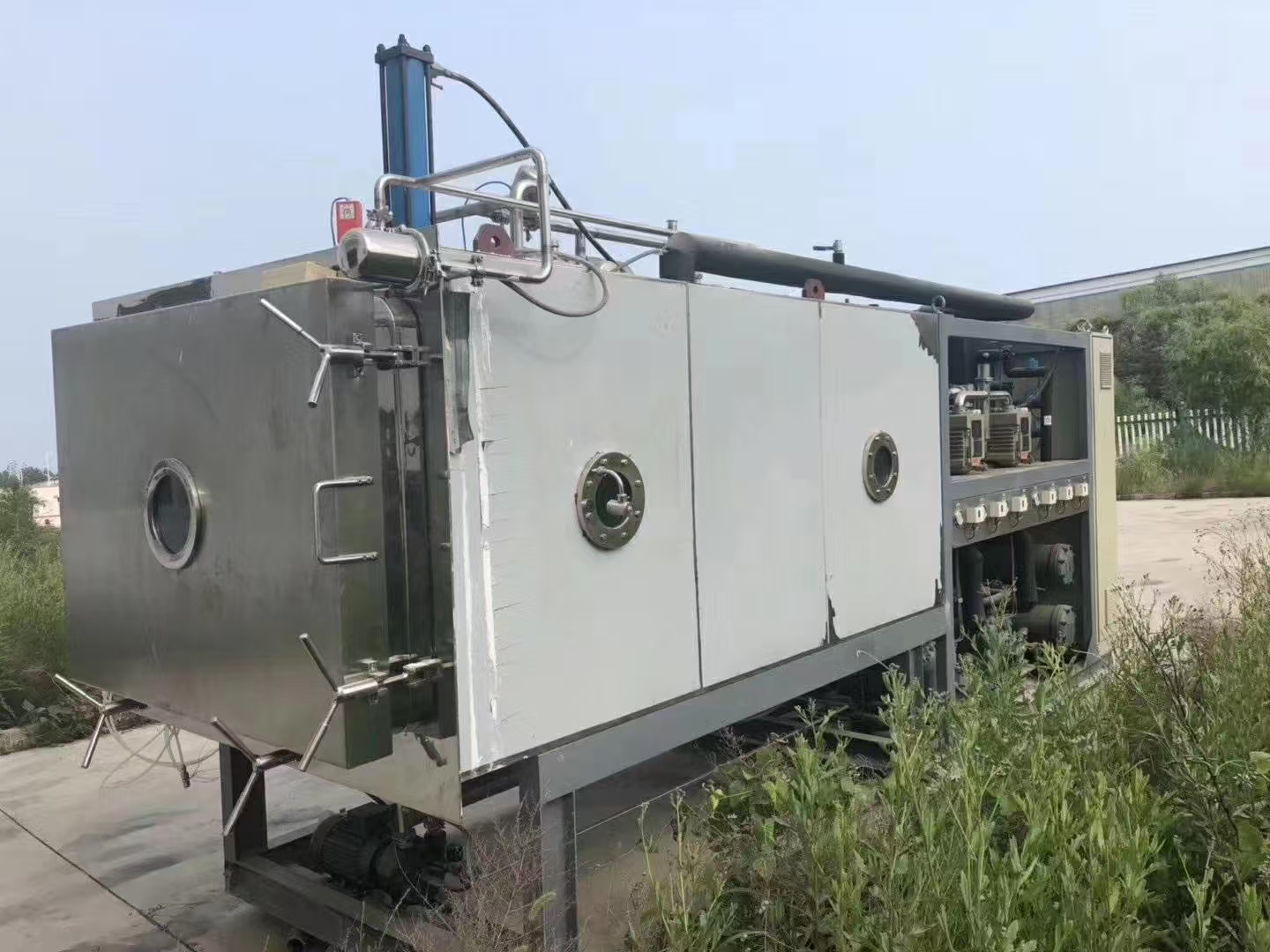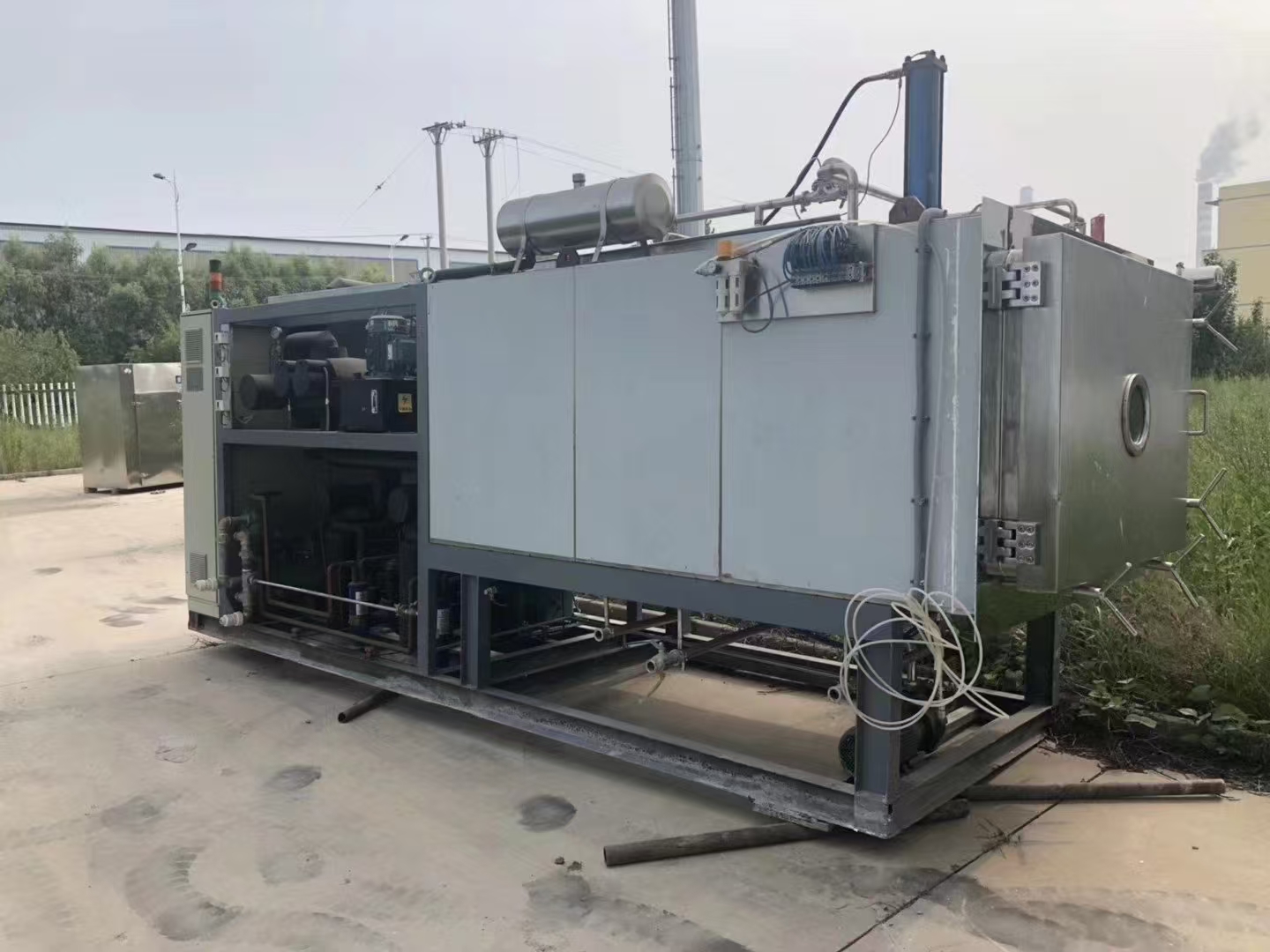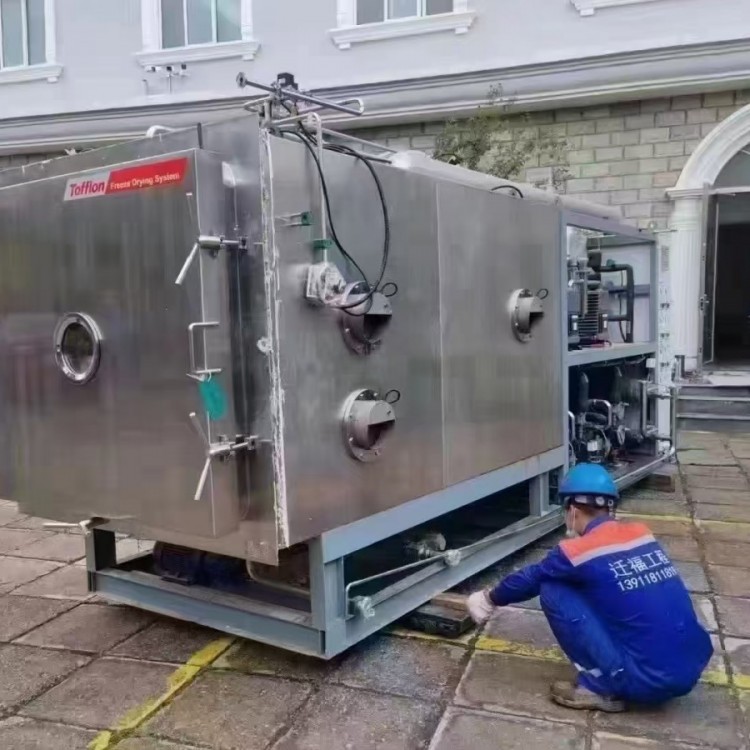

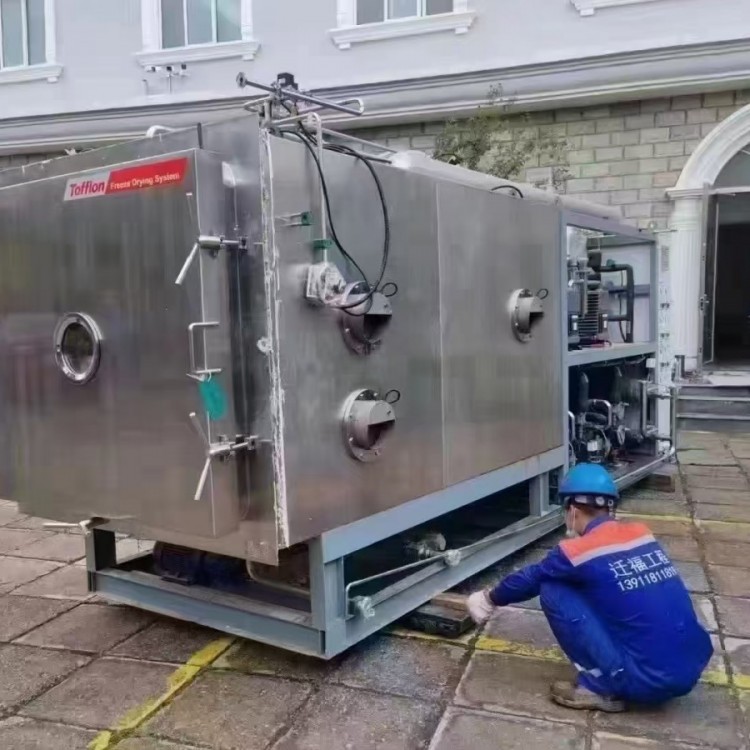
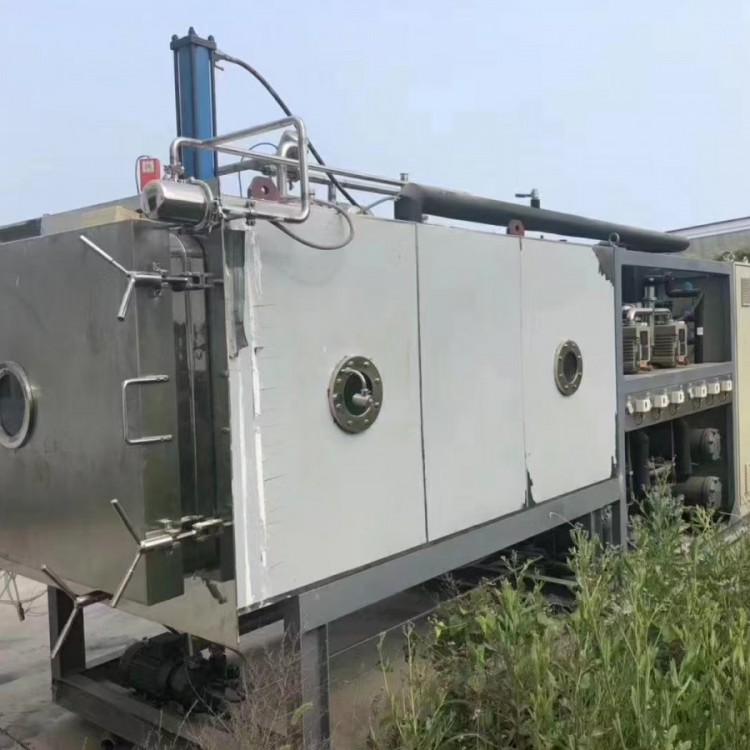












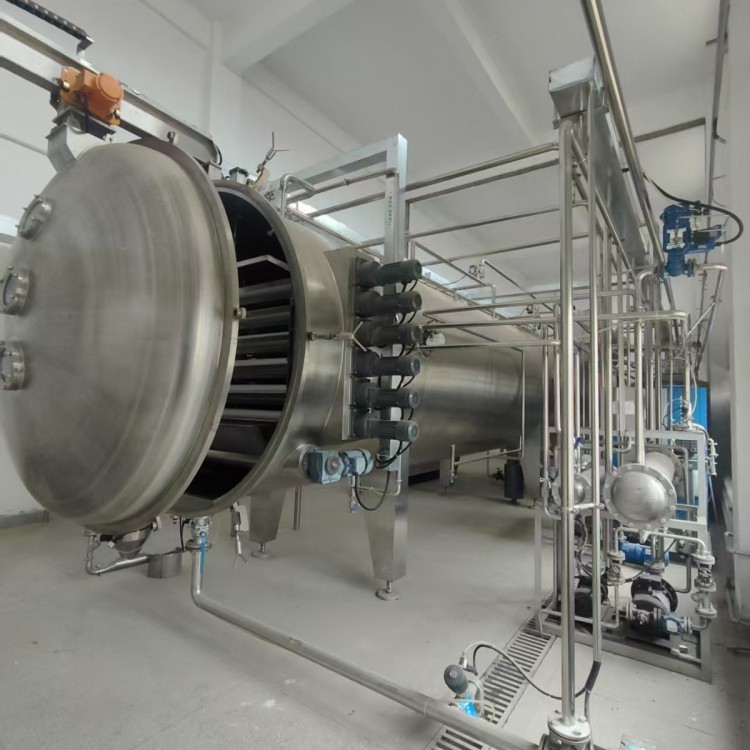


Vacuum freeze-dryer consists of a drying chamber, refrigeration system, vacuum system, and media heat exchange circulation system.Automatic Control SystemPneumatic systems and in situ cleaning and disinfection systems. [1]
Drying cabinet
A desiccator is a vacuum-sealed low-pressure vessel, made entirely of stainless steel, capable of withstanding both positive and negative pressures, and meets the requirements for steam sterilization. The sealing is done with high-temperature and low-temperature-resistant silicone rubber, while the insulation layer is a closed-cell elastic thermal insulator.Insulation materials。
1) Case: Utilizes a high space-efficiency rectangular case with a drainage port at the bottom, an observation window on the side, and equipped with a pressure gauge, temperature-resistance thermometer, exhaust valve, leakage valve, safety valve, and a spray-inlet joint.
2) Shelves: The energy required for cooling and heating food is transferred to the shelves via a heat exchange medium, then to the food. The shelves are made of special hollow sandwich panels, featuring high strength and good sealing. The shelf assembly is mounted inside the freeze-drying chamber with supports. A board layer should be placed on the top as a heat radiation compensation board to ensure that all spaces inside the chamber are at the same temperature environment. Additionally, guard tracks are set on both sides and at the back of the shelves to prevent food trays or food from falling off the shelves.
3) Lid: Equipped with an automatic cylinder locking device. Ensures the required vacuum during the internal pressure reduction of the box. When the vacuum pump is in operation, the butterfly valve between the thousand boxes is opened, and the air and water vapor in the vacuum drying chamber pass through a moisture trap to extract moisture before entering the vacuum pump. The exhaust gas from the vacuum pump is discharged from the system. An oil mist collector is installed at the exhaust port of the vacuum pump to prevent smoke pollution in the indoor environment. To prevent steam from entering the pump, the system is equipped with an air trap valve, which is opened during the drying process.
Media Heat Exchanger Recirculation System
The energy required for both cooling and heating of food is driven by a circulating pump, transmitted through a heat exchange medium to the trays, and then to the food. The cooling source for food is provided by the refrigeration system, while the heating source for warming is supplied by a heating tank. The switching between cooling and heating is achieved by controlling the electromagnetic valves of the cooling and heating sources. During heating, steam enters the heating tank to heat the medium.Pneumatic three-way regulating valveAdjust the mixture ratio of the heat medium from the heating tank and the plate reflux heat medium, and control the temperature of the plates by opening and closing the cooling water solenoid valve of the plate heat exchanger. The system includes a heat medium heating tank and a plate heat exchanger.Pneumatic regulating valveCooling water solenoid valves, circulating pumps, pipelines, solenoid valves, temperature sensors, etc.
Automatic Control System
Features include freeze-dry curve setting, vacuum pump testing and control, media, food, and condenser temperature control, drying state detection, bypass, in-place cleaning and sterilization, automatic protection, and alarm functions.
Pneumatic System
Control pneumatic valves
In-situ Cleaning and Disinfection System
Used for cleaning and steam sterilization of dry box water traps