











I. Product Description and Applications:
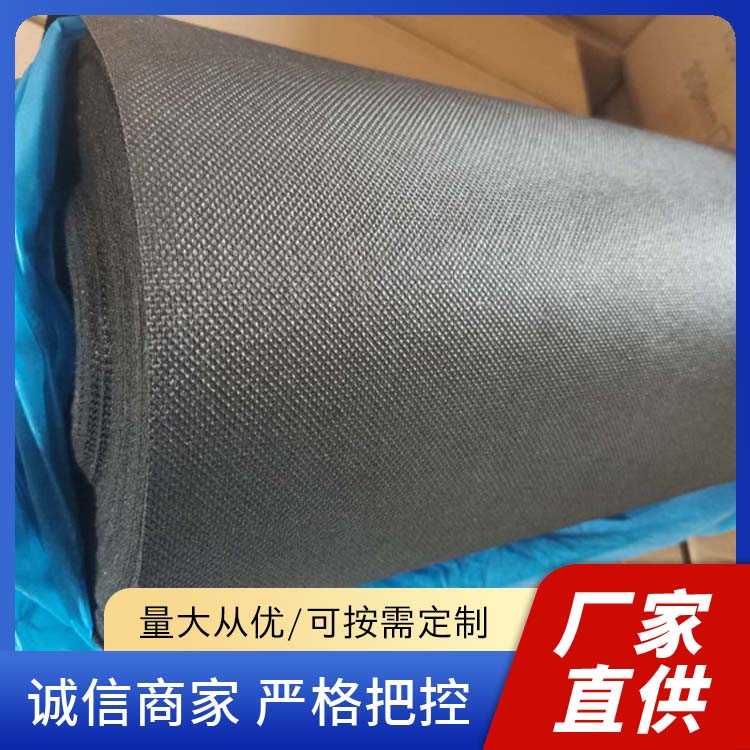
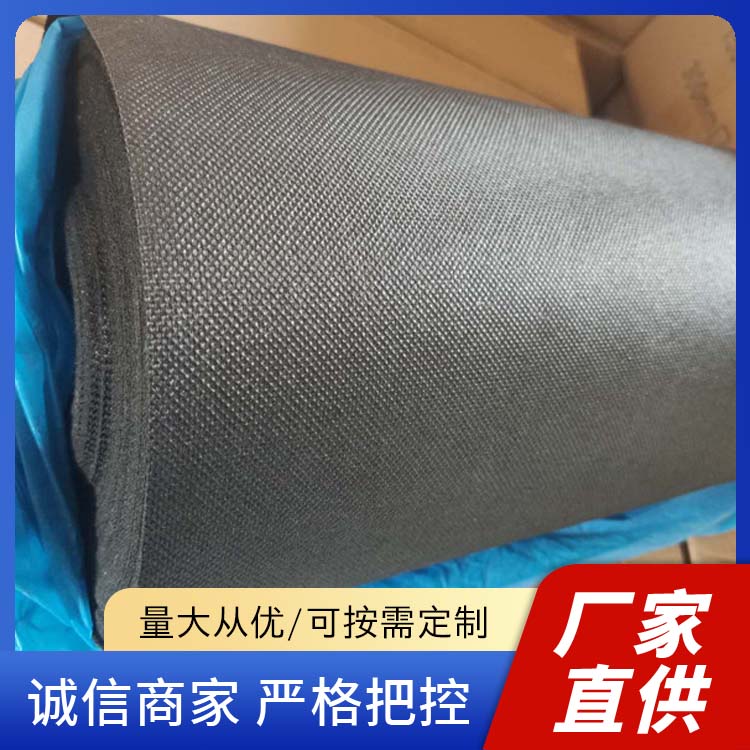
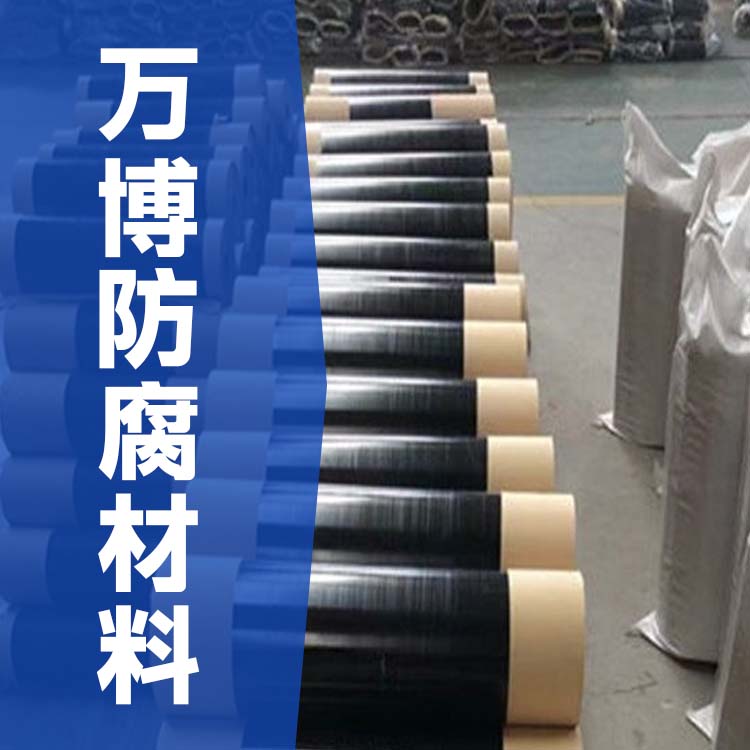
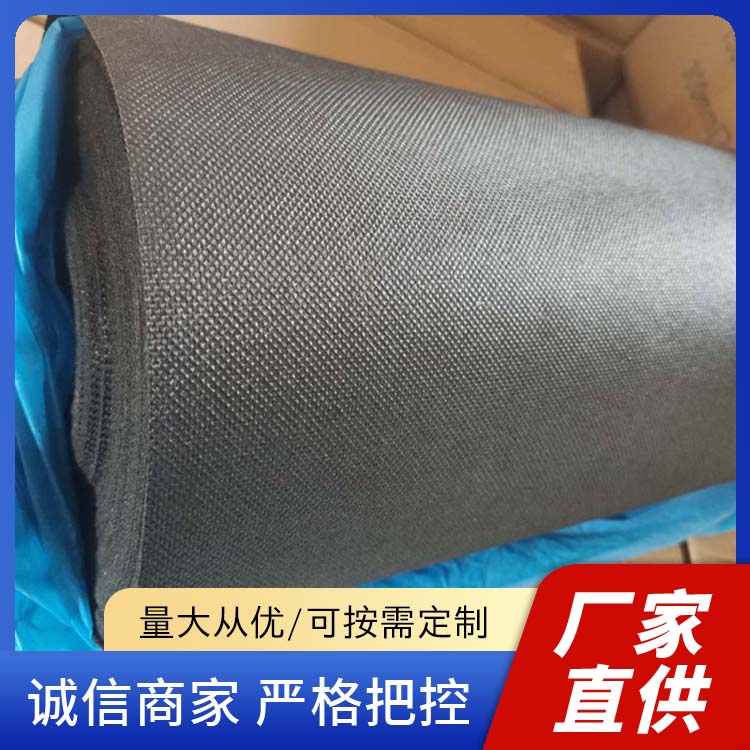
Epoxy coal tar cold wrap tape is composed of two parts: the base tape and the shaping adhesive. The base tape is made by impregnating the base material with epoxy coal tar in polypropylene nonwoven felt, followed by cutting, coiling, and deoiling. It is available in three thicknesses: GH401 reinforced grade (0.4mm), GH402 extra reinforced grade (0.6mm), and GH403 thickened type (0.8mm), with widths cut to customer specifications. The shaping adhesive is composed of separately packaged A and B components and is available in three types based on application temperature: normal temperature type (for temperatures above 0℃), low temperature type (for temperatures between 0℃ and 8℃), and ultra-low temperature type (for temperatures between -5℃ and 25℃). The base tape and shaping adhesive are supplied together when the cold wrap tape is shipped. During installation, the A and B components of the shaping adhesive are mixed in equal proportions, then wrapped around the surface of the steel pipe in the structure of shaping adhesive/base tape/shaping adhesive. After natural curing, it forms an epoxy coal tar anticorrosion layer. It is suitable for the external anticorrosion of buried and underwater steel oil, water supply, and heating pipelines, as well as for the waterproofing and leakage prevention of concrete structures such as steel storage tank bottoms, sewage pools, roof waterproofing layers, bathrooms, basements, and more.
II. Product Features
1. The epoxy coal tar cold-skin tape is a solvent-free environmental product, meaning both the base tape and the molding adhesive contain no volatile solvents. It is safe, fireproof, and effectively protects the environment and the health of construction workers.
2. The base material for the cold-skin tape is chosen as polypropylene non-woven felt, which is a new type of synthetic fiber with high mechanical strength and excellent corrosion resistance. Moreover, the surface is wax-free and has uniform thickness, ensuring a smooth and flat surface for the corrosion-resistant layer, tight bonding, few pinholes, and superior electrical and corrosion-resistant properties.
3. The sizing adhesive is a solvent-free quick-drying formula with a fast curing rate for the preservative layer. It is also categorized into two types based on seasons: normal temperature and ultra-low temperature. This allows for normal construction year-round, alleviating the challenges of winter construction.
4. Easy and quick installation, a single wrap achieves the required thickness and electrical discharge leak test voltage for the reinforced or extra-reinforced anti-corrosion coating as specified in the Chinese Petroleum Standard SY/T 0447-96. This is more labor-saving, convenient, and quick compared to the original combination of epoxy coal tar paint and glass fiber used for the same anti-corrosion layer.
5. The epoxy coal tar cold wrapping tape allows for the prefabrication process of the epoxy coal tar anti-corrosion coating, effectively enhancing construction quality and speed. It has expanded the application scope of this cost-effective, long-lasting, and excellent anti-corrosion performance epoxy coal tar glass fiber anti-corrosion coating.
Section 3: Instructions for Use
1. Surface Treatment. The steel surface must be cleaned of oil污, and it is preferable to use shot blasting or sandblasting to achieve a minimum Sa 2 grade as per GB/T 8923, with Sa 2 1/2 grade being ideal. In cases where construction conditions are limited, manual or power tools can be used to achieve a St 3 grade. After the steel surface treatment is approved, painting must be done as soon as possible before rust reappears. Concrete surfaces should be completely dry (surface moisture less than 6%), with loose materials removed to present a smooth and solid surface.
2. Molding adhesive preparation. First, mix the A and B components separately. Then, mix them in a 1:1 ratio (by weight) and use immediately after thorough mixing. The molding adhesive uses a quick-drying hardener, which cures rapidly but has a shorter shelf life. Therefore, it must be used within 1 hour in summer and within 2 hours in winter after preparation. It should be mixed and used on-site to prevent solidification in the mixing bucket, rendering it unusable. During application, the ambient temperature should be above 5°C, and room-temperature molding adhesive should be used (not suitable below 5°C as the curing time after application is too long, affecting the progress of the work). In temperatures below 5°C, use low-temperature molding adhesive (not suitable above 5°C, as it cures too quickly, the prepared molding adhesive may solidify in the bucket, and the coating surface may develop bubbles, affecting quality).
3. Filling weld gaps. In cases where the weld height exceeds the surface of the steel pipe by 2mm or there is a special condition with two steel plates overlapping, the gaps on both sides of the weld and the overlapping areas of the steel plates should be filled with putty to create a smooth transition surface. The concave pits on the concrete surface should also be filled and smoothed. The putty is made by mixing a prepared molding adhesive with approximately double its weight of talcum powder, and should be mixed and used immediately. It should be used up within 2 hours after mixing.
4. Gluing and wrapping. Before applying the adhesive, the steel surface must be dry. Ensure sufficient adhesive quantity, no missed spots, and immediately wrap the base tape after gluing, with a overlap width of 20-25mm. It must be tightened to ensure a tight contact and a flat surface without bubbles. Some adhesive may seep out from the tape surface (indicating insufficient adhesive quantity). After wrapping, immediately apply a uniform layer of curing adhesive on the tape. If wrapping two layers of base tape is required, wrap another layer in reverse and apply another curing adhesive layer on the surface. At the end of each workday, use the diluent provided by our company to clean the painting tools. After use, filter out debris and the diluent can be reused, but it must be stored airtight and should not be used to dilute solvent-free curing adhesives.
5. Leak Detection and Patching. After the anticorrosive layer is wrapped and allowed to dry naturally, it must remain dry without rain or water immersion for at least 8 hours. Once the anticorrosive layer is fully dry, use an electric spark leak detector in accordance with the Chinese Petroleum Standard SY/T 0447-96, which specifies the leak detection voltage: 2500V for reinforced grade (0.4mm), 3000V for extra-reinforced grade (0.6mm), and 5000V for super-reinforced grade (0.8mm) to inspect for minor pinholes caused by uneven or missed coating. Mark the locations of the pinholes with chalk and promptly apply a curing sealant to patch the leaks. If a higher leak detection voltage for the anticorrosive layer is required, apply 1 to 2 layers of curing sealant or epoxy coal tar paint after the layer is fully dry.
6. Quality Inspection. Conduct appearance, thickness, leak point, and bonding strength checks according to the conditions and methods specified in SY/T 0447-96.
4. Cautionary Notes
1. Must be used in conjunction with our supplied baseband and shaping adhesive (including A and B components).
2. The quantity of molding glue included in each box is only the normal usage for standard construction following the molding glue/base tape/molding glue structure.
3. Handle with care during transportation; ensure the boxes are properly oriented, protect from rain, and avoid direct sunlight exposure.
4. Store the epoxy coal tar cold wrapping tape in its original packaging, in a cool, dry, well-ventilated warehouse away from any fire sources. Stack up to 4 layers, with a storage period of six months.