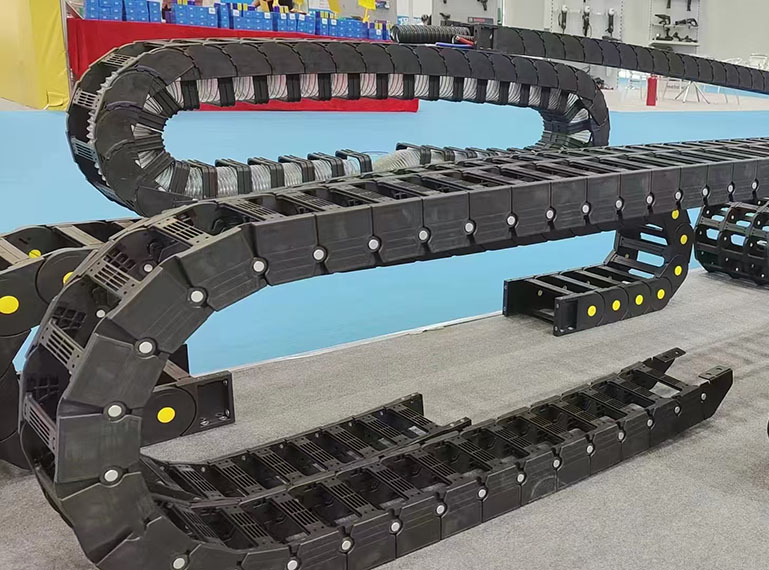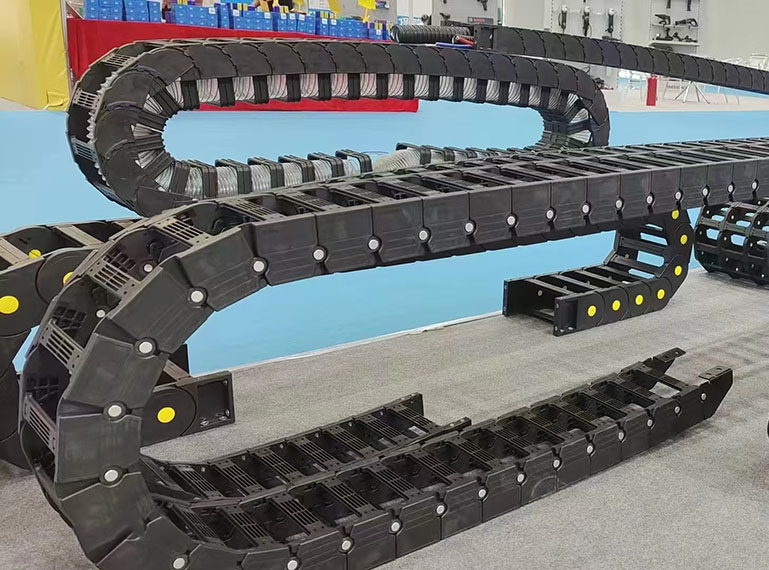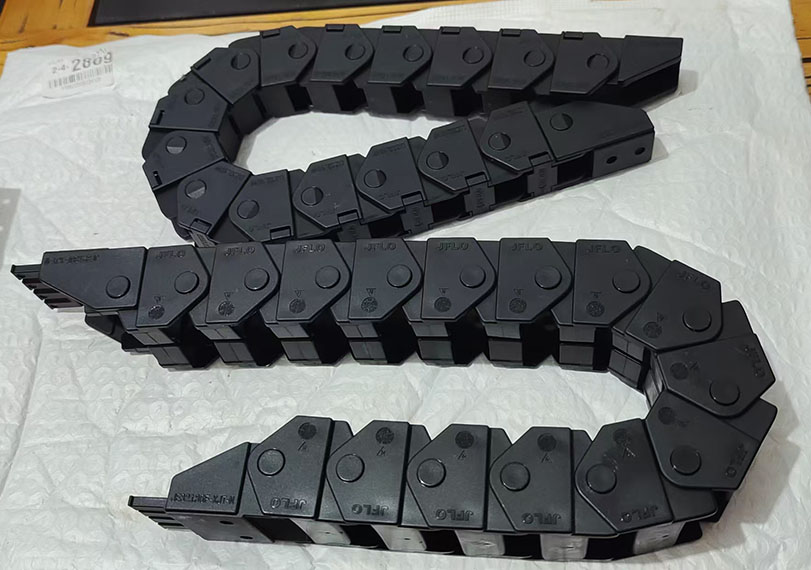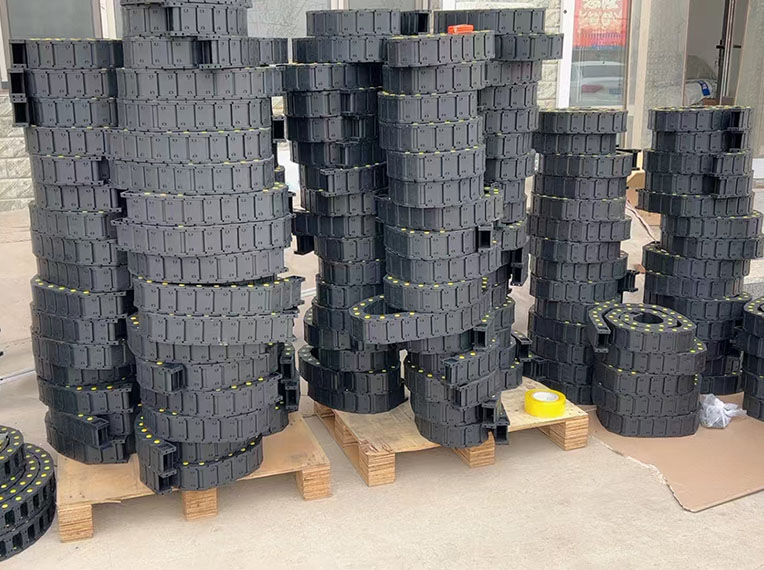

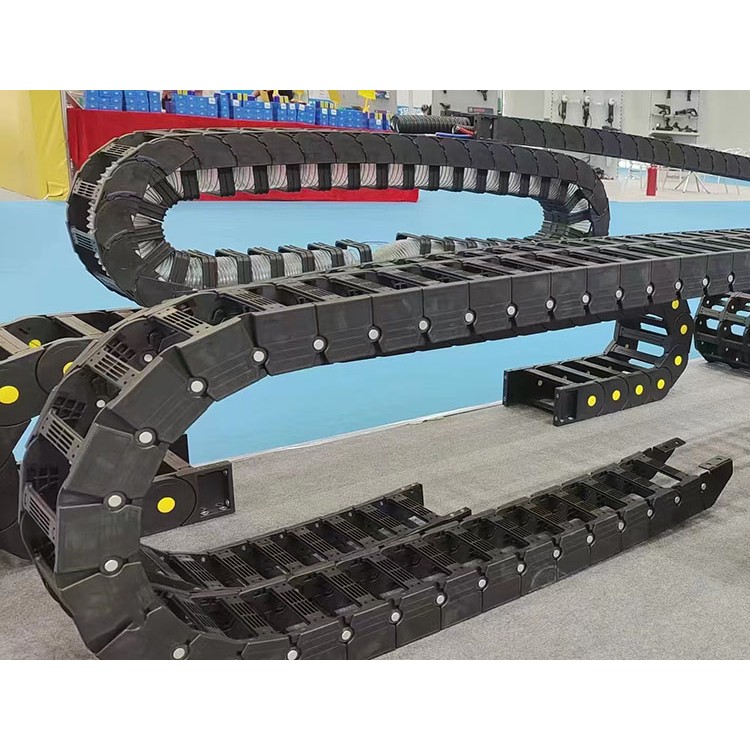


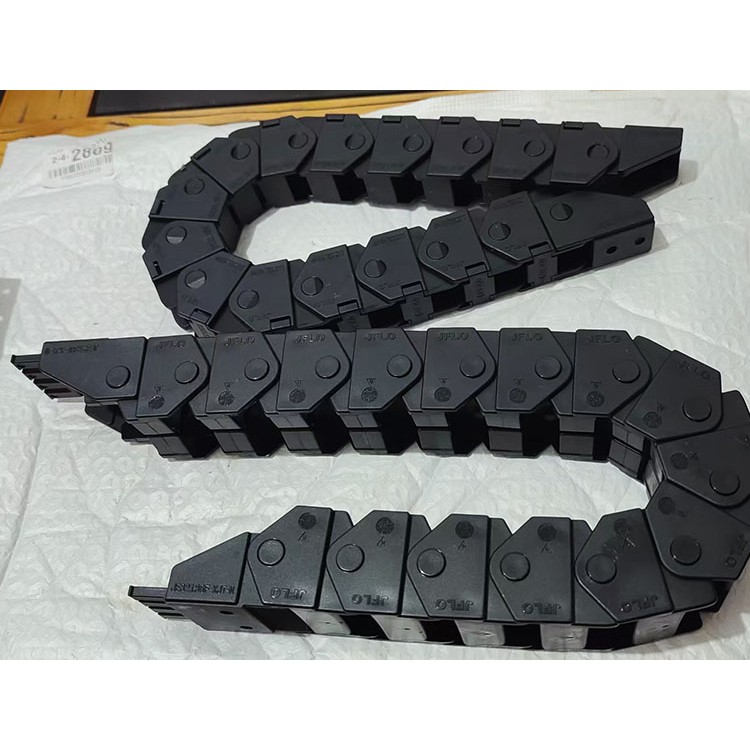
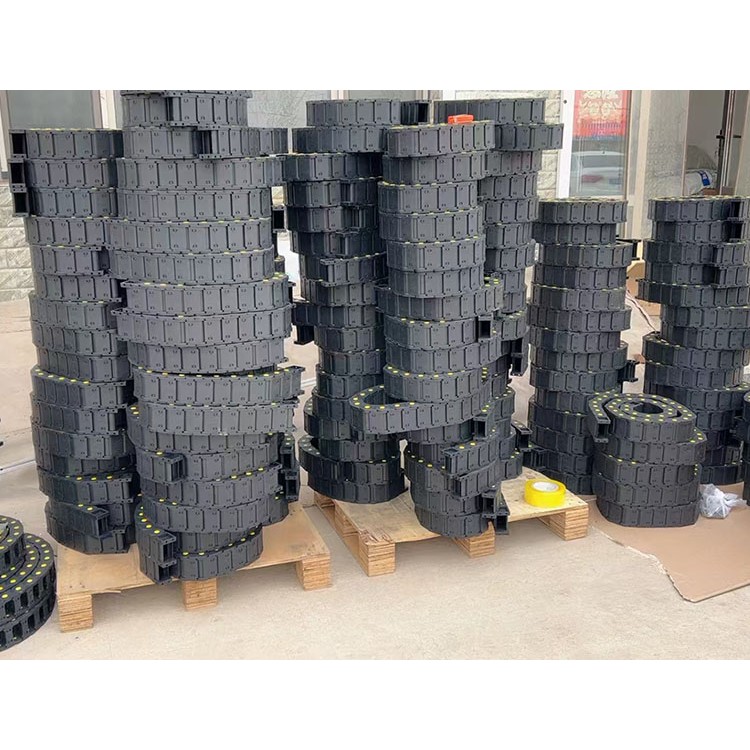







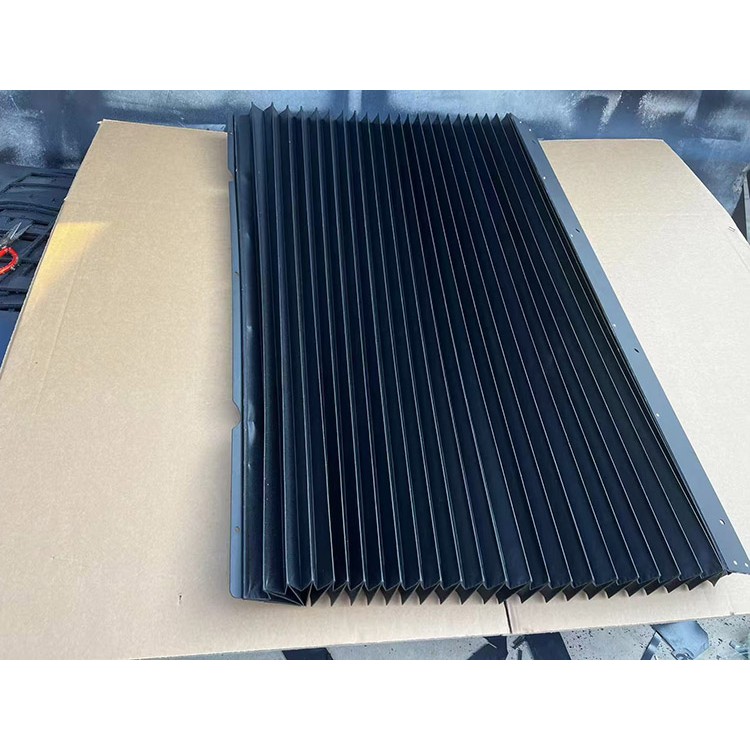

Tiebacks, also known as cable or wire conduit protection tiebacks, are devices used to secure cables, wires, air-pressure hoses, or hydraulic hoses for ease of rotation and movement.
Cable chains are categorized into steel and plastic types. Steel cable chains are made of steel and aluminum alloys and can be customized, while plastic cable chains are also known as engineering plastic cable chains. Cable chains are divided into three types based on the environment and requirements: bridge-type, fully enclosed, and semi-enclosed. Rectangular metal hoses, protective sleeves, corrugated pipes, and flexible metal hoses can also be considered as cable chain protection and mobile power supply products. Cable chains are used in reciprocating motion applications, providing traction and protection for internal cables, oil lines, gas lines, water lines, and more. Cable chains have been widely applied in industries such as CNC machine tools, electronic equipment, glass machinery, injection mold robots, handling machinery, plastic machinery, lifting equipment, woodworking machinery, automotive industry, industrial vehicles, metal processing machines, machine tools, casting machinery, and port equipment.
The chain is composed of numerous units that rotate freely between each other.
The same series of cable guides have identical inner and outer heights, and pitch. The inner width and bending radius R can be chosen from various options.
The unit link is composed of left and right chain plates and top and bottom covers. Each section of the drag chain can be opened easily, allowing for quick assembly and disassembly without the need for wiring. After the cover is opened, cables, oil tubes, gas tubes, water pipes, and other items can be placed into the drag chain.
Each link of the chain can be designed to be removable for easy installation and maintenance. It operates with low noise, is wear-resistant, and can move at high speeds.
Additional separators are available to divide the space within the chain as required.
Available in: steel conduit, steel-aluminum conduit, plastic conduit, stainless steel conduit, nylon conduit, etc.
Forms include: bridge chain conveyors, multi-link bridge chain conveyors, enclosed conveyors, noise-reducing conveyors, open conveyors, S-shaped conveyors, universal joint conveyors, wire passing conveyors, etc. According to the requirements of the usage environment: oil-proof, water-proof, anti-garbage pollution, acid and alkali resistance, high-temperature resistance, wear resistance, length extension required, load-bearing required, noise-free, cable concealment required.
Assembly Types: Bridge-type Cable Chain, Full Enclosed Cable Chain, Semi-Enclosed Cable Chain.
1. Suitable for reciprocating motion applications, it provides traction and protection for internal cables, oil tubes, gas pipes, water pipes, and more. 2. Each section of the chain can be opened for easy installation and maintenance. It operates quietly, is wear-resistant, and can move at high speeds. 3. The chain has been widely used in CNC machine tools, electronic equipment, stone machinery, glass machinery, door and window machinery, injection molding machines, robotic arms, lifting and transportation equipment, and automated warehouses.