












Zhangjiagang Aiseman Intelligent Equipment Co., Ltd.
Product Features:
Acoustic insulation
The thermal conductivity of the composite resin tiles is 0.325 W/mK, approximately one-third that of clay tiles, one-fifth that of 10mm thick cement tiles, and one-2000th that of 0.5mm thick color steel tiles. Without considering the addition of insulation, the thermal insulation performance of the resin tiles can still achieve ---. Acoustic positioning tests show that the resin tiles can effectively absorb noise under the influence of heavy rain, hail, strong winds, and other external factors.
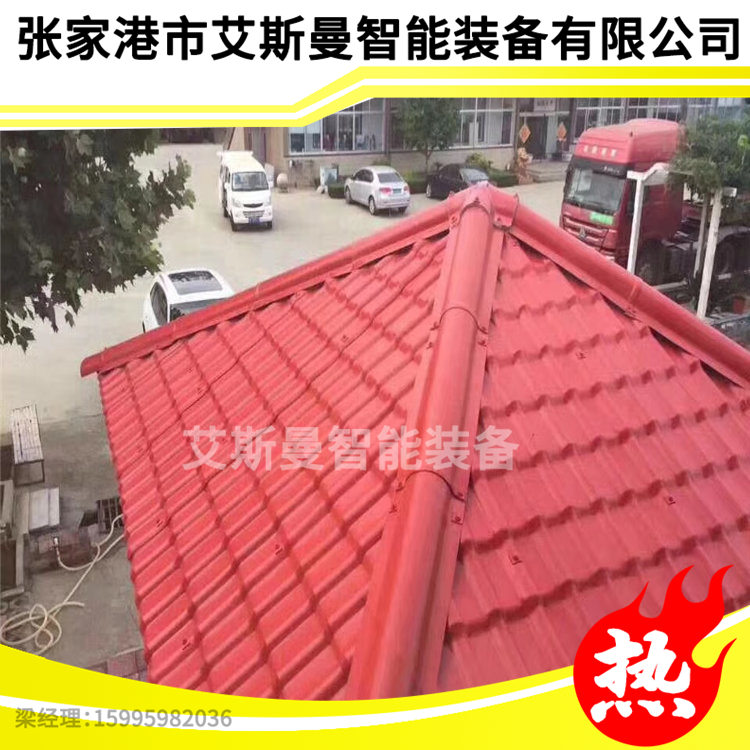
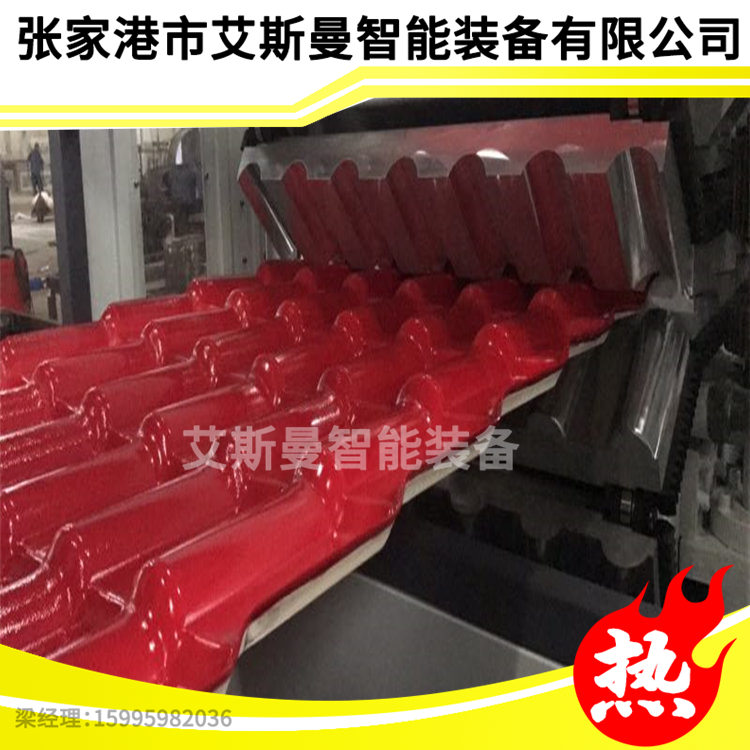
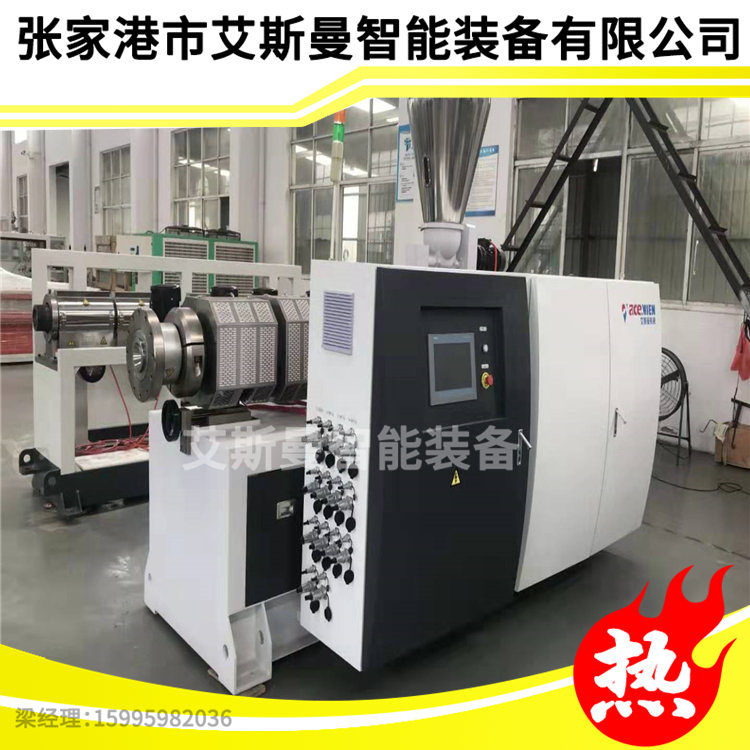
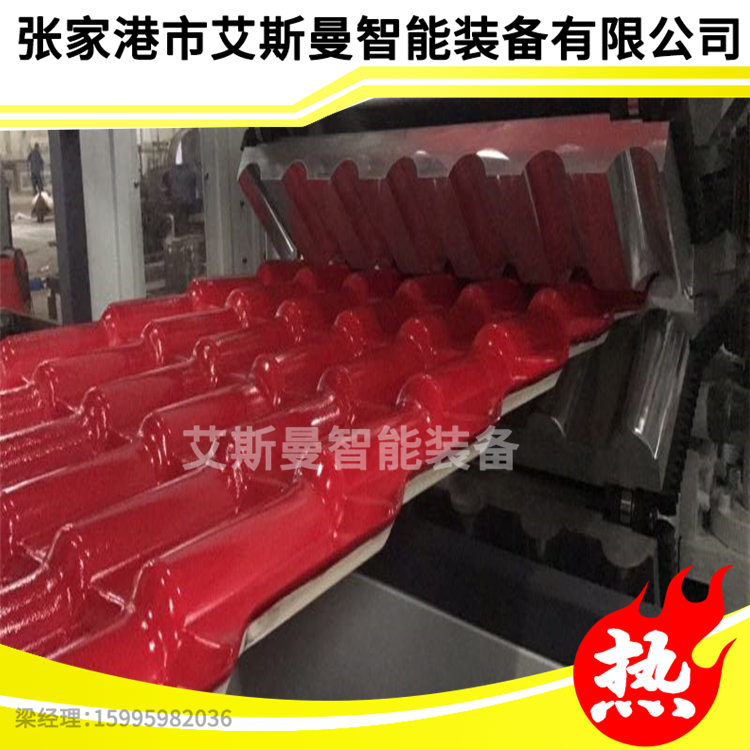
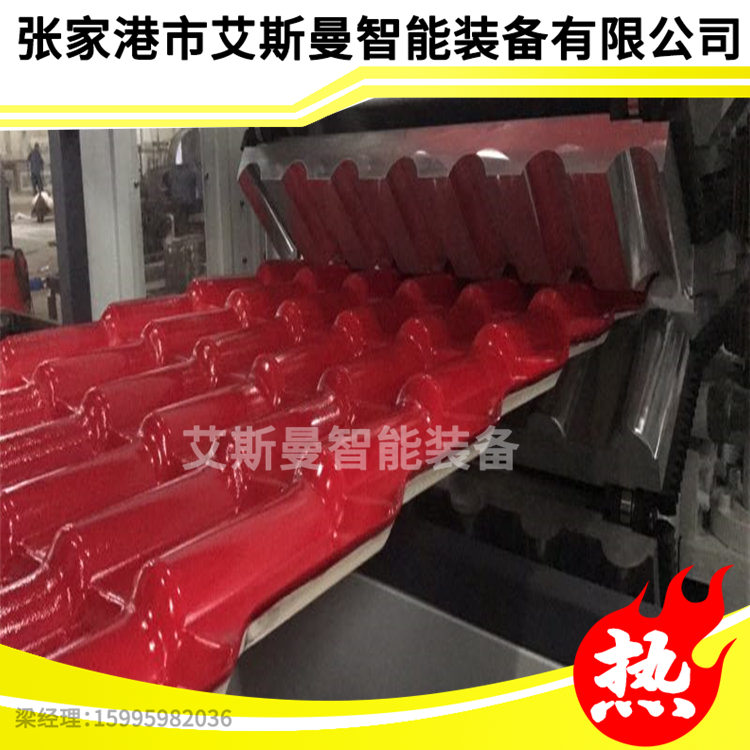
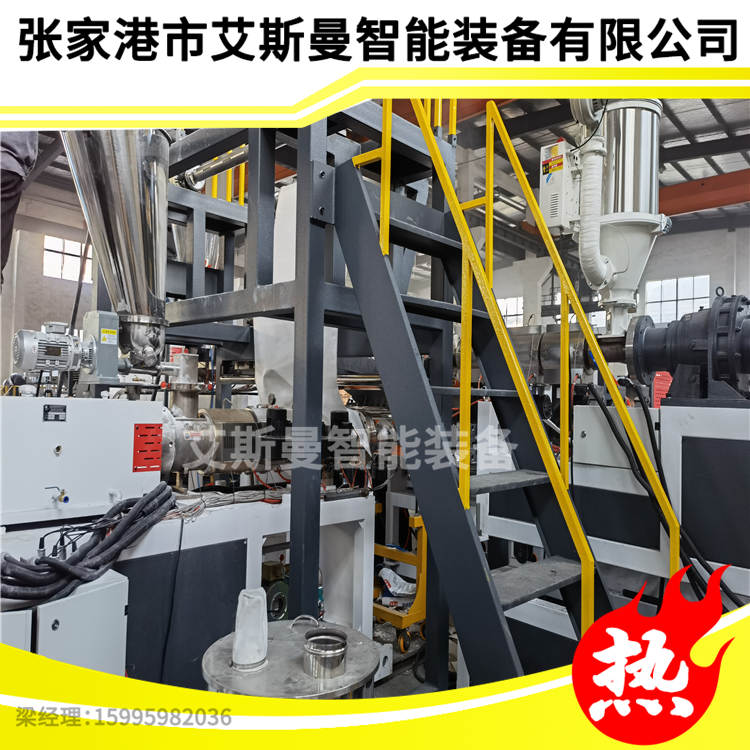
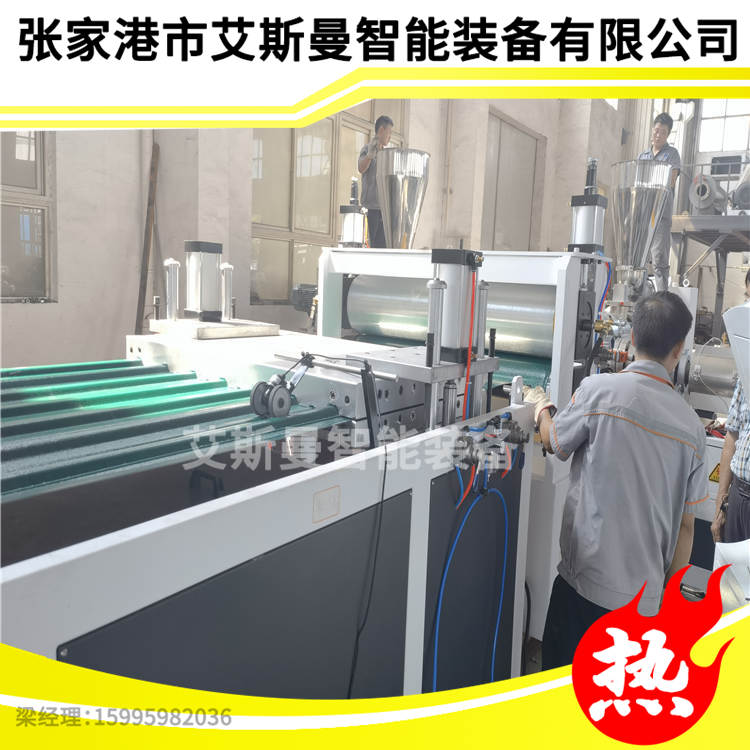
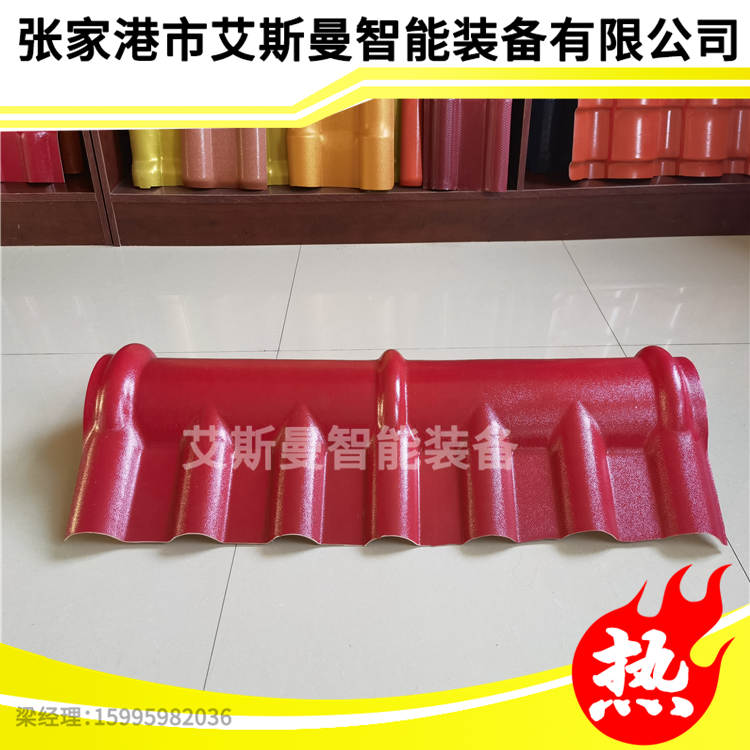
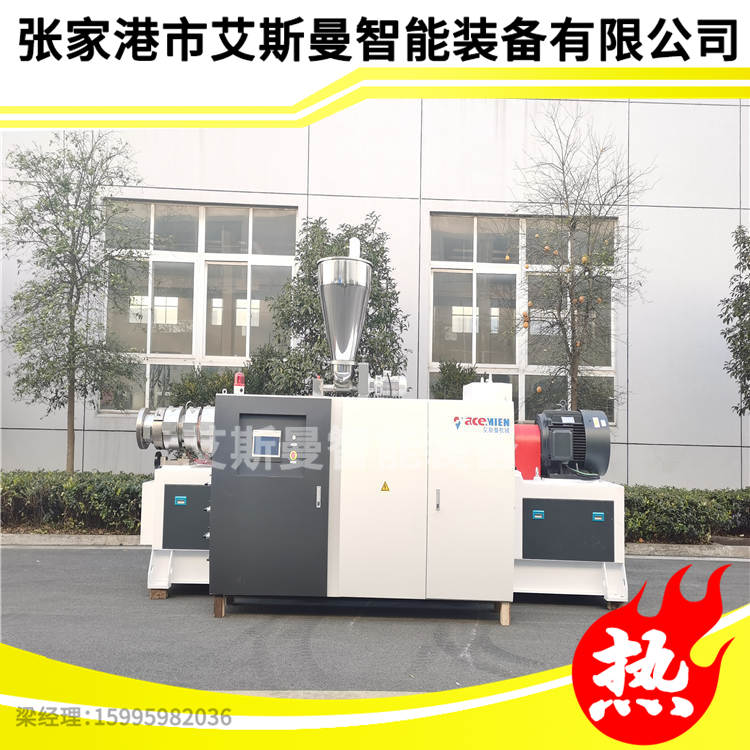
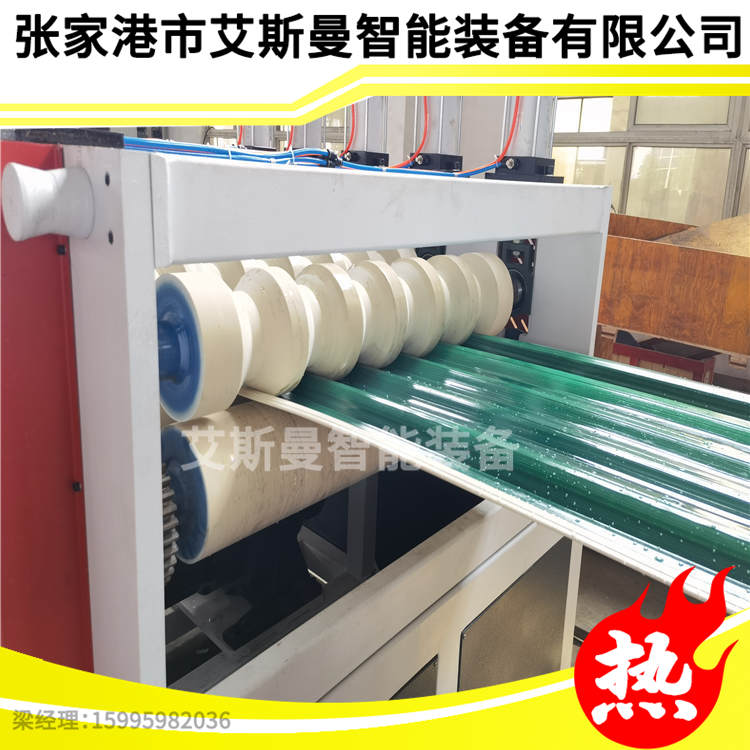
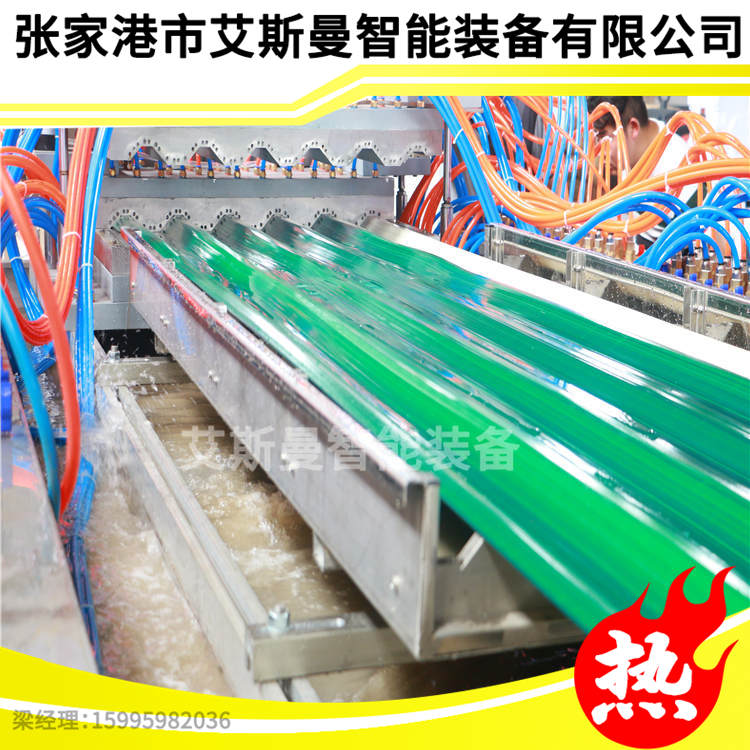
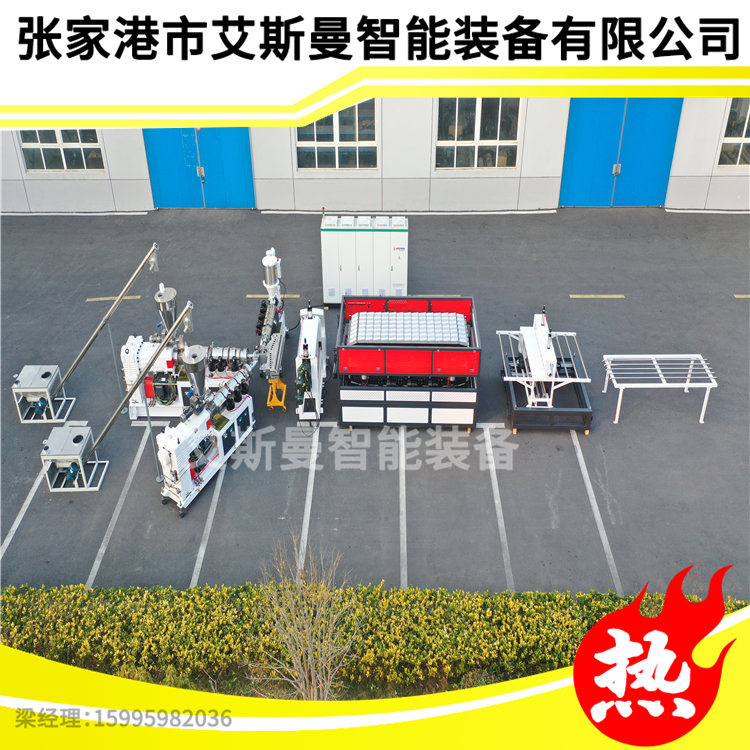
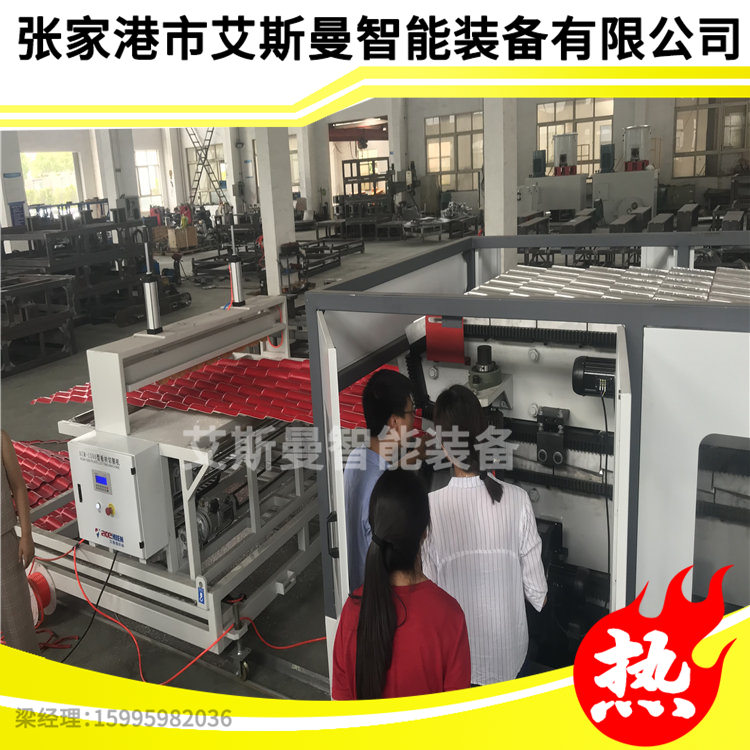
Plastic Ancient Tile Machinery Equipment, Manufacturer of Resin Tile Production Machines
2. Excellent impact resistance and low-temperature performance
Physical tests of composite resin tiles: a 1 kg steel ball dropped from a height of 1.5 meters onto the tile surface without causing cracks. After 10 impacts with the ball falling from a low temperature, there was no damage. After 10 freeze-thaw cycles, the tiles showed no hollowing, bubbles, peeling, or cracking.
3. Load-bearing capacity of *
This product boasts load-bearing capabilities. It has passed the quality inspection by the Shanghai Building Materials and Components Quality Station. Under a support spacing of 660mm, an additional load of 150kg was applied, yet the tiles remained crack-free and undamaged.
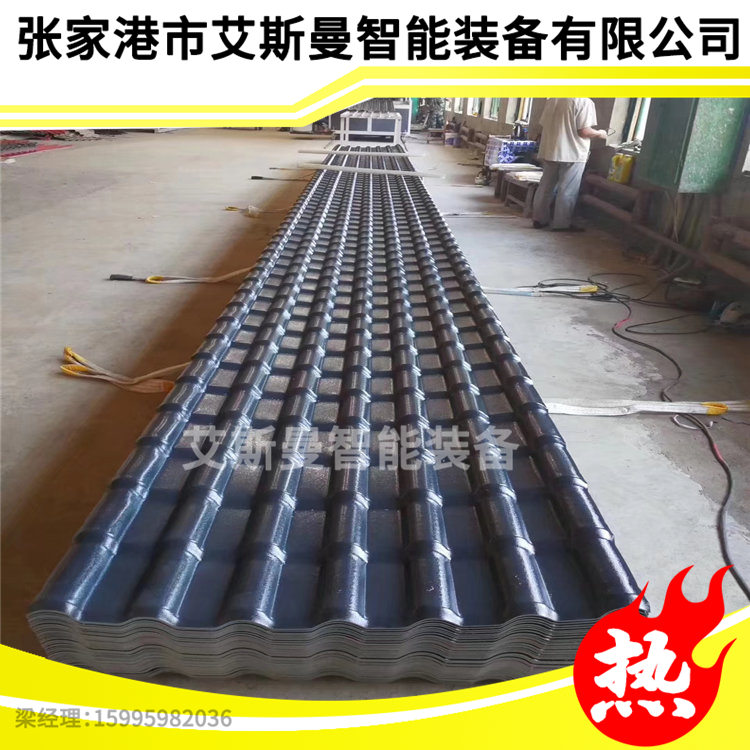
Zhangjiagang Plastic Composite Roofing Tile Production Line, Zhangjiagang Synthetic Resin Roofing Tile Production Line, Zhangjiagang Ancient Style Roofing Tile Production Line
4. Excellent corrosion resistance
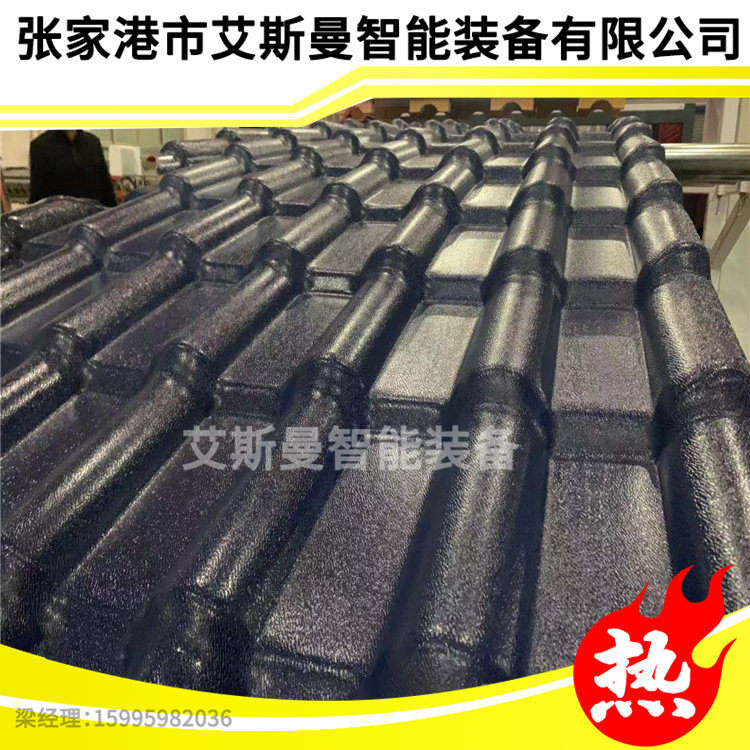
The surface PMMA resin and the main synthetic resin of this product are both corrosion-resistant, not susceptible to degradation from rain or snow. They can withstand long-term corrosion from various substances such as acids, alkalis, and salts. Laboratory tests show no chemical reaction after 24 hours of immersion in salt, alkali, and various acids below 60 degrees.
The synthetic resin shingles are made from a weather-resistant resin that is inherently dense and impermeable to water, eliminating the issue of microporous seepage. With a large individual sheet size, the roof has minimal joints and the overlapping areas are tightly sealed, thus providing superior self-adhesive properties, allowing for the elimination of additional layers, thereby reducing the cost of construction.