
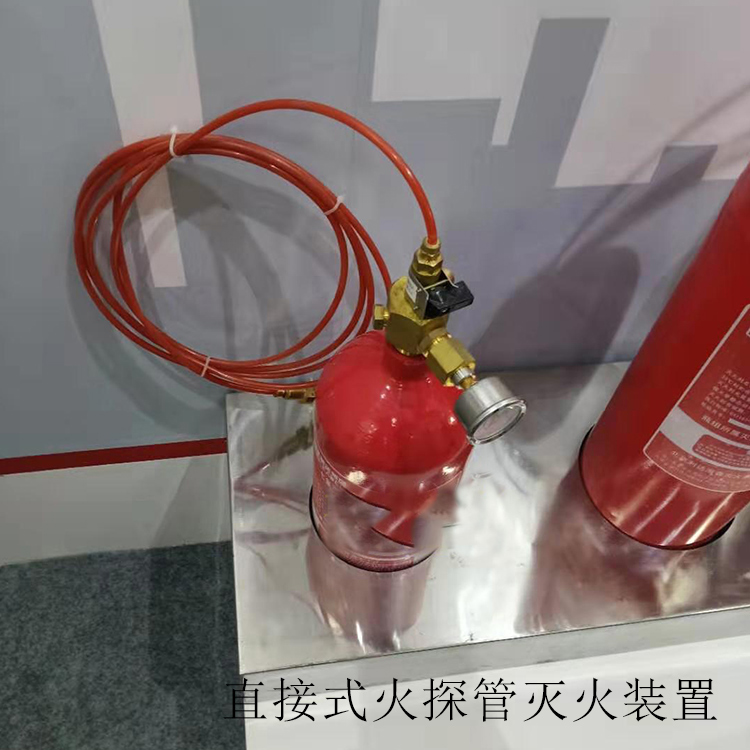










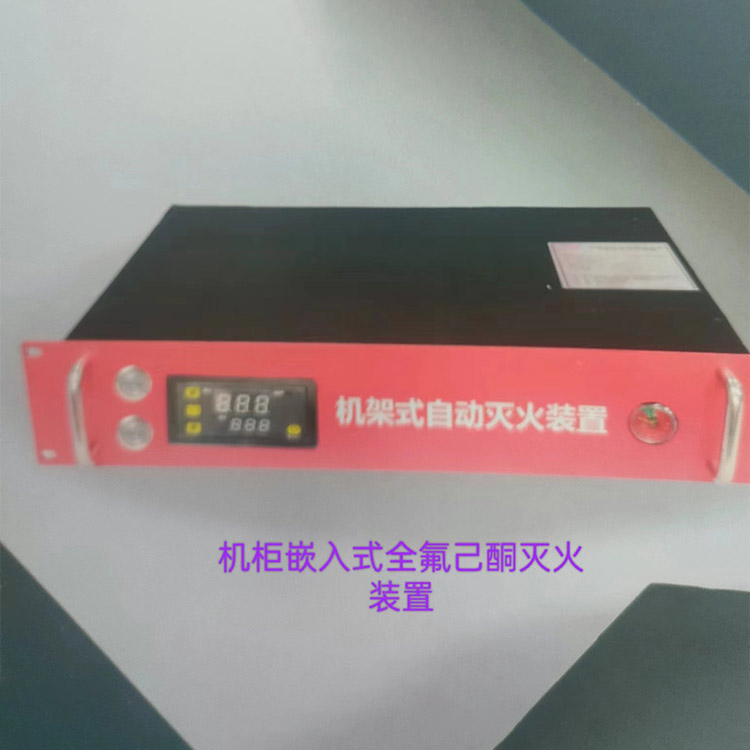
1. The Fire Tube Type Automatic Fire Extinguishing Device is a more scientific and rational fire extinguishing solution. It utilizes a flexible, non-metallic fire tube as the fire detection and extinguishing agent discharge element, operates without any power source, and combines fire detection with extinguishing. It is a product encouraged by the National Development and Reform Commission for the industrial upgrade during the 13th Five-Year Plan period.
2. The flame tube-type automatic fire extinguishing device operates without any power supply or traditional electrical control, using fire detectors. It relies solely on the flame tube material's accurate physical sensing to detect and extinguish fires. This design avoids false alarms and malfunctions caused by electromagnetic interference, smoke and dust, oil stains, humidity, and human errors, making it more convenient, stable, and reliable.
3. The flame detection and automatic fire extinguishing device with a flexible non-metallic probe tube can be installed close to the fire-prone areas inside equipment (where traditional fire protection systems' detection and extinguishing agents are typically placed at the top of the building, far from the actual fire source), allowing for timely fire detection and precise, rapid point-to-point extinguishing, which is true early fire suppression.
4. The fire tube type temperature-sensing automatic fire extinguishing device transforms the traditional gas fire extinguishing system from full flooding within the entire building to localized flooding only for flammable equipment inside, thereby reducing the fire extinguishing agent by over 80%. It also eliminates the need for complex piping networks, cylinder storage rooms, and electronic control equipment, significantly reducing the weight and space occupied by the fire extinguishing device, as well as minimizing the environmental and human harm caused by the extinguishing agent.
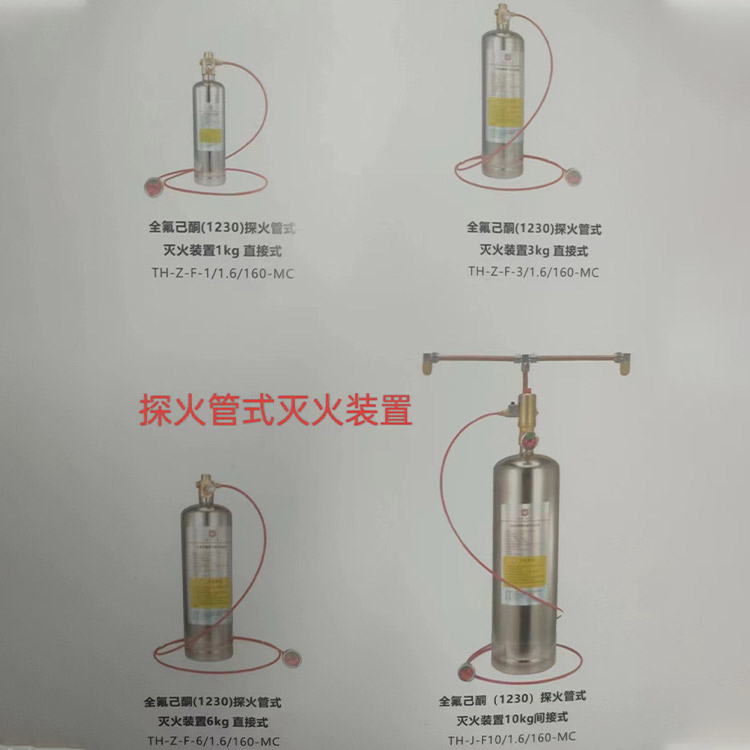
5. Automatic fire extinguishing systems with flame detection tubes can be divided into two categories based on the function of the detection tubes: "Direct Extinguishing Systems" and "Indirect Extinguishing Systems." A device with detection tubes that combine fire detection and extinguishing agent discharge is termed a "Direct Extinguishing System"; if the detection tubes only have fire detection capabilities and the extinguishing agent is discharged through a separate release tube, this type of device is referred to as an "Indirect Extinguishing System."
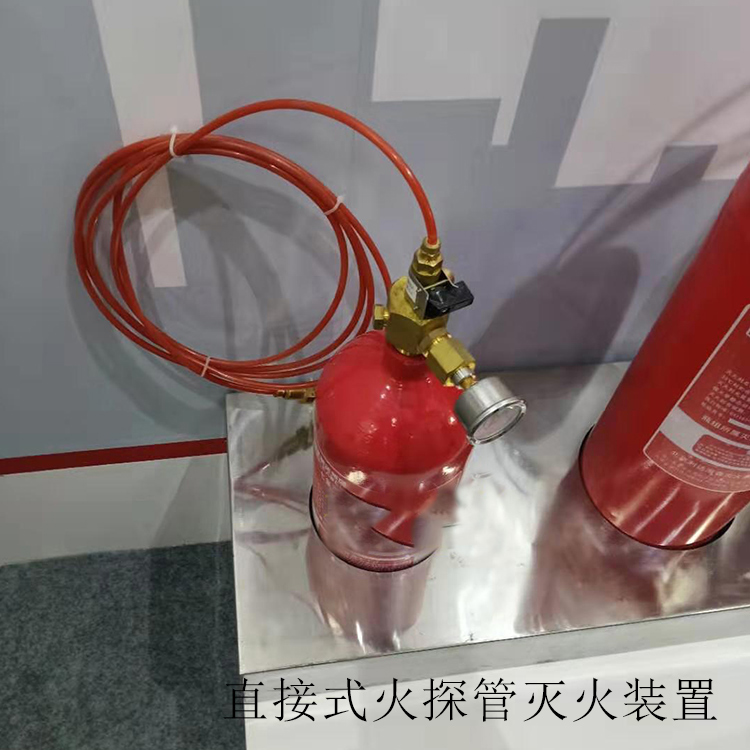
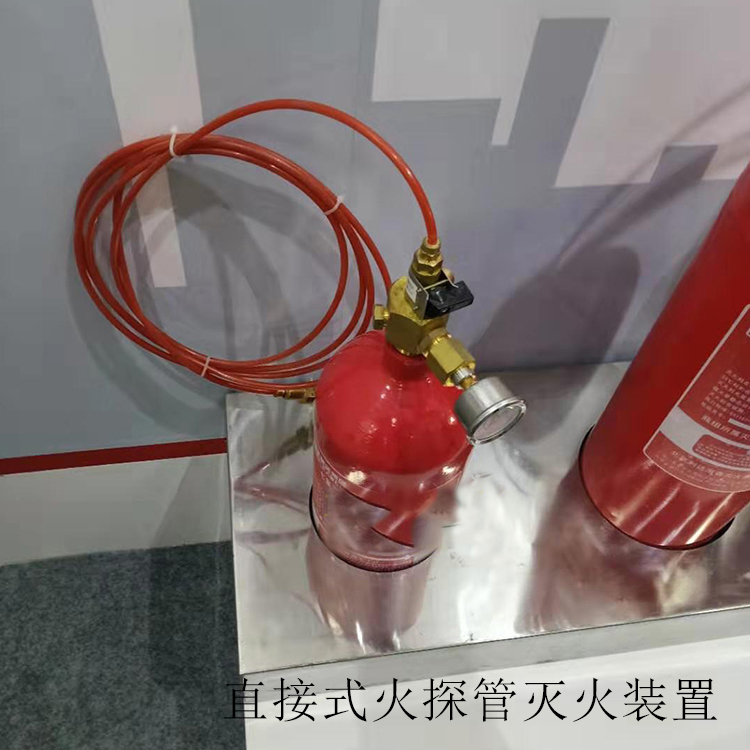
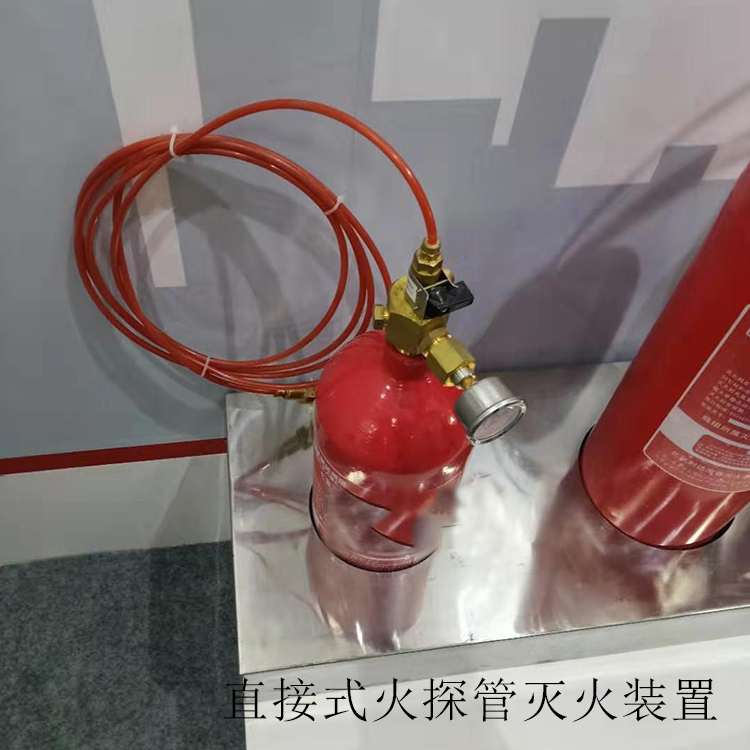
6. The direct extinguishing device in the flame-detecting tube-type automatic fire extinguishing system is a flexible flame-detecting tube installed inside the protected equipment. In the event of a fire, the flame-detecting tube closest to the fire source heats up, softens, and bursts, causing a loss of pressure inside the tube. This pressure drop opens the container valve, which is normally closed by pressure balance, releasing the fire extinguishing agent from the container bottle through the burst opening of the flame-detecting tube, directly onto the fire source, quickly extinguishing it at the initial stage. Mainly used for protecting equipment with a shell volume of 6m³ or less.
7. Indirect fire extinguishing devices in flame-detecting pipe-type automatic fire extinguishing systems. The flexible flame-detecting pipes are arranged in the fire detection area. Upon a fire outbreak, the pipes closest to the fire source heat up, soften, and burst, causing a loss of pressure inside. This pressure loss opens the container that is closed by pressure balance, releasing the fire extinguishing agent inside the container through a separate release pipe and spraying it into the protected space for extinguishing the fire. Mainly used for protecting spaces of 60m³ or less and equipment without an enclosure.
8. The flame tube type automatic fire extinguishing device with temperature sensing is suitable for microwave rooms, decimeter wave rooms, transformer substation rooms, and uninterruptible power supply rooms within broadcast and television transmission towers.
9. The programmed exchange rooms, control rooms, and signal transfer point rooms of the fire tube thermal automatic fire extinguishing system communication system, railway control rooms, and signal stations.
10. The flame detection tube-type automatic fire extinguishing system is suitable for power generation equipment such as thermal, hydroelectric, and wind power, as well as various control rooms, electronic equipment rooms, computer rooms, relay rooms, transformer substations (cabinets), transformers, cable crossings, elevator control cabinets, grooved cable trays or bridge supports.
11. The fire tube type automatic fire extinguishing device with temperature sensor is suitable for computer numerical control (CNC) rooms, precision equipment, vehicles like cars and trains, subways, and ships.
12. The flame tube type automatic fire extinguishing device with temperature sensing is suitable for commercial kitchens, library facilities, flammable goods storage, and other types of warehouses, as well as special or critical cabinet equipment in various locations.
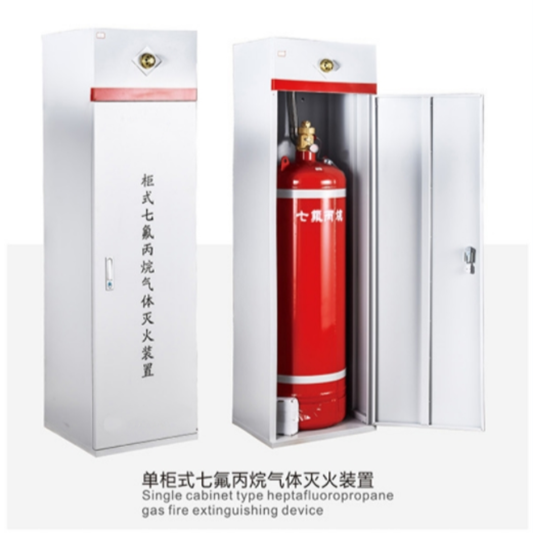
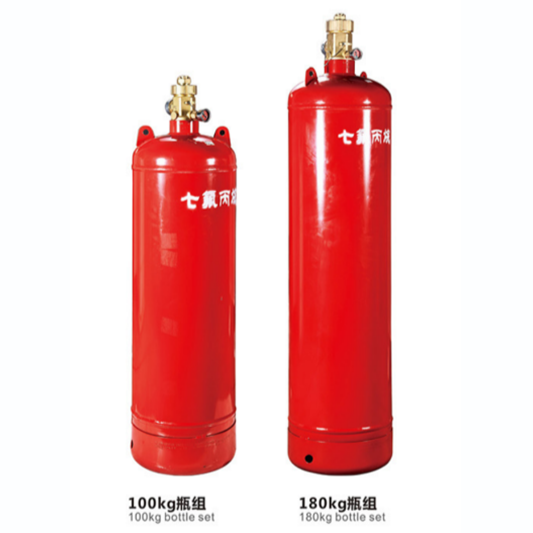
13. The flame detection and automatic fire extinguishing system is composed of a pressure vessel containing fire extinguishing agent, vessel valve, and fire detection tubes or release tubes capable of releasing the extinguishing agent.
14. Position the flame detection and automatic fire extinguishing device with a flame tube sensor near or above the potential fire source. Simultaneously, rely on the numerous detection points (linear) along the flame detection tube for monitoring. In the event of a fire, the flame detection tube softens at the heated temperature and releases the extinguishing medium either through the flame detection tube itself (direct system) or through nozzles (indirect system) into the protected area.
15. The fire tube type temperature-sensing automatic fire extinguishing device is a new variety developed in the high-tech field, a high-tech non-metallic synthetic product. It combines long-lasting anti-leakage, flexibility, and effective temperature-sensing capabilities, and can spray fire extinguishing medium or transmit fire signals within a certain temperature range.
16. The "Fire Detector" is commonly known as the "Fire Probe," a compact, fixed automatic gas fire extinguishing device; it is an automatic gas fire extinguishing system that accurately detects the fire source, extinguishes fires in their infancy, and combines both detection and extinguishing functions.
17. The flame tube type temperature-sensing automatic fire extinguishing device is a targeted, point-to-point, and personal protection automatic gas fire extinguishing system designed for areas prone to fire hazards or critical facilities.
18. The tube-type thermal fire detector automatic fire extinguishing system is an easy-to-install, versatile, battery-free, and highly reliable automatic gas fire extinguishing device.
19. Technical Features of the Fire Tube Type Automatic Fire Extinguishing Device: The fire probe is a flexible material, unaffected by any position, allowing it to be inserted into various narrow and complex flammable spaces or equipment, which is something that other fire protection systems cannot achieve.
20. The flame-extinguishing tube-type temperature-sensing automatic extinguishing device is equivalent to a linear detector. Any point on it can detect a fire source, and the extinguishing medium device is released near the fire source to closely approach the protected object. It combines fire detection and extinguishing, with a quick system response, enabling rapid extinguishing of fires at their nascent stage. This effectively reduces the economic losses caused by fires and facilitates a quick return to production.
21. The flame tube type automatic fire extinguishing device operates without power, is unaffected by electromagnetic interference, vibration, or impact, and is not weakened in fire detection or prone to false operations due to environmental factors like smoke, dust, or humidity. Easy to install and maintain with low operational costs, it is not a total flooding system and will not harm personnel during discharge. Suitable for unmanned monitoring and key protection areas.