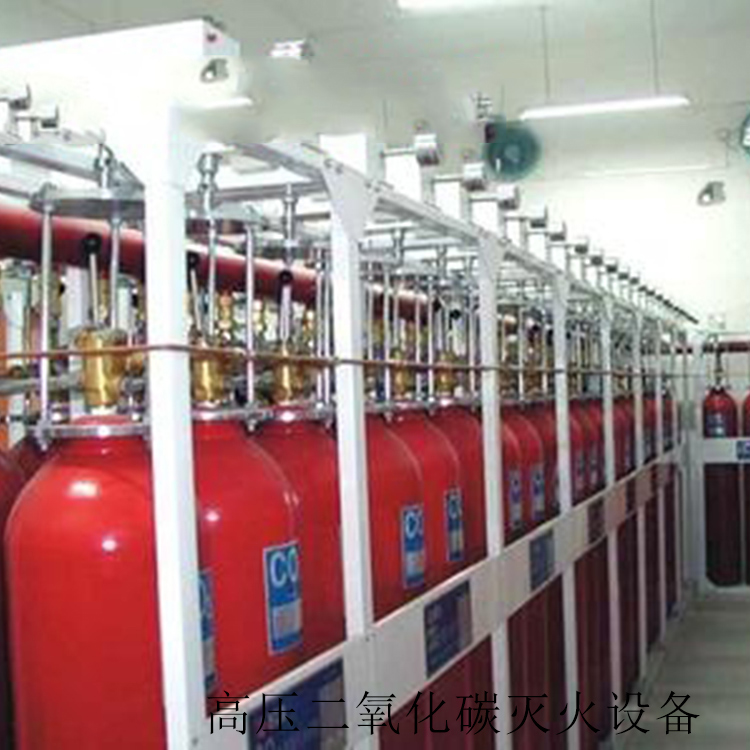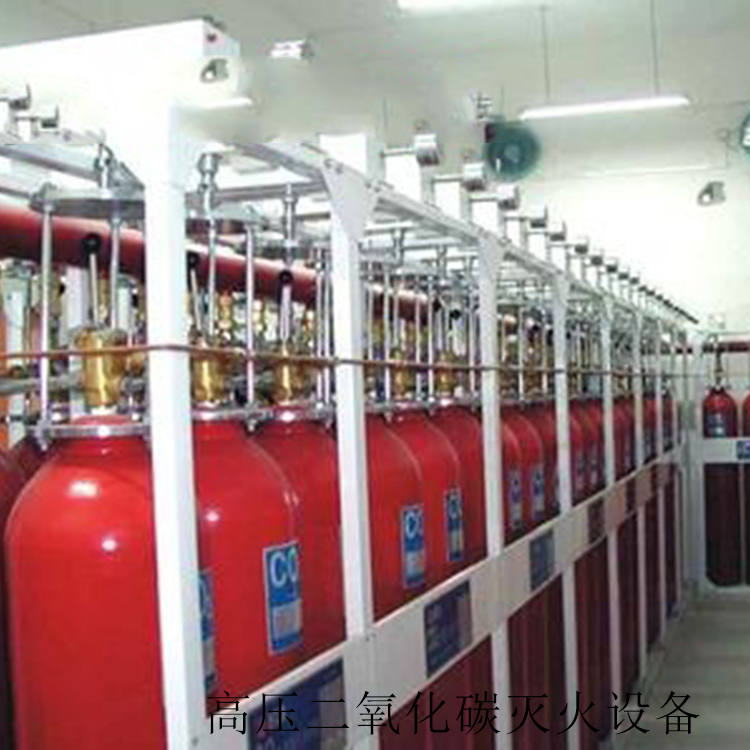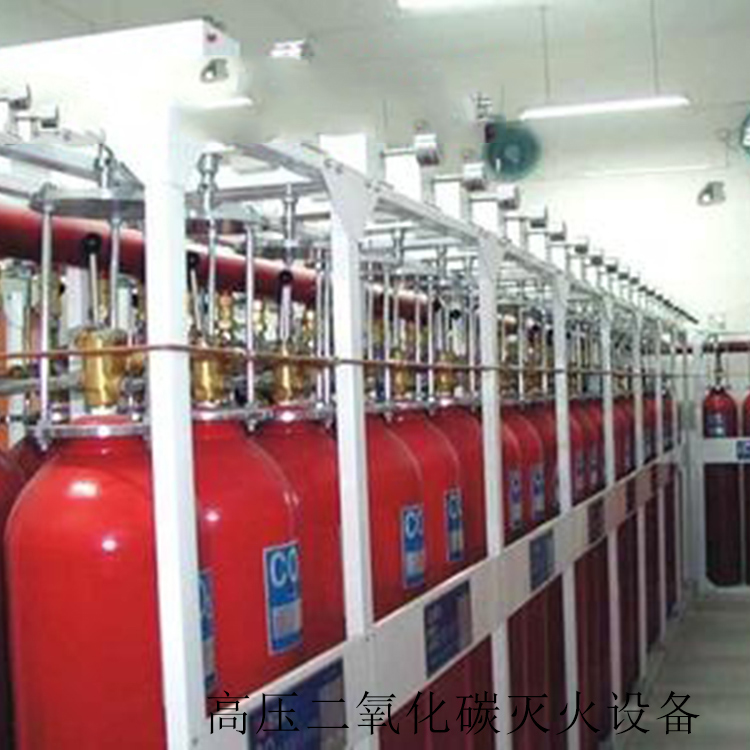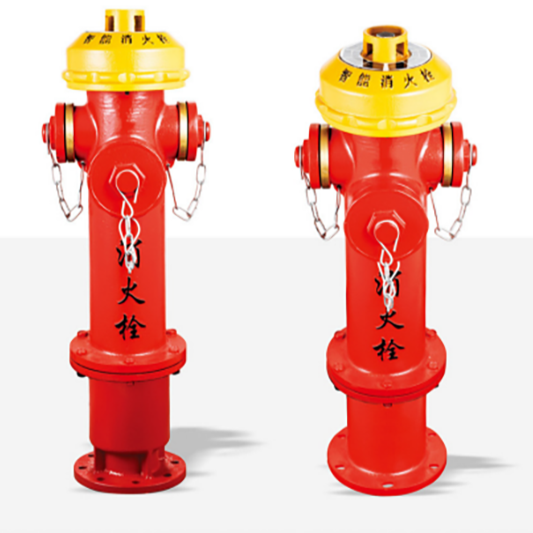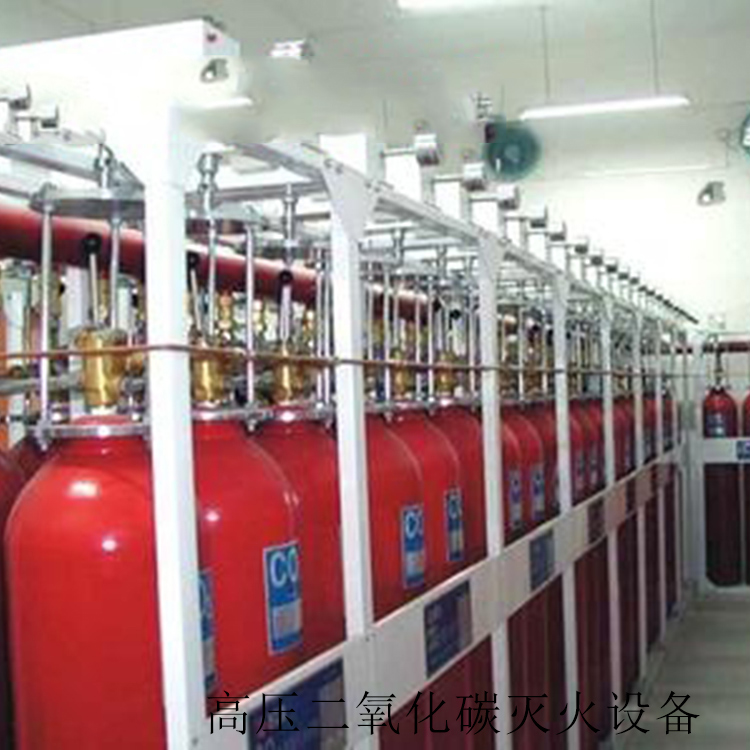

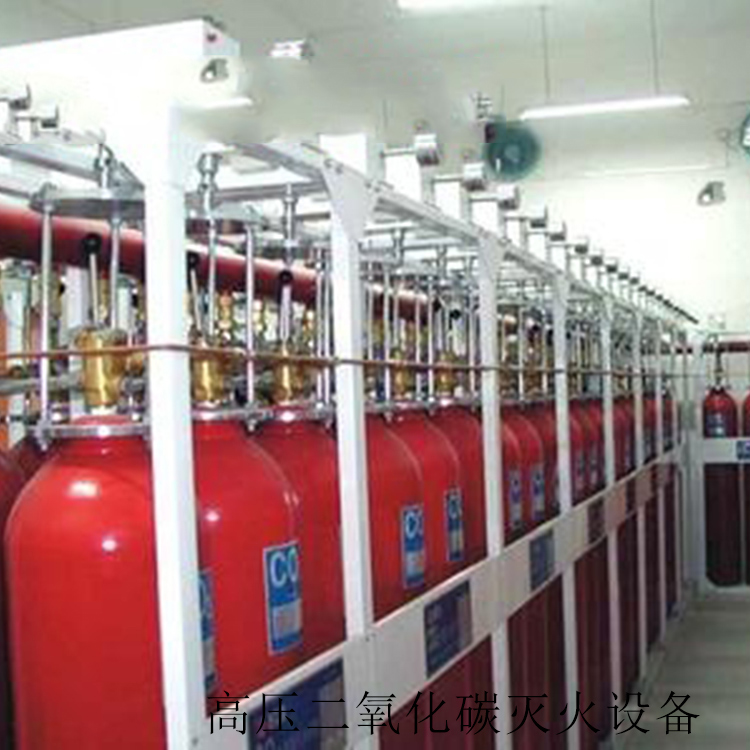
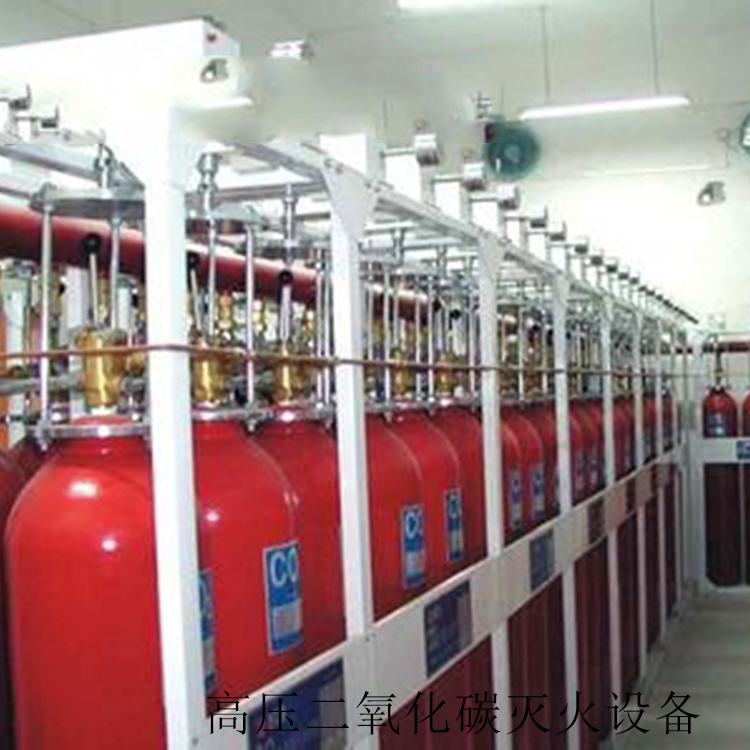
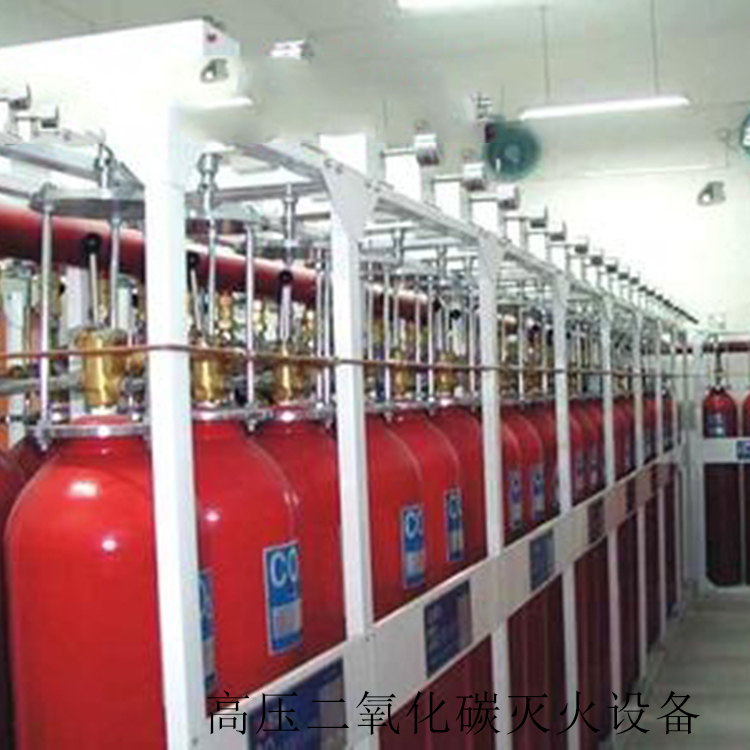








1. The High-Pressure Carbon Dioxide Fire Extinguishing System is a commonly used, fixed gas fire extinguishing device with excellent extinguishing effects. Its fire extinguishing mechanism is to relatively reduce the oxygen content in the air of the burning area, lower the temperature of the burning material, cause the fire to suffocate, and achieve the purpose of extinguishing—the physical action of fire extinguishing.
2. High-pressure carbon dioxide extinguishing agent is an odorless, tasteless, dry inert gas with no corrosiveness and electrical conductivity. It completely vaporizes upon extinguishing, leaving no residue, and does not damage water temperature. It poses no harm to the atmospheric ozone layer, is non-toxic to most materials, and does not contaminate food.
3. High-pressure CO2 fire extinguishing agent is abundant in supply, affordably priced, versatile in use, fast-acting, and effective. It can suffocate the fire within seconds, minimizing the loss to a minimum degree.
4. High-pressure CO2 fire extinguishers are often referred to as three-dimensional extinguishers. Their three-dimensional movement allows them to extinguish both vertically and horizontally spreading flames. The fast-moving, rapidly expanding CO2 gas can penetrate obstacles and small openings, reaching hard-to-access, concealed fire hazard areas, and quickly extinguishing the flames.
5. High-pressure CO2 fire suppression systems are one of the common types of gas fire suppression systems, with mature application technology and widespread use. The fire suppression principle of high-pressure CO2 systems is asphyxiation, with a slight cooling and temperature reduction effect.
6. Compared to other fire suppression systems, the high-pressure CO2 system not only allows for total flooding fire suppression applications but also supports localized fire suppression designs, offering flexibility. It is ideal for protecting high-risk areas prone to fires, such as rolling mills, printing presses, drying equipment, and automotive paint production lines.
7. Inapplicable Range for High-Pressure Carbon Dioxide Fire Extinguishing System: Carbon dioxide fire extinguishing agents are not suitable for extinguishing fires involving substances that can provide oxygen (including oxidizing agents) such as nitrocellulose, hydrogen peroxide, etc.; reactive metals such as potassium, sodium, magnesium, titanium, zirconium, etc.; metal hydrides (including metal amines), such as potassium hydride, sodium hydride, etc.
8. The "toxicity" of high-pressure carbon dioxide fire extinguishing agent: At a concentration of 3%-4% in the air, it can increase the breathing rate and may cause headaches. At a concentration of 9%, a person will lose consciousness and become disoriented within 10 minutes. At a concentration of 20%, a person will suffocate after 20-30 minutes.
9. High-pressure carbon dioxide fire suppression systems are divided into total flooding fire suppression systems and local application fire suppression systems according to the protected object (scope).
10. The high-pressure CO2 total flooding fire extinguishing system is a complete storage unit that injects a certain concentration of CO2 into the protected area within a specified time, ensuring it is evenly distributed throughout the entire protected area.
11. The High-Pressure Carbon Dioxide Local Application Fire Extinguishing System is a fire protection system that directly sprays a specified amount of extinguishing agent onto the burning surface of combustible materials within a designated time frame. It is primarily used to protect localized hazard areas within large enclosed spaces.
12. High-pressure carbon dioxide is divided into independent unit systems and combined distribution systems according to the protected area.
13. A High-Pressure Carbon Dioxide Unit Independent System refers to a fire protection system that uses a set of fire extinguishing agent storage devices to protect a protected area, primarily used in situations where the protected area is not easily combined or where two protected areas are adjacent but there is a possibility of a fire occurring simultaneously.
14. A high-pressure CO2 combination distribution system refers to a fire suppression system that protects multiple protected areas using a single fire extinguishing agent storage unit.
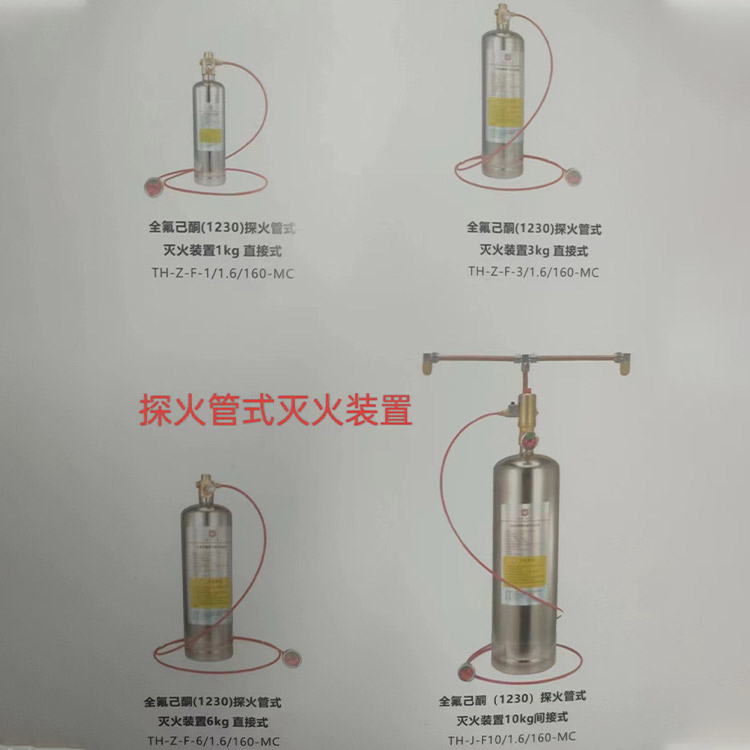
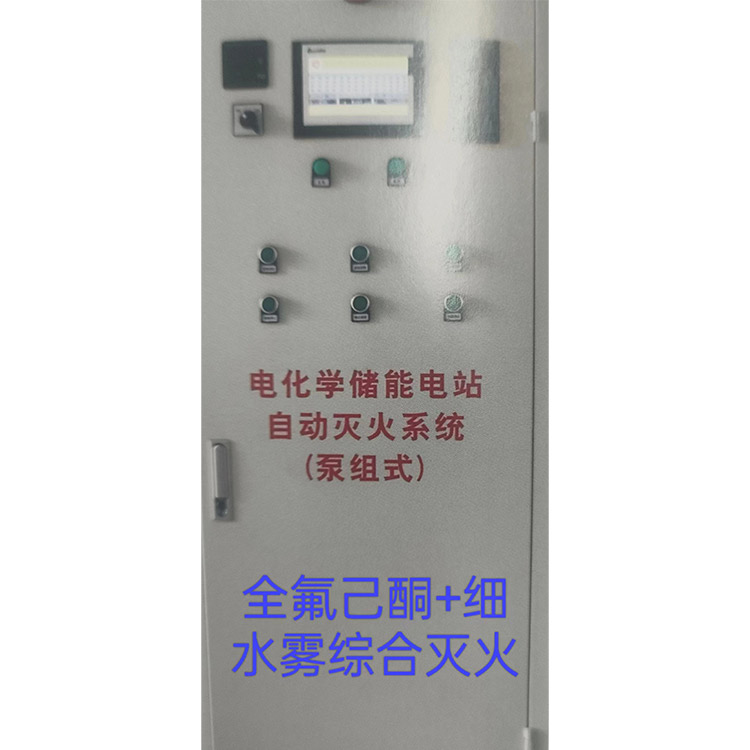
15. The automatic fire extinguishing system using high-pressure carbon dioxide consists of three parts: the fire alarm system, the extinguishing control system, and the extinguishing system. The extinguishing system is further composed of the carbon dioxide storage unit and the pipeline system.
16. High-pressure carbon dioxide automatic fire extinguishing system is applicable to the following types of fires: liquid or fusible solid fires (such as paraffin, asphalt); surface fires on solids and deep-seated fires in some solids (such as cotton, paper); fires involving electrical equipment, such as transformers, switches, generators, motors, etc.; gas fires (excluding those where the gas source cannot be cut off before extinguishing), such as methane, ethane, propane, and city gas.
17. High-pressure CO2 automatic fire suppression system applications: Electronic computer rooms, transformer rooms, distribution rooms, power generating units, metal rolling mills, quenching oil tanks, communication rooms, electrical instrument control centers, etc.; aircraft and ship engine rooms, car garages, engine laboratories, etc.; oil tanks, storage tanks, pump rooms, hazardous goods warehouses, electrostatic paint spray rooms, reactors, etc.; library storage rooms, data storage rooms, bank vaults, cable tunnels, food warehouses, tobacco warehouses, etc.
18. The storage room for cylinders of high-pressure carbon dioxide automatic fire extinguishing systems should maintain a temperature of 0~49°C. The cylinders should not be directly exposed to sunlight and should be kept away from heat sources.
19. The storage room for the high-pressure carbon dioxide automatic fire extinguishing system should be located in a room that is easily accessible to personnel, convenient for entry and exit, and not prone to fire.
20. The storage room for high-pressure CO2 automatic fire extinguishing system should be kept away from environments prone to vibration, impact, and corrosion.
21. The ground, walls, and ceiling of the cylinder room for the high-pressure carbon dioxide automatic fire extinguishing system have been finished. No further construction projects should be present after the system installation is complete.
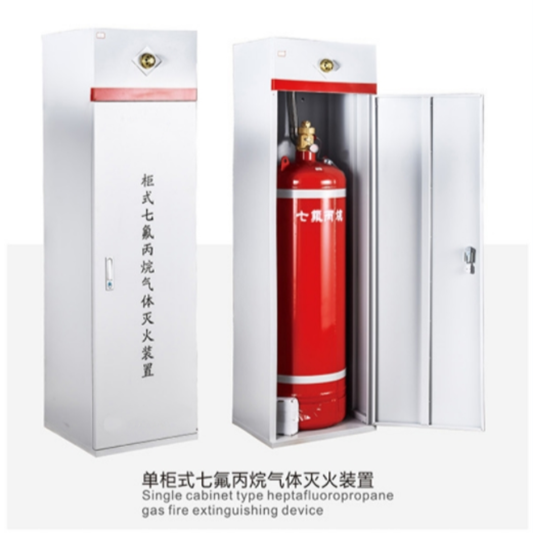
22. The cylinder rack or cabinet for the high-pressure CO2 automatic fire extinguishing system should be securely mounted on the wall or floor, with sufficient space around it for easy installation, inspection, and maintenance of the equipment.
23. Prior to installation, the collection pipe of the high-pressure CO2 automatic fire extinguishing system should be cleaned internally and the inlets and outlets should be sealed. The collection pipe should be securely fastened to the supports and frames, which should also be firmly anchored and treated for corrosion resistance. Additionally, the surface of the collection pipe should be painted red.
24. The collection pipe of the high-pressure carbon dioxide automatic fire extinguishing system equipped with a pressure relief device should not direct the relief towards the operating surface. The installation of the selector valve should ensure the manual handle is on one side of the operating surface, and measures for easy operation should be taken when the installation height exceeds 1.7m.
25. For high-pressure CO2 automatic fire extinguishing systems, it is advisable to use a choice valve with threaded connections, and the pipeline connection should be made with a flexible joint.
26. For high-pressure CO2 automatic fire extinguishing systems, the fire extinguishing agent transmission pipes passing through walls and floors should be equipped with sleeves. The length of the wall penetration sleeve should match the wall thickness, and the sleeve passing through the floor should extend 50mm above the ground. The gap between the pipe and the sleeve should be filled with a flexible, non-combustible material to be tightly packed. The exterior of the fire extinguishing agent pipe should be painted red.
27. Assembled steel cylinders for high-pressure carbon dioxide automatic fire extinguishing systems, valves, and other equipment should be sturdy, reliable, and maintain tightness. The pneumatic start-up piping is a crucial component; there should be no leaks between the copper pipes and their fittings.
28. Equipment installation for high-pressure CO2 automatic fire extinguishing systems should be carried out under the guidance of the supplier's technical personnel. After the system is installed, it should be adjusted (mechanical, electrical control, etc.) and inspected.
29. During the inspection and debugging process of the high-pressure CO2 automatic fire extinguishing system, the power lines must be disconnected to avoid unnecessary losses. After the installation and debugging of the equipment are completed, the fire extinguishing device should be in the automatic extinguishing state.
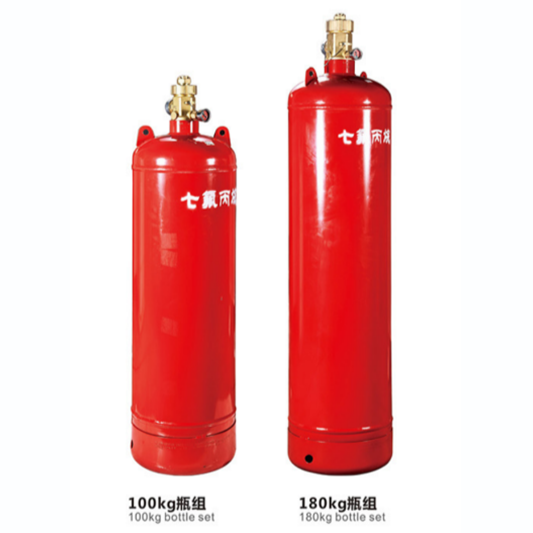
20. The front of the extinguishing agent storage cylinder for the high-pressure carbon dioxide automatic fire extinguishing system should clearly indicate the name of the extinguishing agent as specified in the design and the serial number of the storage container. The gas-actuated storage cylinder group should have clear protective area signage, identifying the storage cylinders used in each protected zone.
21. The selector valve of the high-pressure CO2 automatic fire extinguishing system should be marked with the protective area's name or number in a durable label, and the label should be fixed near the operating handle. After the installation and debugging of the equipment are complete, a "No Unauthorized Movement" sign should be set up.
22. The protected area of the high-pressure carbon dioxide automatic fire extinguishing system should have the "Fire Protection Zone XXX" sign as per the design drawing. This sign must correspond to the gas start bottle and the selector valve in the combined distribution system.
23. When installing the high-pressure CO2 automatic fire extinguishing system, pay attention to the correct orientation of the one-way and selector valves; do not install the inlet and outlet backwards.
24. The high-pressure CO2 automatic fire suppression system determines the corresponding number of storage cylinders for each protected area based on the amount of fire extinguishing agent required, thereby properly connecting the pneumatic pipelines and one-way valves to ensure that the operation and the fire extinguishing agents (cylinders) released (opened) in each protected area meet the actual requirements.
25. When installing the high-pressure CO2 automatic fire extinguishing system, pay attention to attaching connectors to both ends of the high-pressure hose. The threads on both ends of the connectors are M27*1.5-6H.
26. The pneumatic cylinders for the high-pressure CO2 automatic fire extinguishing system are filled to a pressure of 10MPa. When the pressure drops to below 6MPa due to chronic leaks or other reasons, they must be refilled to 10MPa and a gas tightness test must be conducted to ensure the reliability of the system's pneumatics.
27. All connections in the piping of the high-pressure carbon dioxide automatic fire suppression system should be reliable, particularly the pneumatic start-up piping, with no leaks at all.
28. During installation, it is strictly prohibited to knock or bump the components of the high-pressure carbon dioxide automatic fire extinguishing system. This applies particularly to the cylinder head valve and the filling valve on it, as well as the piston assembly. Knocking or bumping these parts can easily cause damage, even posing a risk to personal safety.
29. The wiring for the alarm and control section (electrical part) of the high-pressure CO2 automatic fire extinguishing system should be ensured to be accurate, reliable, and free of any misjudgments.