








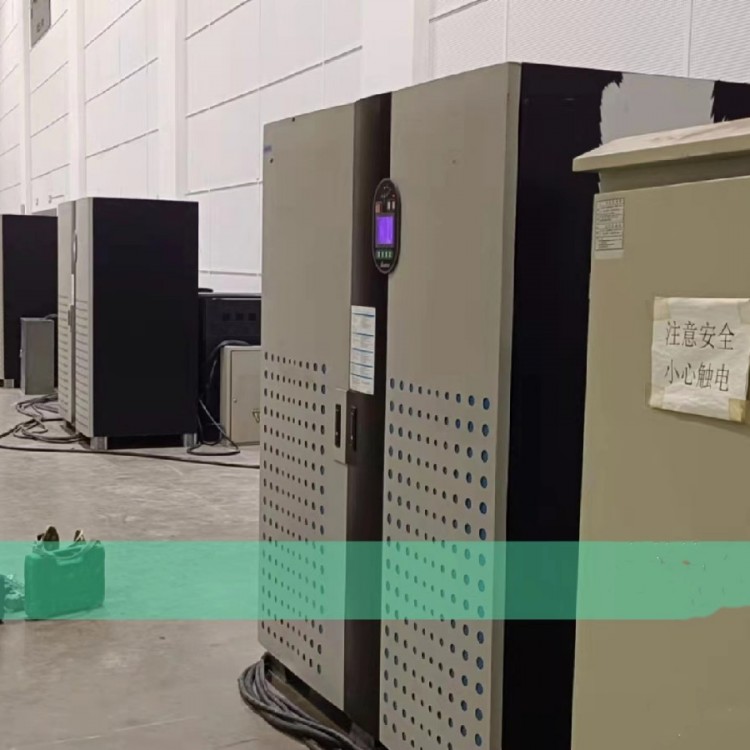
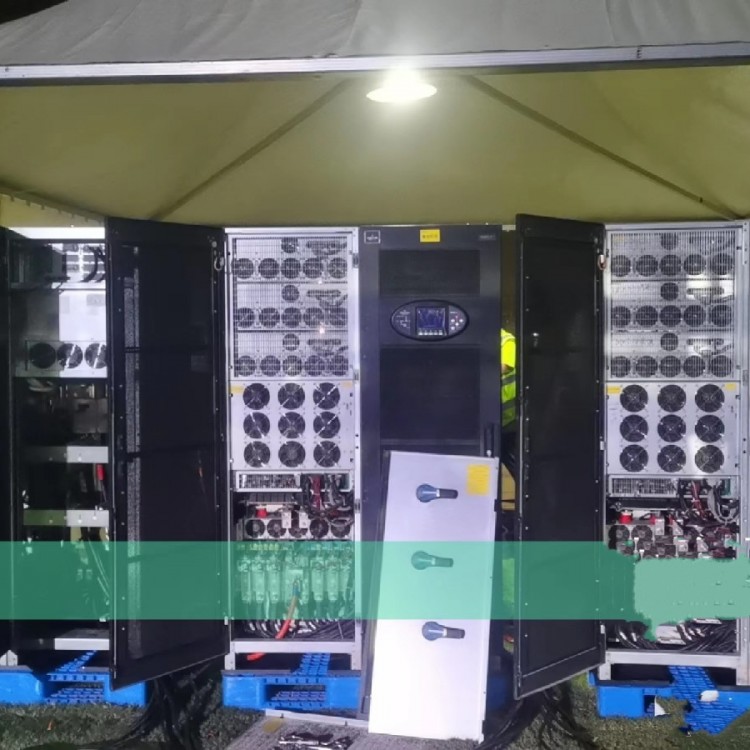
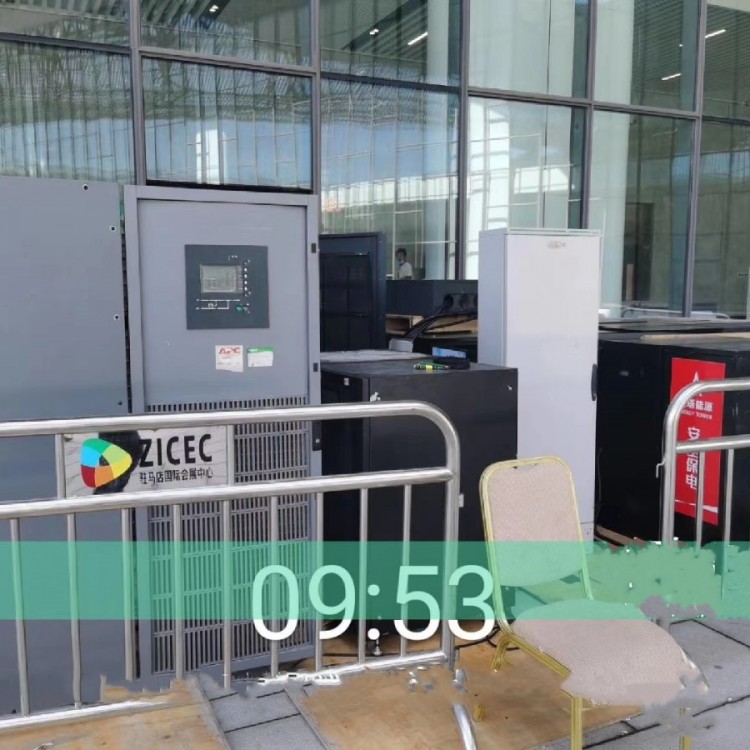
Installation Method for Setra Batteries in UPS Systems
Do not install batteries in sealed spaces or near fire, as it poses a risk of causing fires.
Do not cover the battery with materials like polyethylene film that can cause static electricity, as static buildup may sometimes occur.
Do not install the battery in a location where water may enter; otherwise, there is a risk of electric shock or fire.
Do not install the battery in an environment exceeding -40°C to 60°C.
Do not use lead-acid batteries in dusty areas; otherwise, it may cause a short circuit in the battery.
When using the battery in the box, ensure proper air circulation.
Do not have any sticky or label-like objects pressing down on the top cover, as there is an exhaust valve underneath. Gas produced inside the battery will not be able to escape.
Number of 8-series in parallel — During floating charge, plug-in terminal batteries can only be connected to three columns at most. Bolted terminal connections have no specific limit, but reliability increases with fewer parallel connections. Additionally, when connecting in parallel, it is necessary to ensure that the conductors and contact resistances between columns are equal. To maintain balance in charging and discharging batteries across columns, do not exceed three columns in practice.
9 When using batteries with different capacities, ages, and manufacturers simultaneously, their varying characteristics may potentially damage the battery and machine. Therefore, please avoid using them.
Set Battery main components
1. The plate is the core component of the battery, its "heart," and is divided into positive plates and negative plates.
2. The function of the separator is to isolate the positive and negative plates, prevent short circuits, and can be referred to as the "third electrode." As a carrier for the electrolyte, it can absorb a large amount of electrolyte and facilitate the good diffusion (ionic conduction) of ions. For sealed maintenance-free batteries, the separator also acts as a "channel" for the oxygen produced by the positive plate to reach the negative plate, allowing for the smooth establishment of an oxygen cycle and reducing water loss. The use of ultra-fine glass fiber is the key to achieving maintenance-free operation in separator-type batteries.
3. The electrolyte is primarily composed of pure water and sulfuric acid, mixed with some additives.
Primary Functions: 1) Participates in electrochemical reactions, being one of the active substances in batteries; 2) Serves as a conductor, facilitating the transfer of ions in the electrolyte during battery usage, thereby ensuring smooth conduction and the proper progression of chemical reactions.
Set Battery BT-HSE-100-12 12V 100AH Product Features
Capacity Range: 100AH
Voltage Rating: 12V
Self-discharge rate small: ≤3% (per month)
Excellent high-rate discharge performance
Long design life: Designed for float charge life of 12 years (25°C)
Sealing Reflection Efficiency: ≥98%
Wide operating temperature range: 0~40℃
Application Fields
Buoys灯塔灯
Communication Equipment
Equipment
Railway signaling
Signal
UPS/ EPS Power Supply
Power Closing Operation
Security System
Set Battery BT-HSE-100-12 Instructions
1. Battery connection
Do not connect together batteries with different capacities, performance, or manufacturers for use.
Batteries or battery banks of the same actual capacity can be connected in series.
Batteries or battery banks with the same actual voltage may be connected in parallel.
Please use appropriate wires for connecting and leading the battery bank.
Always disconnect the power supply during connection and disassembly; otherwise, you may risk electric shock and even more dangerous consequences.
Poles must not be reversed or short-circuited; otherwise, it can cause severe damage to the battery, even leading to accidents.
Connective parts should be securely fastened to prevent sparking; if the contact surfaces are oxidized, they can be cleaned with baking soda solution.
The newly installed battery bank should be subjected to a 72-hour float charging before use to ensure internal charge balance within the battery bank, at which point it can be tested or put into operation.
2. Battery charging and discharging
Setting charging parameters during float charging
Series
Model
Float Voltage
High float charging current
Single Cell Temperature Compensation Coefficient
AGM Series
2V Series
2.26 ~2.28V/cell
0.2C
-3mV/℃
12V/6V and 2V 100Ah
2.27 ~2.30V/cell
0.25C
-3mV/℃
Charge parameters setting for reuse
Series
Model
Uniform charging voltage
Large Uniform Charging Current
Single Cell Temperature Compensation Coefficient
AGM Series
2V Series
2.30 ~2.35V/cell
0.2C
-5mV/℃
12V/6V and 2V 100Ah
2.35 ~2.40V/cell
0.25C
-5mV/℃
Discharge Current & Discharge Termination Voltage
Discharge Time (H)
240
120
20
10
Discharge Current (A)
0.0042C
0.0083C
0.05C
0.1C
Discharge Termination Voltage
1.97V/cell
1.92V/cell
1.87V/cell
1.82V/cell
Note: "C" indicates rated capacity
3. Handling & Storage
The battery is heavy and the casing is fragile. Handle it with care, avoiding rolling or dropping the battery. Also, be cautious not to apply external force to the terminals.
Battery storage or installation should be in a dry, well-ventilated area, away from direct sunlight, heat sources, and places prone to sparking.
Batteries should be stored fully charged before storage; it is not allowed to store them after discharge.
Batteries should be stored in an environment with a temperature range of 0℃ to 30℃. Stored batteries should be recharged every three months, and the storage duration should not exceed one year; otherwise, the battery capacity and lifespan will decrease.
Advantages of Setra Batteries:
1. Excellent safety performance: No electrolyte leakage, no battery expansion or cracking under normal use.
2. Excellent discharge performance: stable discharge voltage, gentle discharge platform.
3. Excellent vibration resistance: Battery fully charged and securely mounted, subjected to a 4mm amplitude and 16.7Hz frequency vibration for 1 hour, no leakage, no battery expansion or rupture, and normal open-circuit voltage.
4. Excellent shock resistance: Battery fully charged, dropped from a height of 20 cm onto a 1 cm thick hardwood surface 3 times. No leakage, no battery expansion or cracking, and normal open-circuit voltage.
5. Excellent over-discharge resistance: At 25°C, a fully charged battery undergoes a constant resistance discharge for 3 weeks (resistance value equivalent to the battery's 1CA discharge requirement), with a recovery capacity of over 75%.
6. Excellent overcharge resistance: At 25°C, a battery fully charged at 0.1CA can be charged for 48 hours without leakage, expansion, or cracking, with normal open-circuit voltage and capacity retention above 95%.
7. Excellent high current resistance: Battery in full charge discharges at 2CA for 5 minutes or at 10CA for 5 seconds without any conductive part melting or visible deformation.
The construction advantages of Set Battery:
The grid is made of a special lead calcium alloy with excellent corrosion resistance. The grid structure is optimized for even current distribution, reducing voltage drop and enhancing battery discharge performance. The self-discharge rate is low, resulting in a longer battery lifespan.
The boards utilize an active substance formula, enhancing the utilization of active substances, thereby improving the battery's high-current discharge performance and charging acceptance capabilities, making them suitable for applications requiring high-current impulse discharges.
The separator chosen is an AGM separator with high porosity, low resistance, and corrosion resistance, featuring ample electrolyte and excellent high-rate discharge performance.
Electrolyte utilizes high-purity electrolyte, enhancing the utilization rate of active substances and reducing the self-discharge of the battery.
The safety valve body is made of flame-retardant ABS material, with a unique structural design. Its opening and closing pressure ensures the battery operates safely and reliably.
Battery tray and cover are made of flame-retardant ABS material, offering high strength, corrosion resistance, and a glossy, lustrous appearance.
Columns are embedded with large-diameter copper cores, offering high current load capacity, and the battery has low internal resistance. The column and battery cover are equipped with a dual-sealing structure of mechanical sealing and sealing glue, ensuring complete sealing of the battery to prevent acid migration.
Individual cells are made up of a single cell (larger capacity batteries have an intermediate cell for battery tray strength, but the internal cells are still in parallel), effectively ensuring the electrical performance balance of the individual cells. The battery is equipped with a group positioning device internally to ensure consistent compression of the battery separators, guaranteeing even distribution of the electrolyte. The external connections of the battery use copper-core soft cables with sealed connections to prevent oxidation and corrosion of the battery terminals and connecting bars. The batteries can be assembled into racks for use or installed on the ground, offering flexible and diverse installation methods that are safe and reliable.
WeChat Official Account

Scan to follow Official Account