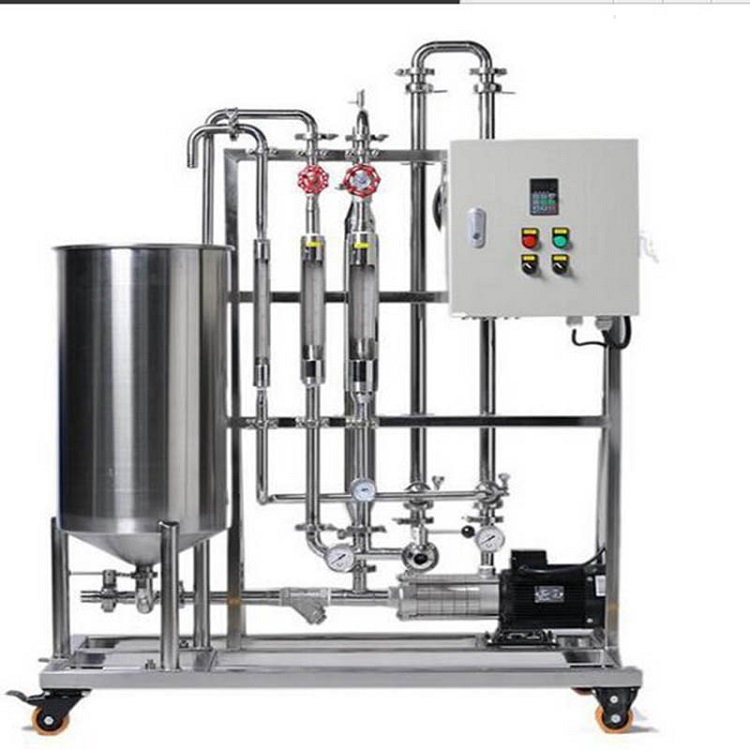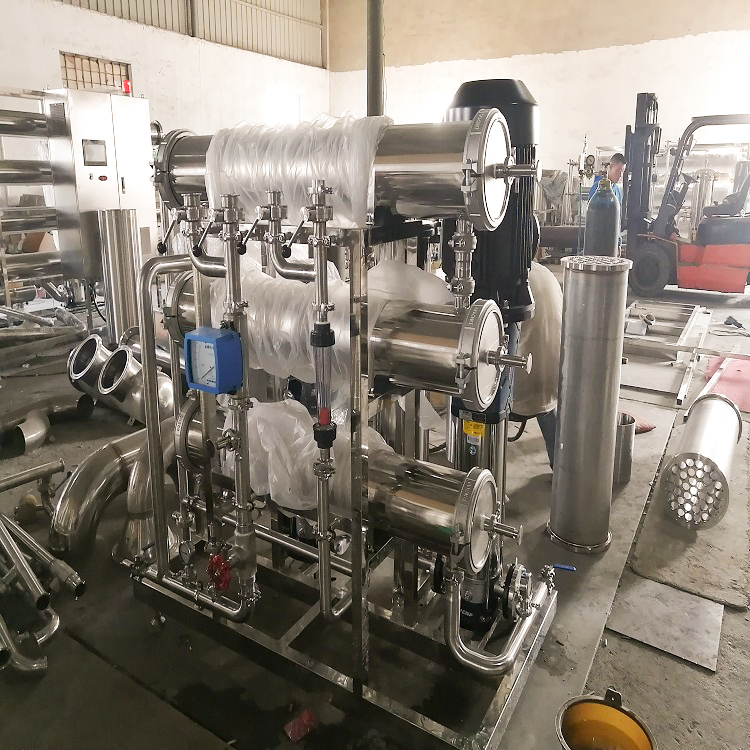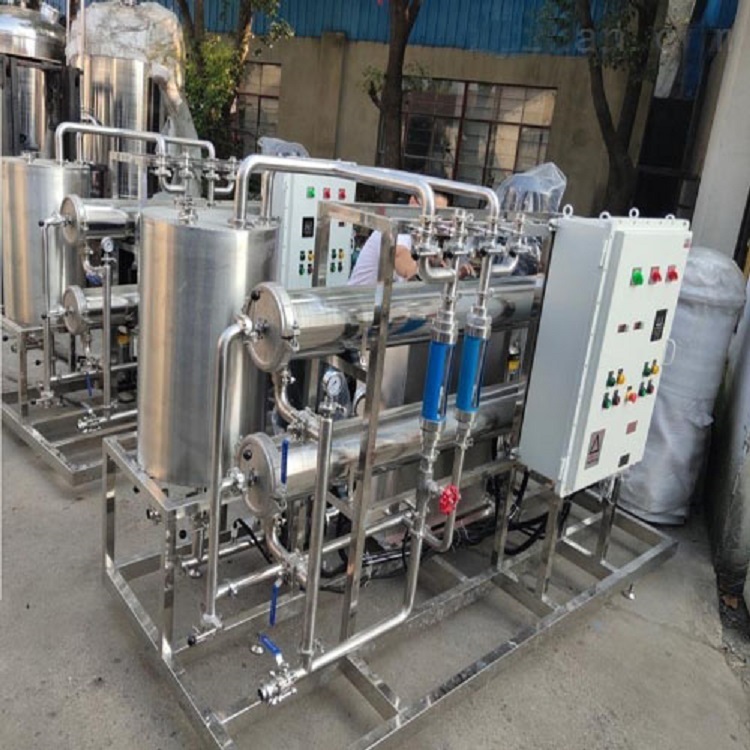


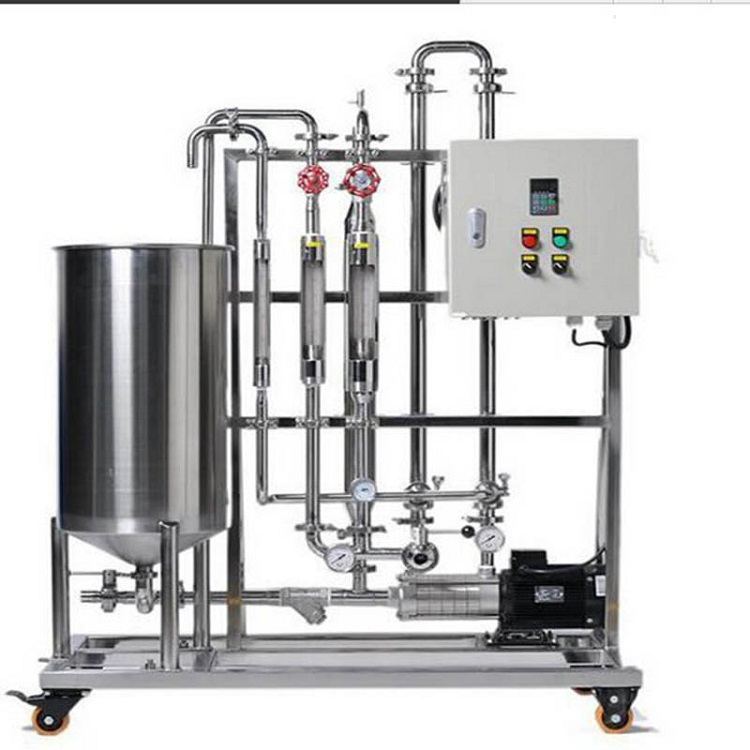
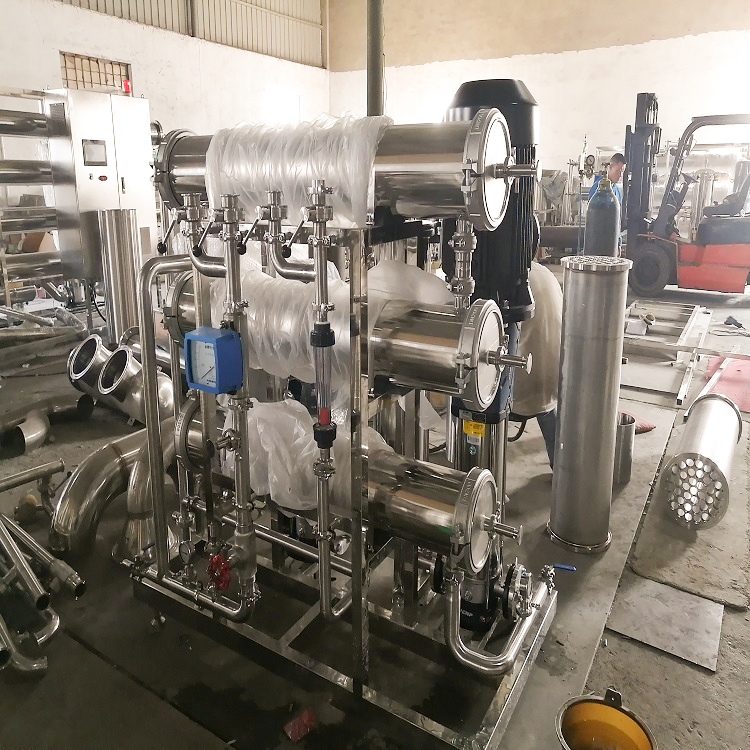
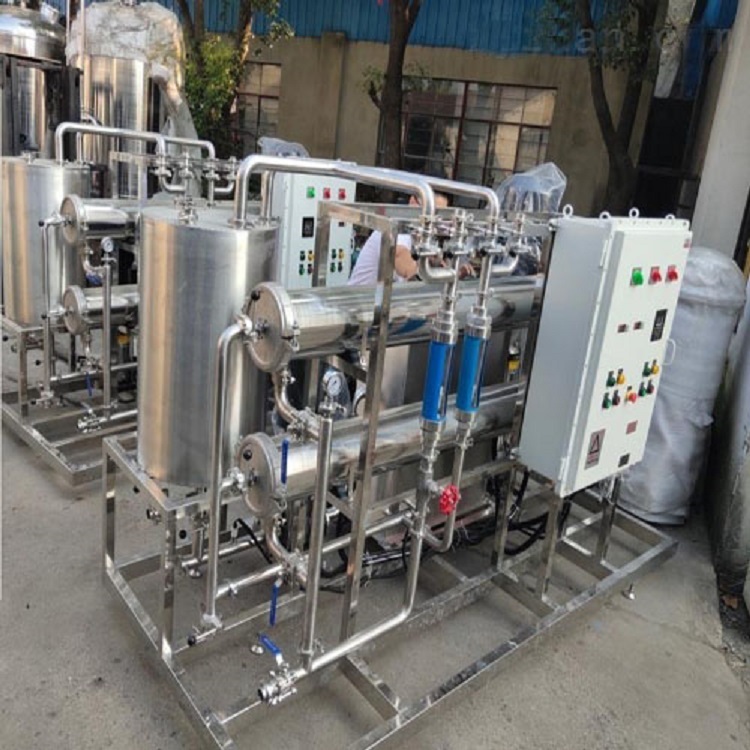












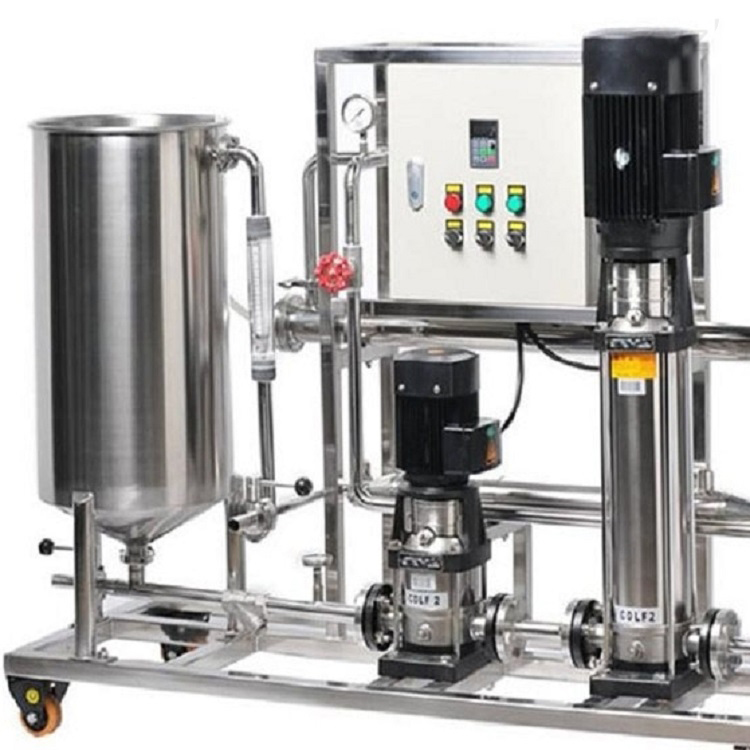
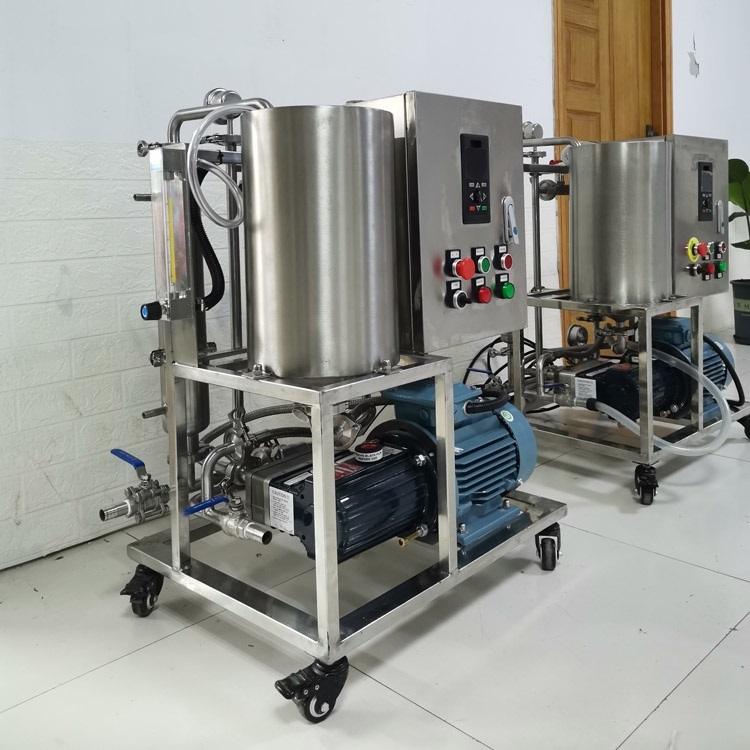
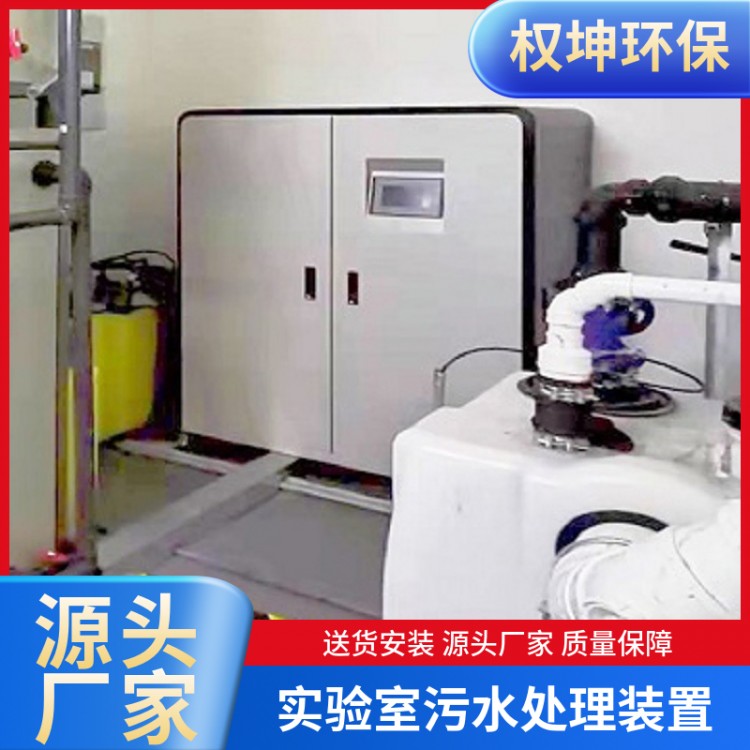
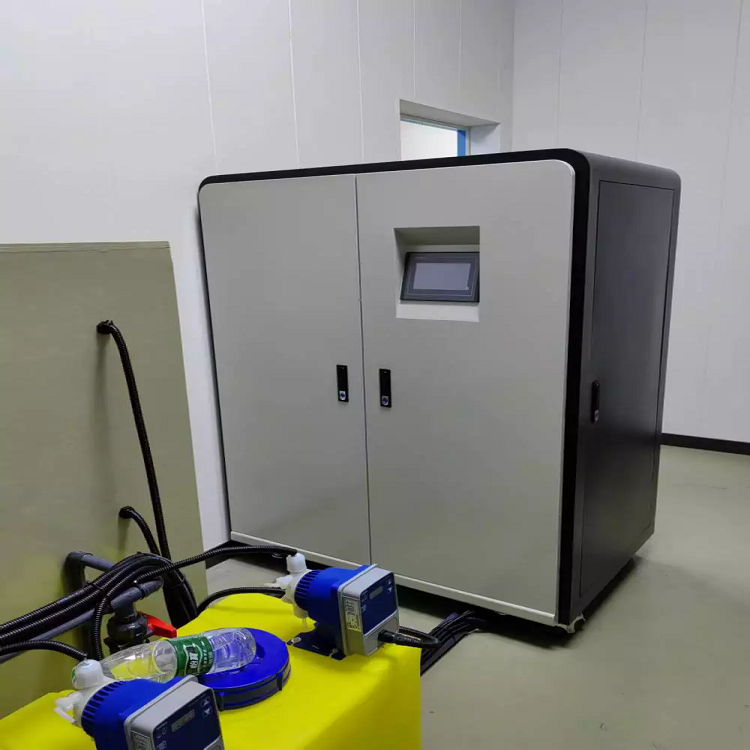
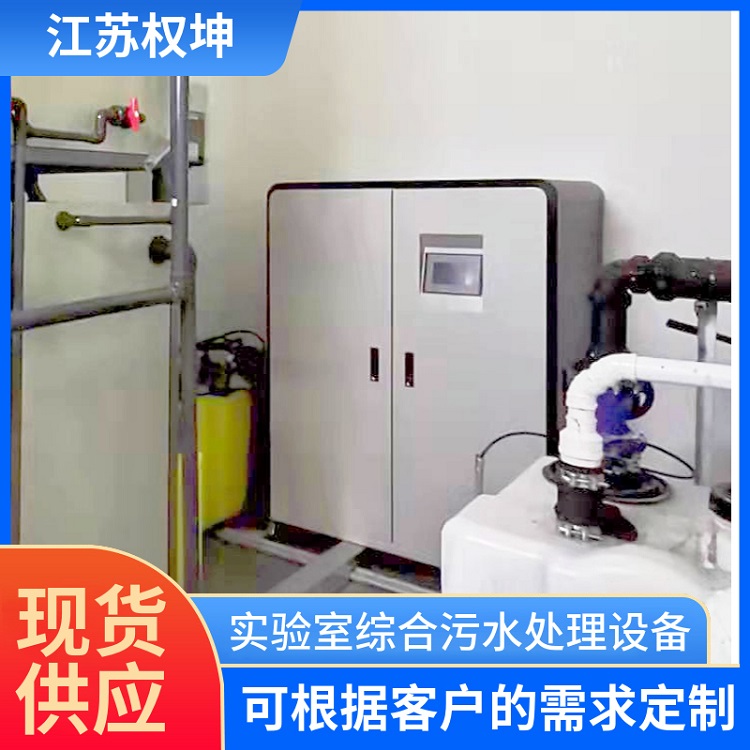
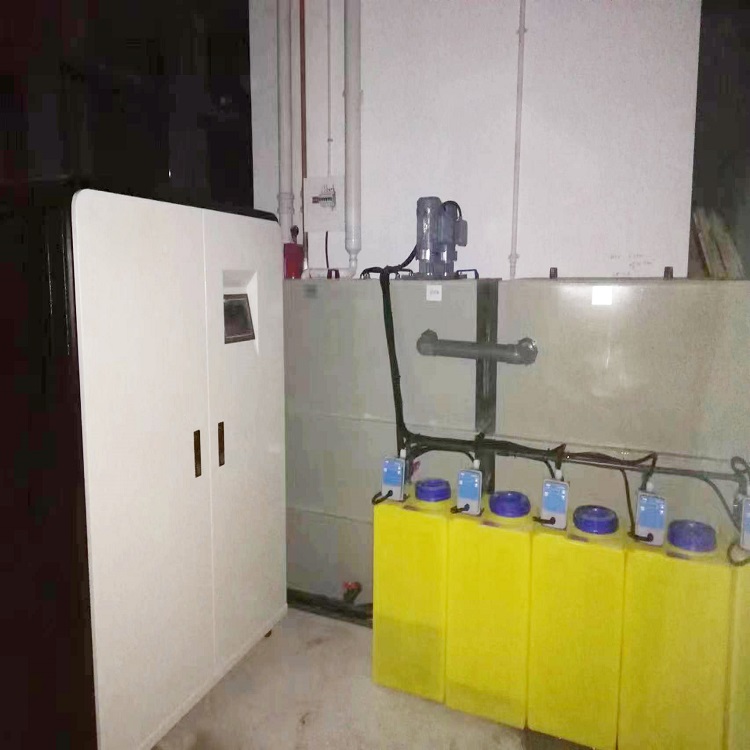
Low-pressure Membrane Separation Equipment / Waste Percolate Kitchen Waste Water / Quankun Stainless Steel Material
Membrane separation processes commonly use liquid separation membranes driven by pressure differences. Depending on the membrane pore size and retention characteristics, they can be classified into microfiltration, ultrafiltration, nanofiltration, and reverse osmosis.
The currently common membrane separation process is driven by pressure difference and carried out through crossflow filtration, enabling molecular-level filtration and separation at ambient temperatures. It is a physical process without phase change. The driving force is provided by a pump, where smaller molecules pass through the membrane while larger molecules are retained.
Reverse osmosis is a membrane process that utilizes the selective property of the reverse osmosis membrane to only allow solvents (usually water) to pass through while retaining ionic substances. It operates by using the static pressure difference across the membrane as the driving force to overcome the osmotic pressure of the solvent, thereby separating the liquid mixture through the reverse osmosis membrane.

Product Features:
1. Core membrane elements utilize original imported organic membranes, selecting different membrane configurations based on process technical requirements and specific user needs to ensure the retention performance of membrane elements within various systems, as well as the stability and reliability of the entire membrane system operation.
2. The reverse osmosis membrane system operates at lower operating pressures, achieving simultaneous desalination and concentration of materials. It boasts a short production cycle, thorough desalination, and high purity of the final product, with excellent quality stability.
3. According to the specific needs of the customer, permeate from the nanofiltration membrane can be recycled, and the membrane elements can be restored to their original performance after professional cleaning, fully realizing the economic efficiency of the membrane equipment.
4. The process is maintained at ambient temperature throughout, with no phase changes occurring, ensuring no adverse effects on the various active components of the material. Particularly suitable for the treatment of thermosensitive substances, the resulting product has a high concentration of active ingredients. Depending on the process requirements, it can proceed to the next stage of production or be directly dried.
5. The system operates in a fully enclosed pipeline, constructed with hygienic-grade stainless steel, ensuring a safe and clean working environment. It meets the standardized production requirements of GMP or FDA.
6. Due to the absence of phase change in the system processing, it remains at room temperature throughout, resulting in low energy consumption and operating costs.
7. High degree of process integration, rational layout, fully automatic control achieved, key process parameters monitored online, system operation status always under control. Professional on-site engineers are available to provide system maintenance information at any time.
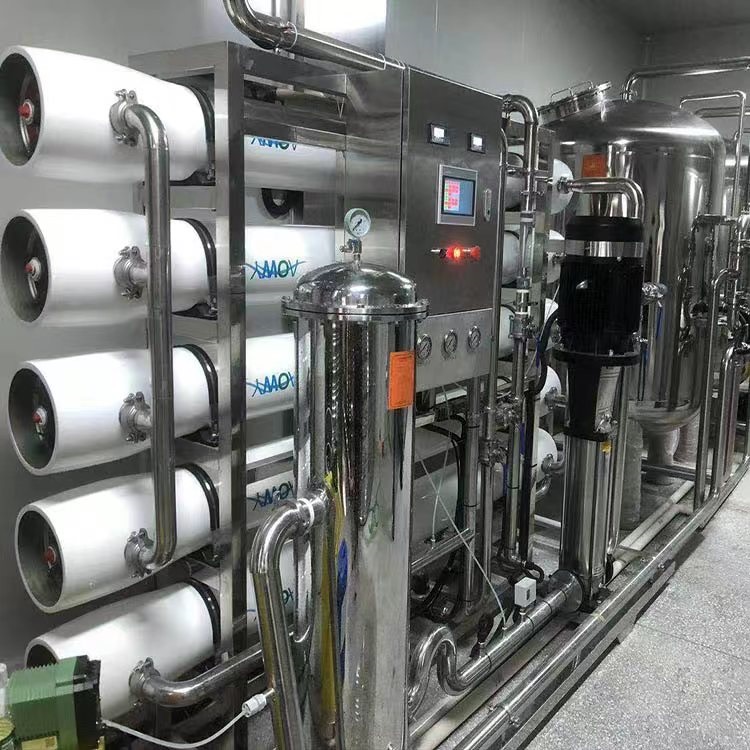
Low-pressure membrane separation equipment / waste leachate kitchen waste wastewater / Quankun stainless steel material
Application Fields:
1. Application in the yiyao industry: sterilization, extraction, separation, purification, concentration, desalination, solvent replacement, etc., of yiyao products.
2. Food Industry Applications: Clarification and concentration of beverages and juices; sterilization and clarification for fruit wines, as well as acid removal; production of dairy products, sugar industry, soy sauce, vinegar clarification, etc.
3. Applications in the baojian product industry: production of animal and plant peptides; clarification and concentration of baojian tea, coffee powder; separation of microbiological substances, purification of baojian wine, etc.
4. Applications in the biotechnology industry: plant extract concentration, natural pigment filtration and concentration, honeysuckle impurity removal and filtration, fermentation broth concentration and refinement, enzyme preparation purification and concentration, amino acid filtration and concentration, etc.
5. Applications in the blood product industry: plasma protein concentration, purification of antiviral immunoglobulins, and production of artificial blood.
6. Applications in the cosmetic industry: Collagen grading, hyaluronic acid purification, production of plant essential oils, refinement of natural pigments, purification of plant extracts, and antioxidant decontamination.