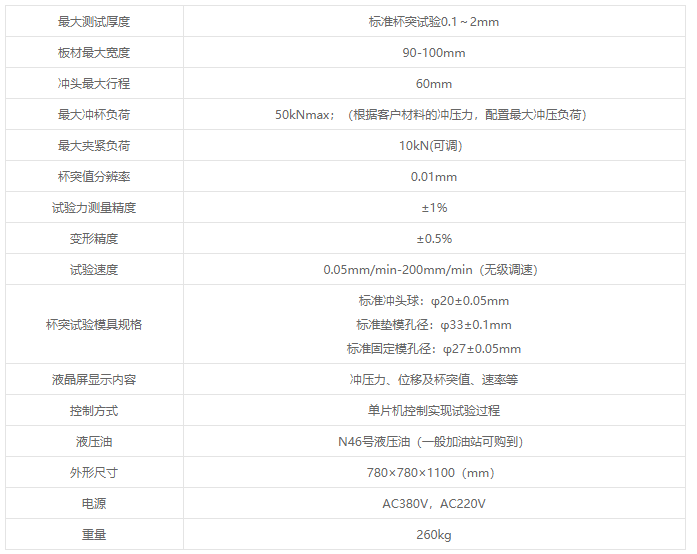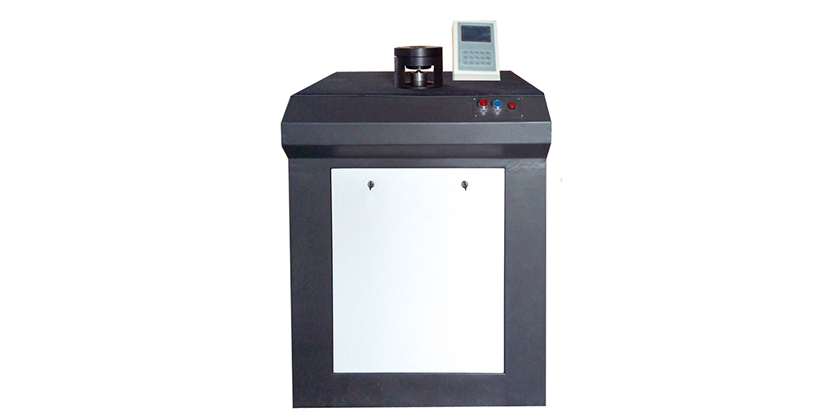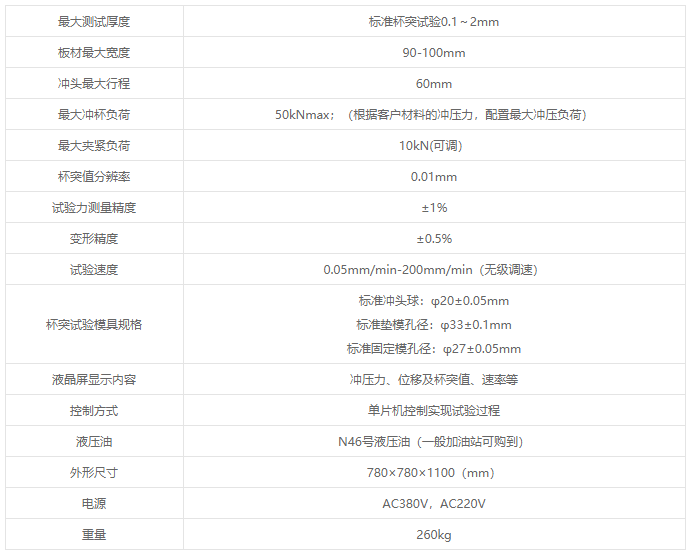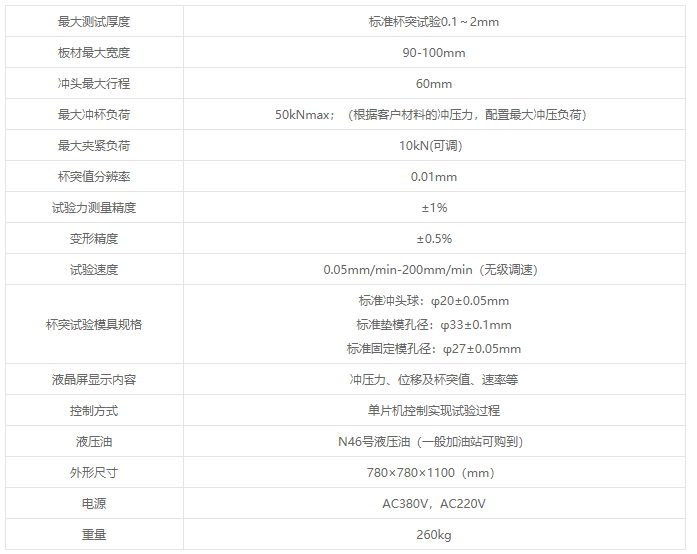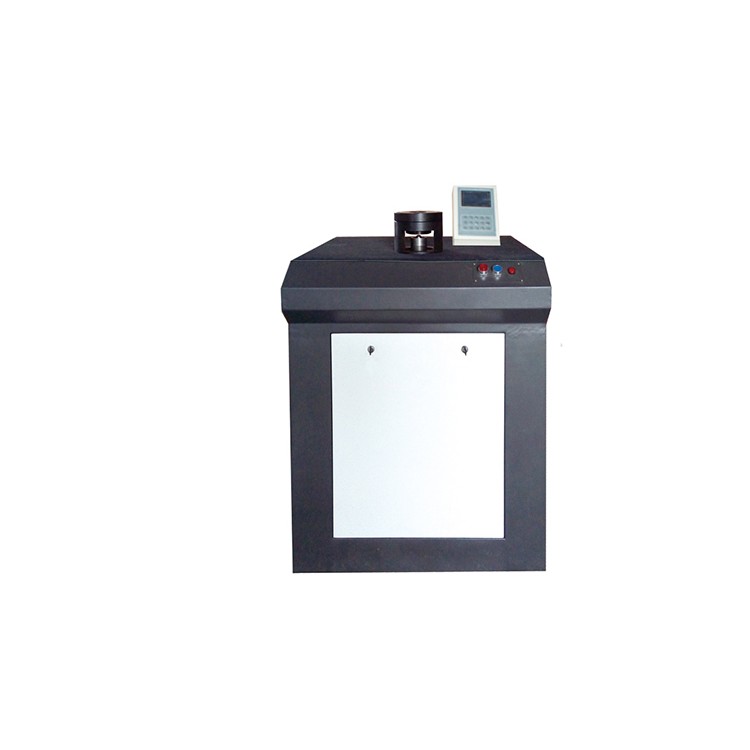

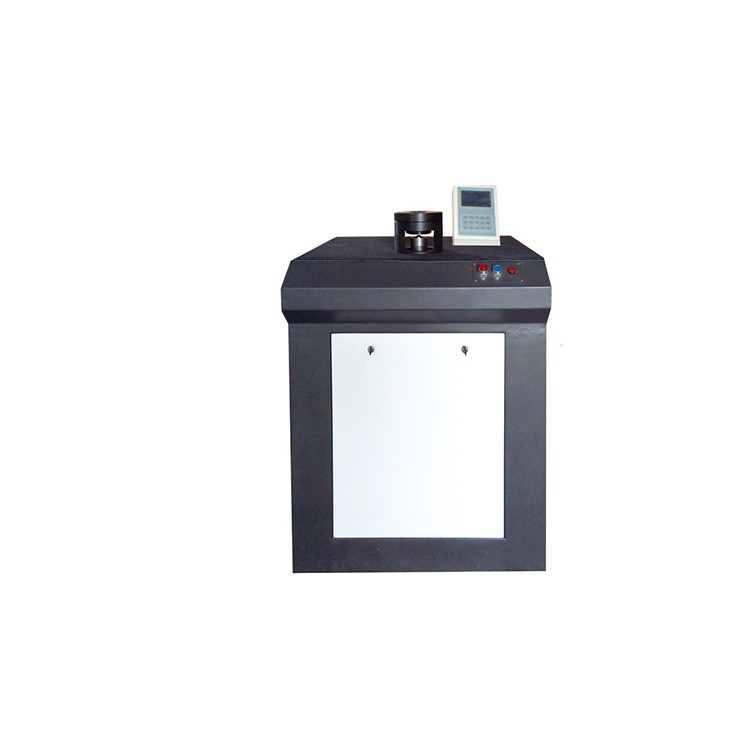
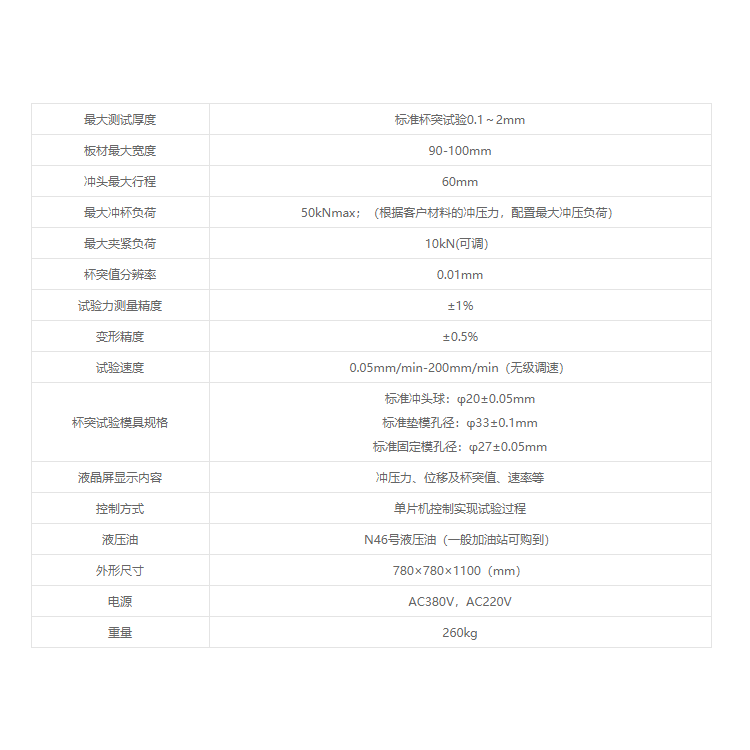







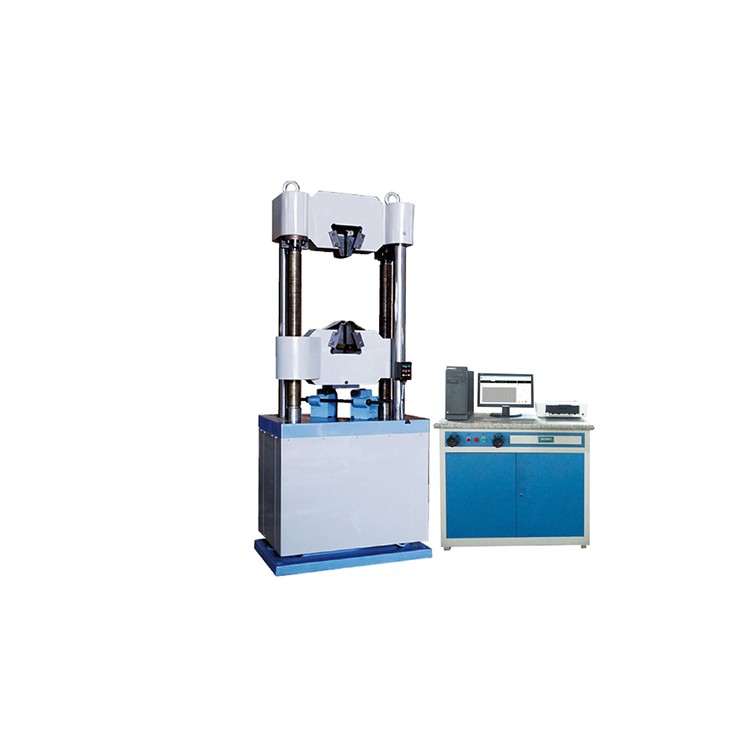
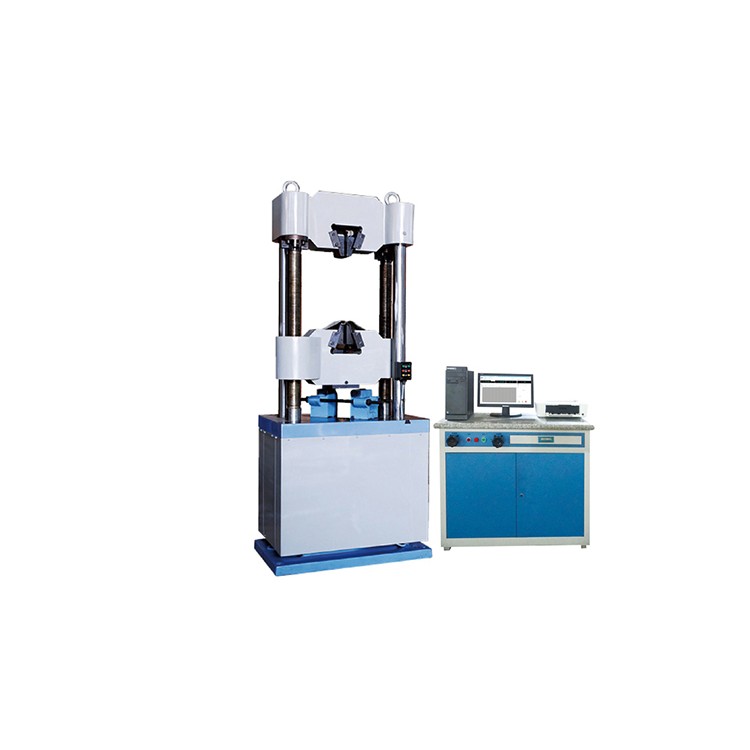
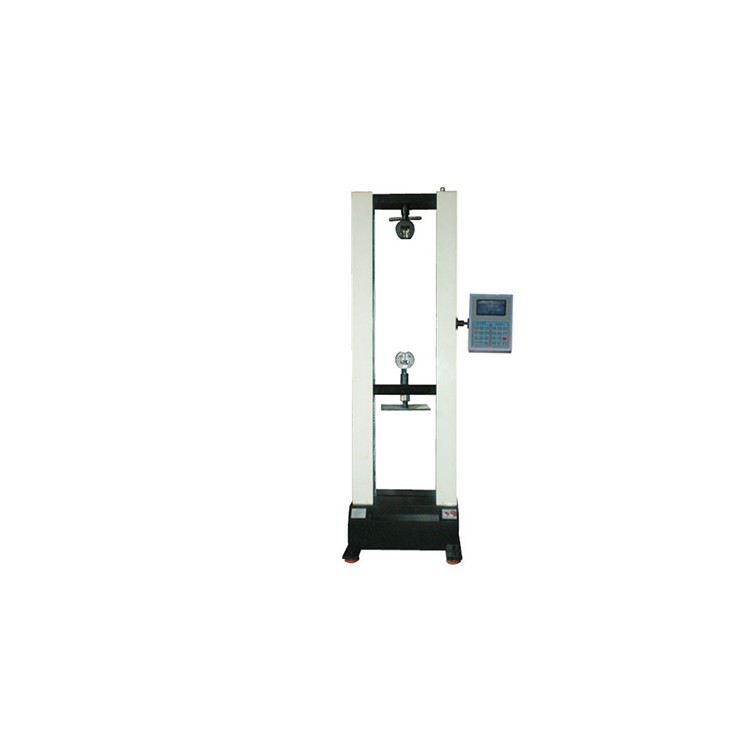
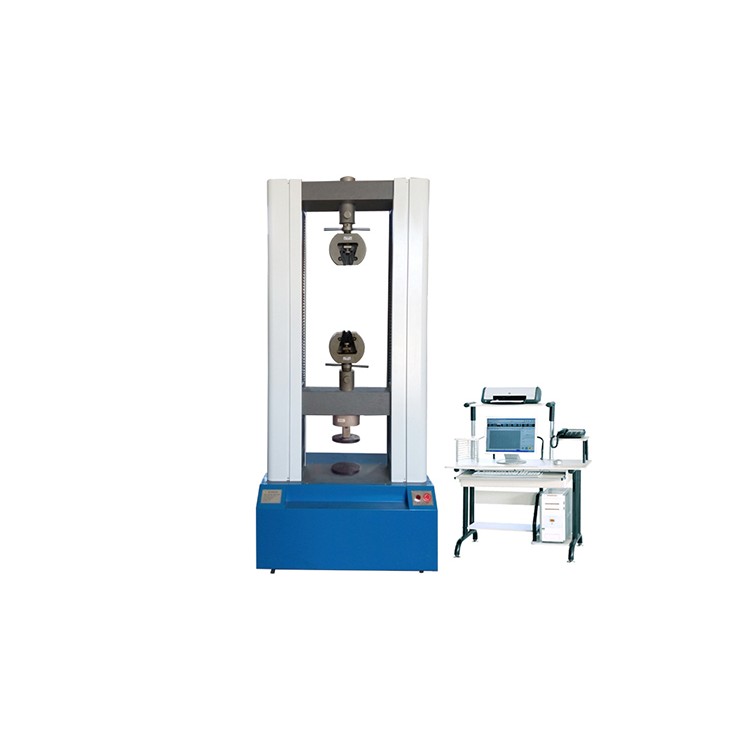
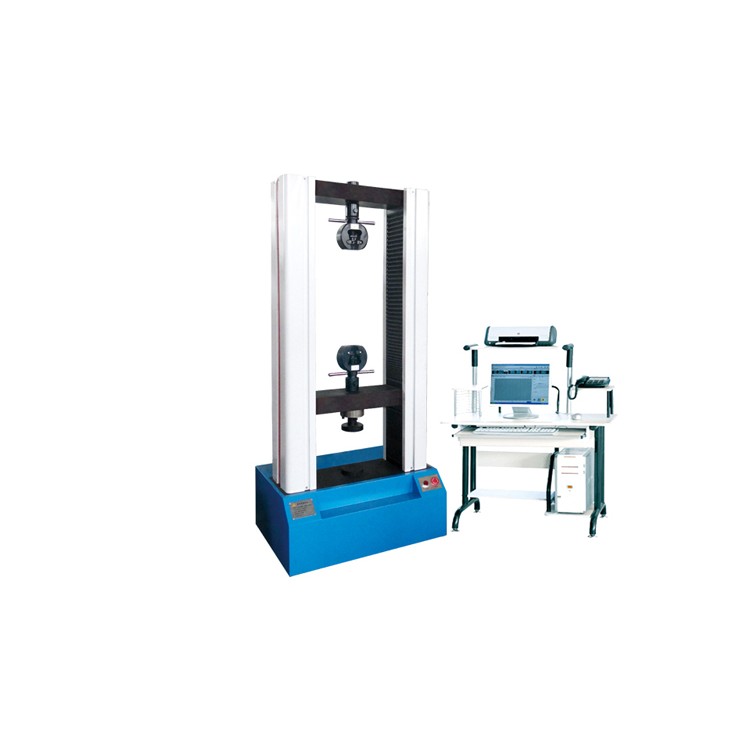
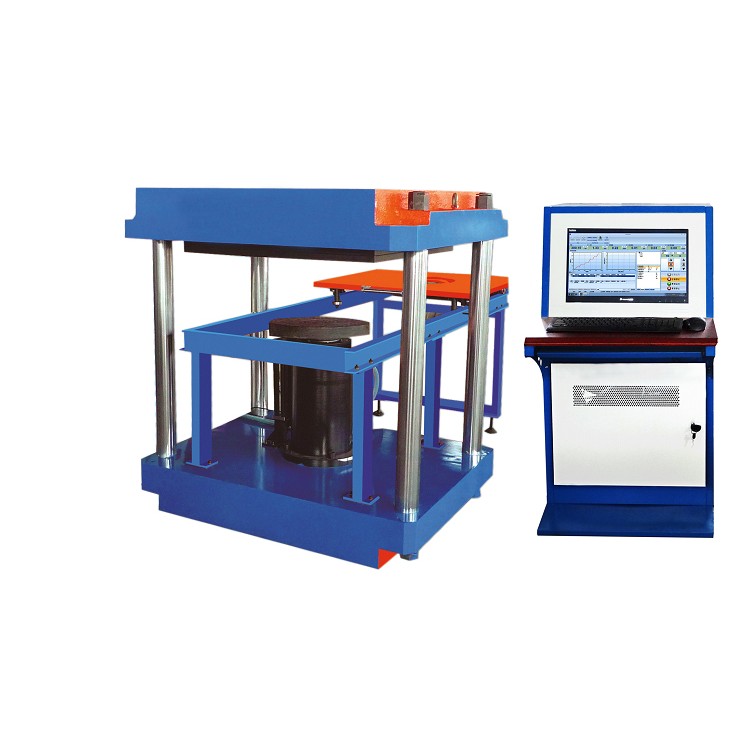
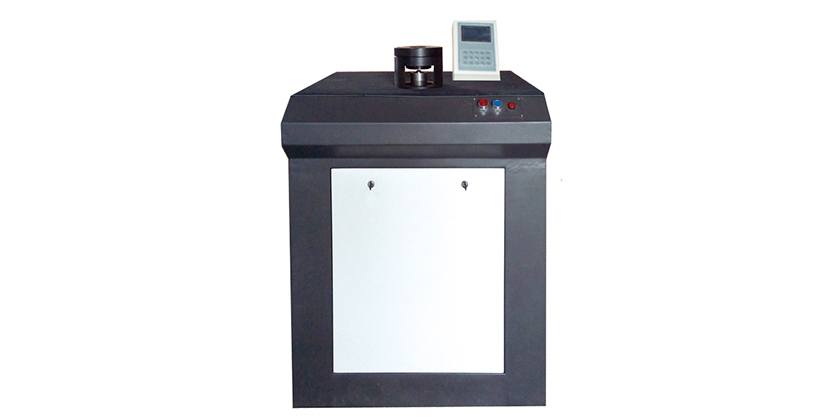
The GBS-50 machine features a novel and elegant design, adhering to human engineering principles. It is a precise equipment for testing the process performance of metal thin plates and strips. It can perform the GB/T4156-2007 "Erligson cup indentation test method for metallic materials, thin plates and thin strips" and meets the requirements of JJG 583-2010 and JB/T7408-94. It also adopts the ASTME643-2008 standard to inspect the plastic deformation properties of metal thin plates and strips during the testing process.
Product Features:
The cup bursting tester employs a new structural principle, enabling servo motor constant-speed loading with rate control capability. The process is controlled by a single-chip microcomputer, allowing for stepless adjustment of the pressing speed, which can be pre-set as required. (Previous methods using hydraulic cylinders and oil sources could not achieve constant rate control.)
2. The clamping force is independently loaded from a hydraulic oil source, adjustable, and displayed on a separate hydraulic gauge, with independent calibration.
3. The force measuring device has been upgraded from hydraulic sensors to spoke-type sensors, with the cup indentation value measured by an encoder. During the test, the punch movement employs our company's innovative low-friction moving device. The perfect match between the measuring device (high-precision spoke-type sensor for direct force measurement) and the loading device, along with their control program, effectively addresses the issue of poor repeatability in past test data. This significantly enhances the accuracy and reliability of the cup indentation value measurement of the testing machine, and also provides a reliable basis for China's implementation of the new cup indentation machine metrological verification regulations and cup indentation test methods.
4. Cup-piercing molds are easy to replace and the specimen loading and unloading is simple. After placing the specimen, pressing the automatic button completes the clamping. Test parameters can be input and changed. The stamping process uses PID control principles. When the stamping force value decreases, the system automatically stops the test if cracks are detected in the specimen. An observation window is provided for easy crack observation. For ultra-thin materials, manual control to stop the test is available. Test data is displayed on a liquid crystal screen and features peak memory functionality, including stamping force and cup-piercing values, enabling storage of test results. The deformation height is automatically remembered, and the system can automatically return to the ready-to-test state upon completion of a test.