









REACH certification costs, timelines, and processes vary due to various factors such as product type, complexity of test items, and the chosen certification body.
Firstly, regarding costs, the REACH certification fees primarily include testing fees and service processing fees. The specific costs vary depending on the product materials, number of test points, complexity of testing items, and the certification body. Generally, non-metallic products may incur higher testing fees than metallic products, as they might require more detailed testing and analysis. Additionally, if more testing items are required, the costs will also increase accordingly. Moreover, the service fees of the certification body are a significant component of the total cost. Therefore, an exact cost figure cannot be provided; it is recommended to directly consult the certification body for an accurate fee quote.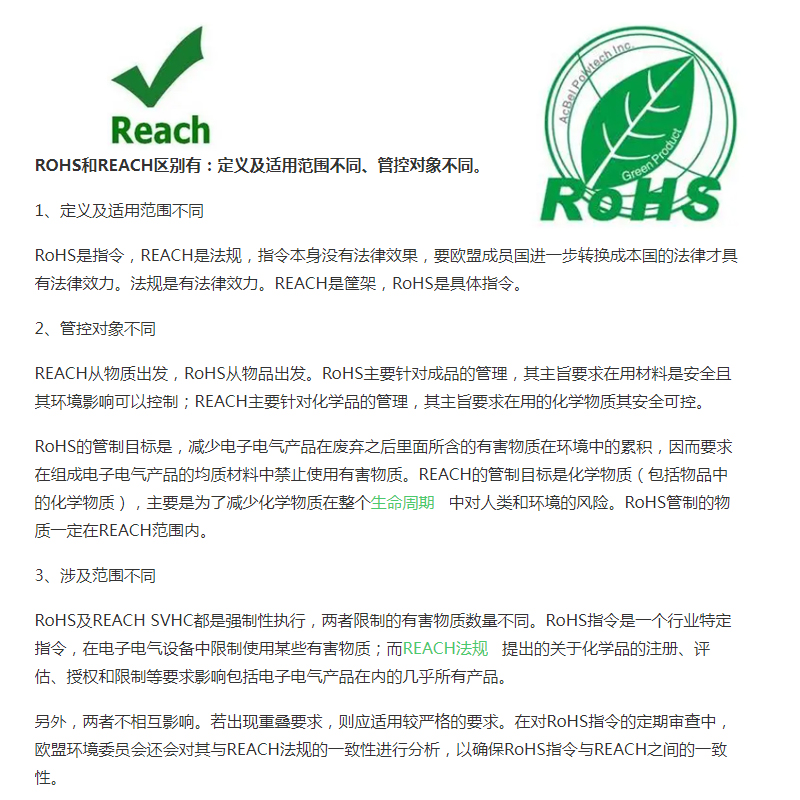
Next, regarding the cycle, the REACH certification timeline varies depending on the complexity of the product, the number of testing items, and the efficiency of the certification body. Generally speaking, if the product contains fewer chemicals and data preparation and collection are quick, the entire certification cycle may be relatively short. Conversely, if the product involves a large number of chemicals or requires extended testing and review, the certification cycle may be prolonged. Therefore, the specific timeline needs to be determined based on the actual situation.
Regarding the process, the application procedure for REACH certification generally includes the following steps:
Define Chemical ScopeThe company must determine if the chemicals produced or sold fall under the REACH regulation. If the annual production or import volume of the chemicals exceeds 1 ton, or if they involve Substances of Very High Concern (SVHC) or banned substances under REACH, registration is required.
Prepare registration documentsRegistration documents include technical files, risk assessment reports, safety data sheets (SDS), etc. The company must ensure that the contents of these documents are true, accurate, complete, and comply with REACH regulations.
Submit registration applicationAfter preparing the registration documents, companies can submit registration applications through the EU's REACH-IT system. Before submitting the application, companies must carefully review the document content to ensure there are no omissions or errors.
Continuously updated and maintainedAfter obtaining the REACH registration certificate, the company must continuously update and maintain the registration files to ensure compliance with regulatory requirements.
Note that REACH certification is a complex and knowledge-intensive process; thus, it is advisable for companies to collaborate with certification bodies that have extensive experience and professional qualifications. Additionally, maintaining good communication and cooperation with the certification body throughout the application process is crucial.
In summary, the cost, duration, and process for REACH certification vary due to various factors. For more accurate information, it is recommended that companies consult directly with the certification authority to tailor a suitable certification plan based on the specific product and regulatory requirements.