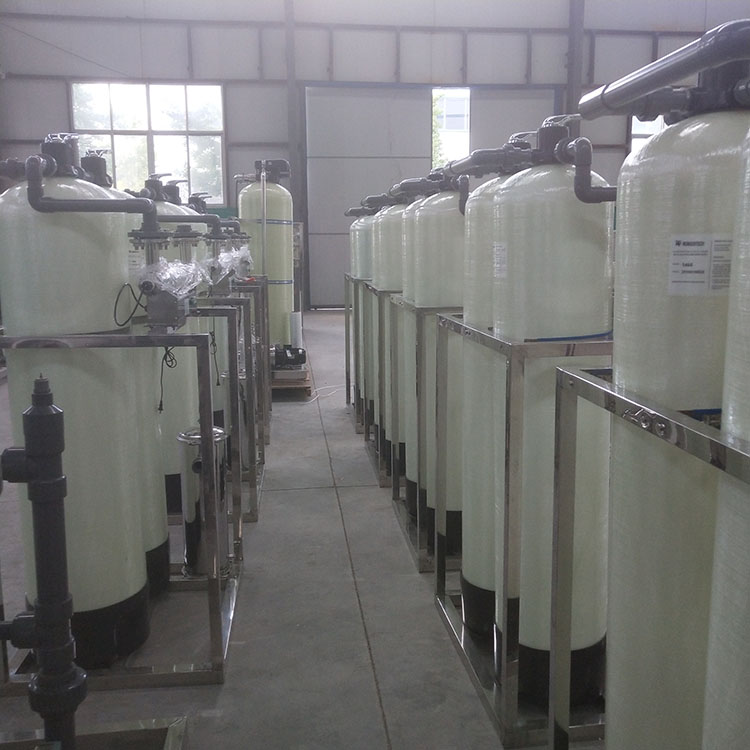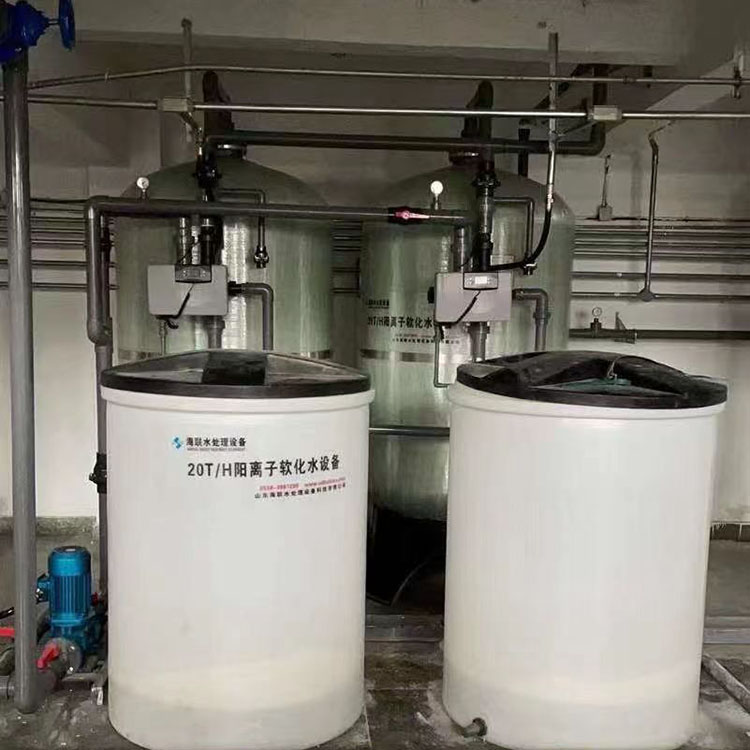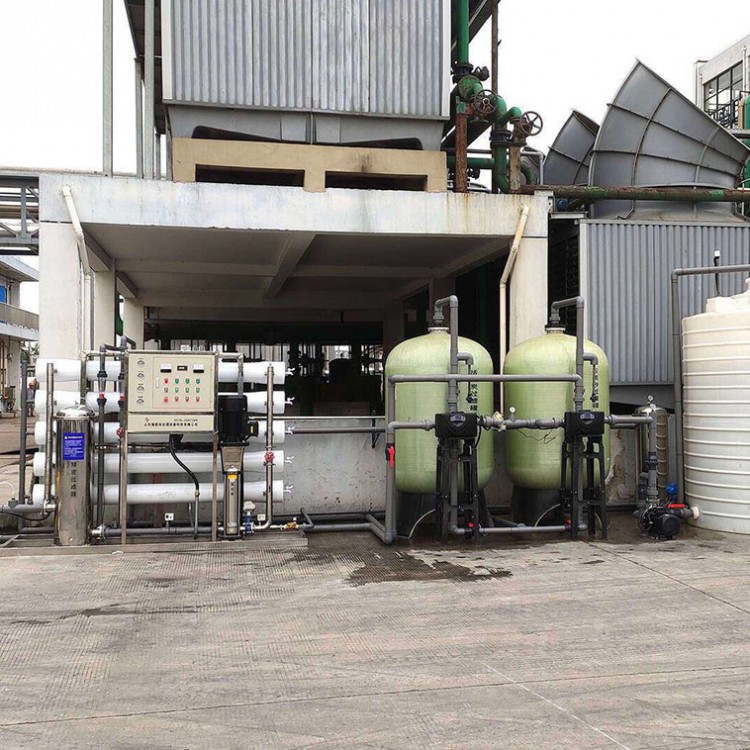

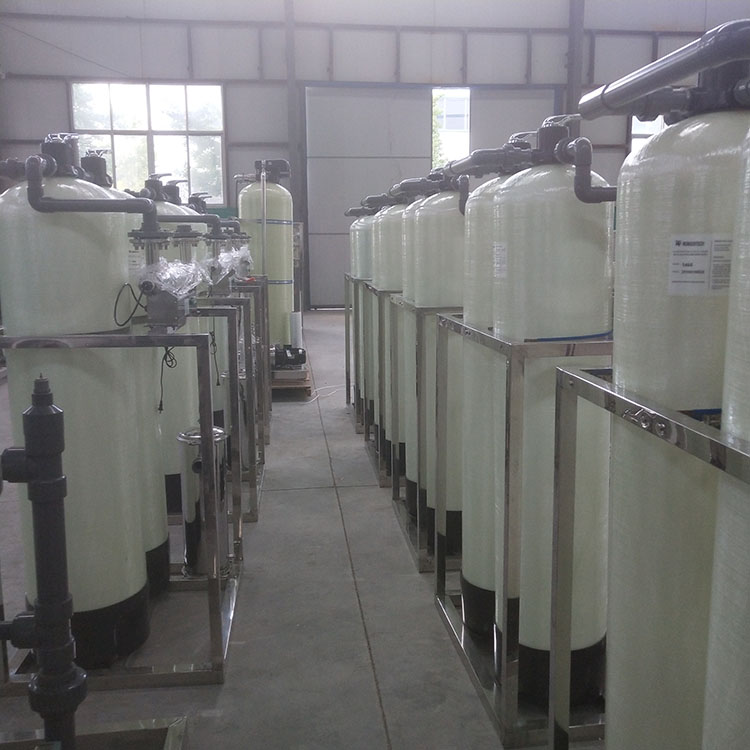

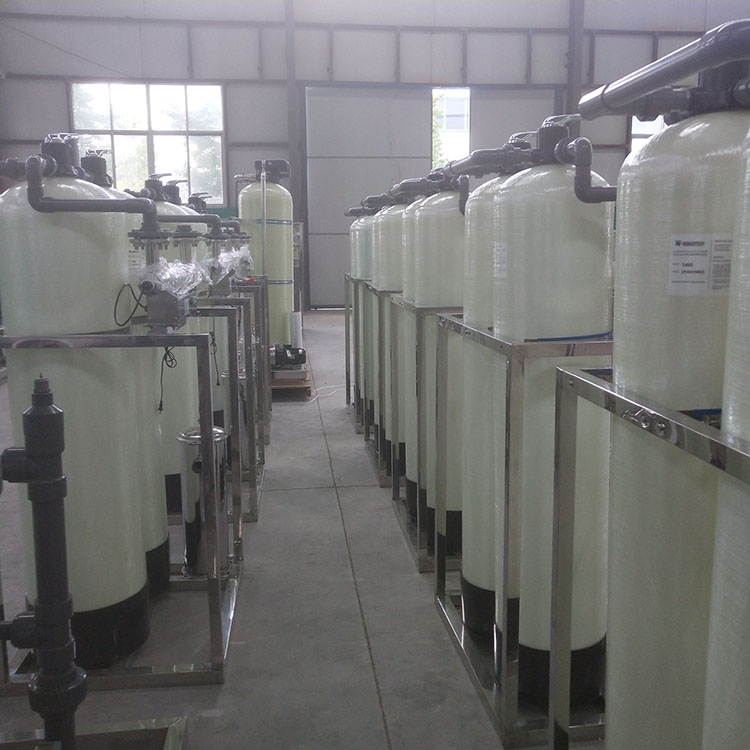
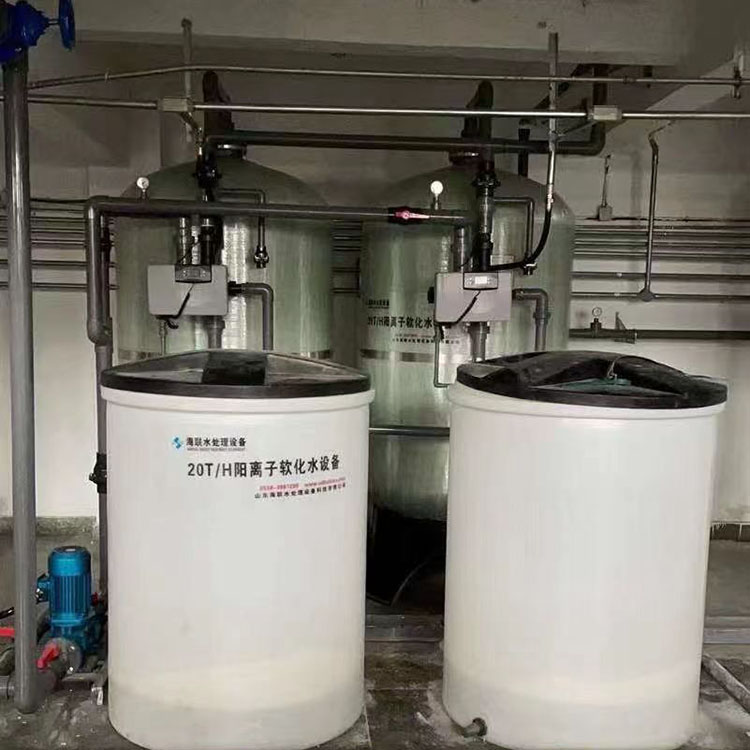
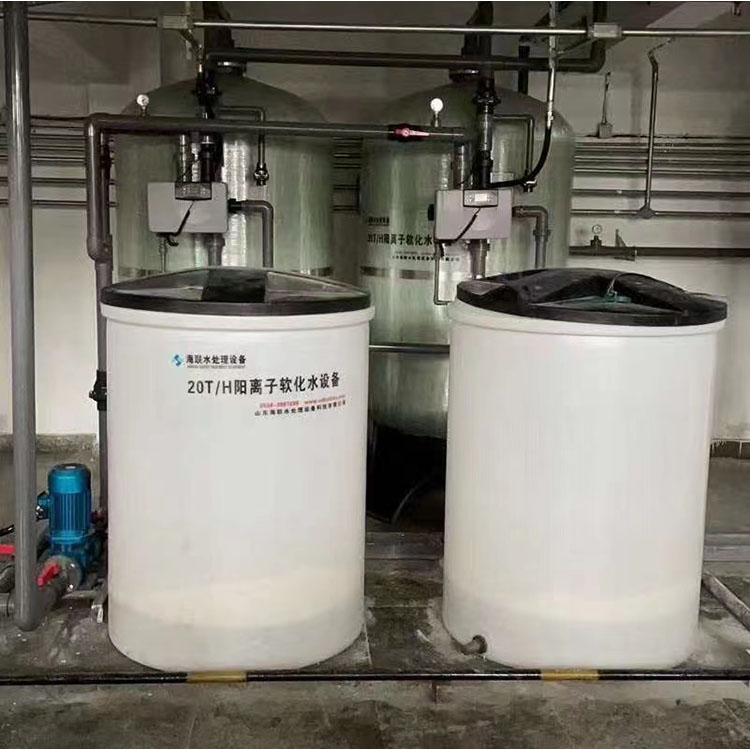







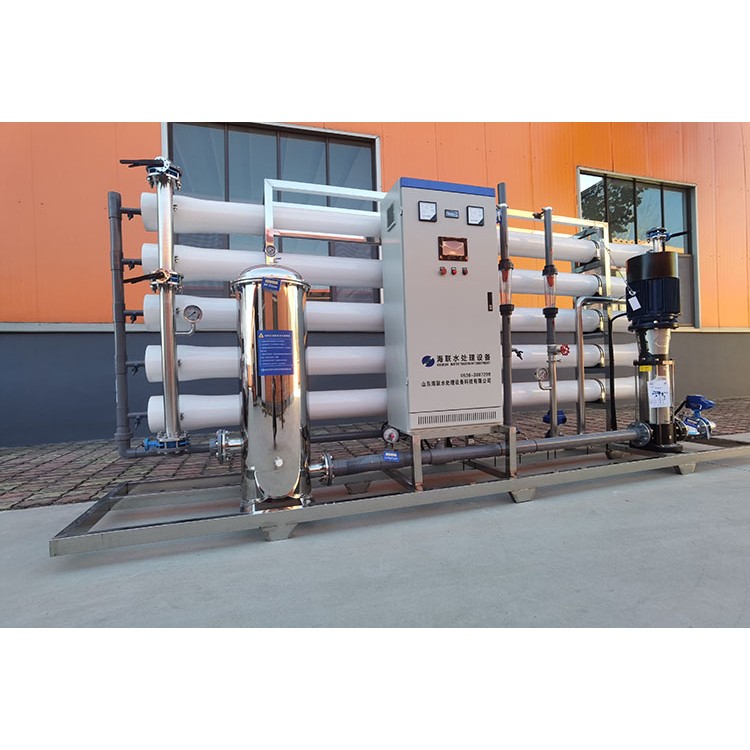


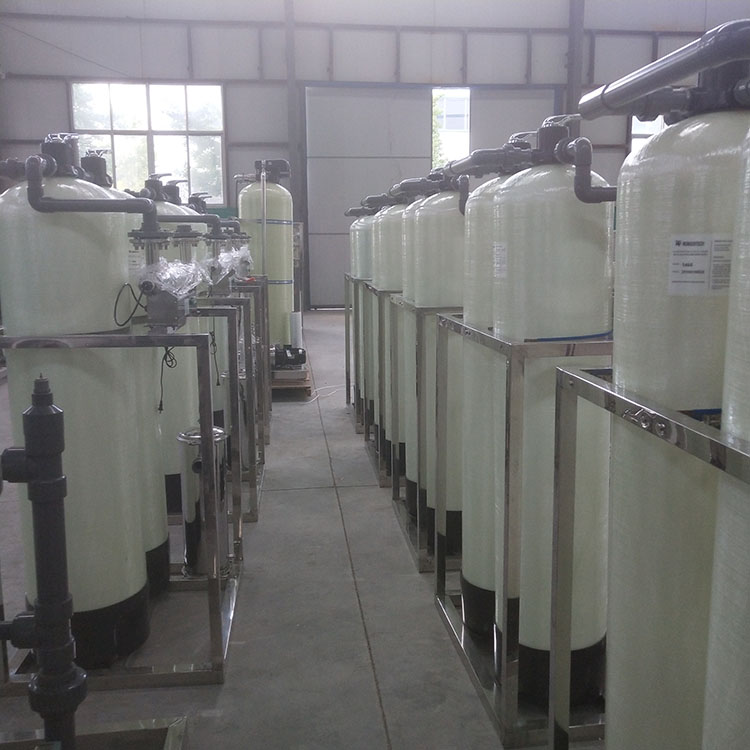
Softening Water Principle: When the original water has high calcium and magnesium ion content, the ion exchange resin (a polymer with corresponding functional genes; sodium ion exchange resin contains a large amount of sodium ions) releases sodium ions, which bind with the calcium and magnesium ions, reducing their content in the water, thus lowering the water hardness and transforming hard water into soft water. Water hardness is mainly composed of positive ions: calcium (Ca2+) and magnesium (Mg2+). As hard water passes through the resin layer of the exchanger, calcium and magnesium ions are adsorbed by the resin while releasing sodium ions. Consequently, the water exiting the exchanger is softened by removing the hardness ions. Once the resin adsorbs calcium and magnesium ions to a certain saturation point, the water hardness increases. At this time, the water softener automatically regenerates the exhausted resin according to a pre-set program, using a high-concentration sodium chloride solution (saltwater) to pass through the resin, restoring the exhausted resin back to sodium type resin. Equipment Model: 0.5 ton/hour – 1000 ton/hour. Equipment Selection Considerations: Consider the peak water usage, original water hardness, and whether the equipment runs for more than 8 hours a day. Equipment Purchase Considerations: Resin brand, exchange capacity, regeneration control method, and whether the equipment over 30 tons has the saltwater soaking function.