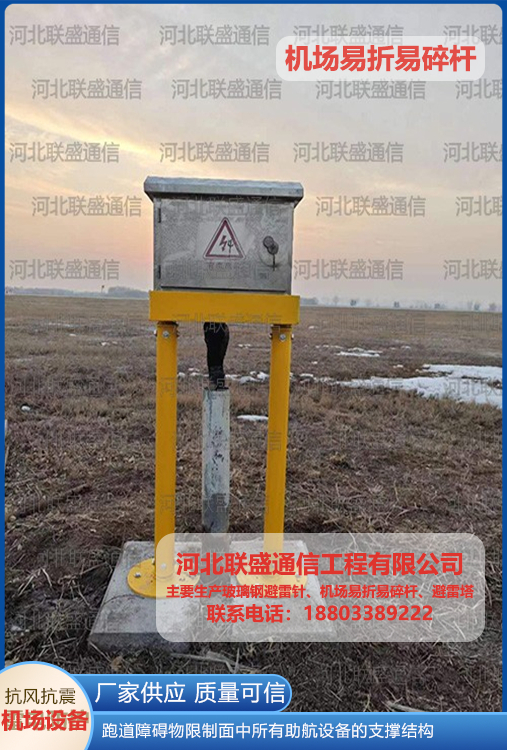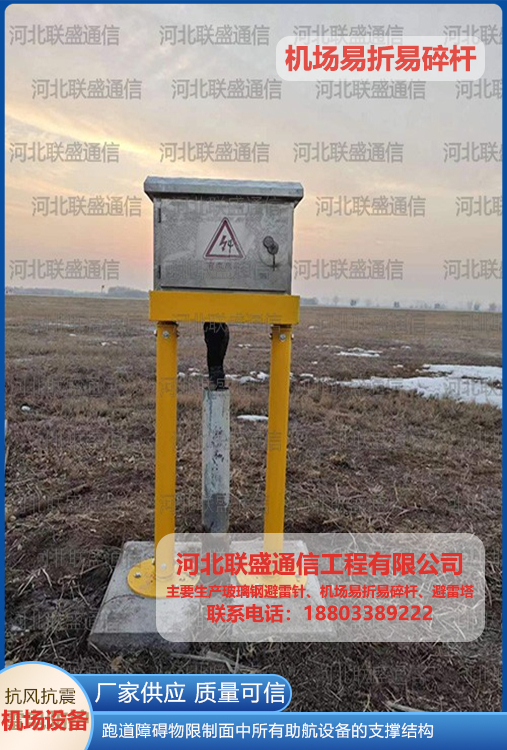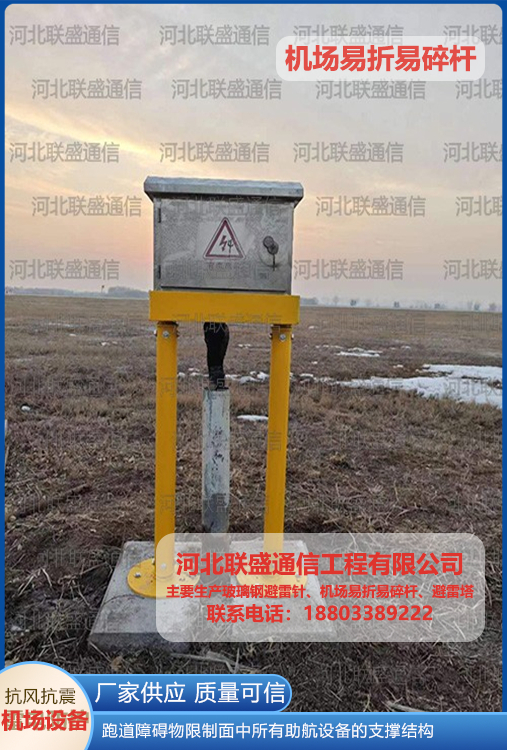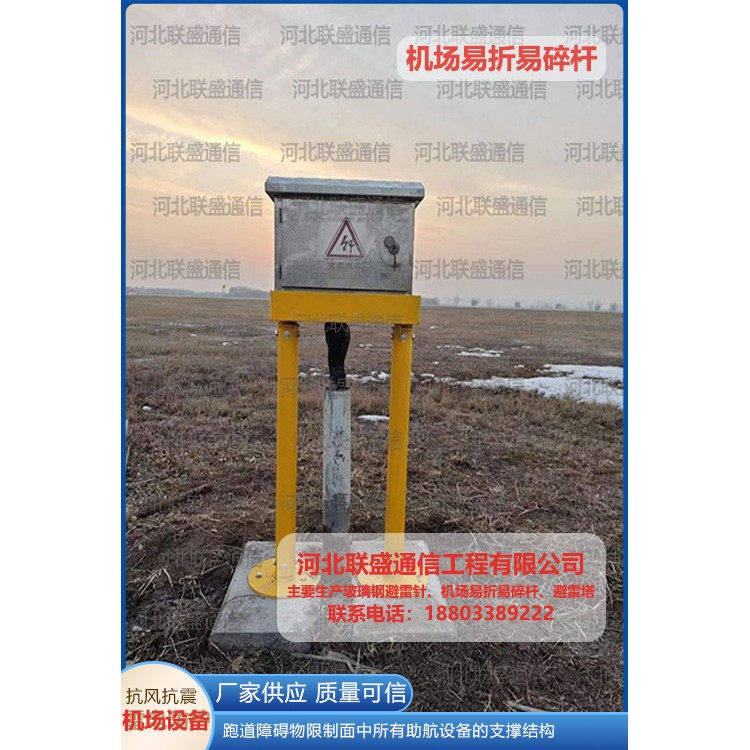

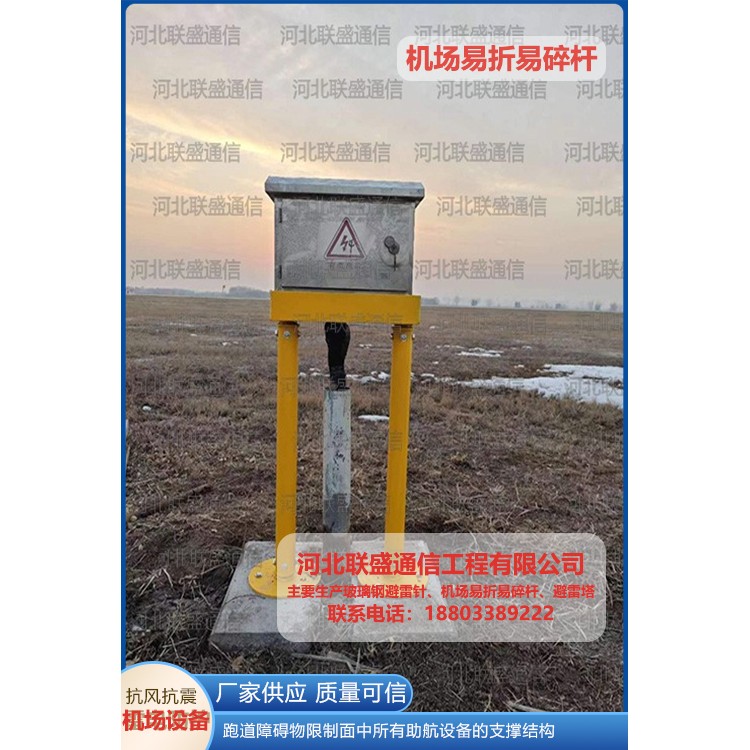
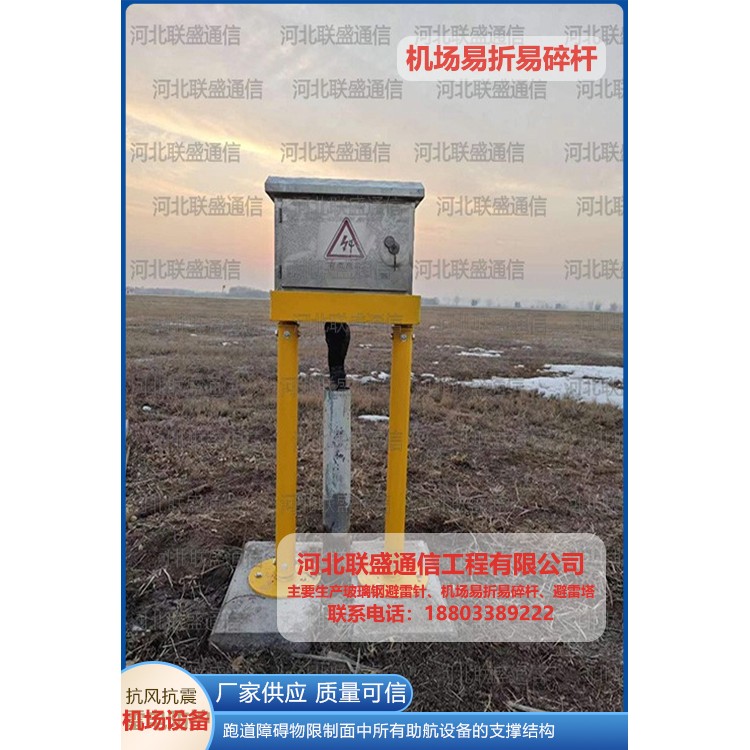
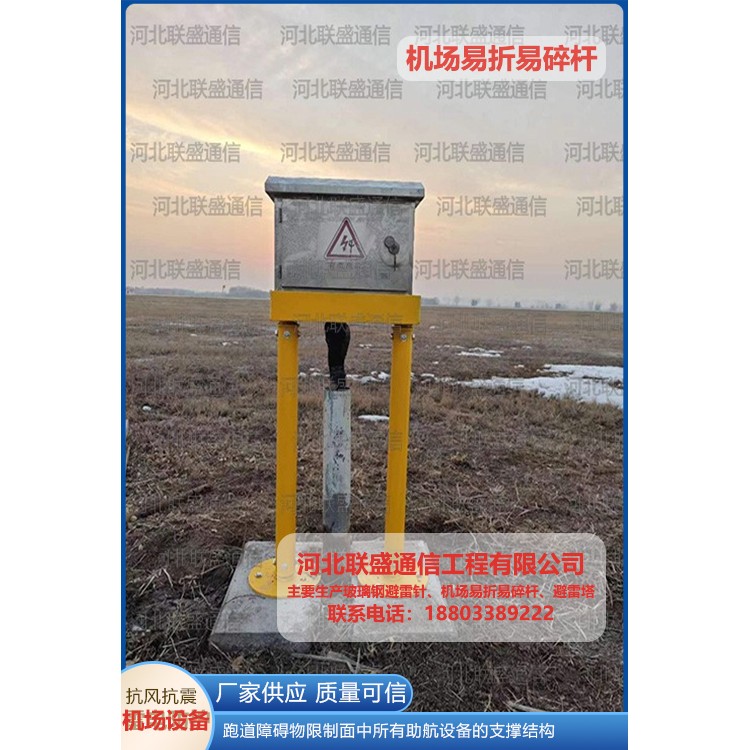













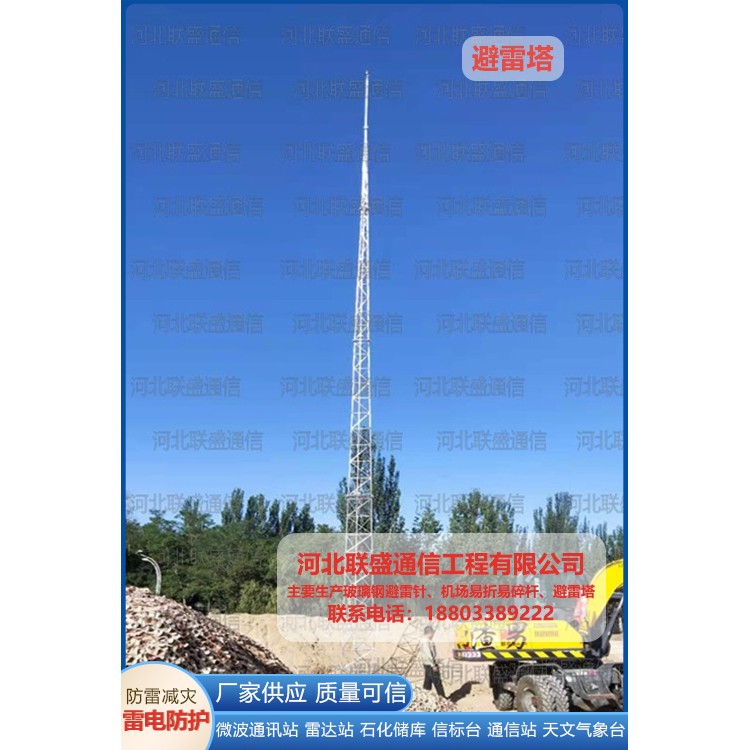
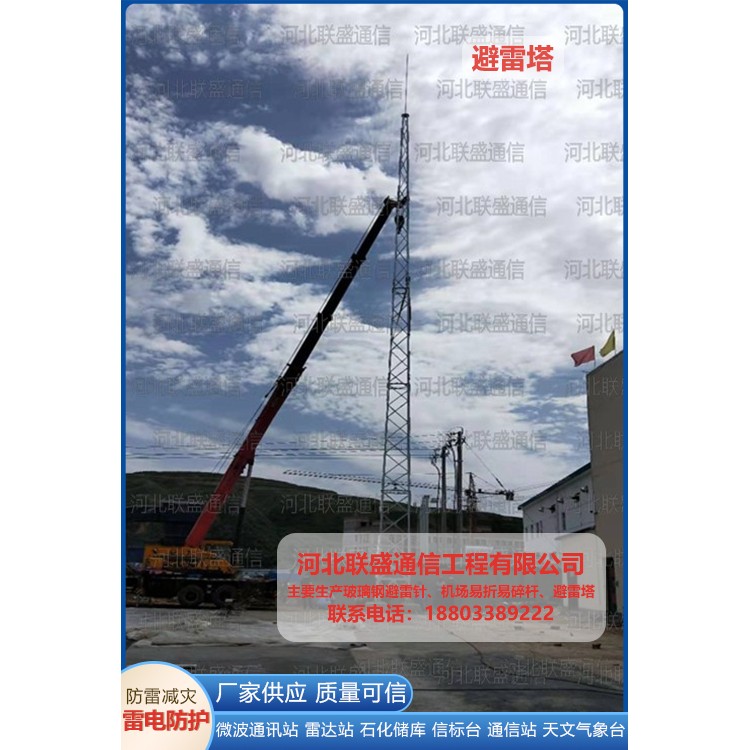
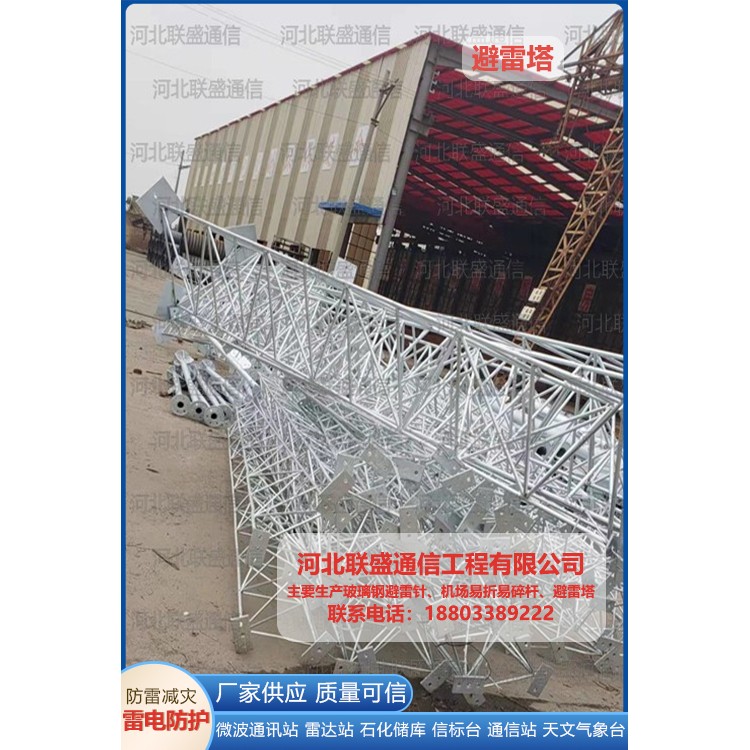
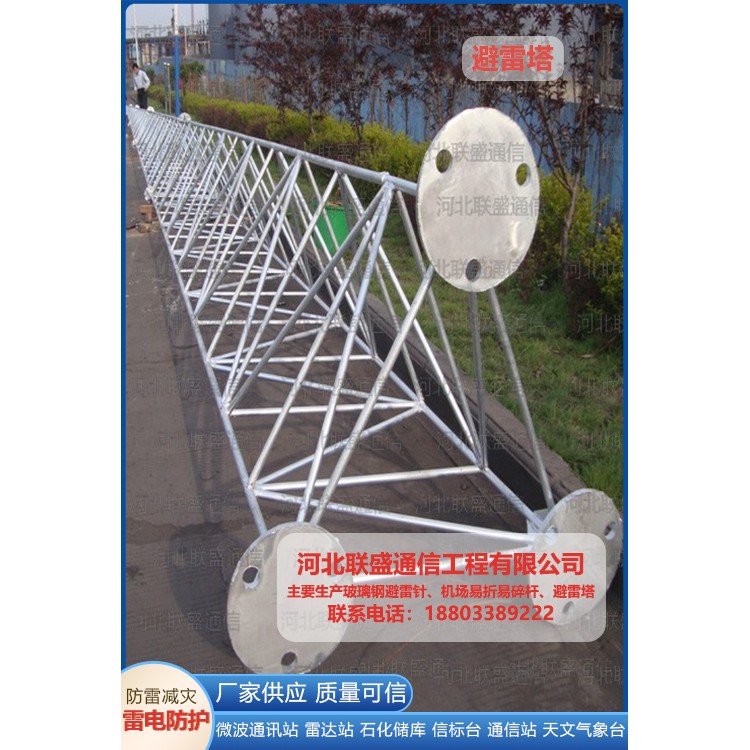

Airport Foldable and Fragile Rod Application Scope: Supporting structures for all aid devices in the runway obstacle restriction surface.
Fragile and brittle items — may break (shatter), bend, or yield under specified impact forces, thus posing minimal harm to aircraft as lightweight objects.
Fragility
Visual and non-visual navigation facilities at airports, such as approach lighting towers, meteorological equipment, and radio navigation equipment, are typically located near runways, taxiways, and aprons. If an aircraft in takeoff or landing ground operations were to accidentally collide with them, it could pose a hazard. All such equipment and their supports must be collapsible and installed as low as possible to ensure that collisions do not lead to aircraft control loss. Collapsibility can be achieved through various design concepts, such as using lightweight, brittle, and low-toughness materials, components, and connectors, to ensure that collapsible objects break, bend, or yield upon impact.
Flexible and fragile poles (hereinafter referred to as "flexible poles") are support structures made in single-pole, tower frame, and other configurations, utilizing lightweight, fragile materials and a design prone to bending.
Condition for bendability of aviation easily breakable and fragile rods
Collapsible rods for aircraft that may not abort a descent and could collide must break and fragment upon impact from an aircraft weighing 3,000 kg and traveling at 140 km/h. For aircraft that may not slide on the ground and could collide, the collapsible rods must also break and fragment upon impact from an aircraft weighing 3,000 kg and traveling at 50 km/h. The force exerted by the collapsible rod on the aircraft during impact must not exceed 45 KN; the energy transferred to the aircraft by the collapsible rod must not exceed 55 KJ.