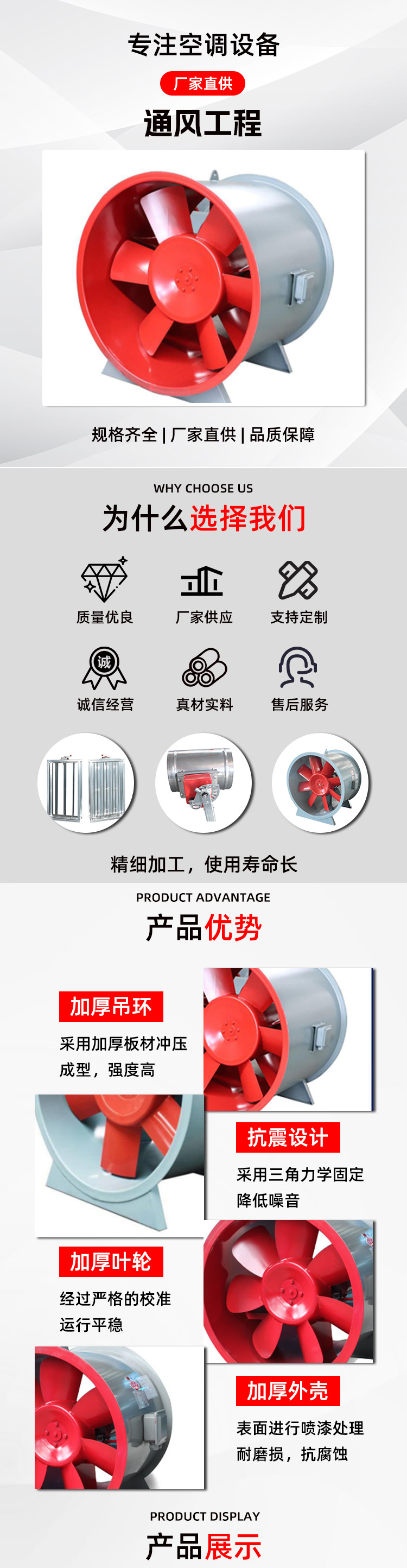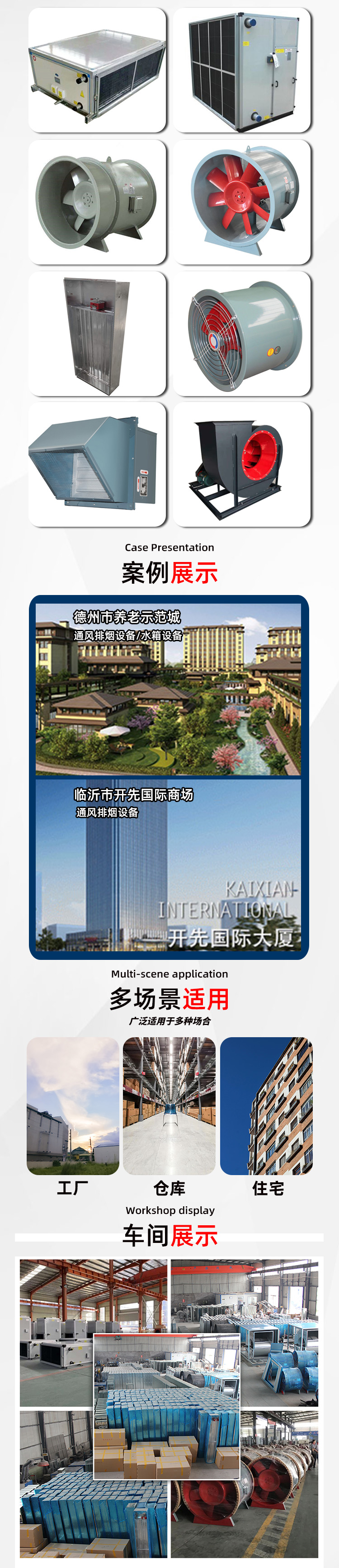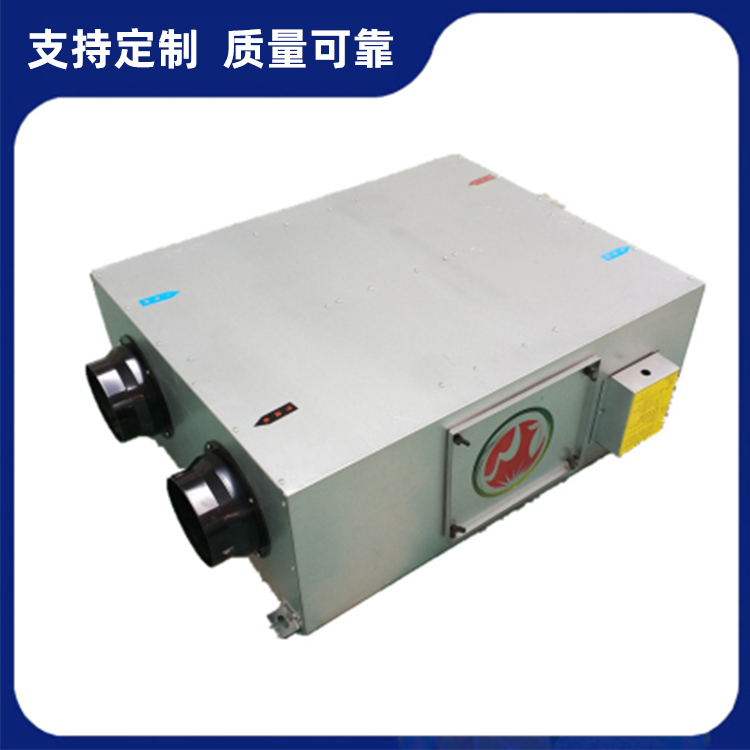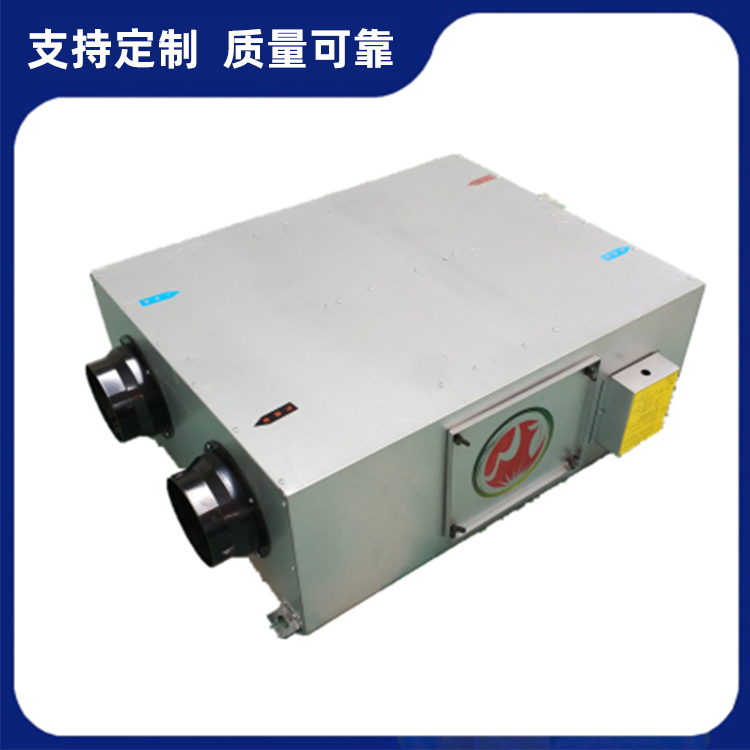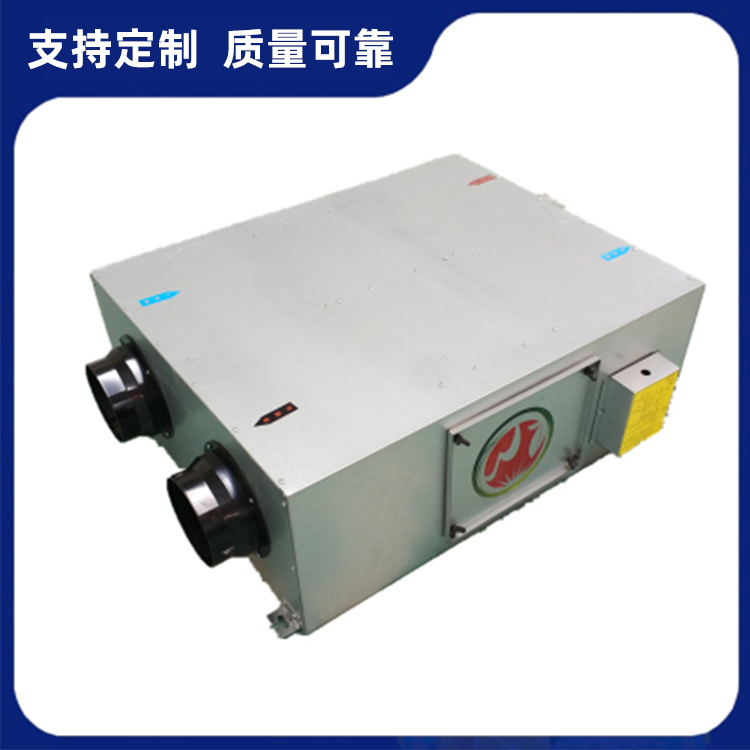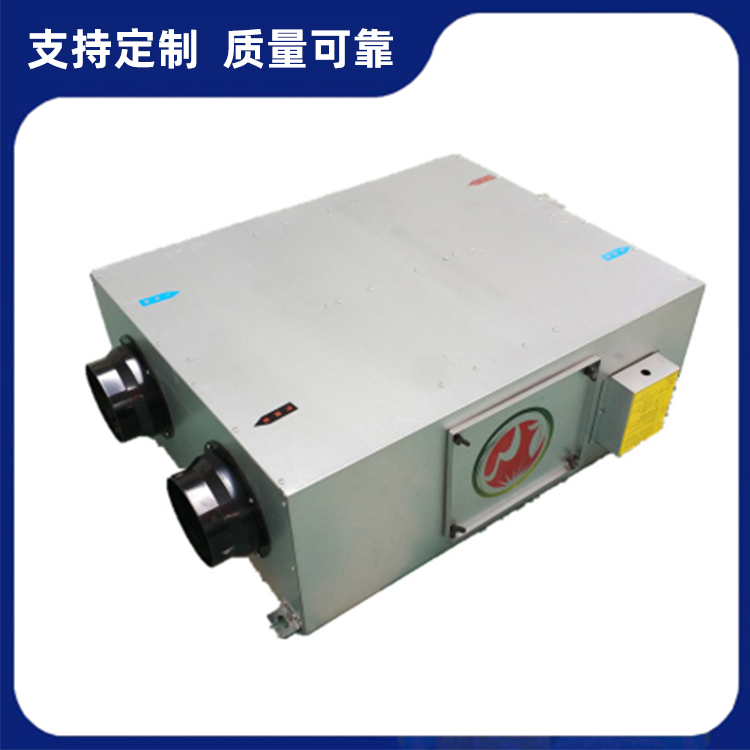

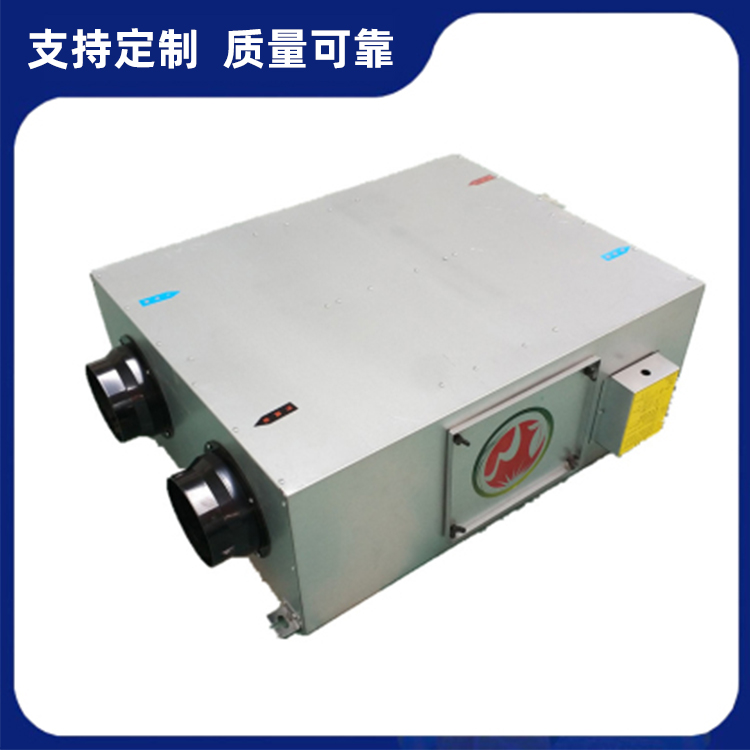
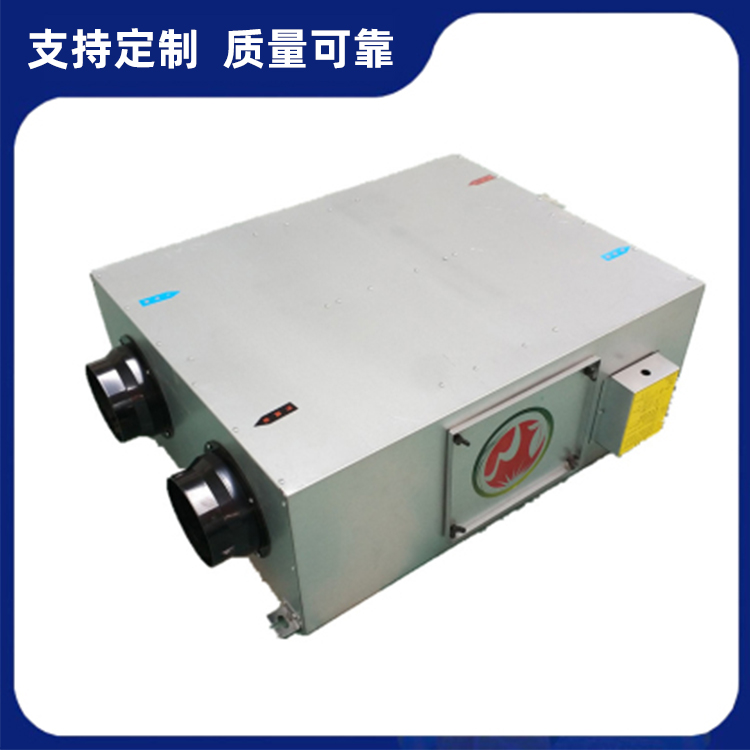








The core component of the ceiling-mounted full heat exchanger is the heat exchanger itself. The stale indoor air and the fresh outdoor air are exchanged for temperature through the heat transfer plates, while simultaneously exchanging humidity through the micro-pores on the plates, achieving the effect of ventilation and air exchange while maintaining stable indoor temperature and humidity. This is the full heat exchange process. During the summer cooling period, the fresh air absorbs coldness from the exhaust air, lowering the temperature and getting dried, thus reducing the humidity of the fresh air; during the winter operation, the fresh air absorbs heat from the exhaust air, raising the temperature and getting humidified.
Ceiling-mounted Full Heat Exchanger Principle
When the product is in operation, the indoor exhaust air and fresh air flow through the heat exchanger core in a positive cross pattern. Due to temperature differences and vapor pressure differences on both sides of the airflow separator, the two streams exhibit heat and mass transfer phenomena as they pass through the separator, initiating the full heat exchange process. During summer operation, the fresh air absorbs coolness from the air conditioning exhaust, thereby reducing temperature and getting dried by the air conditioning wind, lowering the humidity content of the fresh air. In winter operation, the fresh air absorbs heat from the air conditioning room exhaust, resulting in an increase in temperature. Thus, through the full heat exchange process of the heat exchange core, energy is recovered from the air conditioning exhaust air for the fresh air.