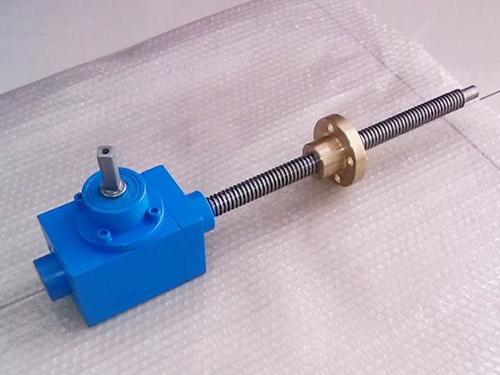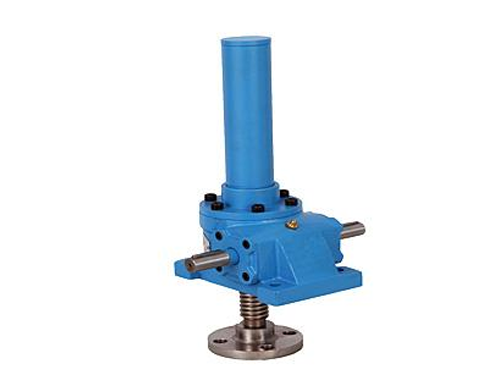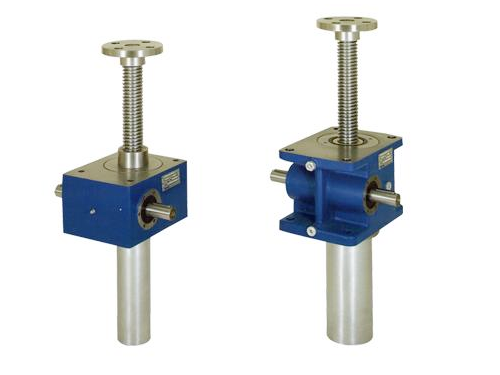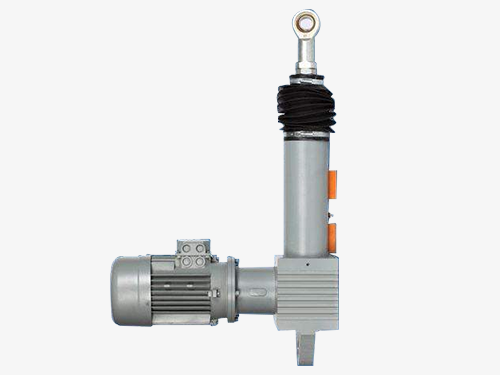

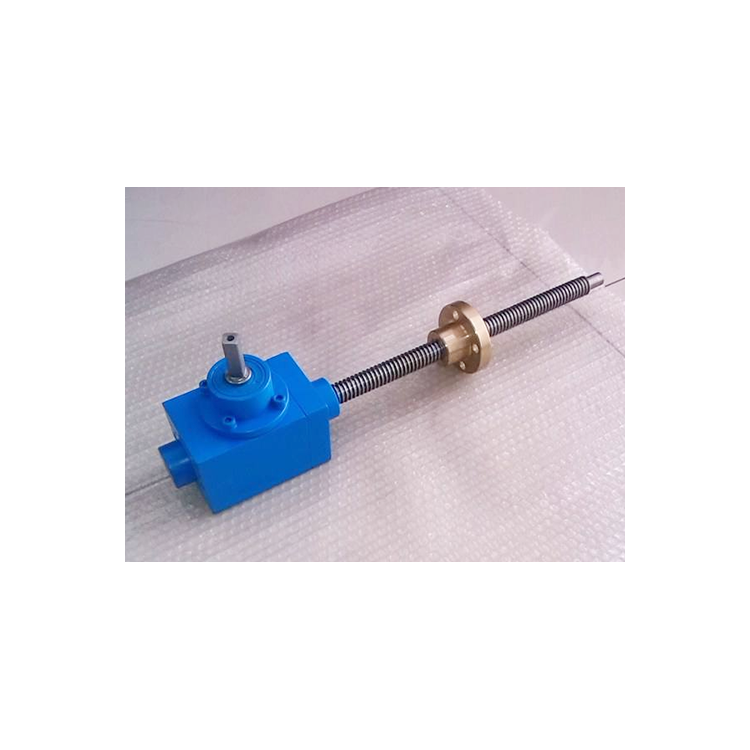

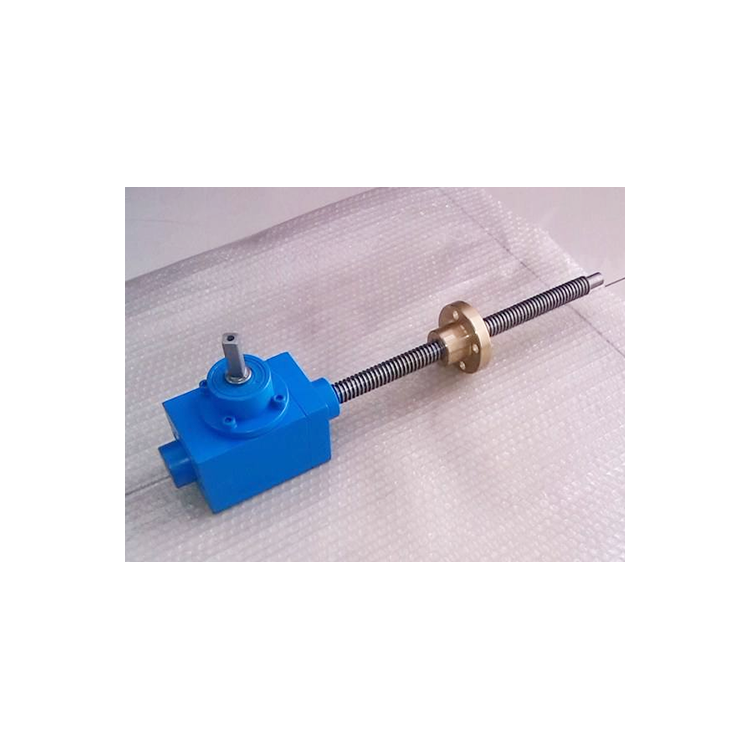
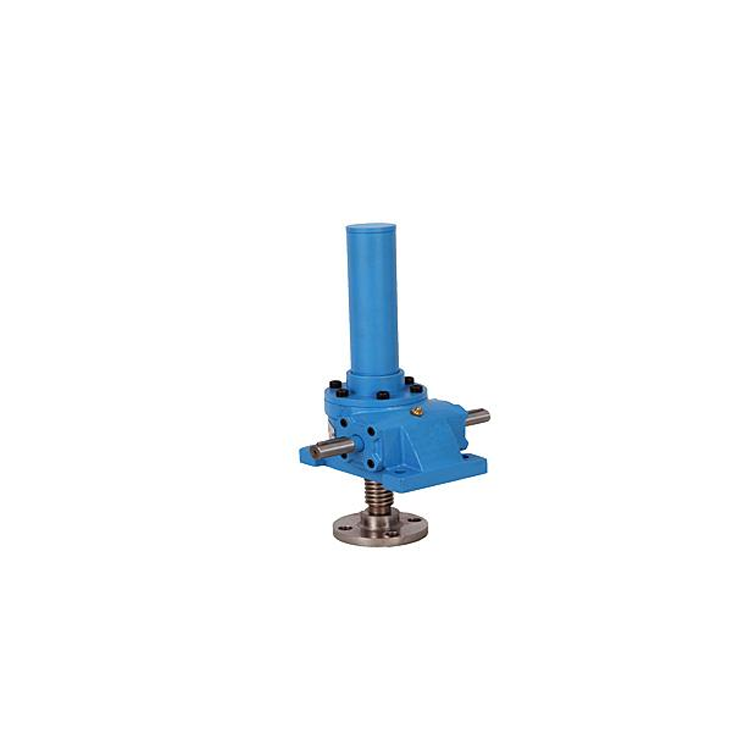
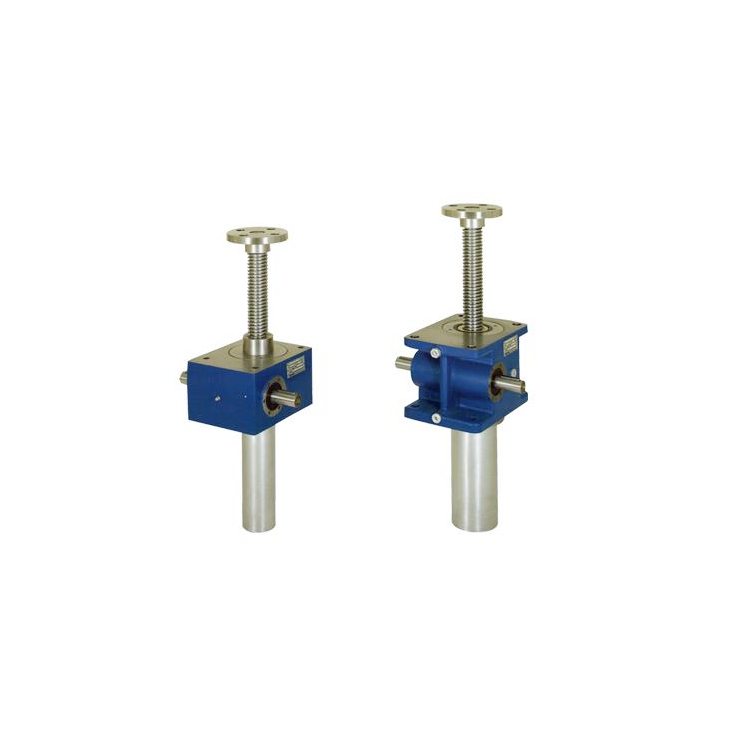







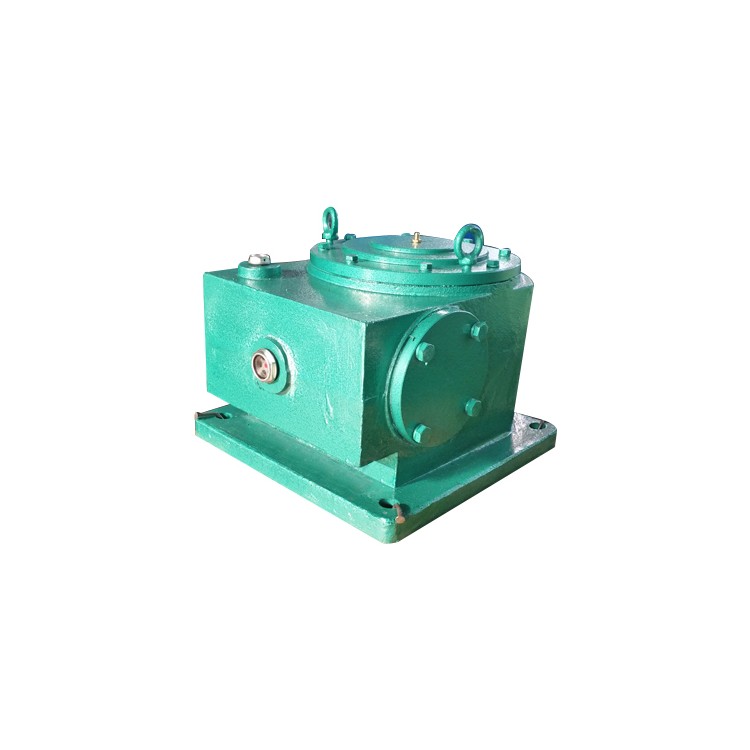
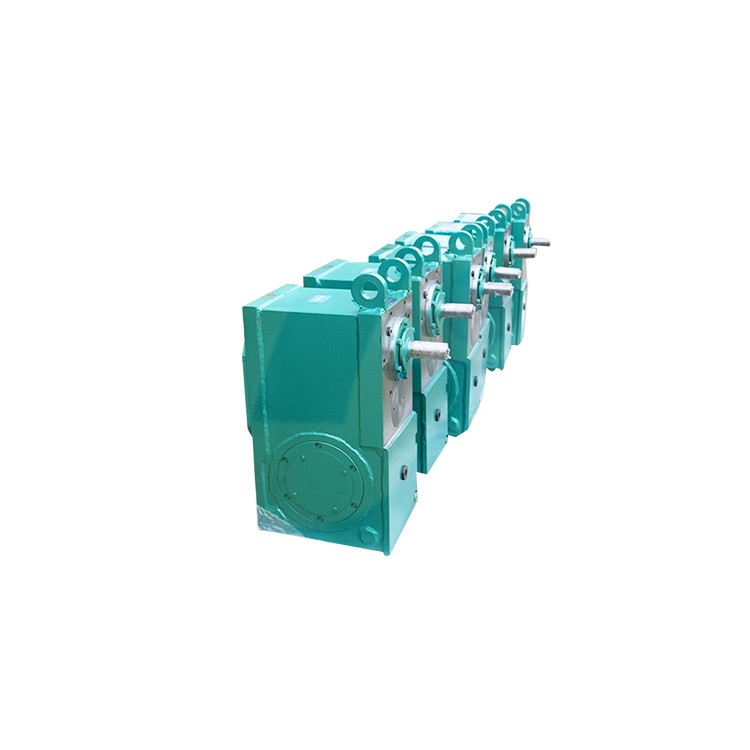
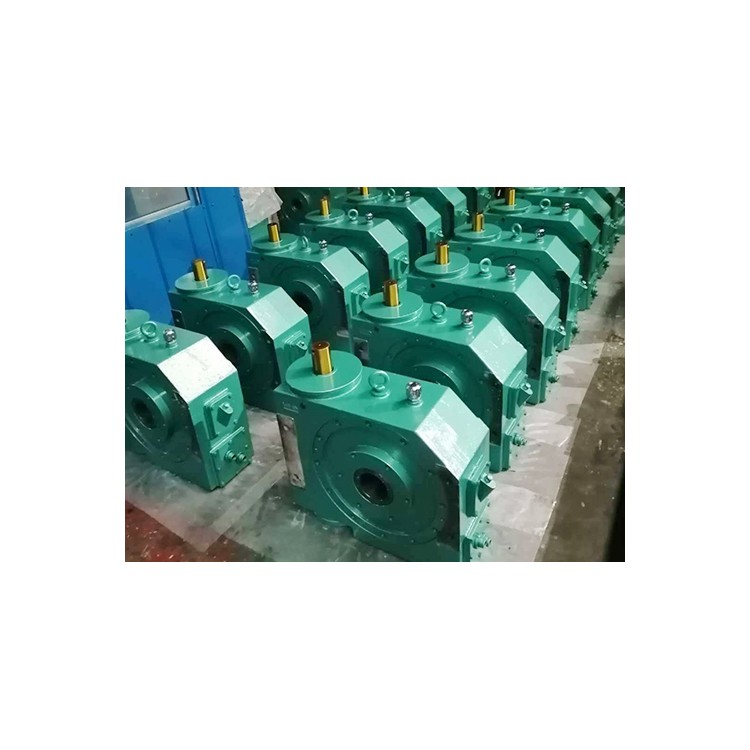

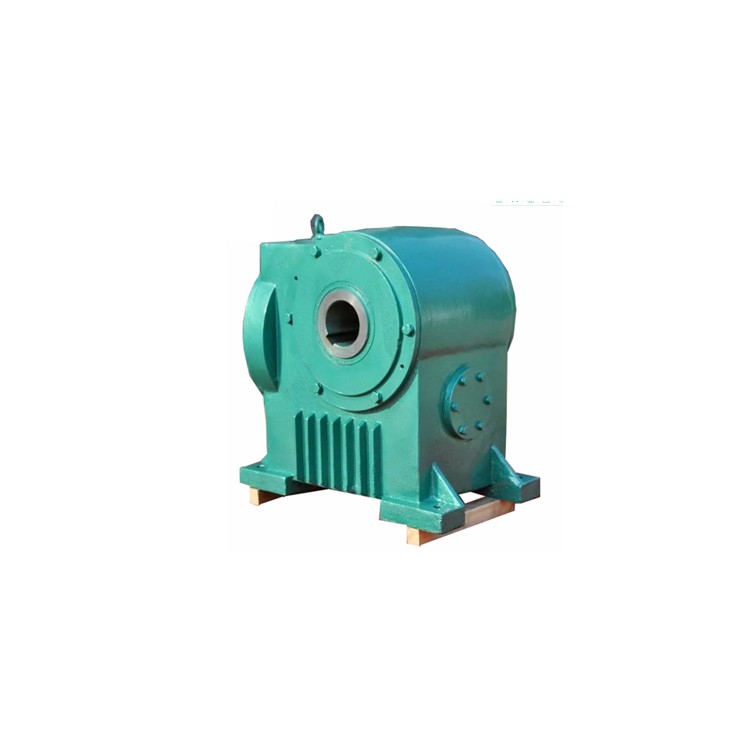
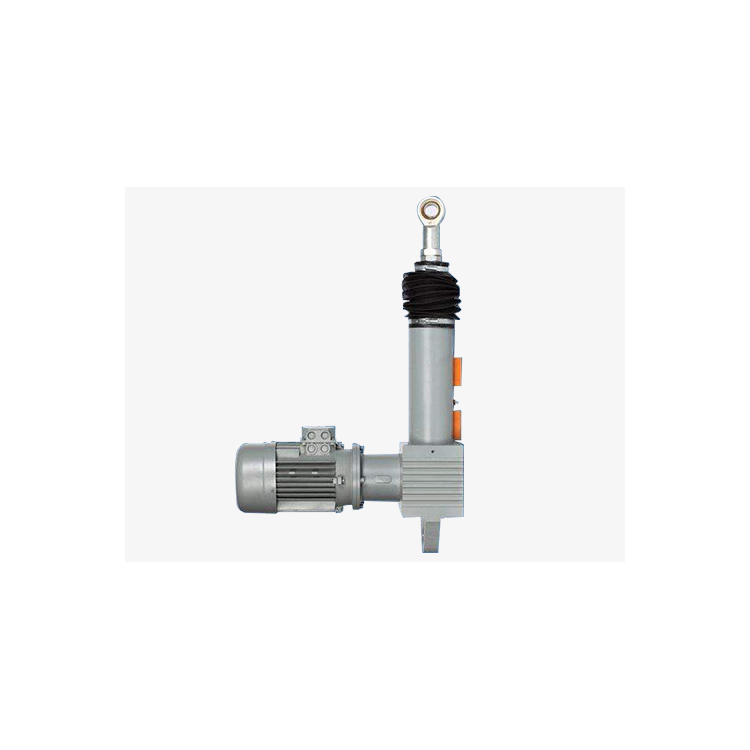
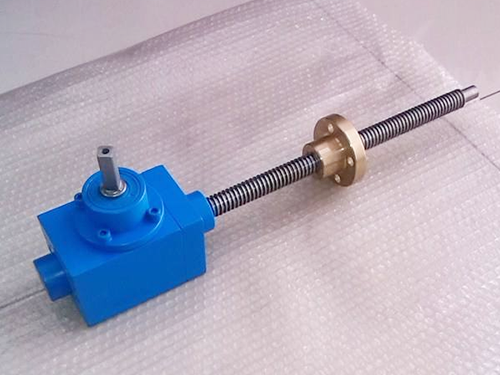
The worm gear screw jack is widely used in various industries such as machinery, metallurgy, construction, chemical industry, medical, culture, and public health. It can accurately control and adjust the lifting or advancing height according to a certain program. It can be directly driven by an electric motor or other power sources, or operated manually.
Screw jack, the SWL series worm screw jack is a basic lifting component that complies with the JB/T8809—2010 standard (originally JB/T8809—1998, JB/ZQ4391—86). Load capacity: 2.5—120T. Features include compact structure, small size, light weight, wide power sources, low noise, easy installation, flexible use, multiple functions, diverse matching types, high reliability, and long service life.
The screw jack, also known as a spiral drive mechanism, primarily converts rotational motion into linear motion or vice versa. It includes those that primarily transmit motion, such as the feed screw of machine tool worktables, and others that adjust the relative positions of parts. Screw jacks are differentiated by sliding friction and rolling friction mechanisms. The sliding screw and nut mechanism has a simple structure, is easy to process, and has a low manufacturing cost, featuring an automatic locking function, although it has a large friction torque and low transmission efficiency. The ball screw and nut mechanism, while more complex and costly to manufacture and not self-locking, boasts small friction torque, high transmission efficiency, high precision, good system rigidity, reversible motion, and a long service life. The screw jack consists of a worm gear reducer and a screw, with the减速部件 being the worm drive that drives the worm to achieve reduction. The worm gear is equivalent to the nut of the lifting screw and matches with the lifting screw.
The lifting speed of the screw jack is equal to the input speed of the worm gear divided by the reduction ratio of the worm and worm gear, then multiplied by the pitch of the screw. It typically uses grease lubrication due to its structural design. The maintenance and care of the screw jack; some series employ oil lubrication, which offers the advantages of longer lifespan and more stable operation compared to the grease-lubricated series. Planetary gear reducer [1].
Product Application
Input speed: 1500 rpm, lifting speed: 2.7 m/min. Available in various structural types and assembly methods; lifting height customizable to customer requirements. The device features self-locking capability.
Structural style
Hoists are classified by structural type into:
Type 1 - Ball screw performs both rotational movement and axial movement simultaneously.
Type 2 - The lead screw performs a rotating motion. The nut on the lead screw moves axially.
Assembly Type
Each type of lifting equipment is further divided into two assembly styles:
Type A - Screw (or Nut) moves upwards.
B-type - lead screw (or nut) moves downward.
Ball screw head type
1-Type screw with structural design
The top section is:
I (cylindrical), II (flanged), III (threaded), IV (flat-head) styles.
The screw head section of the 2-type structural style is available in two forms: I (cylindrical) and III (threaded).
Transmission Ratio
The hoists are divided into two gear ratios, namely Standard (P) and Slow (M).
Screw jack protection
The protection of 1st type lifting screw is divided into: Basic Type, Anti-Rotational Type (F), and Enclosed Type (Z).
The protection of the 2-type lifting screw is divided into: Basic Type and Protective Cover Type (Z) [2].
Product Features
Broadcast Editor
1. The JWM type (trapezoidal screw type) is suitable for low-speed and low-frequency applications, mainly consisting of precision trapezoidal screw and nut pairs and high-precision worm and worm gear pairs.
2. Economical pricing, compact structure, easy operation, and convenient maintenance.
3. Low speed, low frequency: Mainly used in high-load, low-speed applications where frequent operation is not required.
4. Maintain Load: The trapezoidal screw features an automatic locking function, which can hold the load even without a braking device.