






Elevators, also known as escalators or moving walks, are common vertical transportation tools in modern shopping malls, subway stations, and other public places. The following is a brief introduction to their related knowledge:
### Structural Composition
1. **Truss**: The framework structure supporting the overall weight and passenger load; the main engine (including the working brake and related accessories) drives the entire system to operate.
2. **Guide System**: Regulates the elevator's speed, lifting height, and the movement paths of its components.
3. **Handrail and skirt board assembly**: A critical part for passenger safety, including top and bottom covers, wall panels, and anti-pinch devices; handrails provide a grip for users to maintain balance and stability, especially crucial for children and the elderly who require additional support and assistance.
4. **Chains connect all the steps**, allowing them to move along predetermined paths. The treads are located at the entrance to facilitate smooth transitions onto the electric walkway. Inspection covers and floor plates are situated at the exit for easy maintenance, inspection, and safety.
5. Additional components, such as advanced pedals, work together to fulfill operational tasks. Depending on specific requirements and scenarios, there may be more customized designs to meet special needs and application environment demands. There are significant differences that are difficult to list exhaustively, but the overall structure and principle are generally the same. They are a type of mechanical product that uses electricity as a power source to achieve automated transmission functions. The classification criteria are also diverse, allowing for selection based on actual needs to achieve the desired performance state!
### Working Principle and Safety Precautions
It drives a series of steps along a fixed track in a circular motion through a motor-driven transmission chain, continuously transporting personnel. During this process, strict adherence to operational procedures is required, ensuring firm footing and a firm grip on the handles on both sides to prevent accidents and ensure personal and property safety!
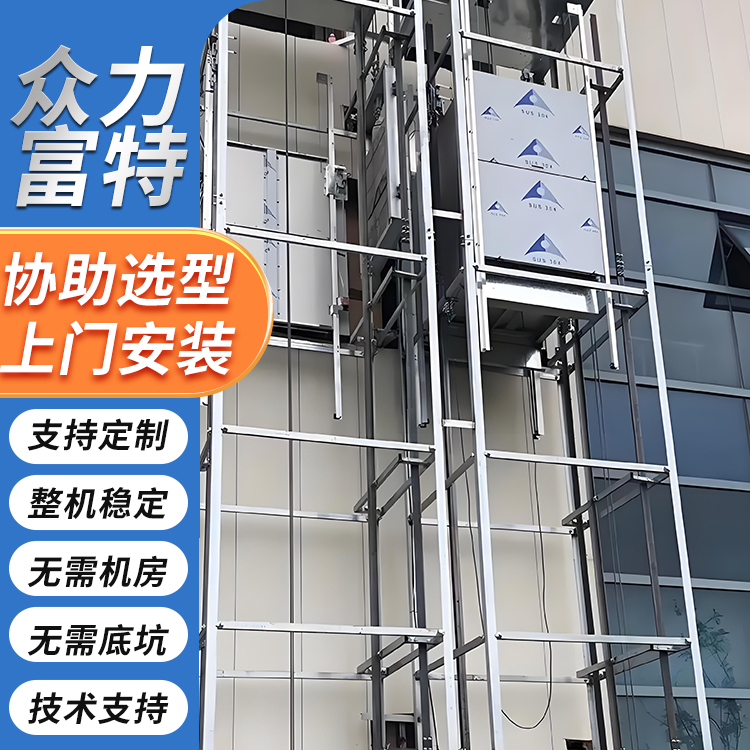
Design Concepts for Villa Elevators

The design approach for villa elevators primarily includes the following aspects:
Firstly, the attention to the escalator should reflect a humanized approach. The primary purpose of installing a villa elevator is to facilitate the use of the elderly and individuals with mobility issues. Therefore, the design must thoroughly consider their needs and habits. Secondly, personalized elements should be considered to match the architectural style and the preferences and temperament of the users. As each building or household has its unique structure and style, selecting an elevator that complements it is crucial. Additionally, safety is a non-negotiable factor; third-party safety inspections must be conducted to ensure proper operation.
In terms of hoist layout, the placement can be flexibly arranged based on the actual situation, such as in the middle of the stairs, at the corner of the wall, or around the escalator, with the preference being centered and not blocking the passage. Additionally, the reasonable car size and load capacity are determined by reversing the door width, with a recommendation for 3-5 people (250~400KG) to meet basic needs and enhance the comfort and experience of the ride. A comprehensive consideration of these factors ultimately determines the specific design details. Furthermore, to improve overall safety, we should add self-rescue measures and procedures in case of emergencies, as well as a standard emergency leveling device with power failure function.

Special elevators refer to passenger and cargo lifting electromechanical equipment with special purposes, structures, or operational environmental requirements, installed within buildings or construction projects. These devices have clear definitions and classification requirements under the "Special Equipment Safety Law of the People's Republic of China," and their safety and reliability are crucial for the protection of both personal and property safety.
### Key Features:
***Specialty**: Designed and manufactured based on varying usage environments and requirements; for instance, fire elevators are equipped with fire and smoke prevention features and can swiftly transport firefighters to emergency scenes for rescue operations. Elevators for hospitals emphasize smoothness, comfort, and compliance with special requirements like sterile disinfection within the facility. Mining elevators must meet the unique demands of explosion-proof, dust-proof, and moisture-resistant environments in mines. In summary, each type of special-purpose elevator has its own structural design and safety measures to meet specific application needs and safety standards.
***High Standard of Safety Performance**: Due to its involvement in life safety and other critical areas, there are stringent regulations and execution processes for manufacturing, installation, and inspection to ensure quality and operational effectiveness, thus minimizing the probability of accidents and enabling timely and effective response to various emergencies, aiming to safeguard the lives and property of the people with minimal impact and to achieve the goal of effectiveness and development in all directions!
In summary, it is evident that special-purpose elevators are one of the indispensable and essential facilities in modern architecture!
Elevator Function - Suxun Elevator (Online Inquiry) - Guizhou Elevators supplied by Suxun Elevator Co., Ltd. Suxun Elevator Co., Ltd. has dedicated much passion and enthusiasm to the field of elevators and accessories. Suxun Elevator has always centered on customers and creating value for them, winning the market through quality and service. We sincerely hope to cooperate with all sectors of society to create success and brilliance together. For related business inquiries, please contact Luo Feifei.