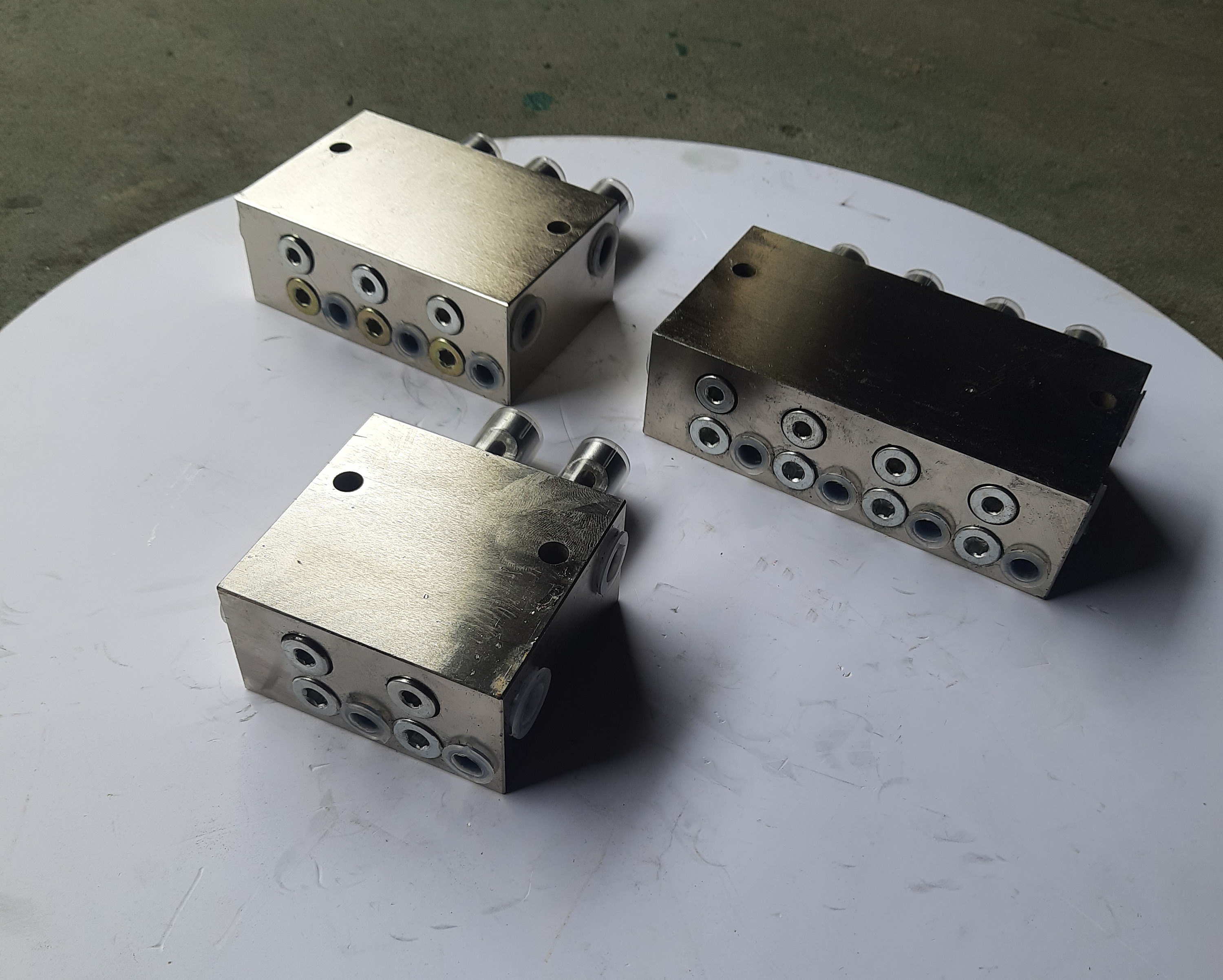

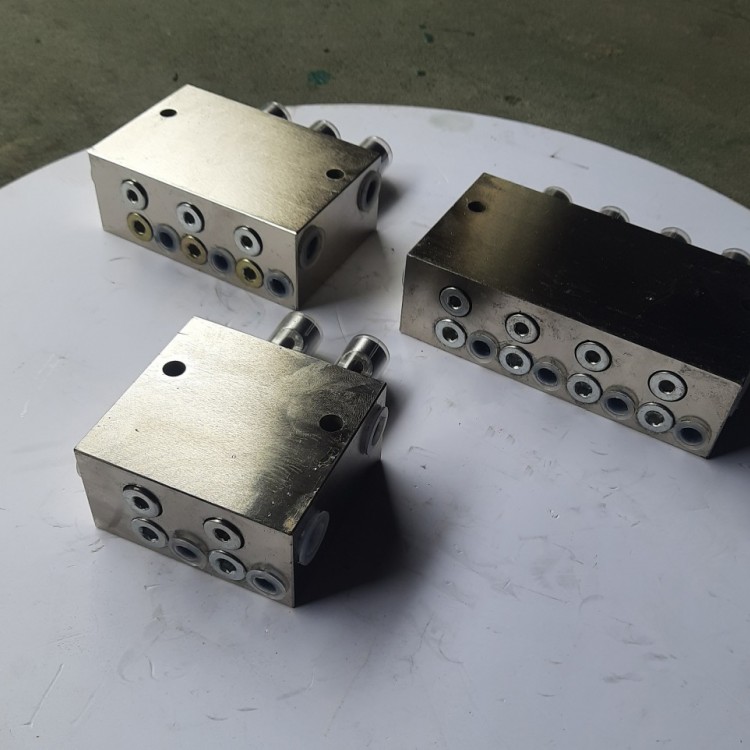

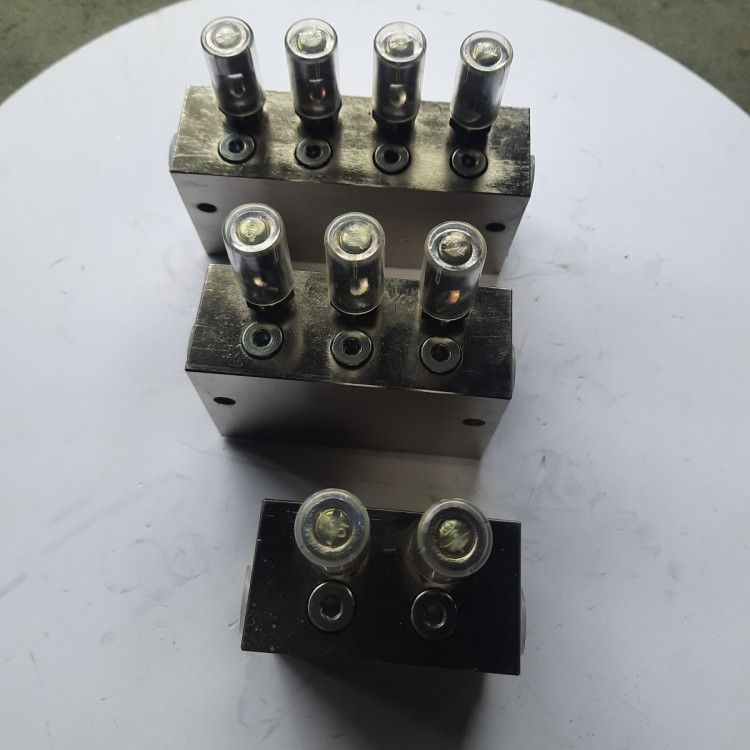


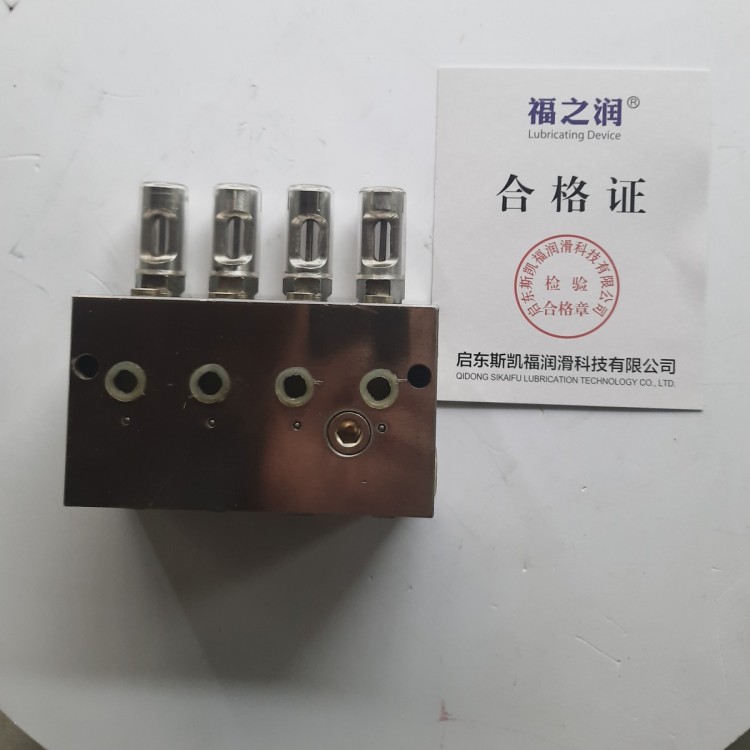
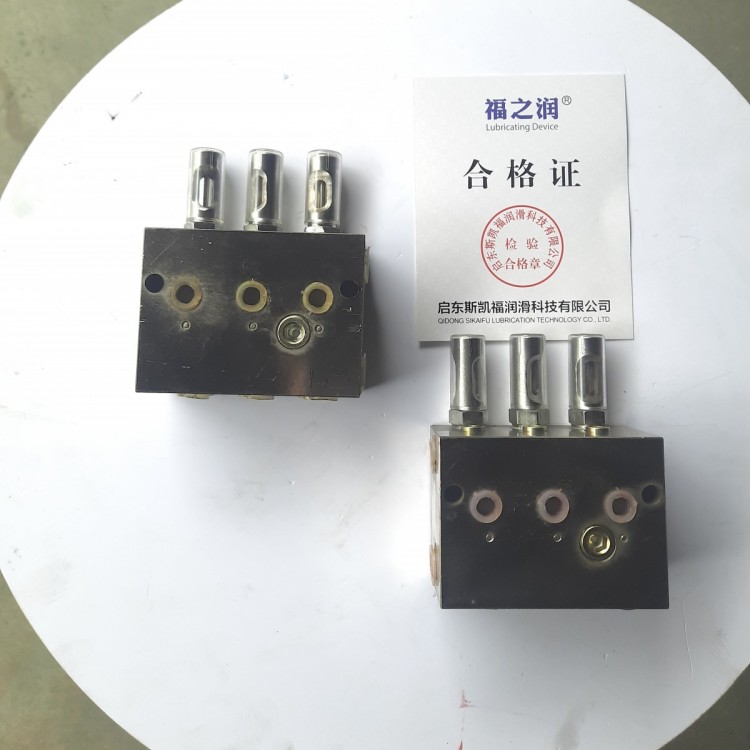
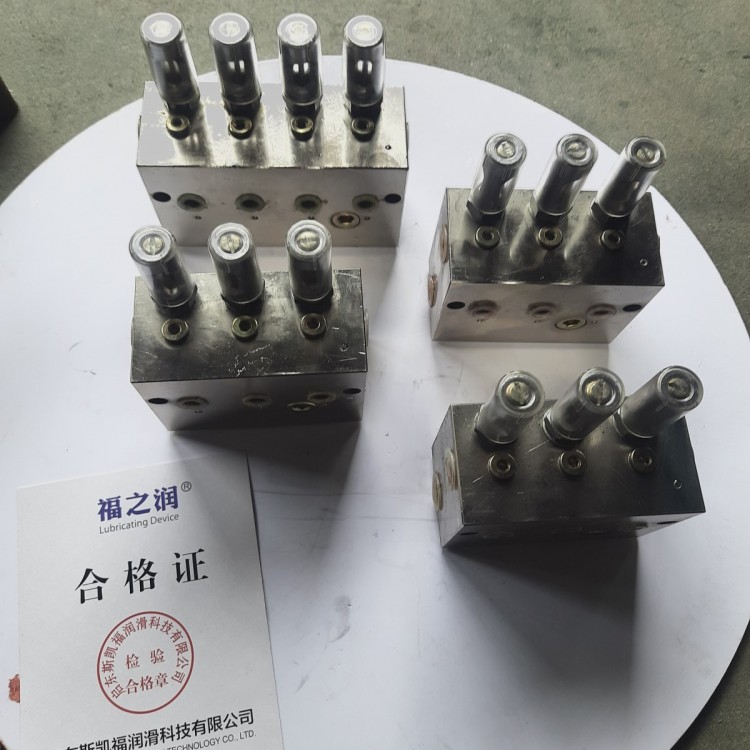
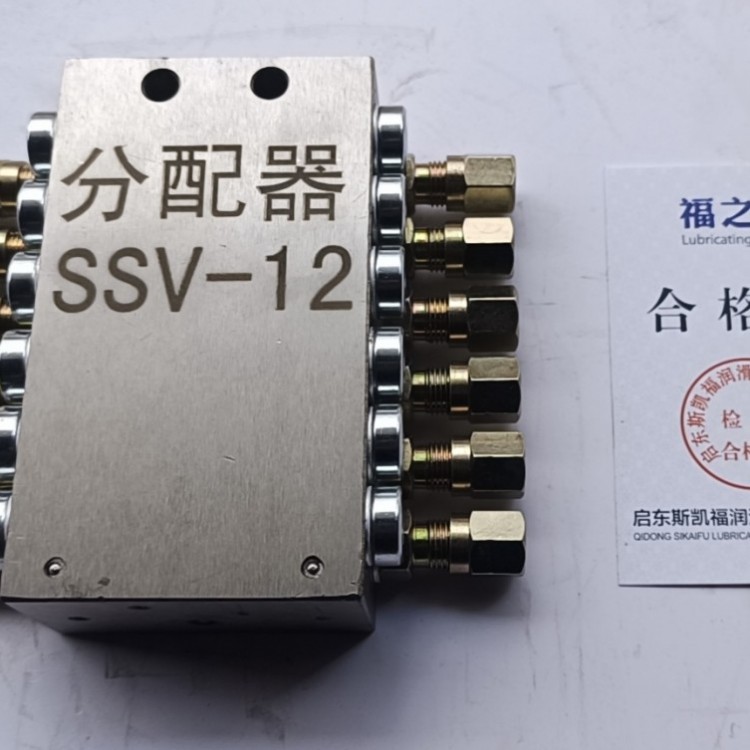







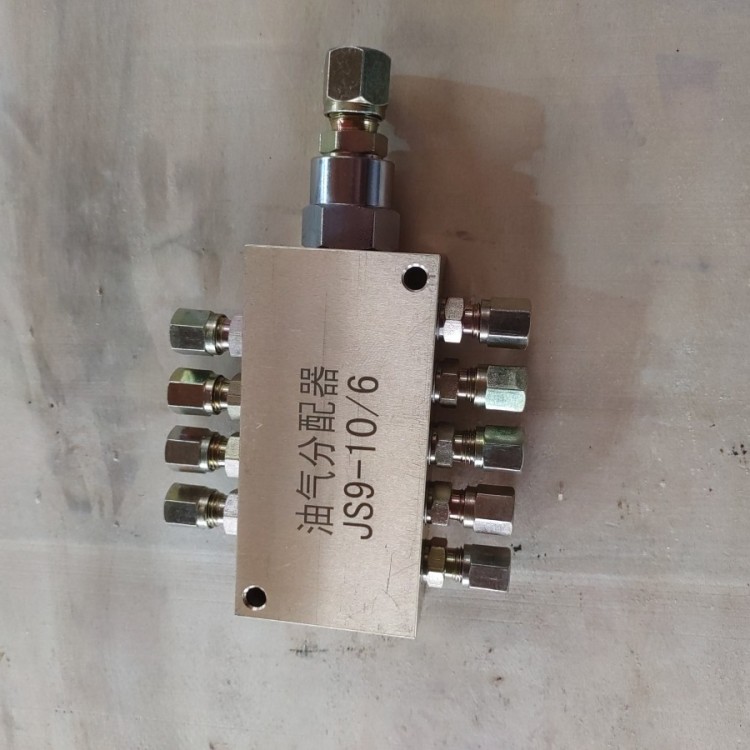
SDPQ-LSeries dual-line distributors (20MPa)
I. Terms of Use
The two-line centralized lubrication system, designed for a nominal pressure of 20MPa, serves as a metering oil supply device. Under the alternating pressure of the two supply lines, it directly pushes the piston to supply oil, thereby quantitatively distributing grease to each lubrication point.
The SDPQ-L series one-way oil distributor features all oil outlets at the bottom. The distributor piston drains oil from the same feed port during both forward and reverse operations. Each time the system operates, all feed ports drain oil once.
II. Technical Specifications
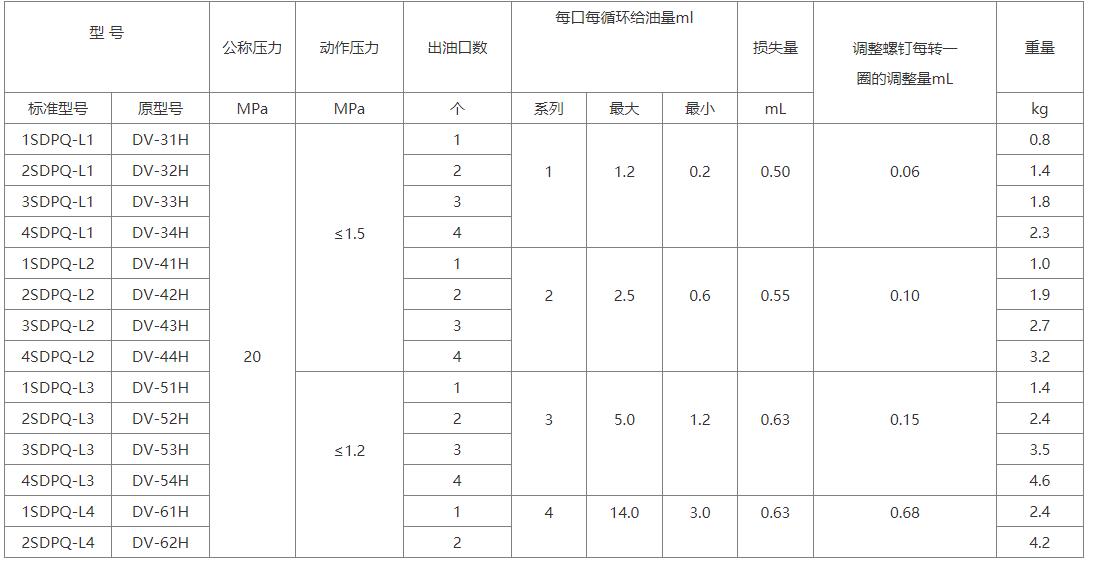
The SDPQ-L series distributors use medium with a penetration of 265 (25°C, 150g) 1/10mm grease (NLGI 0#~1#) or lubricating oil with a viscosity grade greater than N68.
Operating temperature range: -10℃ to 80℃; usable at 10MPa pressure when the medium is lubricating oil.
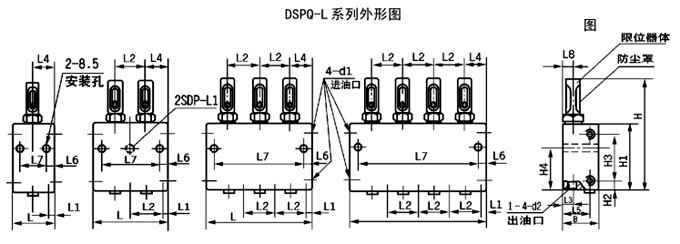
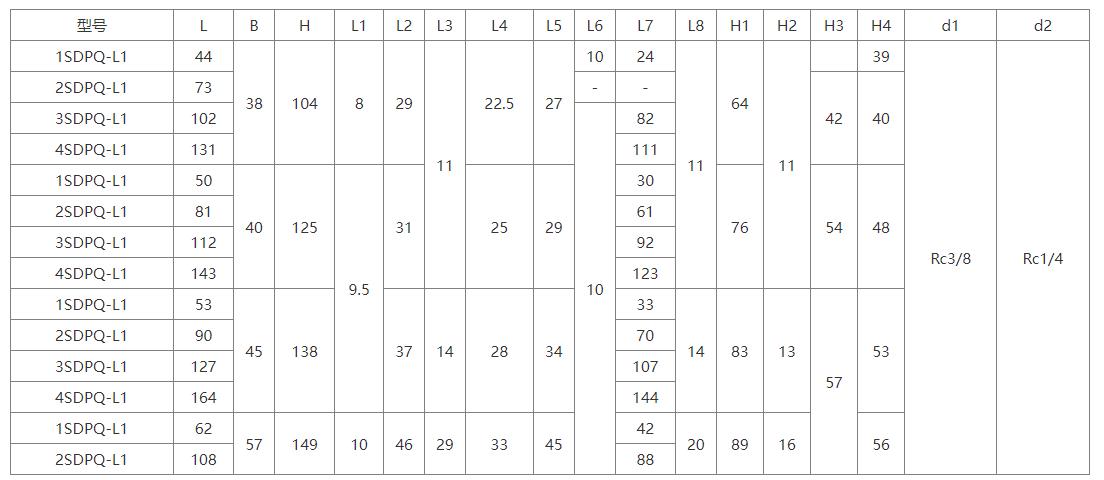
SDPQ-L series bidirectional oil distributors with unidirectional oil outlet; only an oil outlet is located at the bottom. The lubricant is supplied from the bottom outlet during both forward and reverse oil displacement by the piston. The specifications for its form and dimensions are shown in the figures and tables.
III. Working Principle
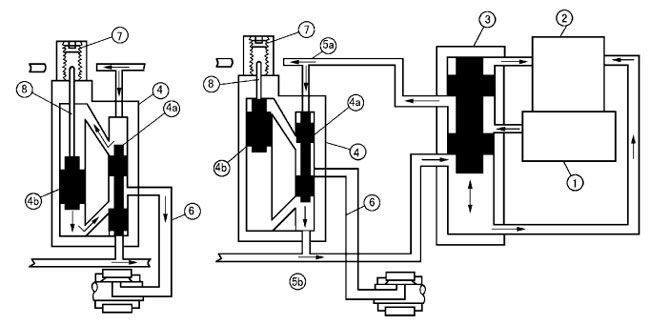
1. Lube Pump 2. Oil Reservoir 3. Directional Valve 4. Distributor 4a. Pilot Piston 4b. Main Piston
5a. Fuel Supply Tube; 5b. Fuel Supply Tube to Oil Tube; 7. Adjustment Screw; 8. Indicator Rod
The dual-line distributor features two oil intake ports, which are connected to the 5a and 5b supply lines, respectively. When one line is supplied by the lubrication pump, the other opens to the oil storage tank.
As shown in the image above, the lubricant delivered by the pump is transported through supply line 5a to the distributor 4, where it pressurizes the upper part of the pilot piston 4a, pushing it down. At this moment, the lower part is connected to supply line 5b for unloading. As the pilot piston 4a moves down, it connects the upper chamber of the main piston 4b with the upper chamber of the pilot piston, and the lower chamber of the main piston with the outlet. The supplied lubricant enters the upper chamber of the main piston, pushing it down and forcing the lubricant in the lower chamber through feed line 6 to the lubrication point, completing the oil supply action for the current cycle.
Switch to fuel line 5b to begin the second cycle of fueling action. The distributor piston reverses the aforementioned action in the same sequence.
The diameter and stroke of the main piston 4b determine the oil outlet of each distributor. By adjusting the adjusting screw 7, the stroke of the main piston 4b can be changed to achieve oil quantity regulation within the specified range.
4. Instructions for Use
1. Must be used with the specified medium under the prescribed conditions.
2. The two inlet oil ports of the distributor are connected to two fuel supply lines respectively, and both sides are through. If an inlet port on one side is not in use, it should be sealed with a plug. The unused fuel outlet should also be sealed with a plug (SDPQ series).
3. For use in dusty, humid, and harsh environments, a protective cover should be used.
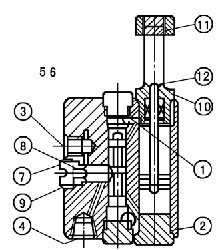
4. Adjust the oil volume by turning the adjusting screw (11) on the limiter (10), which can be set within the range of maximum and minimum oil volumes according to the actual needs at the lubrication points. Adjustments should be made with the indicator rod (12) retracted, and the locking screw should be tightened after adjustment.
5. If the number of oil ports is odd, unscrew the plug (8) and place it over the oil supply port (3). This connects the oil supply ports (3) and (4), allowing the piston to extract oil from port (4) during both forward and reverse actions.
6. The system primarily uses parallel installation for dual-line distributors, with the oil supply pipe connecting to either the left or right side of the distributor. Secondarily, series installation is employed, with a maximum of three in series not to be exceeded. In certain situations, a combination of parallel and series installation may also be used.
7. The surface contacting the distributor should be smooth and even; do not tighten the installation bolts too much to prevent deformation that may affect normal operation.
8. The end bolts of the distributor piston are not to be removed without cause. In case of leakage, tighten or replace with a new sealing washer.
V. Common Faults and Troubleshooting Methods
1. The distributor is not functioning.
Check for oil line pressure, whether lubrication points are blocked, and if the oil line is flattened; whether impurities have entered the distributor causing piston holes to roughen, etc. Investigate and resolve accordingly.
2. Oil leakage at the limit switch body indicator rod.
Remove the stopper and replace the new oil seal. It may be due to the oil seal being in stock too long, aging, or exceeding the specified environmental temperature for use. Investigate and replace as needed.