














I. Basic Introduction
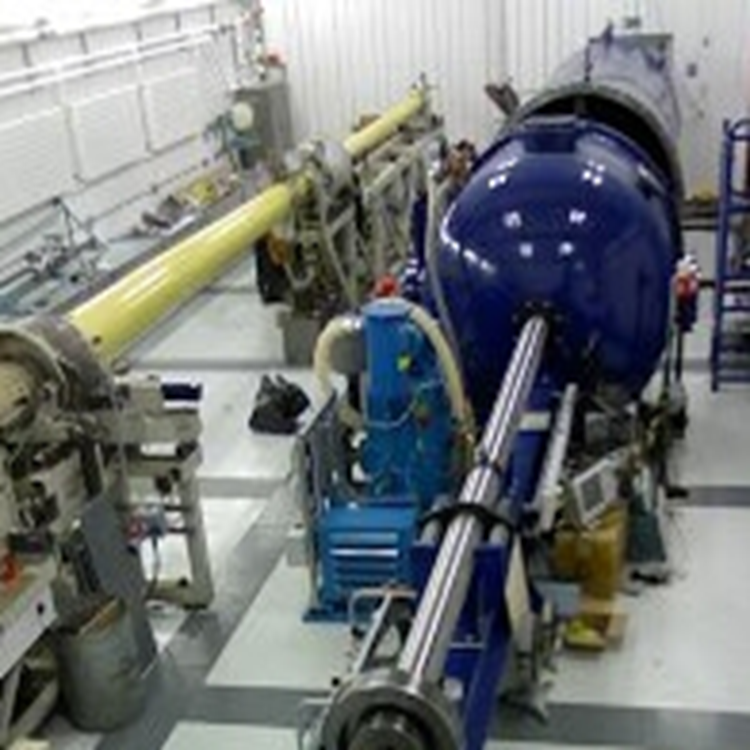
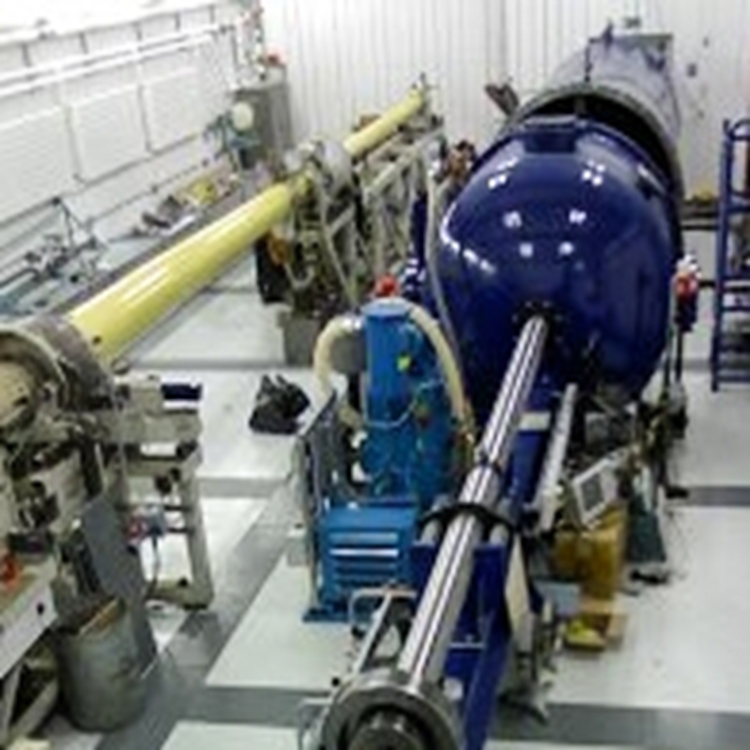
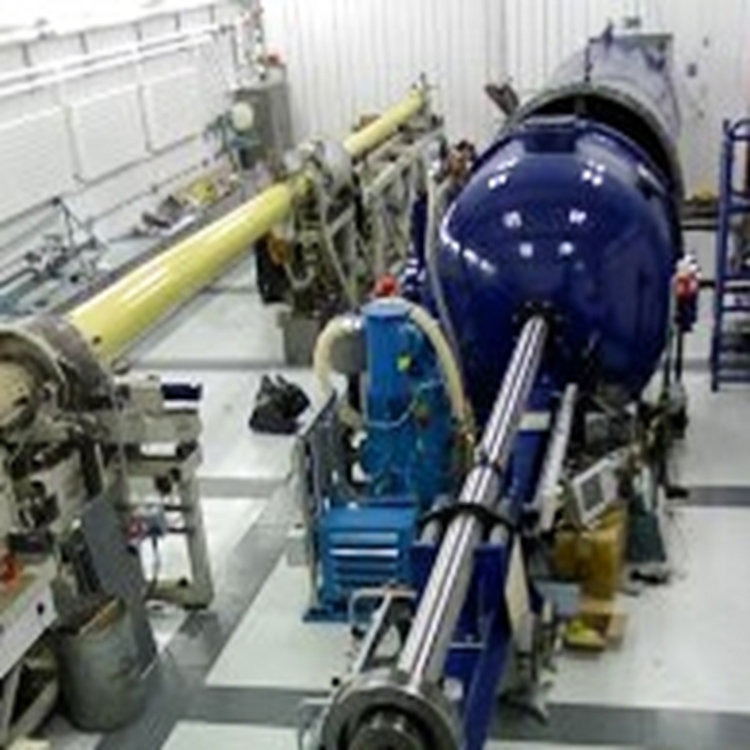
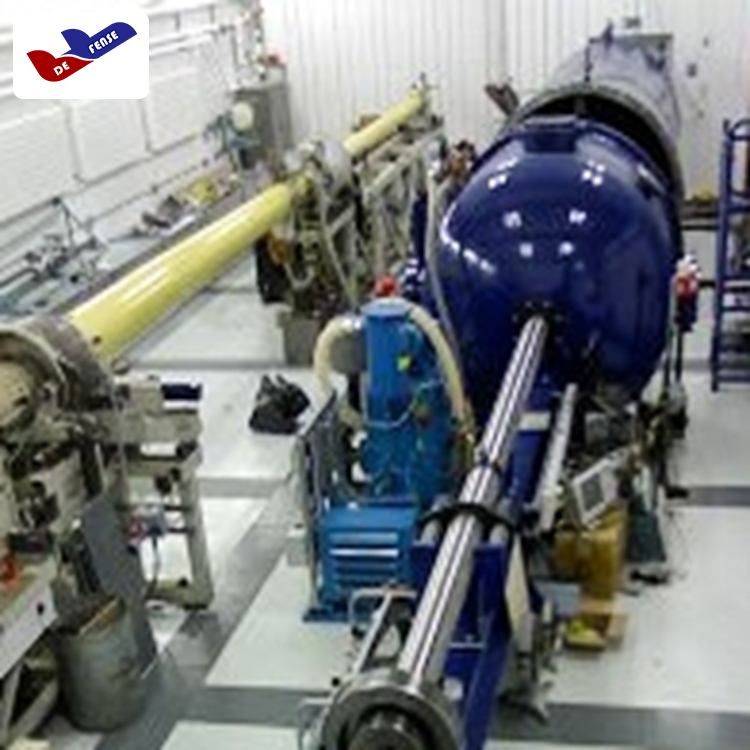
The primary light gas gun's gas expands continuously as the bullet moves, causing the base pressure to decrease, making it difficult to achieve super-high velocity. Therefore, the development of multi-stage light gas guns is required. In high-speed impact experiments, after the bullet's exit velocity exceeds 1.5 km/s, a two-stage light gas gun is generally considered, primarily consisting of the compression stage and the firing stage. The working principle is as follows: first, vacuum is drawn from the pump tube, firing tube, and target chamber. High-pressure nitrogen is then introduced into the high-pressure gas chamber, followed by filling a certain amount of hydrogen into the pump tube. (a) Ignition stage: the firing mechanism of the high-pressure gas chamber is triggered, and the piston compresses the hydrogen in the bullet's after-chamber, propelled by the high-pressure nitrogen. (b) Bullet firing stage: when the hydrogen pressure in the after-chamber reaches a certain level, the diaphragm bursts, and the bullet and bullet carrier behind the diaphragm are rapidly launched. (c) Bullet carrier separation and velocity measurement stage: the bullet carrier is intercepted by the bullet carrier separator, and the bullet continues to fly forward through the velocity measurement device. The velocity signal is recorded by an oscilloscope, used for calculating the bullet's velocity. (d) Bullet impact on target stage: the bullet impacts the target installed in the target chamber, and its transient process can be recorded by the flash X-ray high-speed imaging system and the optical high-speed camera.
Section 2: We offer
Development of a Second-Grade Light Gas Gun System
2. Research and Development of Measurement and Control Systems: muzzle velocity measurement, chamber pressure testing, strain testing, displacement testing, impact force testing