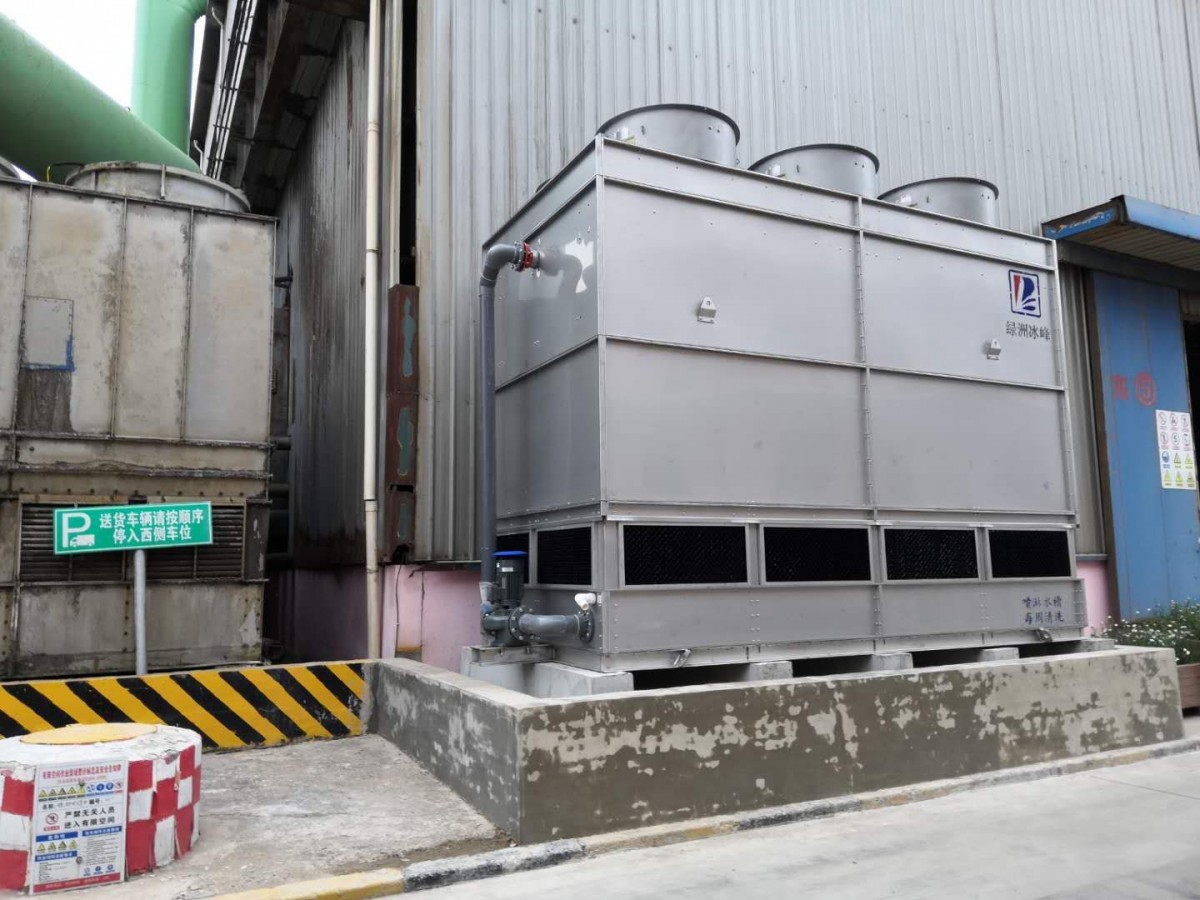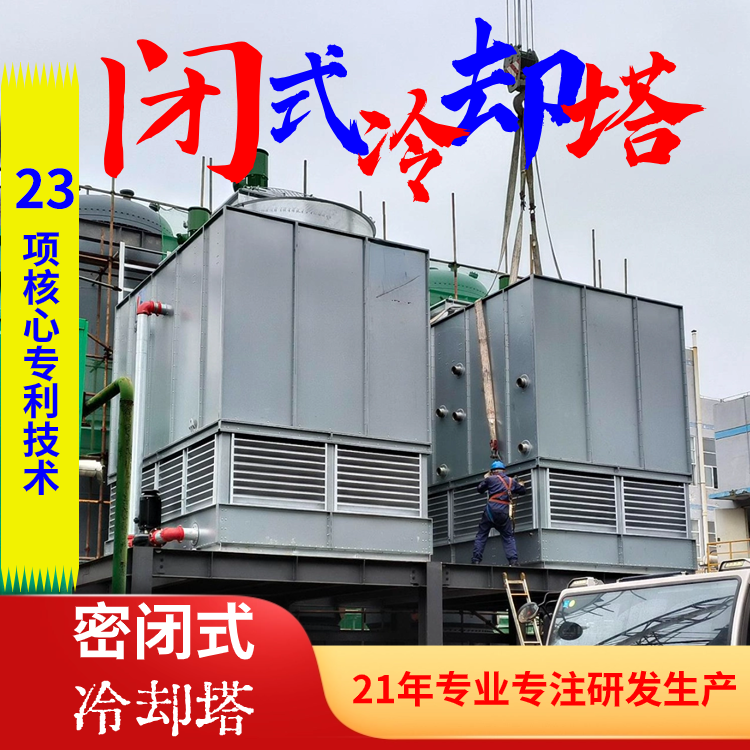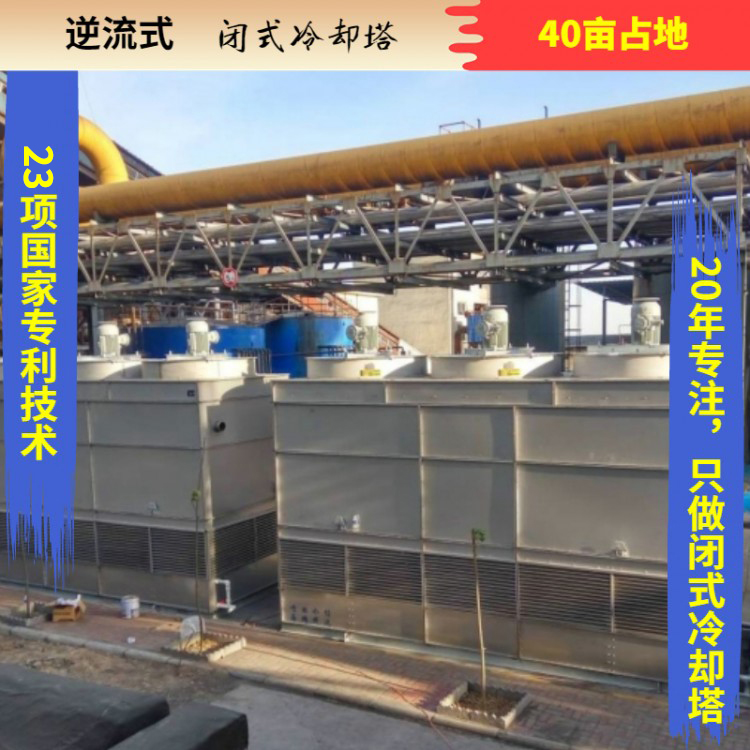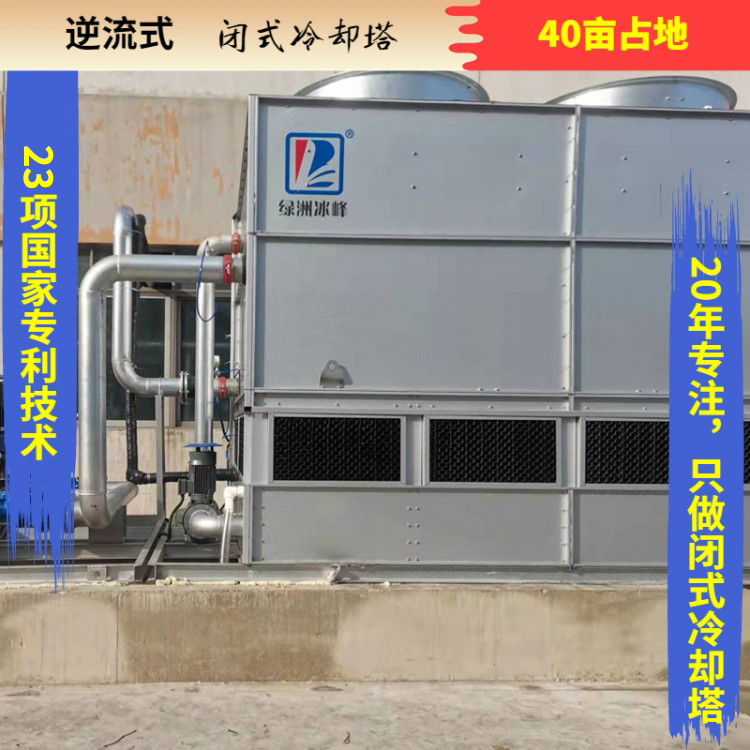


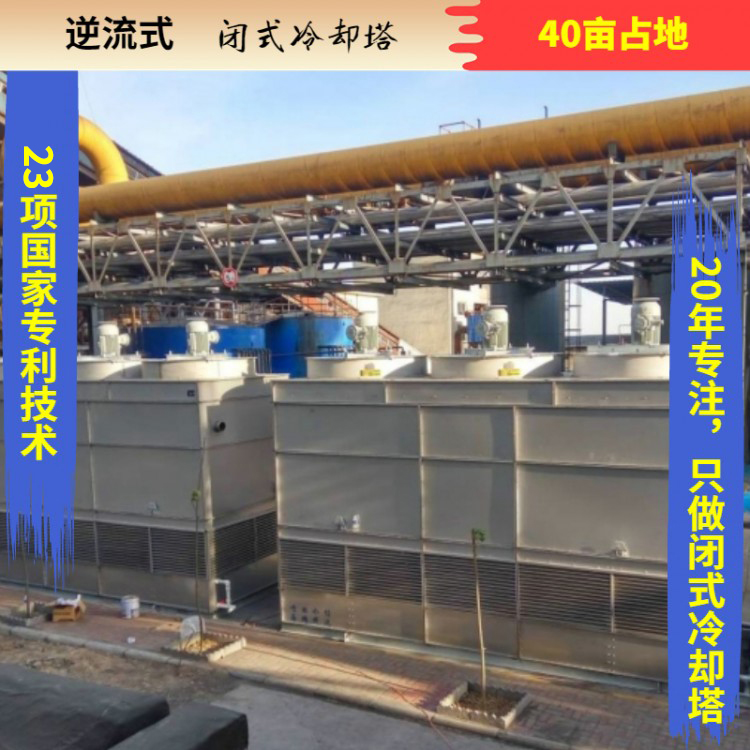
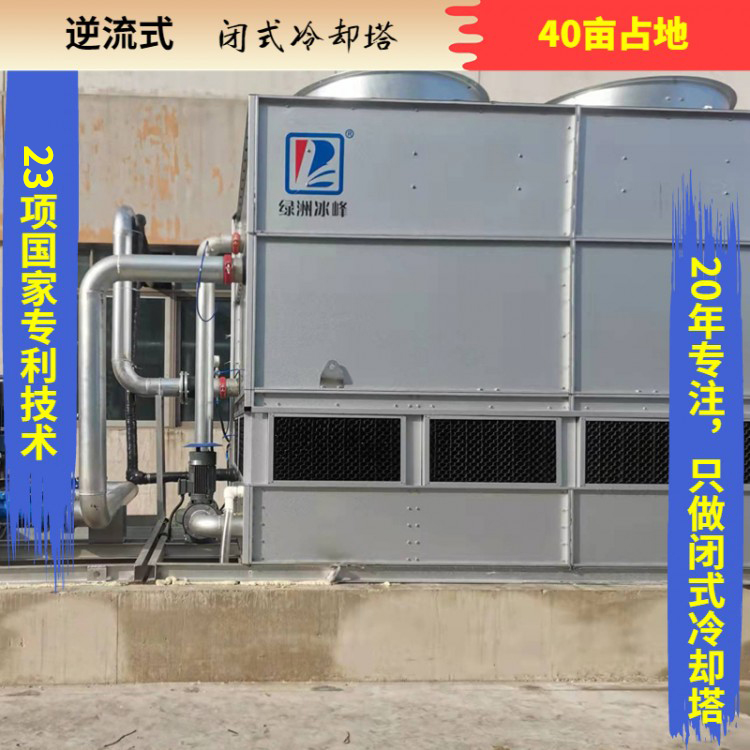












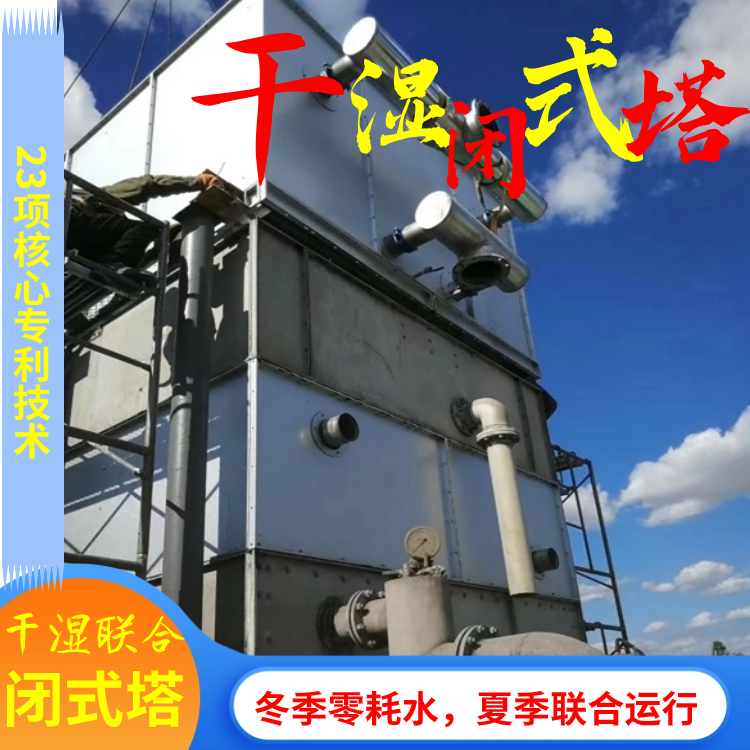
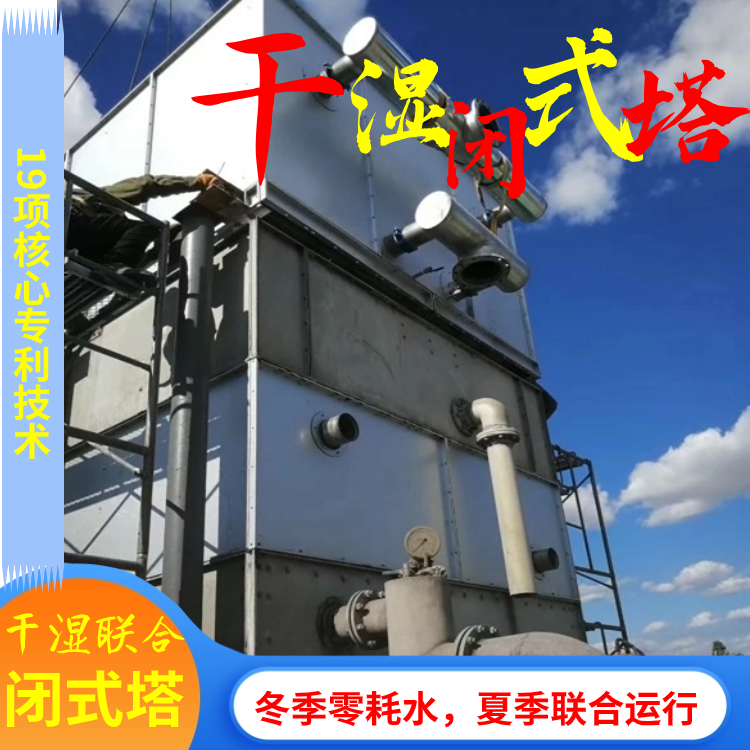
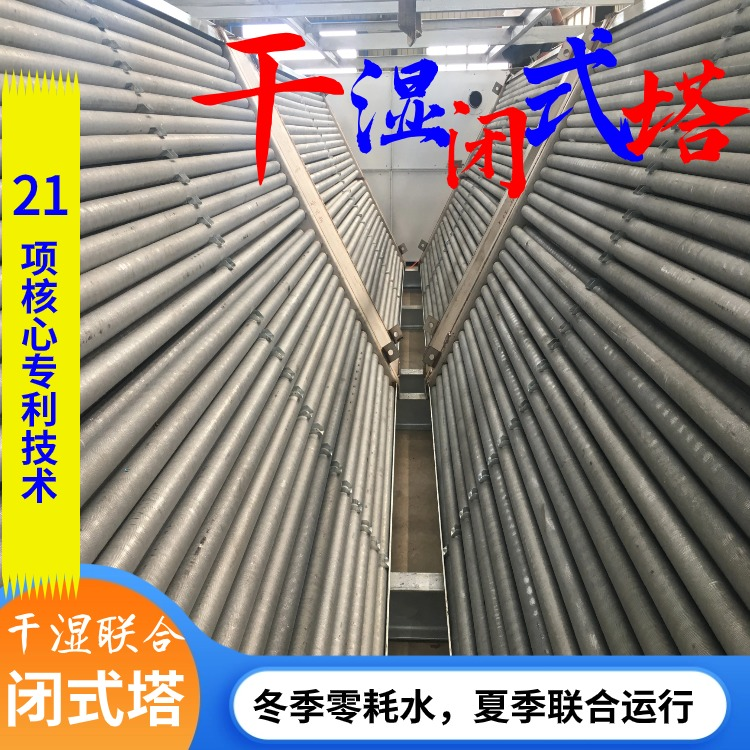
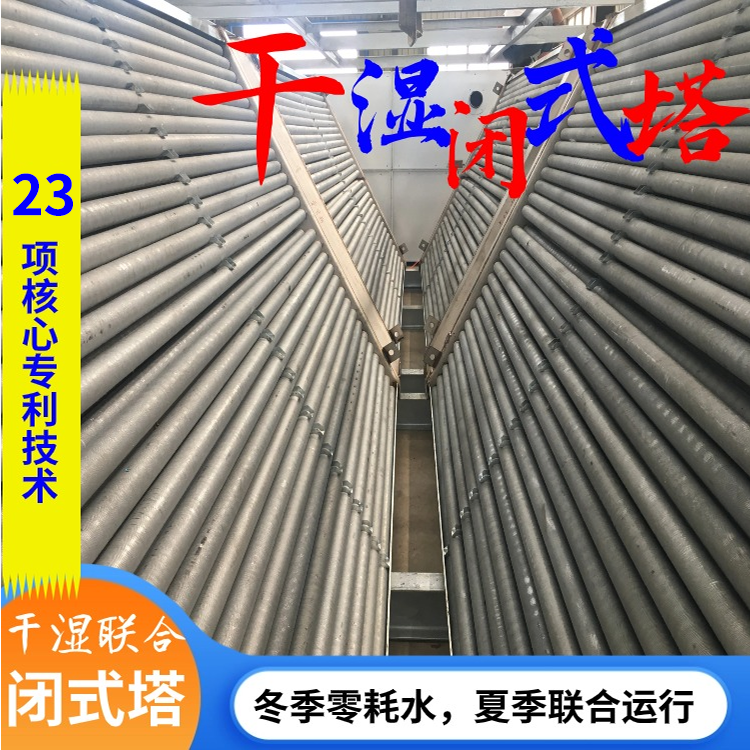
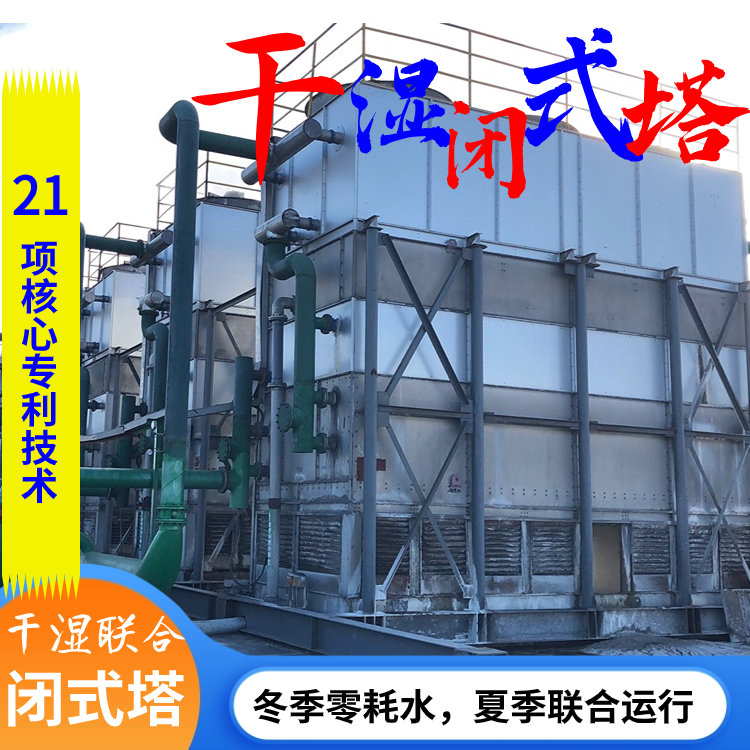
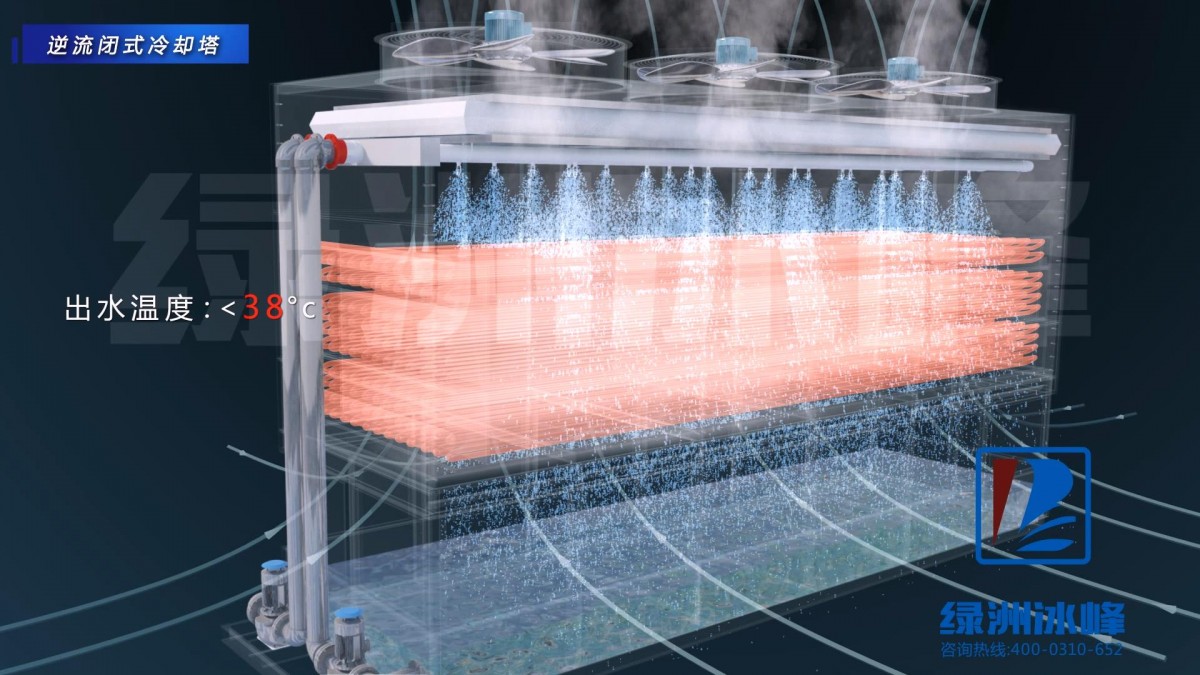
Counter-Flow Closed-Circuit Cooling Towers, named due to the counter-directional flow of refrigerant and heat medium, with spray water flowing from top to bottom and air passing swiftly from bottom to top. Mainly composed of heat exchange coils, spray water system, exhaust system, and frame shell. Its features are as follows:
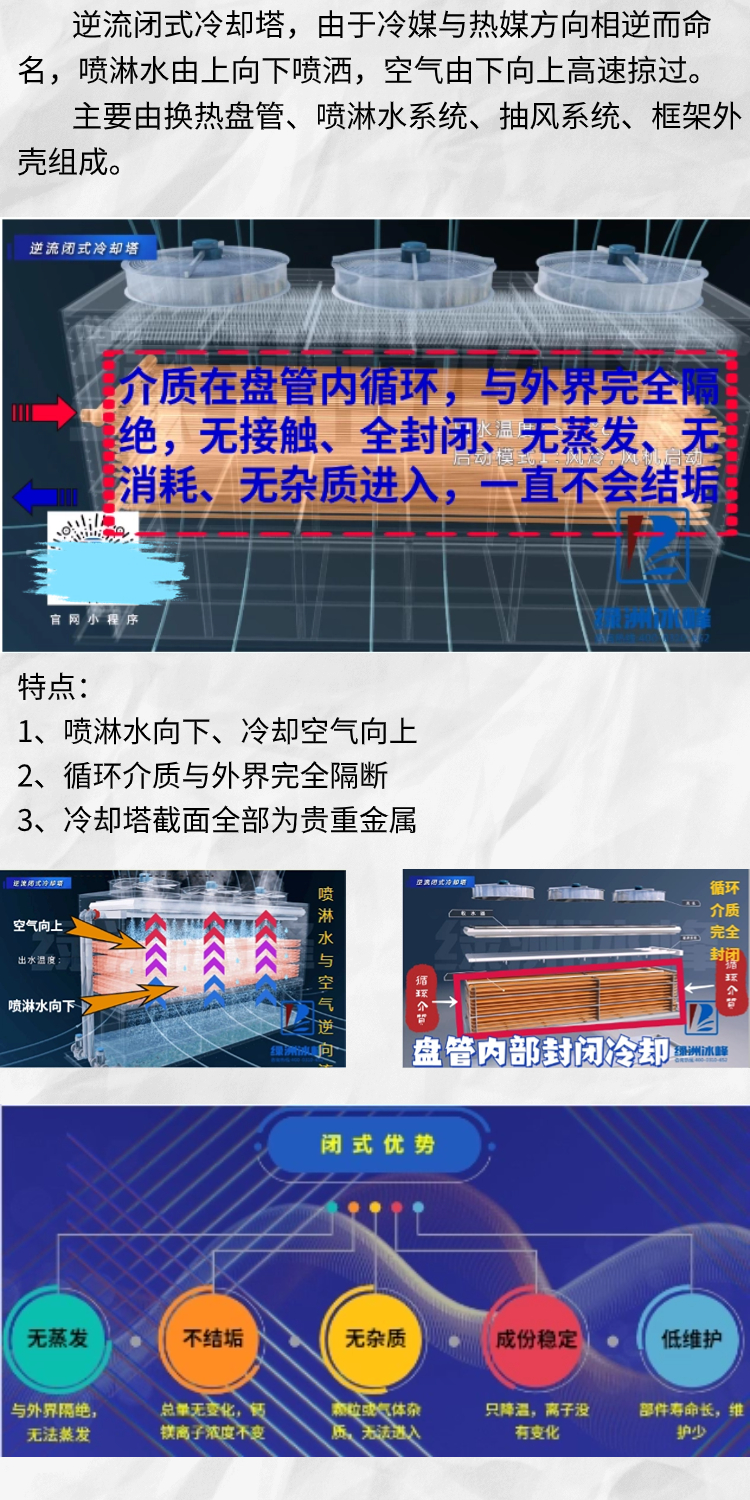
1. Low system resistance; due to the full surface area of heat exchange coils, the fluid flow area is large, resulting in reduced resistance, which can decrease system pressure loss and lower the circulation pump head.
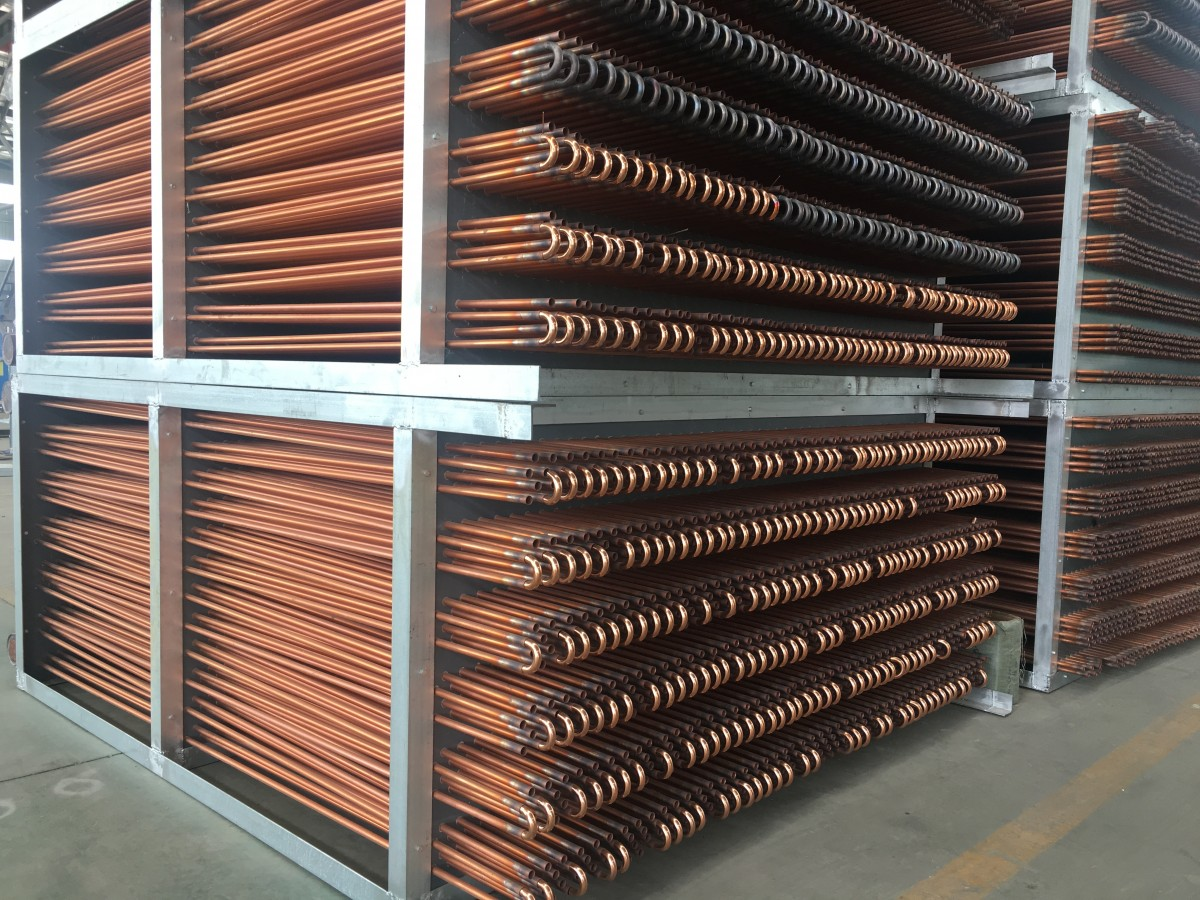
2. Simple structure, minimal maintenance, and from an operational standpoint, it includes a ventilation system, water system, and electrical control system. The water system is divided into an internal circulation system and a sprinkler system, differing only in this aspect.
3. Non-scaling – This is not only a feature of the counterflow closed-loop cooling tower but also a significant advantage of closed-loop cooling towers. Due to the complete enclosed recirculation of the circulating fluid, cooling occurs without evaporation, eliminating scaling possibilities. This ensures the purity, singularity, and stability of the circulating medium. Not only can it cool circulating water and refrigerants, but it can also cool any fluid medium.
4. Operation is stable due to the cooling effect of the closed-loop counterflow cooling tower, which is directly related to air volume and spray water. These factors are selected during design and manufacturing and do not change. Additionally, other influencing factors include the internal fluid temperature and the ambient wet bulb temperature. The fluid temperature is directly affected by the production process and remains relatively stable as long as normal production is maintained. The wet bulb temperature is an atmospheric condition of the operating environment and does not vary as dramatically as the dry bulb temperature. Therefore, the operation of the closed-loop cooling tower is stable and reliable.
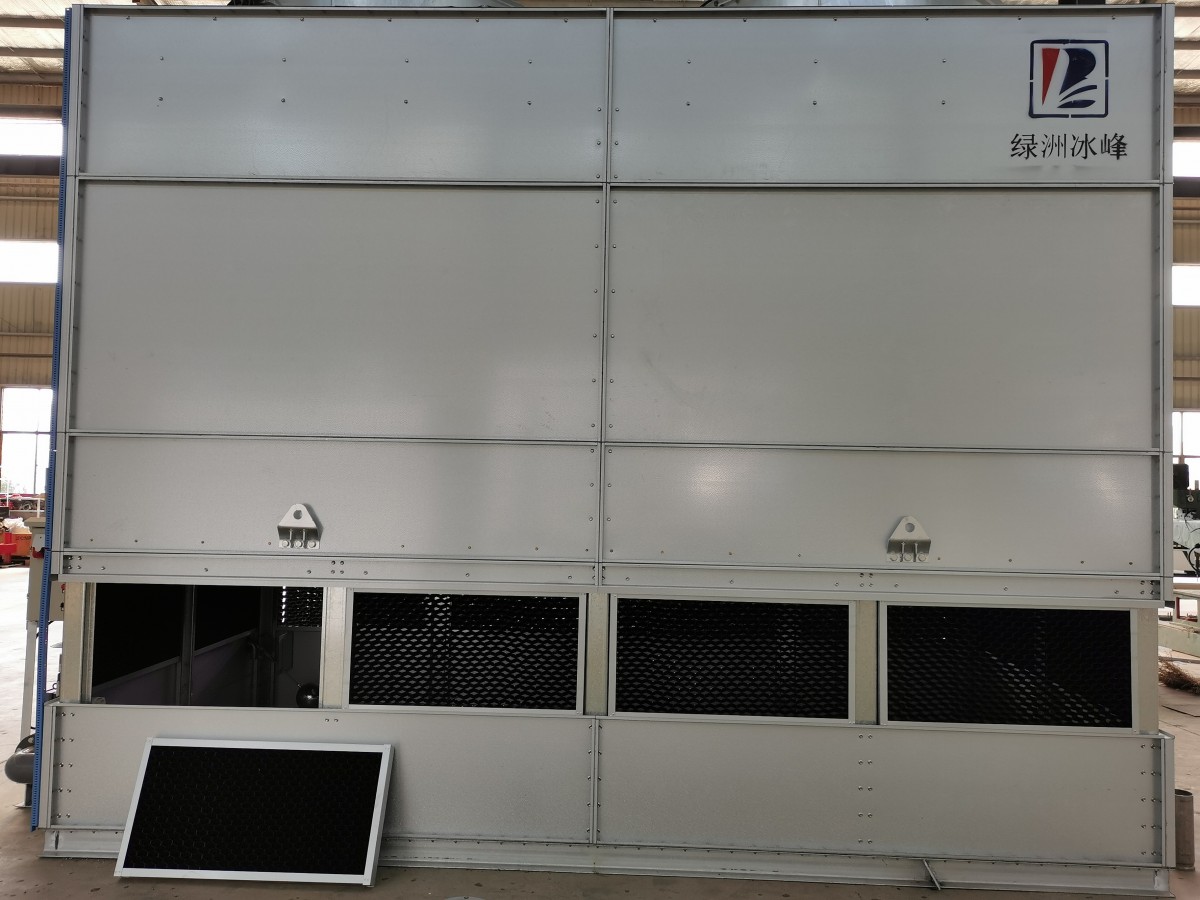
5. Save land costs with a counter-current closed cooling tower, compared to an open cooling tower, no large water pool is required. This saves substantial land costs, facilitates the overall layout of the factory, and also reduces the cost of pool construction and eliminates the possibility of leaks.
6. Rationally designed, counterflow closed-circuit cooling towers can be placed beside the factory, along road edges, or installed on rooftops without occupying any land.