
















I. Overview
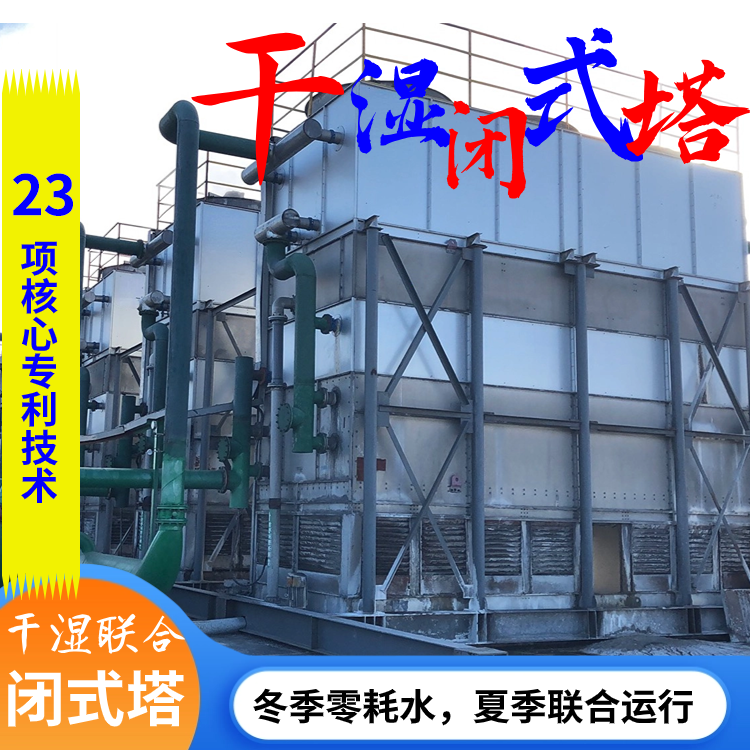
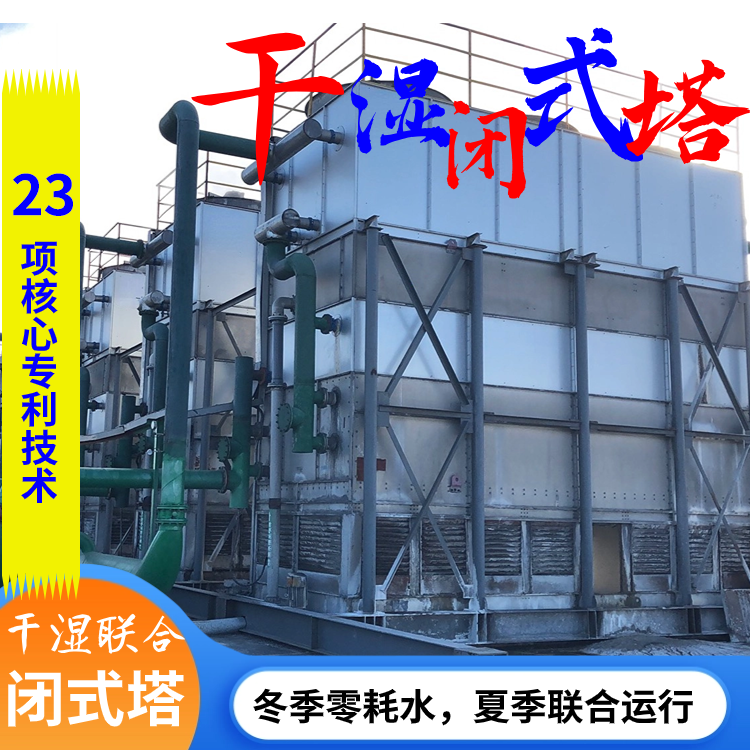
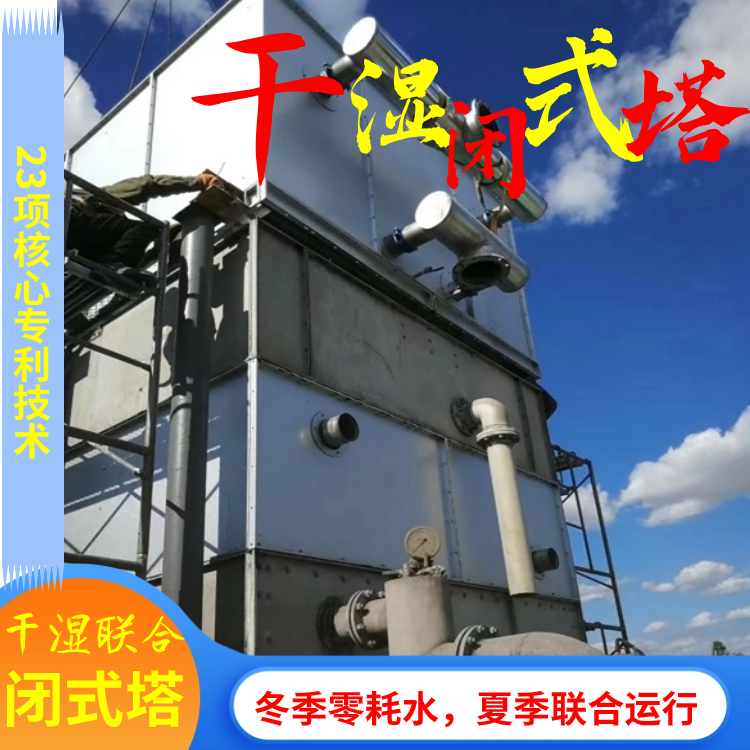
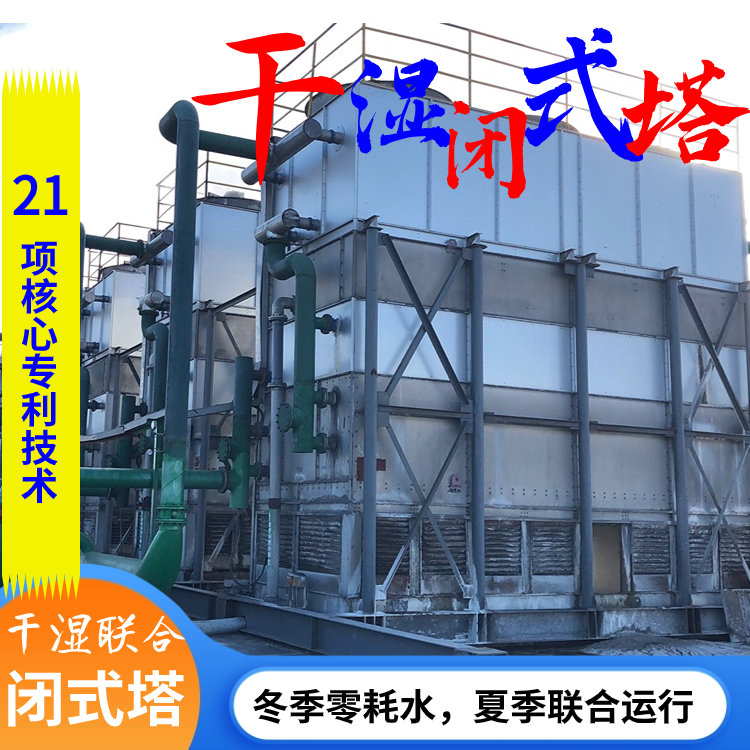
A Dry-Wet Combined Closed Circuit Cooling Tower, or simply Dry-Wet Combined, Dry-Wet Mixed, or Dry-Wet Hybrid Closed Circuit Cooling Tower, combines dry and wet tube designs, leveraging the benefits of both heat transfer methods. The dry tube utilizes the advantage of lower local temperatures to reduce the medium temperature to nearly the dry bulb temperature, consuming only the kinetic energy needed to drive air flow, with no water usage. The wet tube then reduces the medium temperature to near the wet bulb temperature, compensating for the dry tube's inability to reach the wet bulb temperature. Consequently, it saves a significant amount of water, making it popular among users.
II. Process Workflow
The production process equipment generates heat, which is transferred to the circulating medium, high-temperature medium, and then enters the dry-wet combined closed cooling tower through enclosed pipes.
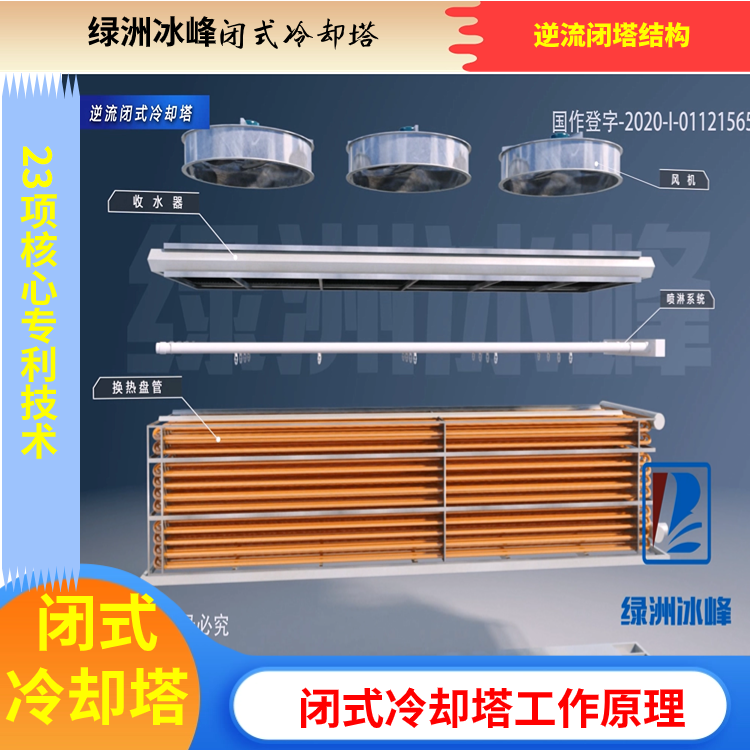
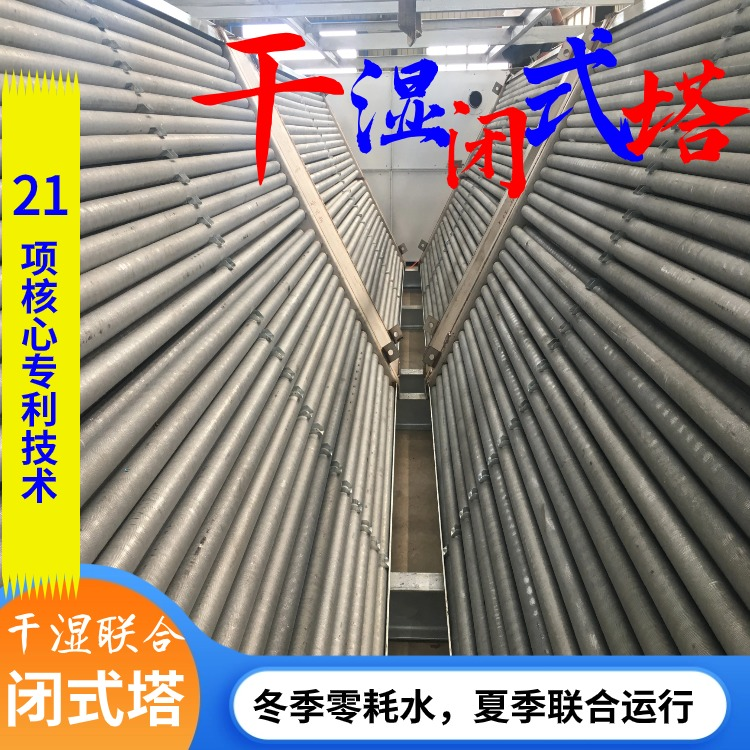
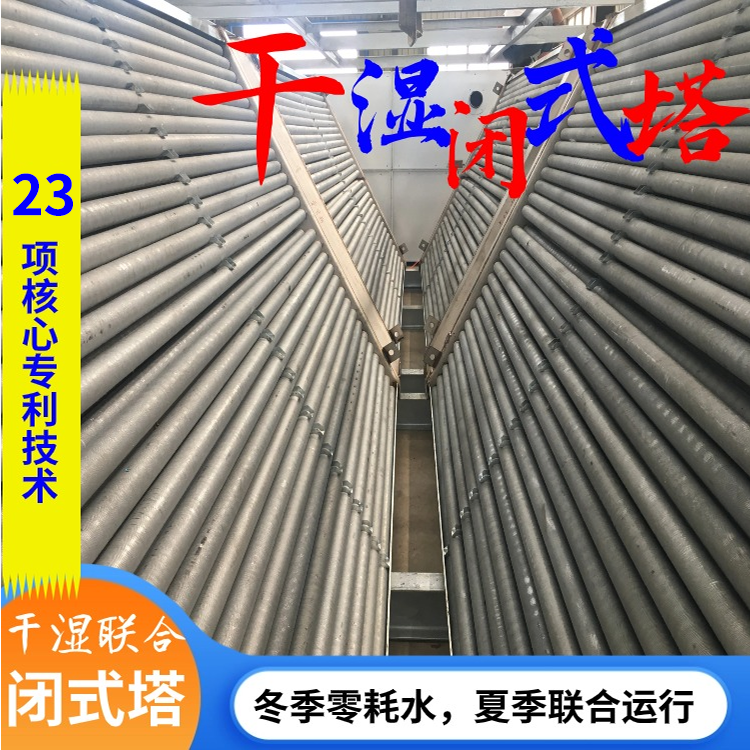
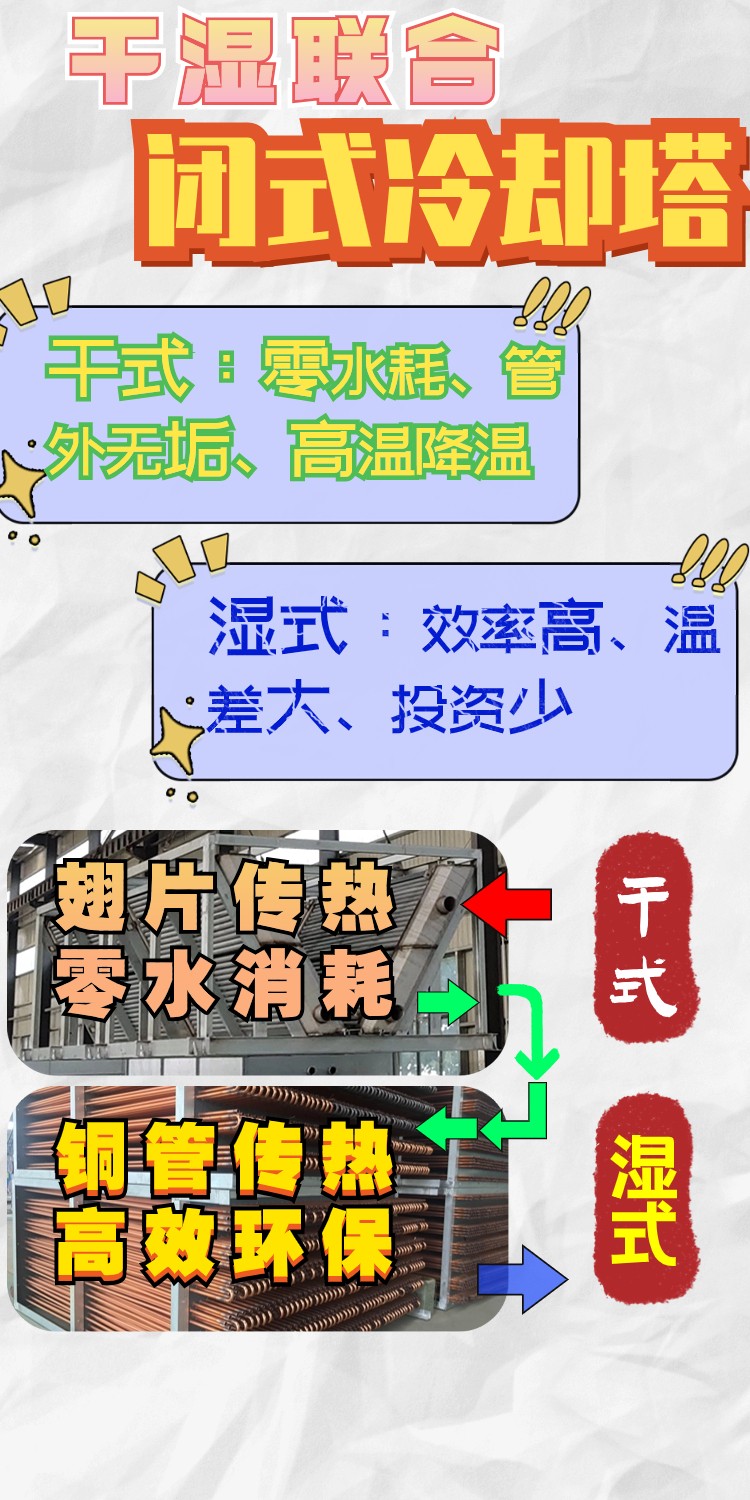
2. High-temperature medium enters the dry cooling coil, transferring heat through the base pipe to the fins, where it exchanges heat with the high-speed airflow passing over, carrying away heat energy and reducing the temperature.
3. After cooling, the medium enters the wet coil, where the spray water evaporates and condenses to absorb heat, further reducing the temperature. The cooling range is greater than that of the dry coil, but it requires the use of spray water.
4. The circulating medium is cooled and temperature reduced through dry and wet coil cooling to meet process requirements, then it is sealed and returned to the production equipment for reheating, and the cycle repeats.
III. Advantages
1. Dry Coil: Zero water consumption, no scale on the exterior, high-temperature drop straight down. Fully utilizes the local low-temperature characteristics of the project, using air to cool the high-temperature medium by approximately 2~4 degrees, with complete zero water consumption.
2. Wet-type: High efficiency, large temperature difference, low investment; reduces the temperature of the circulating medium to the required temperature for the production process, minimizing the investment in dry-type coils.

Section 4: Application Scenarios
1. Northwest Region: Arid, water-scarce area; reducing water consumption can also lower branch operation costs.
2. Abundant Power Areas: Due to the large air volume required during dry operation and the high power of the fan motor, energy consumption is considerable. This makes it particularly suitable for regions with abundant wind, hydro, tidal, and nuclear power.
V. Case Studies

Six. Oasis Ice Peak Brand Advantages
Focused for 21 years, our dedication translates to expertise, with rich experience and unwavering quality.
23 patents, patent-protected, reliable technology, excellent performance, stable operation
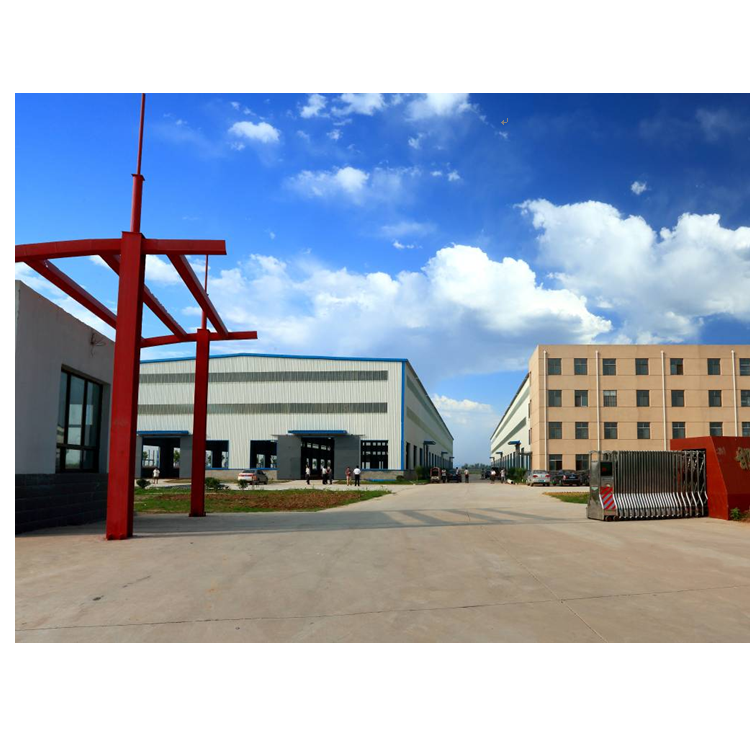
40 acres, robust, strong backing, long-term collaboration.