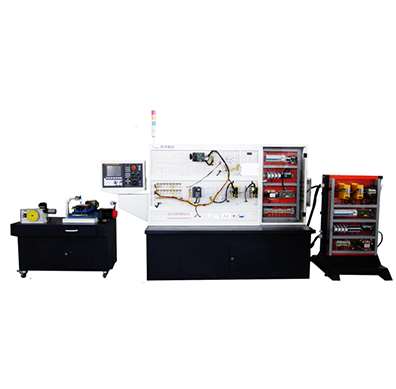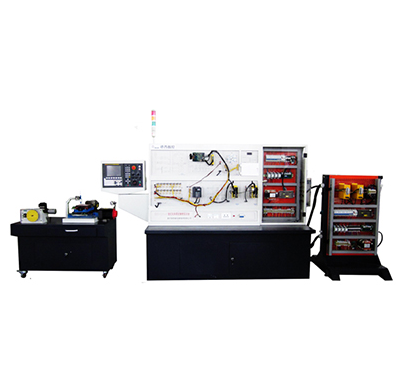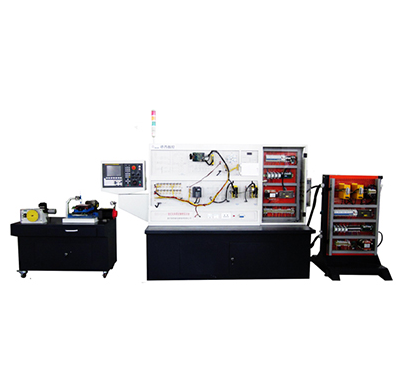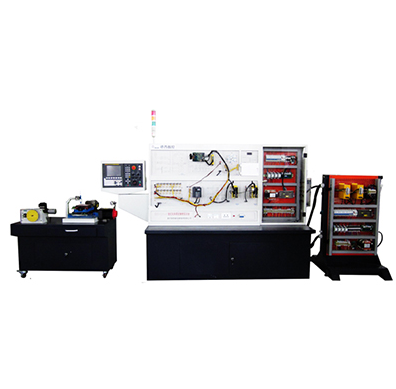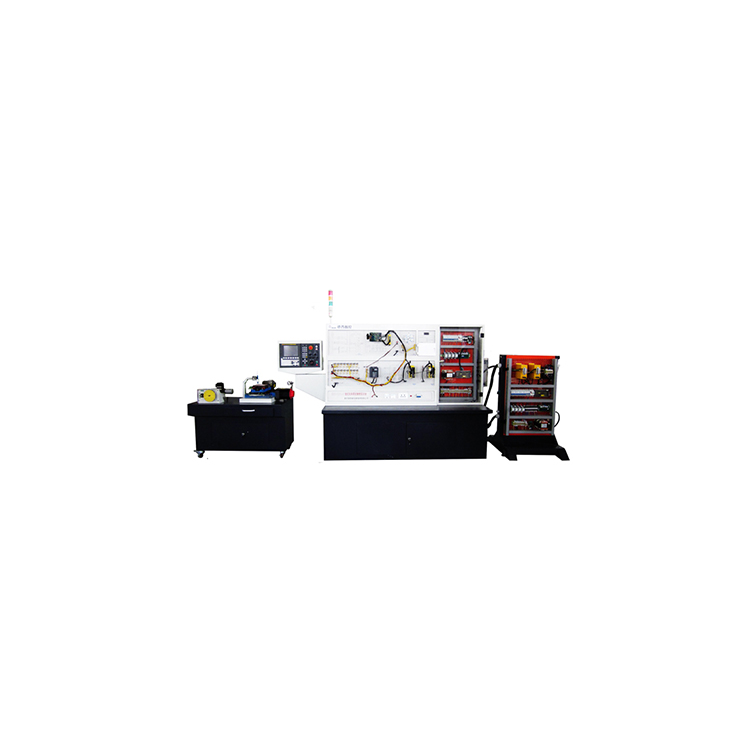

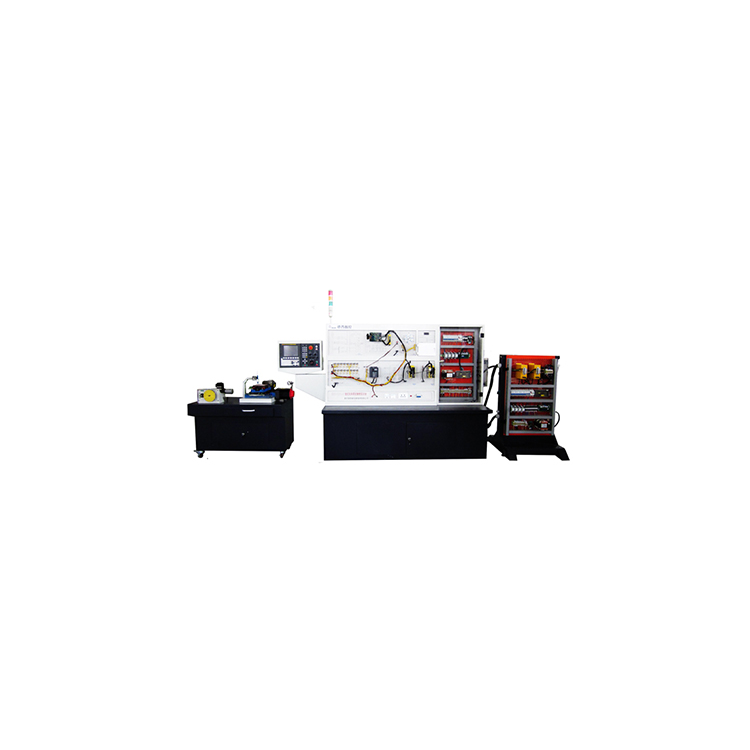
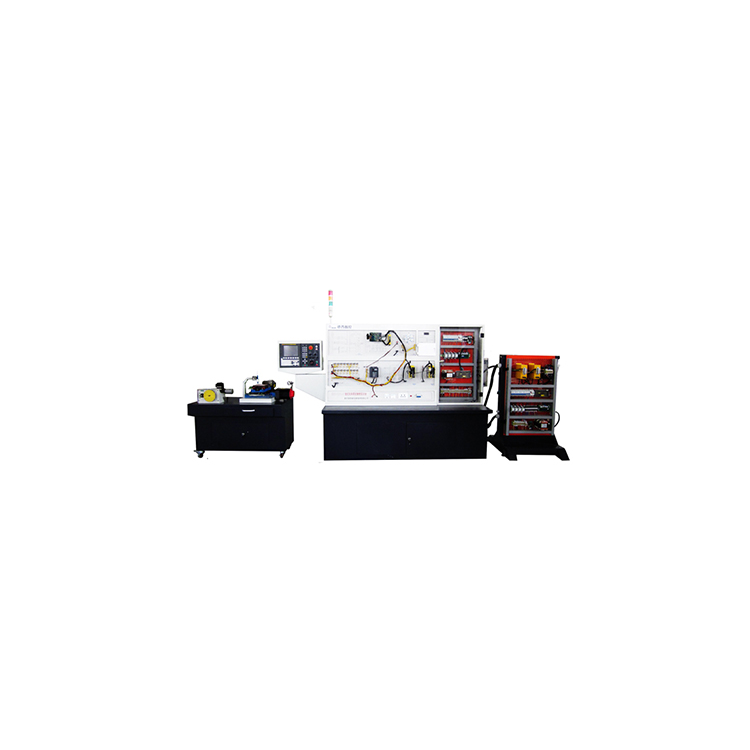
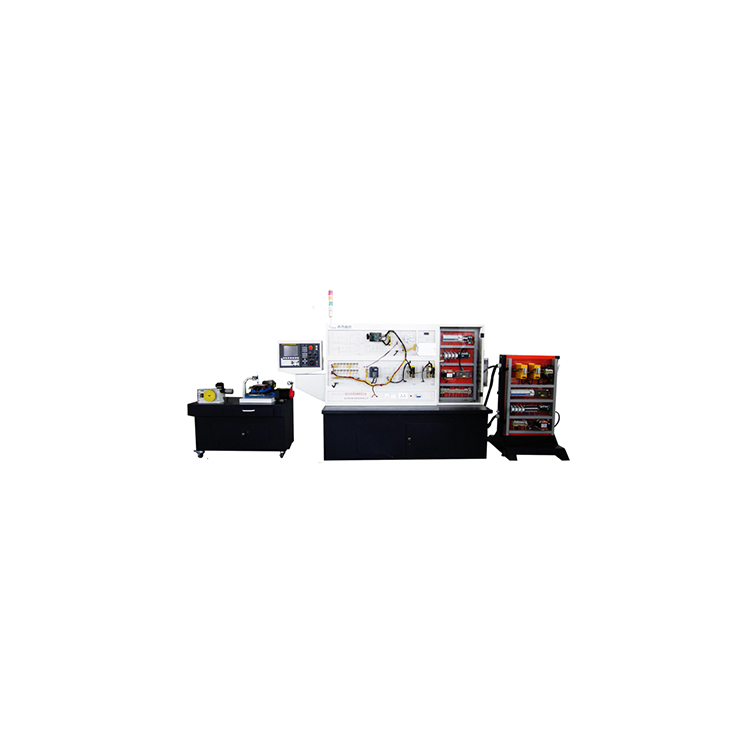












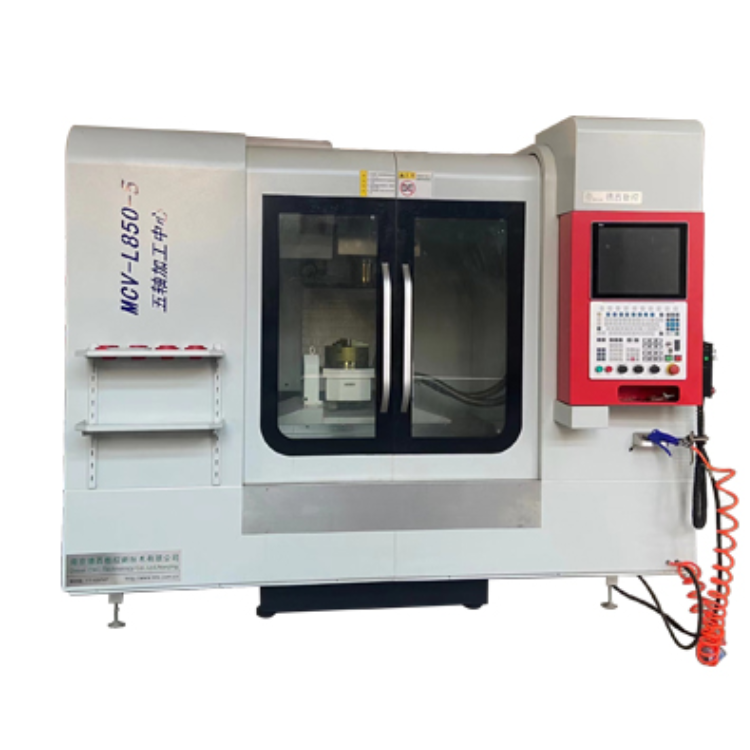
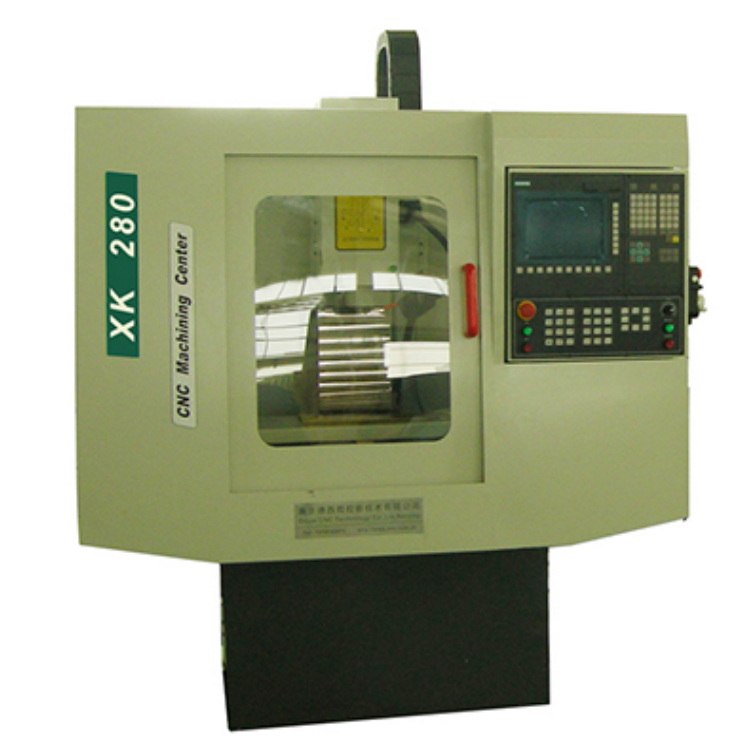
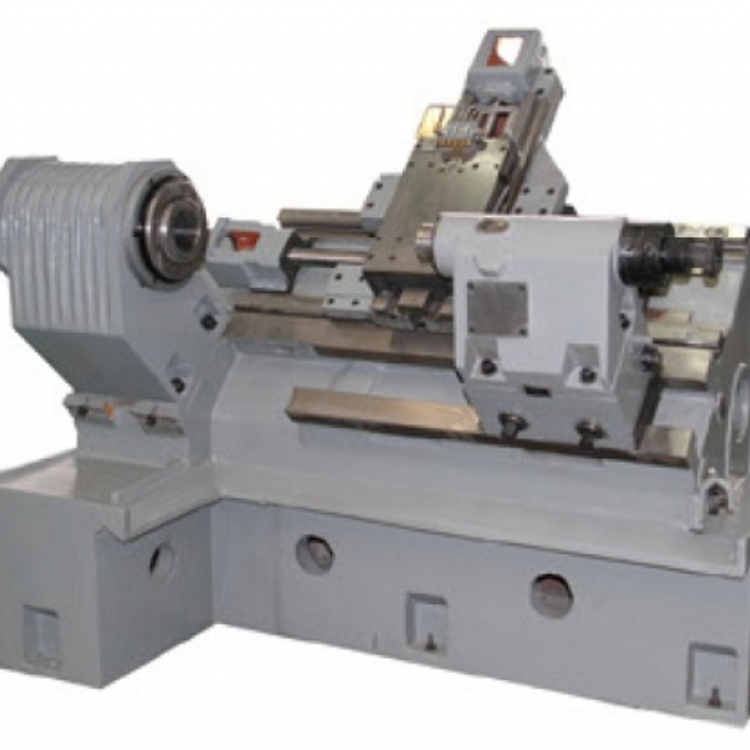

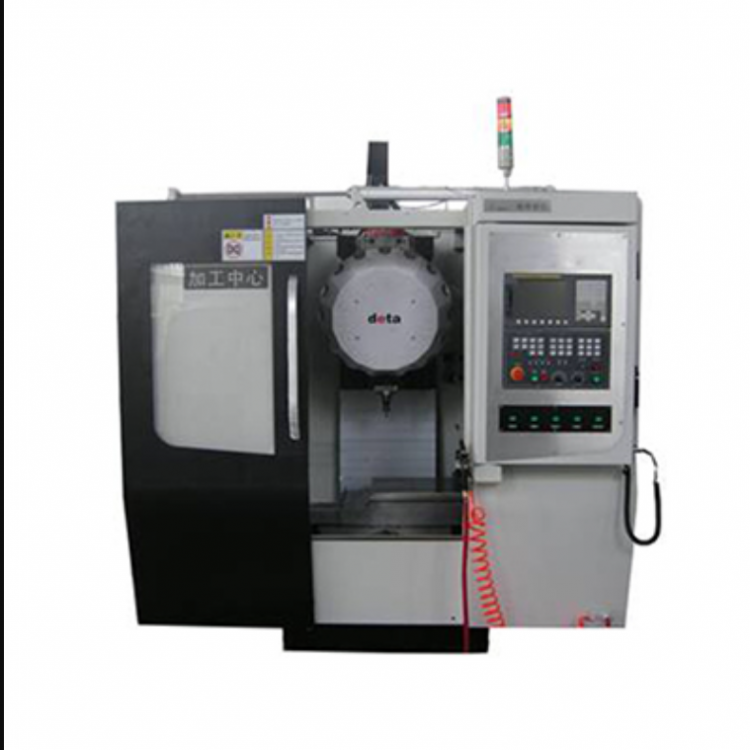
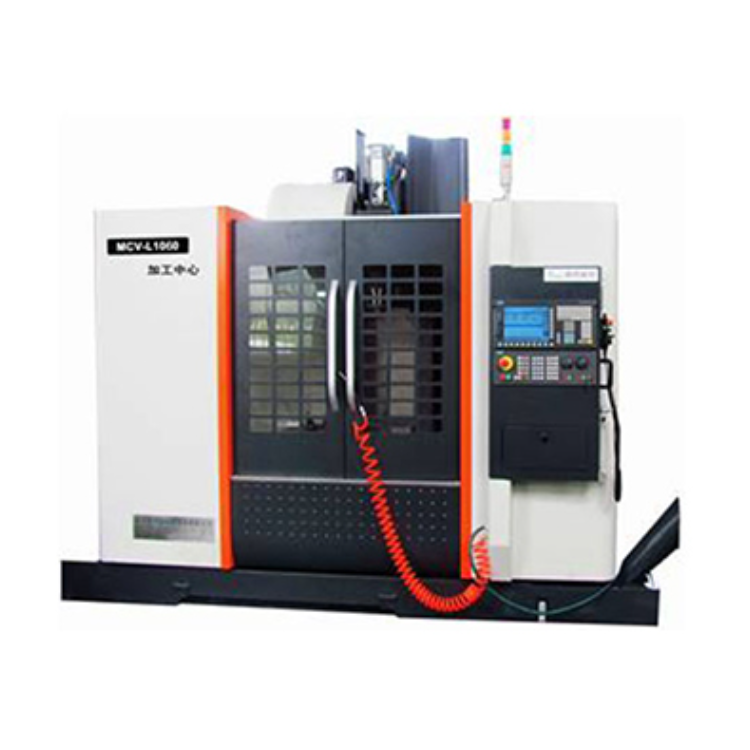
The DS-RT-AE CNC lathe assembly, adjustment, and maintenance training table features comprehensive training functions including CNC lathe composition principles, debugging, PLC, parameter settings, fault diagnosis, maintenance, programming, and mechanical assembly. It is composed of a CNC experiment table, mechanism demonstration table, and machine tool electrical cabinet.
The electrical control console is composed of modules such as CNC systems, spindle variable frequency, AC servo drive, tool magazine control, input/output (I/O), high-voltage control, power supply, and fault settings. Every key component of the electrical system in a CNC machine tool is decomposed and displayed in the electrical debugging cabinet, with all signals capable of being displayed and measured; it allows for self-connection and adjustment; the fault setting module can set up dozens of fault points, which can be set explicitly (for training purposes) or covertly (for assessment purposes), and it can also display the number of faults.
The DS-RT-AE modular demonstration stand consists of an X/Z dual-axis two-dimensional motion platform, a main shaft motor and encoder, and a four-position electric lathe turret.
The 2-axis motion platform utilizes rolling linear guides and ball screws, featuring bidirectional backlash and zeroing functions. It is equipped with an electric pen that can draw the actual trajectory of the double-axis linkage. The main shaft motor is controlled by a variable-frequency inverter for stepless speed variation and is connected to an encoder via a timing belt. The industrial 4-axis electric lathe performs actions such as lifting, positioning, lowering, and locking with motion control.
Machine tool electrical cabinets are identical to industrial CNC machine tool control cabinets, enabling practical training in circuit design, electrical component installation, wiring, and debugging. The electrical boards are interchangeable, facilitating group-based practical skill training for students. The electrical boards are equipped with simulated drivers and variable frequency inverters for more realistic training, as well as protective devices to reduce costs. The institutional demonstration stand is controlled by a dual parallel setup of the electrical control experiment stand and the machine tool electrical cabinet.
The Intelligent Fault Diagnosis Assessment System consists of a fault control box, a PC (self-provided), and assessment software. It allows for operation training on equipment faults, including setting, diagnosis, and elimination, on the PC, and features exams, automatic scoring, and grade recording. This system is a standalone module and is available for purchase.