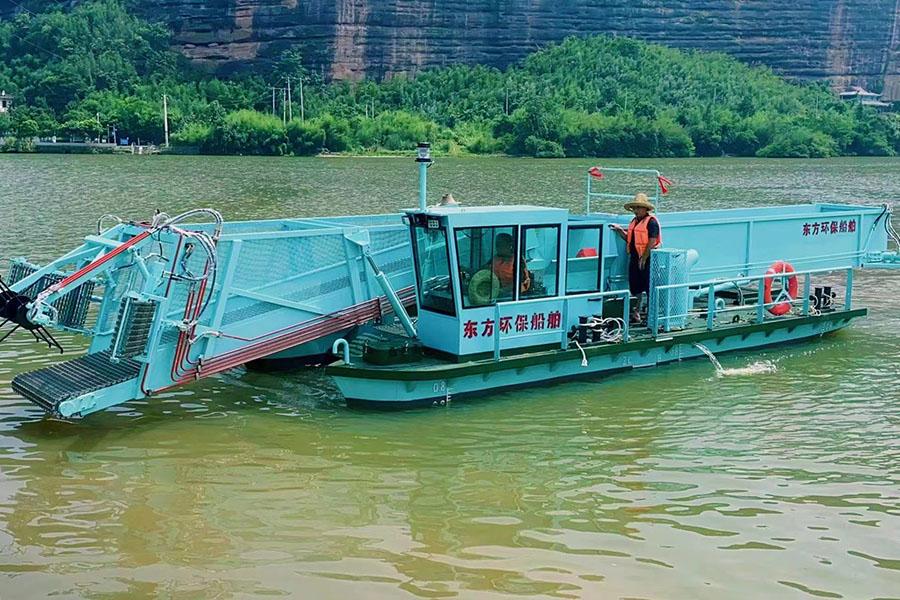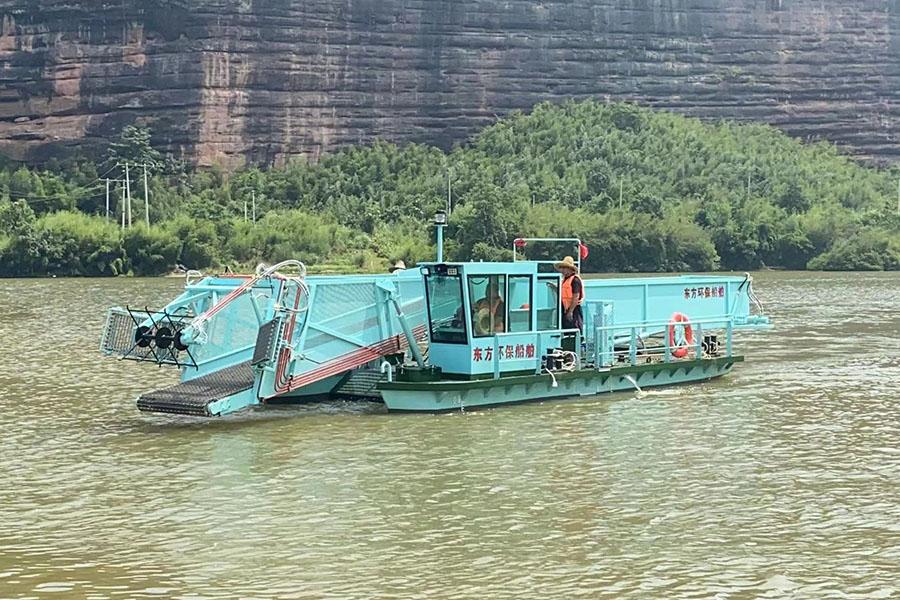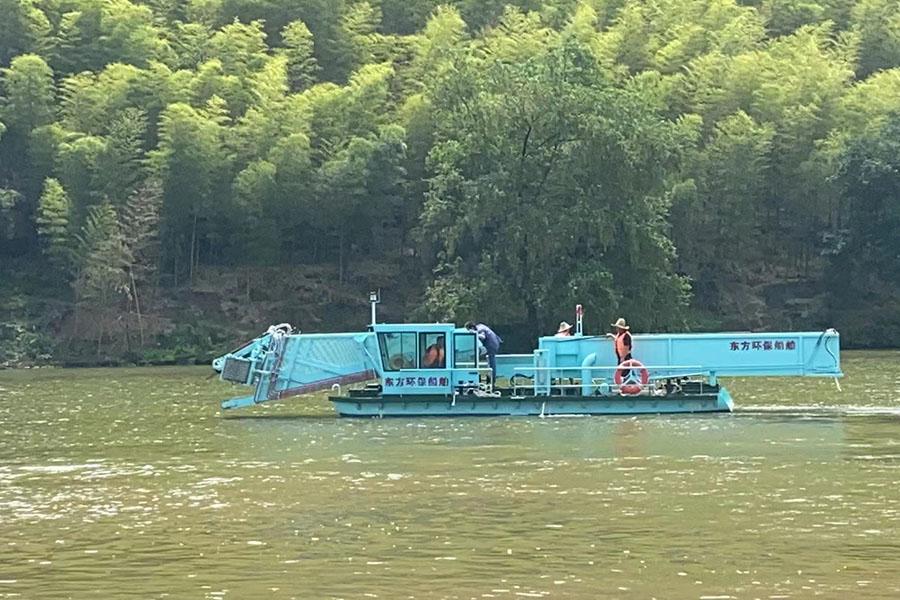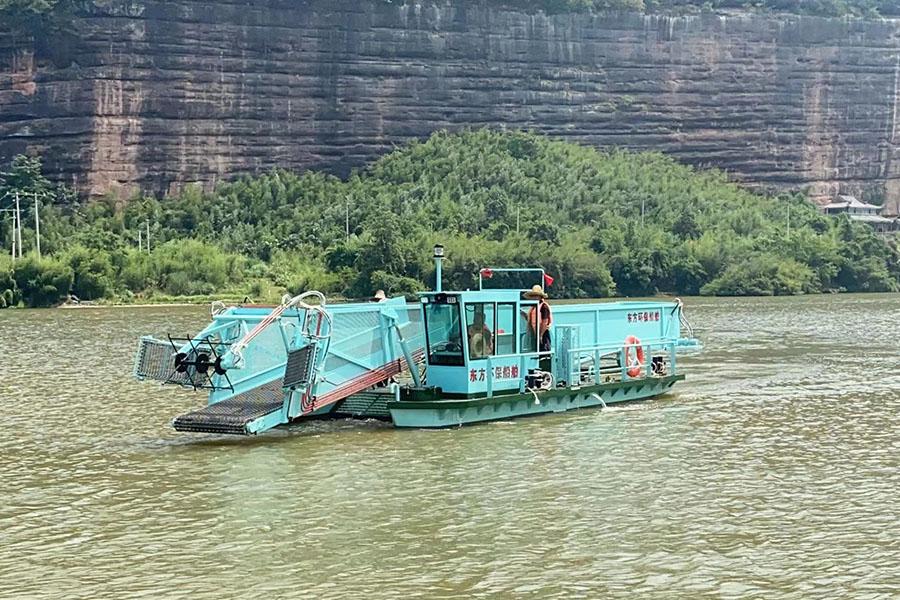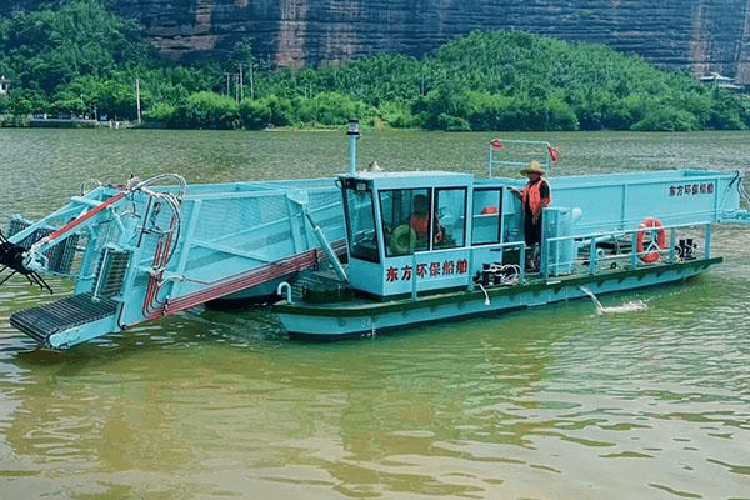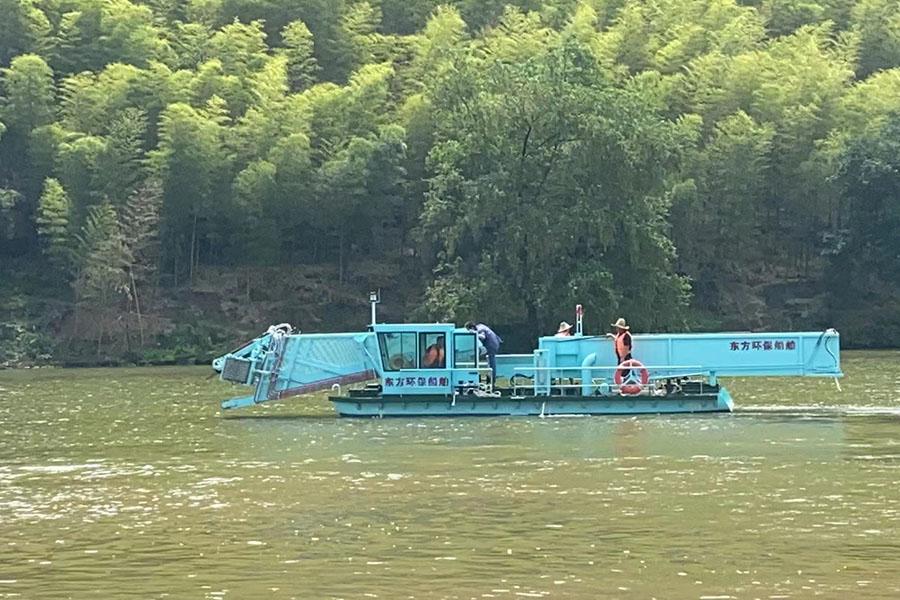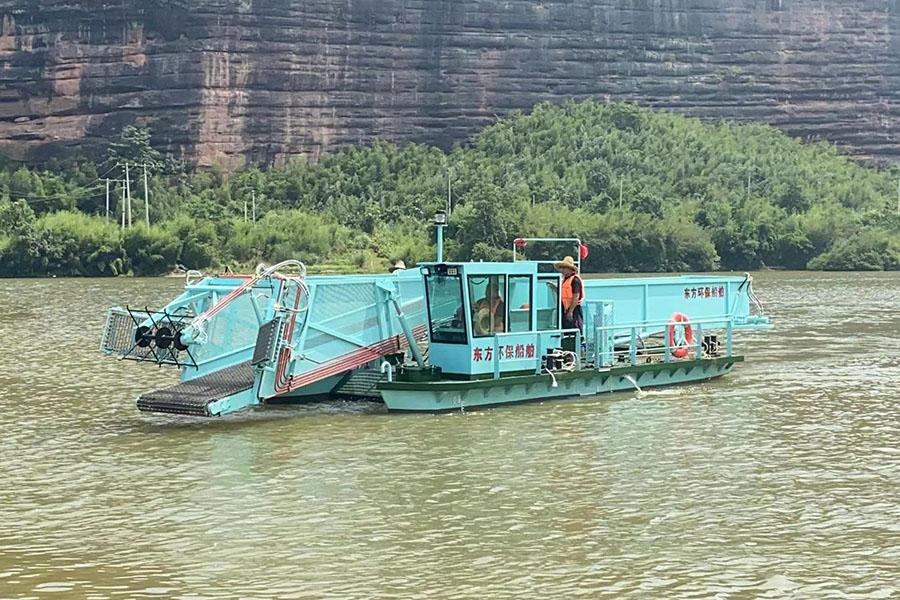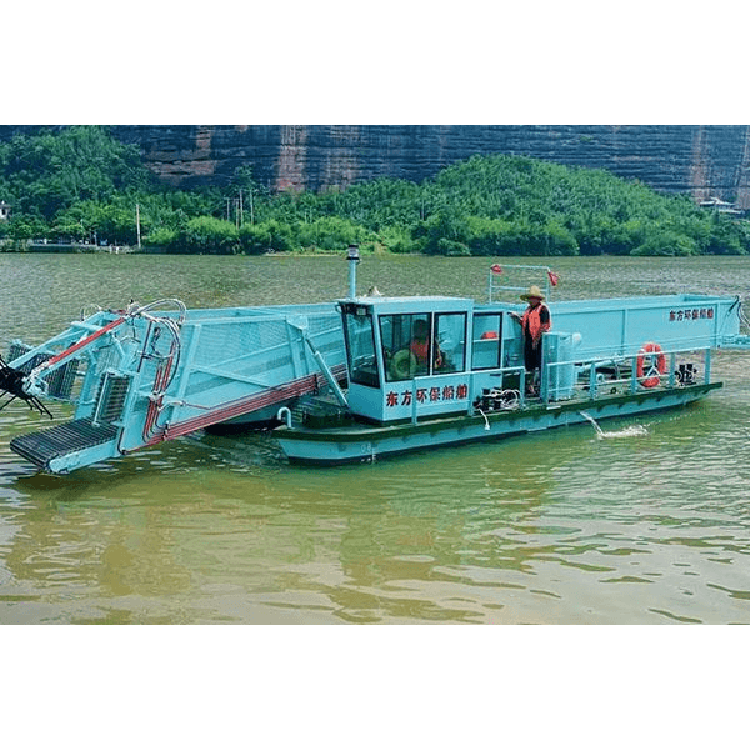

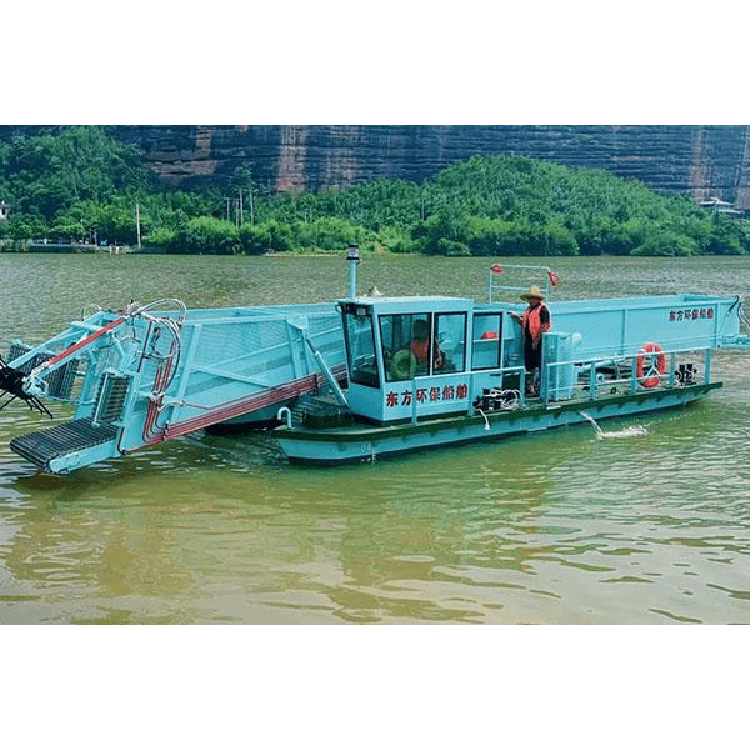
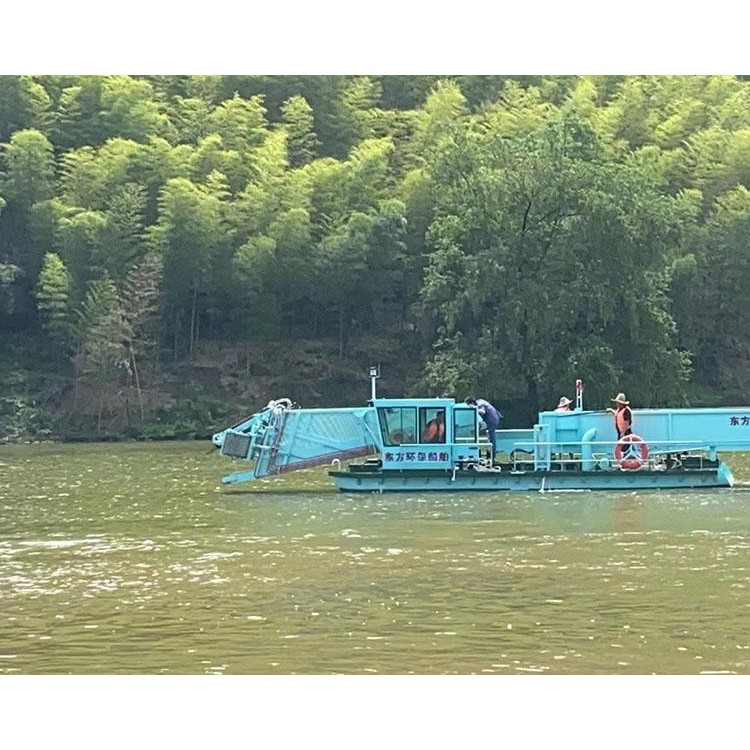
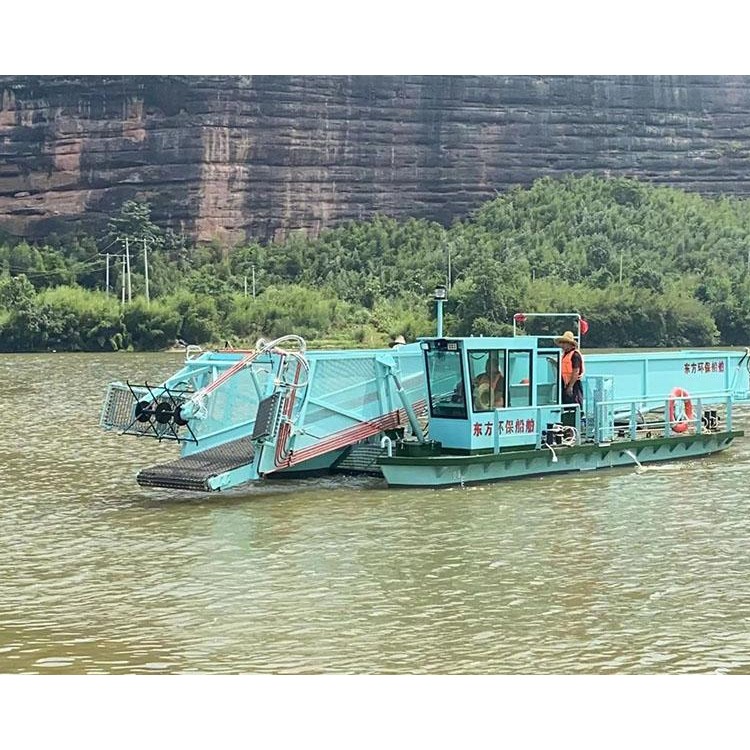











1. The vessel is primarily used for retrieving river and lake debris and floating matter, and can automatically offload the collected waste and debris onto the shore at a wharf or onto garbage trucks.
2. The collection chamber is installed at the bow of the ship, and can adjust the retrieval depth freely based on the waste condition. The ends of the collection chamber are mechanical pendulums that can swing left and right to expand the cleaning area.
The conveyor belt on the arm can rotate to create a water flow, suctioning small debris into the collection chamber, thereby enhancing cleaning efficiency.
3. The vessel's three compartments - fore, mid, and aft - are composed of high-strength stainless steel conveyor belts, equipped with stainless steel hooks. Each hook has an average load capacity of 1 ton, ensuring secure handling.
The solid waste hook securely fastens the debris, preventing it from slipping back onto the conveyor belt and into the water. The conveyor belt has a high load-bearing capacity, is sturdy and durable, and is easy to replace. It also features strong debris hooking ability.
4. The vessel has a wide recovery range, is spacious and aesthetically pleasing, operates with low noise and fuel consumption, is safe and easy to handle, highly automated, and can effectively clean riverways.