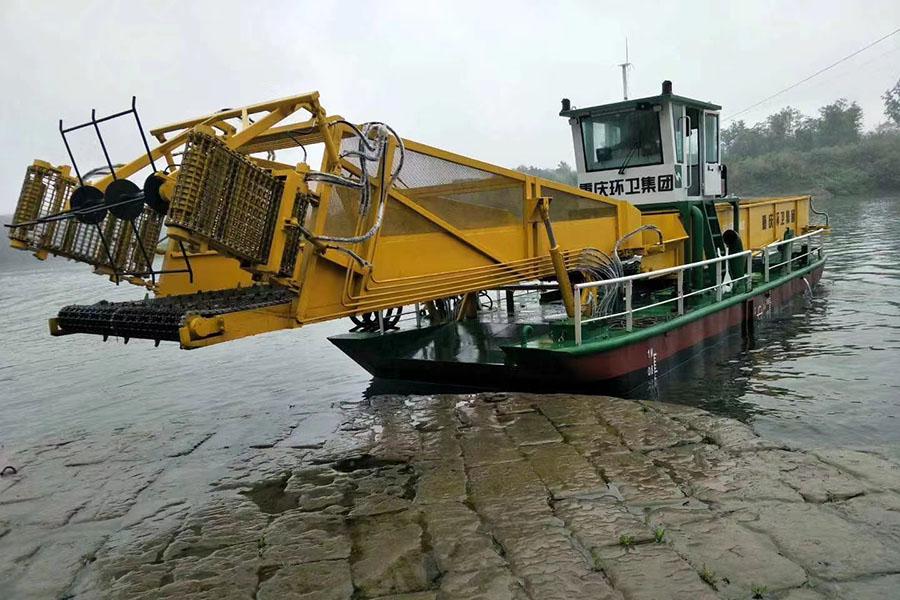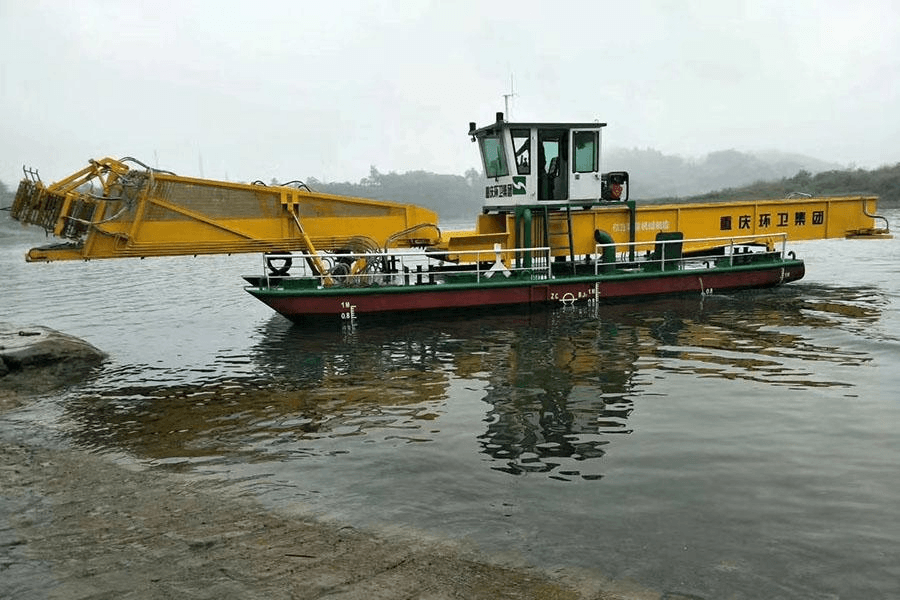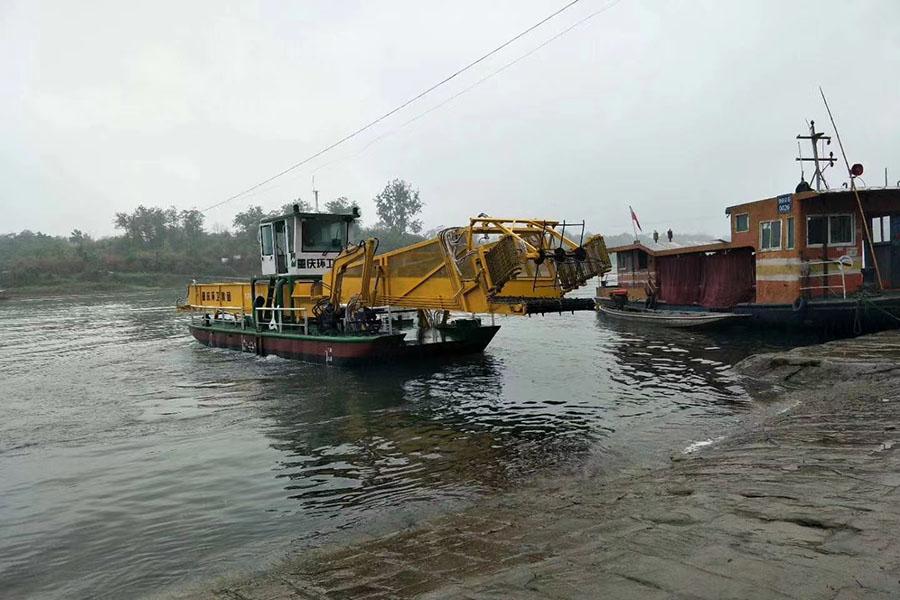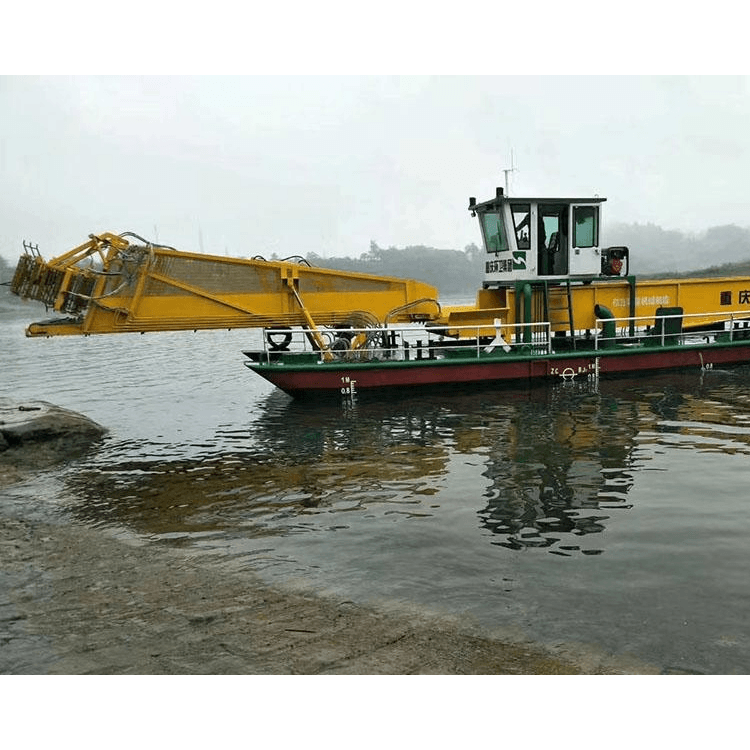











1. The vessel is primarily used for the collection of river and lake debris and floating waste, and it can automatically discharge the collected waste and debris onto the shore or onto garbage trucks.
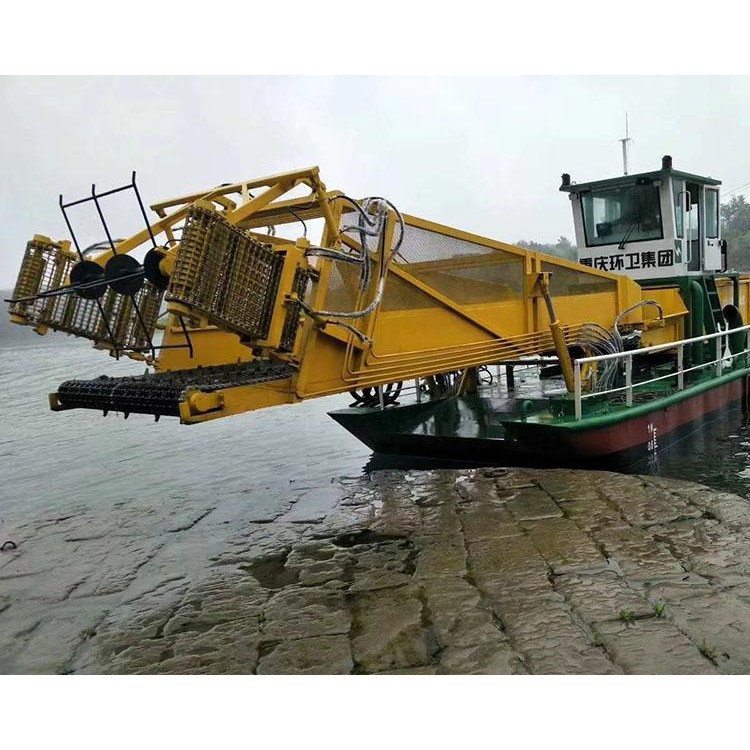
2. The collection chamber is installed at the front of the ship, allowing for adjustable retrieval depths based on the waste situation. The ends of the collection chamber are equipped with mechanical pendulums that can swing left and right to expand the cleaning area.
The conveyor belt on the arm can rotate to form a water flow, drawing small debris into the collection chamber, thereby enhancing cleaning efficiency.
3. The vessel's three compartments - front, middle, and rear - are all composed of high-strength stainless steel conveyor belts, equipped with stainless steel hooks. Each hook has an average load-bearing capacity of 1 ton, ensuring secure handling.
The solid design hooks garbage securely, preventing it from slipping back onto the conveyor belt and into the water. The conveyor belt is heavy-duty, robust, and durable, with easy replacement and strong garbage hook-holding capacity.
4. The vessel has a broad recovery range, is spacious and aesthetically pleasing, produces minimal noise, consumes low fuel, operates safely and simply, and boasts high automation, effectively cleaning riverbanks and the like.
3. Boats and remote-controlled vessels are conveniently paired for round-the-clock operations. Capable of collection, recovery, storage, and preliminary processing.