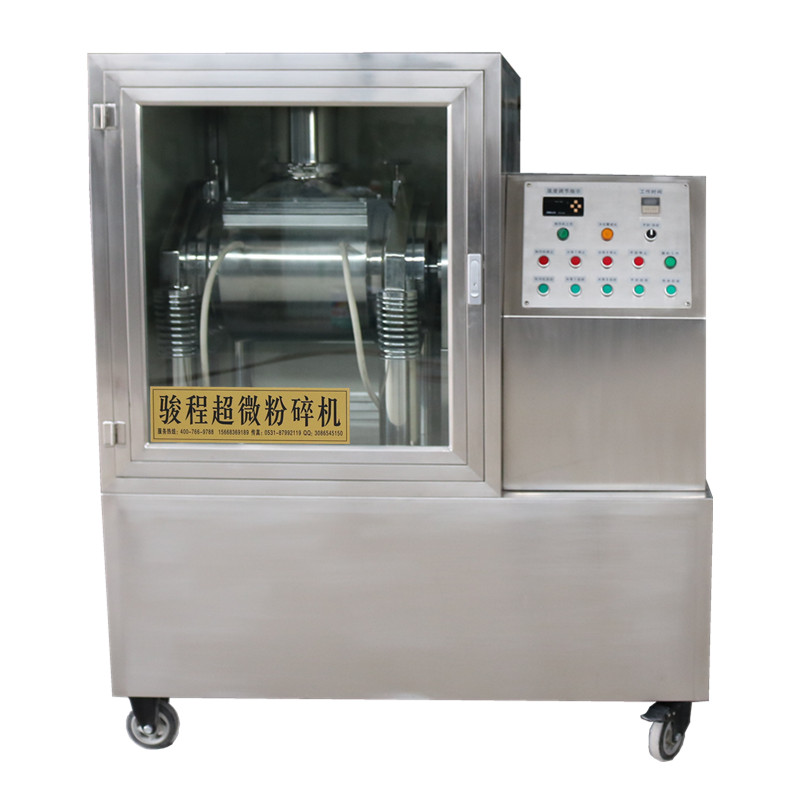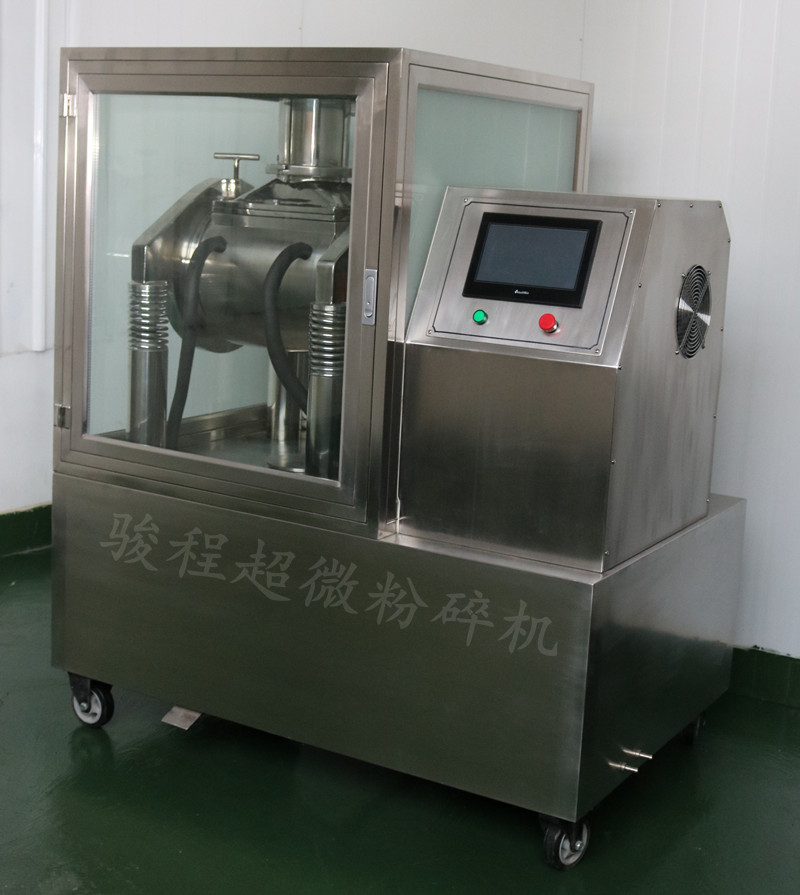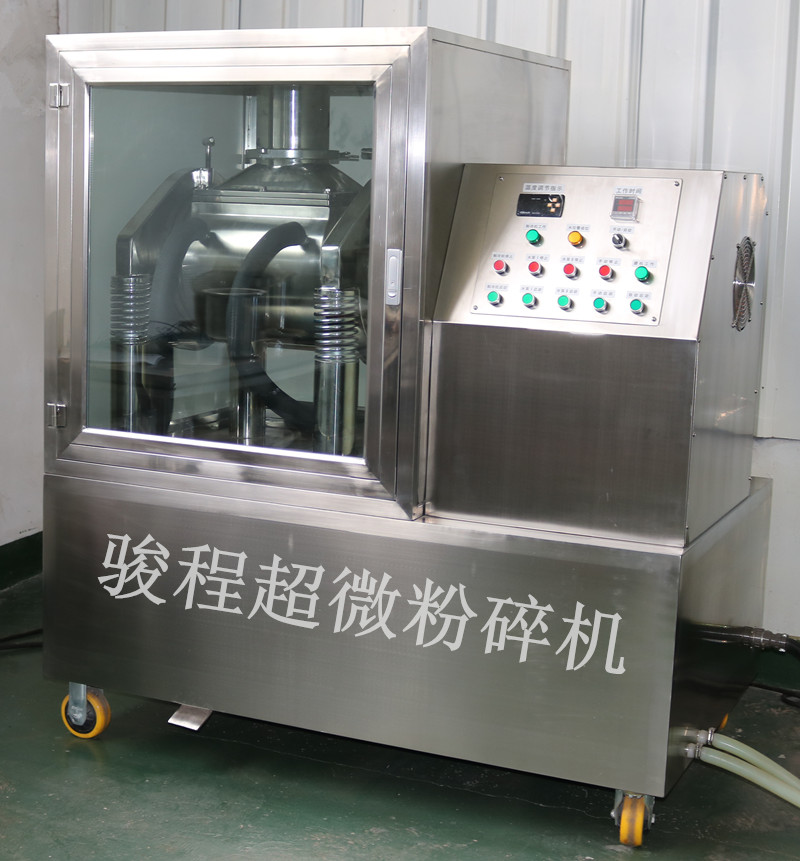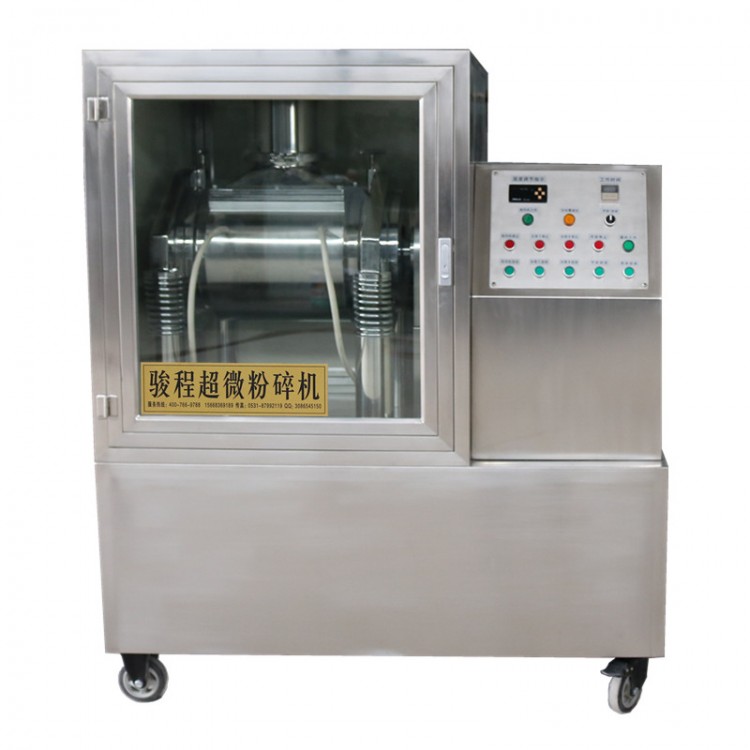
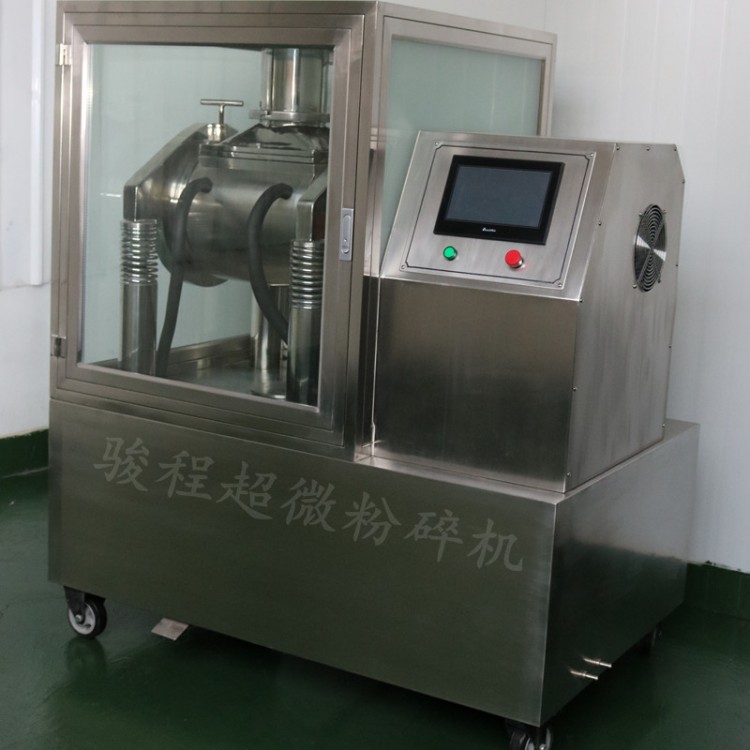









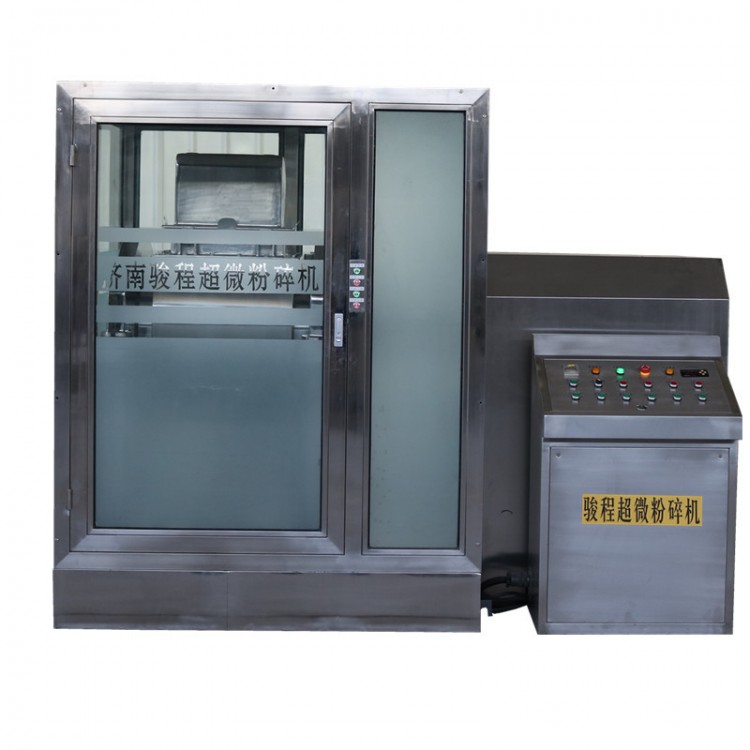
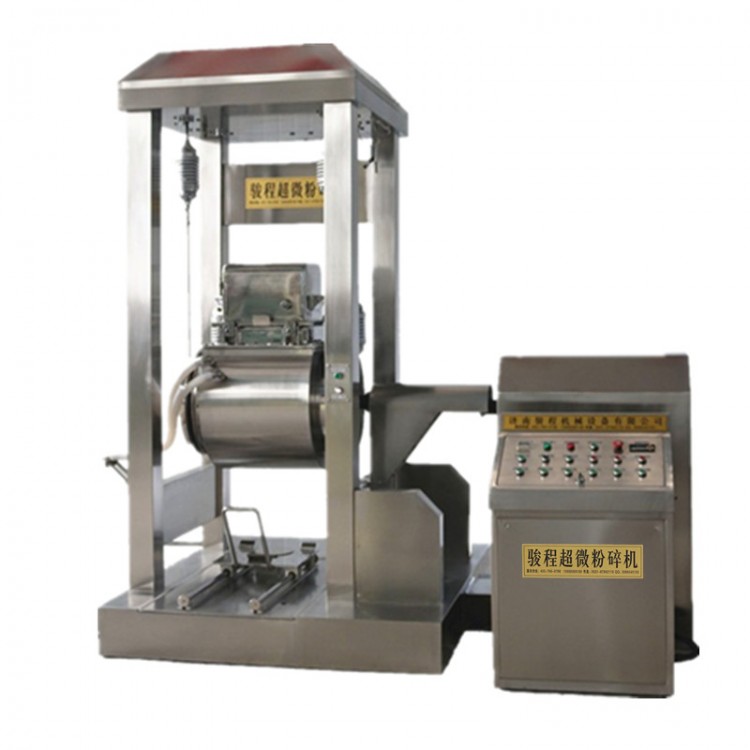
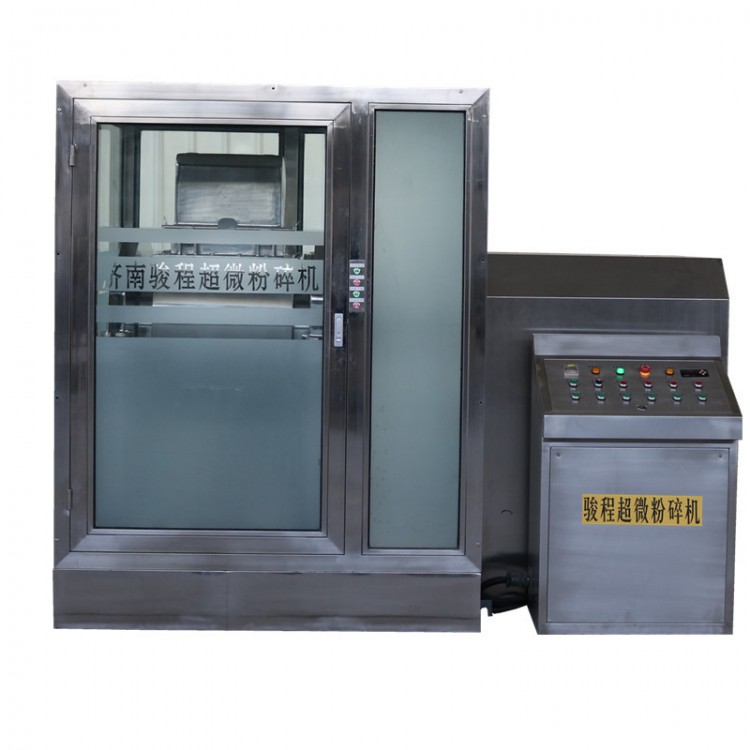
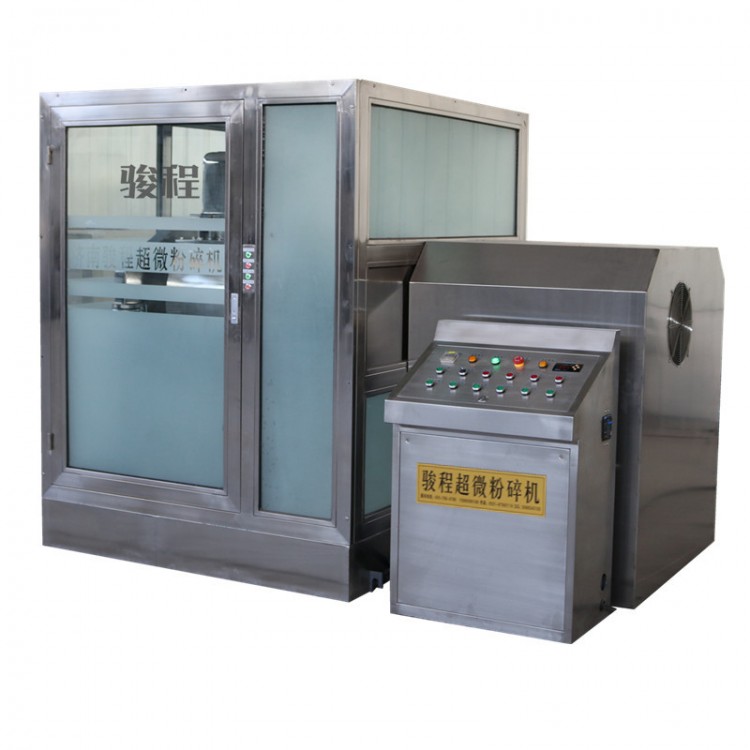
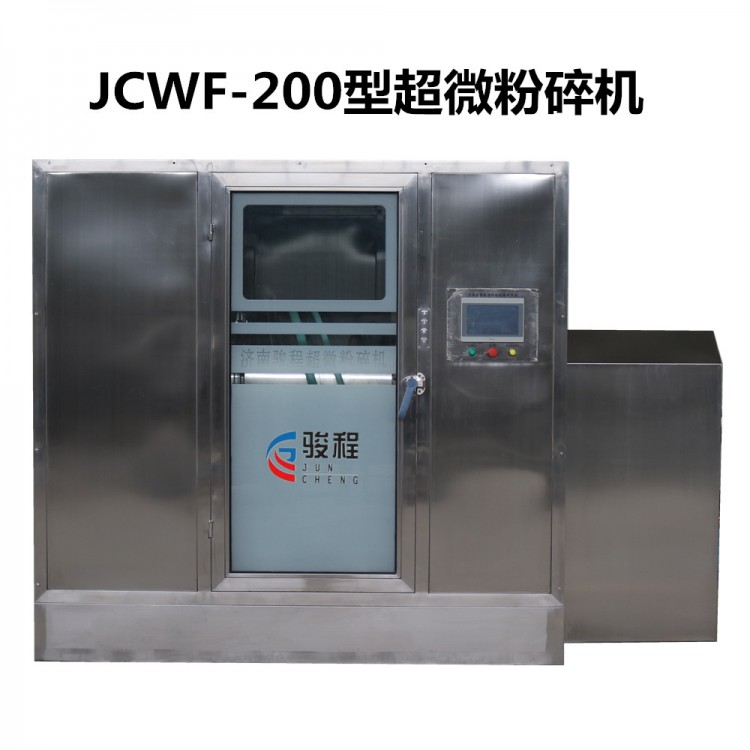
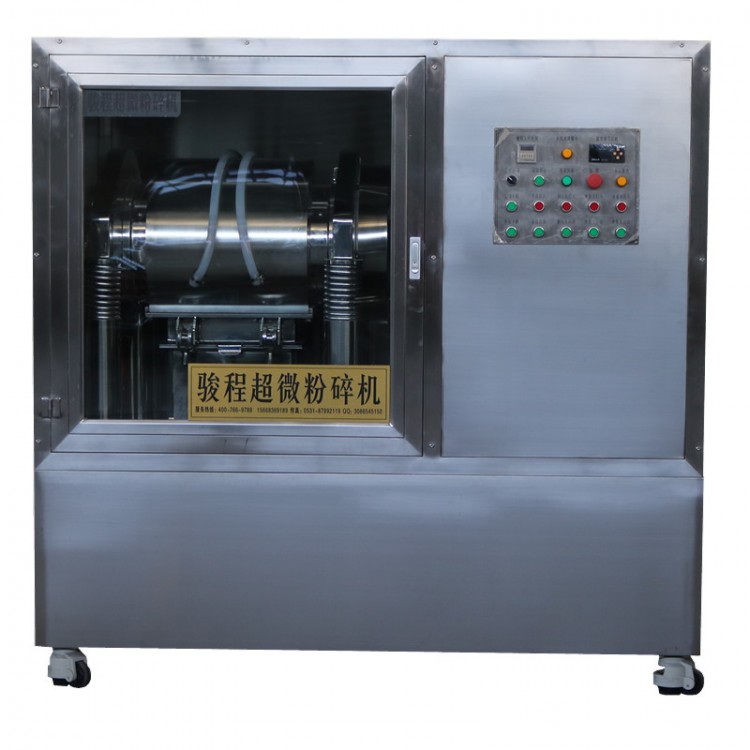
The Vibrating Chinese Herbal Micro-Powder Machine is a pure physical grinding process. The ultra-fine powder produced has the advantages of rapid dissolution of active ingredients and complete composition in the medicine. Utilizing high-intensity vibration and shearing forces, the material inside the grinding cylinder is subjected to high-speed impacts and abrasions. Under the combined action of high acceleration impact and shearing forces, the material is compressed, torn, and broken. The size of the粉碎 force is not affected by the material's mass, and even small-quality materials are subjected to a large force. The medium filling rate is high, and the number of actions per unit time is numerous. It can evenly distribute the material and achieve uniform grinding and mixing effects in a very short time. This significantly shortens the grinding time, improves the grinding efficiency, and ensures complete grinding without any drug residue.
The vibratory Chinese herbal micronizer enhances the dissolution rate of traditional Chinese medicine, with ultra-fine powder technology reducing the particle size of herbs to a cellular level, allowing for direct release of active ingredients. This results in an increased dissolution rate and significantly higher dissolution yield. High-speed rotation, high medium filling, and small medium size achieve high power density, greatly reducing the grinding time for fine materials. Ultra-fine pearl powder provides a sand-free feel, aids in clinical absorption, and improves bioavailability. The worm leech, after ultra-fine powdering, improves odor and taste, enhancing efficacy. Given that many herbs contain aromatic and volatile components, which are often the active ingredients, traditional粉碎 techniques result in longer processing times, overheating, and varying degrees of volatilization losses, especially when these components are in low or trace amounts. This makes it difficult to develop and utilize herbs with volatile components. However, ultra-fine powdering is fast, avoids overheating, and can be performed at low temperatures, making it particularly suitable for herbs containing aromatic and volatile compounds. Ultra-fine powdering of Chinese herbs makes the particles finer, making active ingredients easier to dissolve and enhancing efficacy, reducing the dosage and saving raw materials. Precise mixing allows for the micro-complexing and coating of two or more materials; it is also suitable for liquid-grain and grain-grain interfaces; strong emulsification prevents short-term separation; high solid content achieves strong homogenization. It improves the compression and granulation properties of Chinese medicine, making it pleasant to take and easy to apply; it is beneficial for preserving bioactive components, and low-temperature ultra-fine powdering of Chinese medicine helps maintain bioactivity and enhance efficacy. During the grinding process, overheating can be controlled, and the rapid grinding aids in preserving bioactive components and various nutrients that are sensitive to heat, thereby enhancing efficacy and facilitating the modernization of Chinese medicine.
During the operation of ultra-fine pulverizing equipment, in addition to performing basic maintenance and care, attention should also be given to the following points:
1. The medium filling rate is particularly crucial for the crushing effect. Some customers, in a bid to increase production volume,擅自 reduce the amount of medium, unaware that when the filling rate is too low, the medium's movement is confined to the lower part of the drum, resulting in incomplete force on the material and poor crushing performance. Additionally, some customers believe that the more medium, the better the crushing effect. The Juncheng ultra-fine mill's amplitude and medium filling rate have an optimal matching relationship, with the grinding medium filling rate between 60%-70%.
2. Neglecting the impact of moisture on crushing effectiveness, the intense impact during the crushing process causes moisture to be expelled from the material, forming liquid bridges between the powder particles, significantly enhancing cohesion and severely affecting the dispersibility of the material within the grinding chamber. Higher moisture content during the crushing process leads to lower energy transfer and utilization, and a greater impact on the particle size and specific surface area of the powder. Moisture often affects material properties; for example, traditional Chinese medicine with high moisture content experiences a significant increase in tenacity, making crushing difficult. It is crucial to test the moisture content of the material before crushing and to dry it appropriately for different materials, aiming for a moisture content of around 2% to 5%.
3. Excessive addition of material can lead to the agglomeration of powders, forming secondary granules and increasing the particle size. The amount of material added varies depending on the nature of the drug's texture. Some materials expand in volume after crushing, so only 2/3 of the filling box is needed when filling. For materials that are lighter in specific gravity and shrink in volume after crushing, the material should be as coarse as possible before crushing to form smaller particles, and the box can be filled to capacity.
4. Without low-temperature refrigeration units, equipment heating affects the crushing efficiency. This is because during the crushing process, there is intense friction and impact between the filling medium and the medium, the medium and the drug, and the drugs themselves, which generate a large amount of heat energy, causing a sharp rise in temperature. This leads to the softening of the drugs, increasing the difficulty of crushing. Therefore, for manufacturing companies, we recommend purchasing equipment with dedicated refrigeration units. Equipping crushing equipment with refrigeration keeps the crushing temperature below 10 degrees Celsius. The drugs become relatively脆, allowing for better control over the particle size of the powder.
In addition to the above, the crushing effect of the equipment also depends on the vibration intensity, amplitude, and frequency. These parameters have been pre-adjusted and tested for quality before shipment. Customers are not allowed to make arbitrary changes to these settings to avoid affecting the crushing performance and lifespan of the equipment.