










Suzhou Zhangjiagang high-voltage cable wire recycling, sheathed cable recycling, online quotation
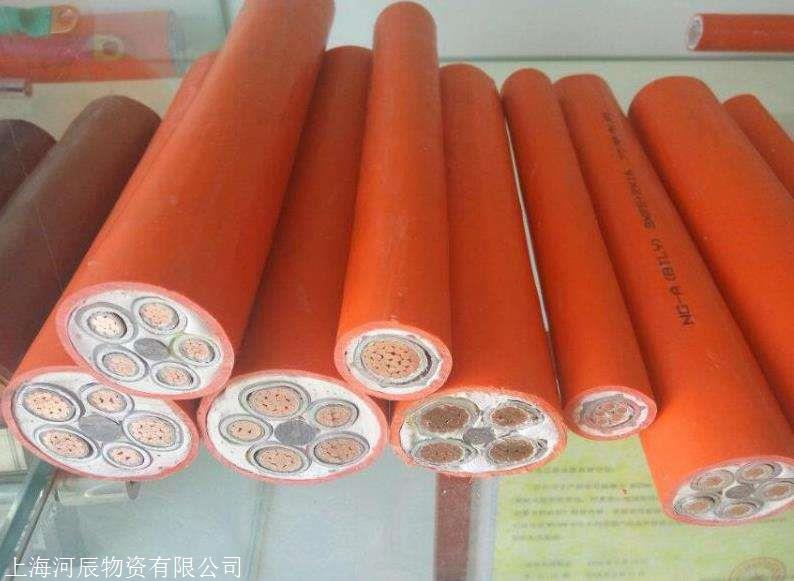
Wiring and cable recycling service, including the collection of second-hand wiring and cables, copper bars, busbars, factory cables, fire-resistant cables, communication cables, marine cables, special cables, and废旧 wire recycling with free dismantling service. Recycling Range: 1. Power cable recycling: medium and low-voltage power cables, high-voltage cables, ultra-high-voltage cables, and ultra-ultra-high-voltage cables, oil-immersed, plastic, and rubber-insulated power cables 2. Communication cable recycling: coaxial communication cables, urban communication cables, coal mine-specific communication cables, shielded communication cables, armored communication cables, flame-retardant communication cables 3. Bare conductor products: steel-core aluminum conductors, copper-aluminum busbars, electric locomotive wires, etc. 4. Special cable recycling: high-temperature-resistant wiring and cables, polyether sulfone-insulated wires, low-inductance cables, low-noise cables, heating cables, electroluminescent wires, CMP cables, cables, halogen-free new green environmental protection cables and wires, cross-linked cables, bare wires, factory cables. Mainly serving the Jiangsu, Zhejiang, Anhui provinces (Nanjing, Zhenjiang, Changzhou, Wuxi, Suzhou, Nantong, Taicang, Kunshan, Yixing, Jiangyin, Qidong, Haimen, Zhangjiagang, Xuancheng, Changshu, Huzhou, Jiaxing, Hangzhou, Shaoxing, Ningbo, Zhoushan) and surrounding areas. Welcome to call!
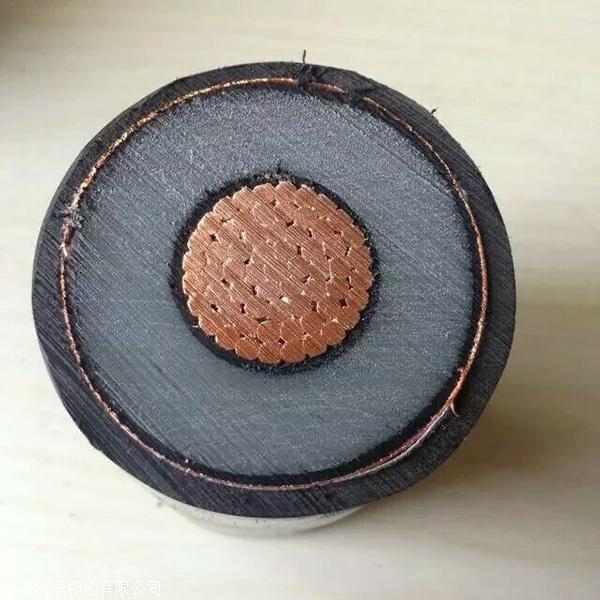
Suzhou Zhangjiagang High-Voltage Cable Wire Recycling, Shielded Cable Recycling Online Quotation [Submarine Cable Structural Development] In 1988, the transoceanic submarine optical cable system (TAT-8) was laid between the United States, the United Kingdom, and France, with a total length of 6,700 km. This cable contained 3 pairs of optical fibers, each with a transmission rate of 280 Mb/s and a repeater spacing of 67 km. It was a transatlantic communication submarine optical cable, marking the arrival of the submarine cable era. In 1989, the transpacific submarine optical cable (total length 13,200 km) was also successfully constructed, and from then on, submarine optical cables replaced coaxial cables in the intercontinental submarine cable domain across oceans, and submarine cables were no longer laid across the oceans. Optical fibers have a large transmission capacity and long repeater spacing, making them suitable for long-distance communication undersea. The optical fibers used in submarine optical cables have higher requirements than those used in land optical cables; they require low loss, high strength, long manufacturing length, long repeater distances, generally over 50 km, and transmission performance requirements that do not change within 25 years. In terms of the structure of submarine optical cables: they must withstand strong pressure and tension, especially for deep-sea optical cables (laid at depths below 1,000 meters), where in addition to the weight of the cable itself, dynamic stresses are added to the cable during laying and maintenance operations. Under such heavy loads, the strain of the cable must be limited to 0.7-0.8%; the structure of submarine optical cables requires strength and lightweight materials, but aluminum, which reacts electrochemically and mechanically with seawater, cannot be used because hydrogen molecules can diffuse into the glass material of the optical fibers, increasing the fiber's loss. Therefore, submarine optical cables must prevent internal generation as well as external penetration. To this end, a carbon or titanium-coated fiber was developed in the early 1990s, which could prevent hydrogen penetration and prevent chemical corrosion. The optical fiber joints also require high strength, maintaining the original strength of the fiber and ensuring the surface is not damaged. According to the above requirements and characteristics, the basic structure of submarine optical cables involves spirally wrapping the fibers, which have been coated once or twice, around the reinforcing elements (made of steel wire). Typical structures of deep-sea optical cables include: the optical fibers are placed in a spiral U-shaped slot plastic skeleton, filled with grease or elastic plastic to form the core. The core is wrapped with high-strength steel wire, with all gaps filled with waterproof material, then wrapped with a layer of copper tape and welded to form a composite body of steel wire and copper tube, which is both pressure and tension-resistant. This copper tube also serves as a conductor for transmitting remote power supply current. Outside the steel wire and copper tube, an additional layer of polyethylene sheath is added. This multi-layered structure is designed to protect the optical fibers, prevent breakage, prevent seawater intrusion, and withstand immense tension and pressure during laying and recovery repairs. Despite such rigorous protection, in the late 1980s, instances were found where the polyethylene insulator of deep-sea optical cables was bitten, causing power supply failures. Remote power supply for the submarine cable system is crucial; the repeaters along the submarine cable rely on remote power supply from the landing stations. The digital repeaters used in submarine optical cables have multiple functions and consume several times more electricity than the analog repeaters used in submarine cables, requiring a highly reliable and uninterrupted power supply. Therefore, in areas with frequent disturbances, two layers of steel tape wrapping and an additional layer of polyethylene outer sheath are added to the submarine optical cables. By the 1990s, submarine optical cables had become one of the main means of intercontinental communication alongside satellite communication. China has participated in the construction and investment of 18 submarine optical cable projects from 1989 to the end of 1998. One of the landing submarine cable systems was completed in December 1993—the Japan (C-J) Submarine Cable System. The China-Korea submarine cable was completed and opened in February 1996, landing in Qingdao, China, and Taean, South Korea, with a total length of 549 km; in November 1997, the FLAG Submarine Cable System, which was jointly constructed, was completed and put into operation, this being an intercontinental cable system landing in China, with landing points in 12 countries and regions, including the UK, Egypt, India, Thailand, Japan, etc., with a total length of over 27,000 km, with a segment of 622 km; the Asia-Europe Submarine Cable System, initiated by telecommunications companies and Singapore, is currently under construction, connecting Asia, Europe, and Oceania, landing in 33 countries and regions with a total length of 38,000 km, making it the world's longest submarine cable. It uses advanced 8-wavelength wavelength division multiplexing technology, with a design capacity of up to 40 Gb/s, landing in Shenzhen and other locations, and was completed and opened by the end of 1999. The volume of intercontinental communication services carried by submarine optical cables has been increasing year by year, surpassing satellite communication, and has become the mainstay of modern intercontinental communication.
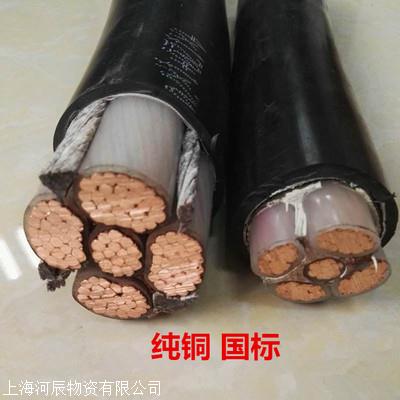
Cable Wire Recycling: The scope of wire and cable recycling includes power cables: medium and low voltage power cables, high voltage cables, ultra-high voltage cables, and extra-high voltage cables, oil-immersed, plastic, and rubber insulated power cables. Power cable products are mainly used for strong electric power transmission in the transmission lines of power generation, distribution, transmission, transformation, and supply, with high current (tens to thousands of amperes) and high voltage (220V to 500kV and above). With the rapid development of the communication industry over the past two decades, communication cables and optical fibers have also seen astonishing growth. From the simple telephone and telegraph cables of the past to thousands of pair cables, coaxial cables, optical fibers, data cables, and even combined communication cables. The structural dimensions of these products are usually small and uniform, with high manufacturing precision requirements. Magnetic wire (winding wire) is mainly used in various motors, instruments, and meters. Flexible fire-resistant cables: 1. Excellent fire-resistant properties, meeting not only the GB12666.6A class 950℃ 90min requirements but also the British BS6387-1994规定的A grade 650℃ 3h, B grade 750℃ 3h, and C grade 950℃ 3h requirements. Additionally, they can withstand water spray and mechanical impact during combustion.