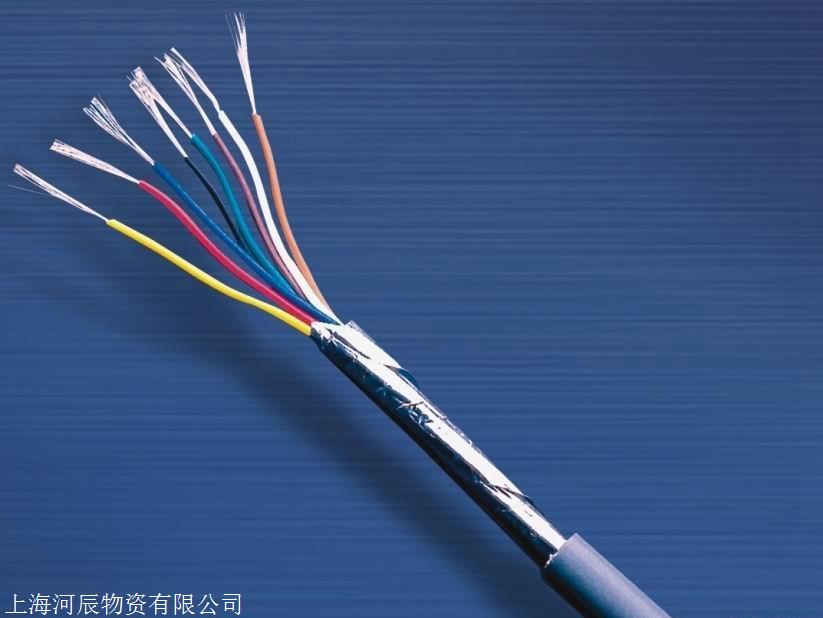
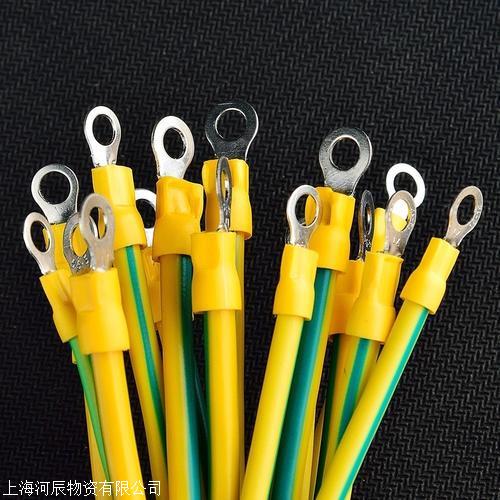











Nanjing Jianye old cable wire recycling, signal cable recycling, with vehicle pick-up service

Wiring and Cable Recycling Service: We recycle second-hand wiring and cables, copper bars, busbars, factory cables, fire-resistant cables, communication cables, marine cables, special cables, and old network cables, with free dismantling services included. Recycling Scope of Wires and Cables: 1. Power Cable Recycling: Medium and low voltage power cables, high voltage cables, ultra-high voltage cables, and extra-high voltage cables, including oil-impregnated, plastic, and rubber insulated power cables. 2. Communication Cable Recycling: Coaxial communication cables, urban communication cables, coal mine-specific communication cables, shielded communication cables, armored communication cables, and flame-retardant communication cables. 3. Bare Wires and Cables: Steel-core aluminum conductors, copper-aluminum busbars, electric locomotive wires, etc. 4. Special Cable Recycling: High-temperature-resistant wiring and cables, polyether sulfone insulated wires, low-inductance cables, low-noise cables, heating cables, electroluminescent wires, CMP cables, cables, halogen-free new green environmental protection cables, cross-linked cables, bare wires, factory cables. Mainly serving Jiangsu, Zhejiang, Anhui provinces (Nanjing, Zhenjiang, Changzhou, Wuxi, Suzhou, Nantong, Taicang, Kunshan, Yixing, Jiangyin, Qidong, Haimen, Zhangjiagang, Xuancheng, Changshu, Huzhou, Jiaxing, Hangzhou, Shaoxing, Ningbo, Zhoushan, and surrounding areas), welcome to call!

Nanjing Jianye's old cable wire recycling, signal cable recycling, and on-site pick-up mantra uses Arabic numerals to represent wire cross-sections (square millimeters), while Chinese characters denote multiples. The mantra's cross-section and multiple phrase "10 down five" refers to cross-sections below 10, where the current carrying capacity is five times the cross-sectional value. "100 up two" (read as "bai shang er") indicates that for cross-sections above 100, the current carrying capacity is twice the cross-sectional value. The boundary between 25 and 35 cross-sections is where four and three times multiples meet. This is the mantra "25, 35, four-three boundary." For cross-sections of 70 and 95, it's 2.5 times. From the above arrangement, it can be seen that, except for those below 10 and above 100, the wire cross-sections in the middle fall into the same multiple for every two specifications. For example, the calculation of current carrying capacity for aluminum-core insulated wire at an environmental temperature not exceeding 25°C: when the cross-section is 6 square millimeters, the calculated current carrying capacity is 30 amps; when the cross-section is 150 square millimeters, the calculated current carrying capacity is 300 amps; when the cross-section is 70 square millimeters, the calculated current carrying capacity is 175 amps. From the above arrangement, it can also be seen that the multiple decreases as the cross-section increases, and there is a slight error at the boundary of multiple changes. For instance, at the boundary of 25 and 35 cross-sections, where four and three times multiples meet, 25 belongs to the four times range, and according to the mantra it is calculated as 100 amps, but according to the manual, it is 97 amps. Conversely, for 35, it is calculated as 105 amps by the mantra, but it is 117 amps when looked up in the table. However, this has little impact on usage.

Cable wires and cables are primarily manufactured through three processes: drawing, twisting, and sheathing. The more complex the model and specification, the higher the repeatability. 1. Drawing is a metal forming technique where metal is forced through molds (pressure wheels) under external force, compressing the cross-sectional area to achieve the required shape and size. This process is called metal drawing. Drawing processes include: single wire drawing and twisted drawing. 2. Twisting is done to enhance the flexibility and integrity of the cable wires, involving two or more single wires being woven together in a specified direction. Twisting processes include: conductor twisting, cable laying, braiding, steel armor fitting, and wrapping. 3. Sheathing involves covering different materials over the conductor based on the specific performance requirements of the cable wires. Sheathing processes include: A. Extrusion: rubber, plastic, lead, aluminum, etc. B. longitudinal wrapping: rubber, corrugated aluminum strip materials. C. Wrapping: strip materials such as paper tape, mica tape, alkali-free glass fiber tape, non-woven fabric, plastic tape, etc., and linear materials such as cotton yarn, silk, etc. D. Coating: insulating varnish, asphalt. 1. When cable wires cross each other, high-voltage cables should be below low-voltage cables. If one cable is protected by piping or a partition within 1m of the crossing point, the allowable distance is 0.25m. 2. When cables are close to or cross with steam pipes, with insulation measures in place, the parallel and crossing distances are 0.5m and 0.25m, respectively. 3. When cables cross railways or roads, they should be protected by piping, with the protective pipe extending beyond the track or road surface by 2m. 4. The distance between cables and the foundation of buildings should allow for burial outside the building's drainage area; when cables are introduced into buildings, they should be protected by piping, with the protective pipe also extending beyond the building's drainage area. 5. The distance between cables directly buried underground and general grounding devices should be 0.25 to 0.5m; the burial depth of cables directly buried underground should generally not be less than 0.7m, and should be buried below the frost layer.