















Operation Principle
- Working Principle:
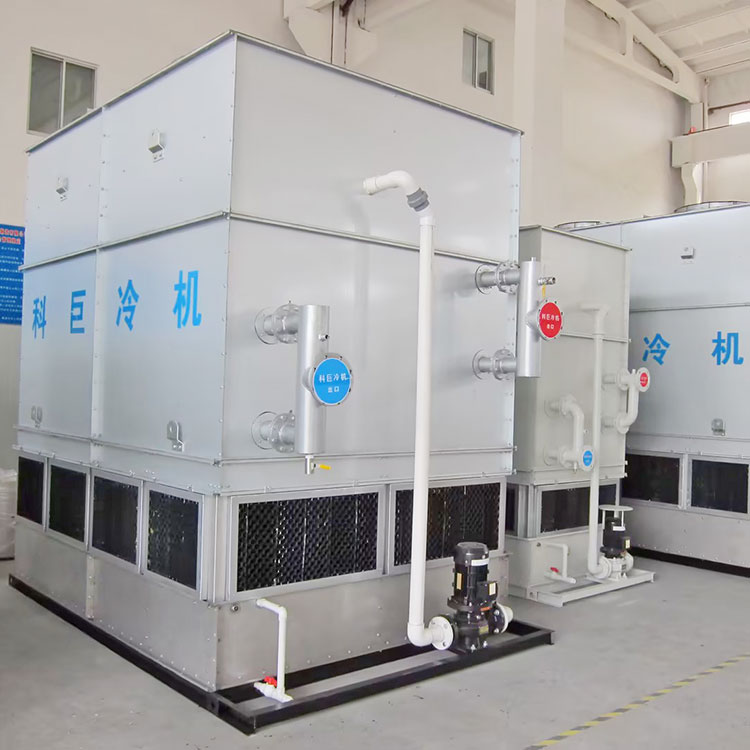
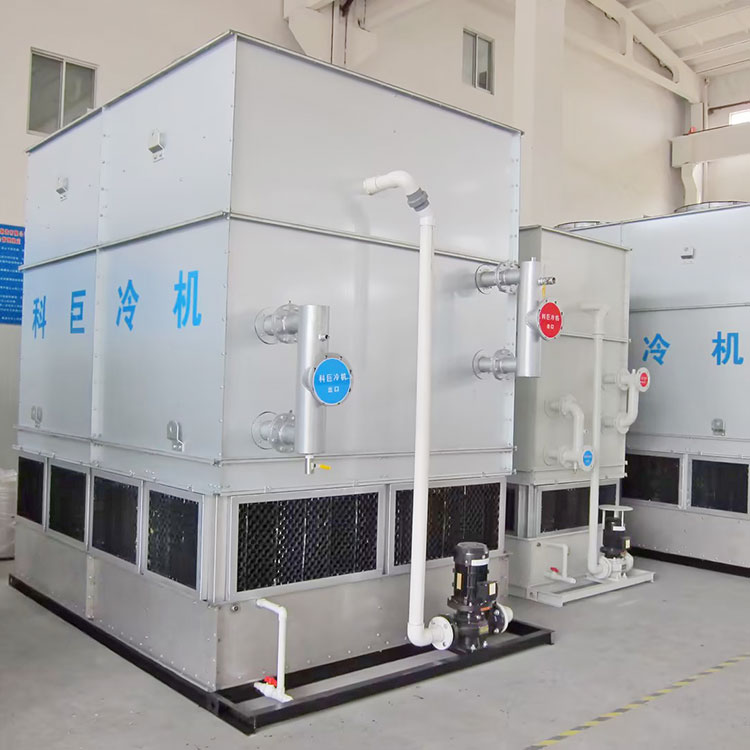
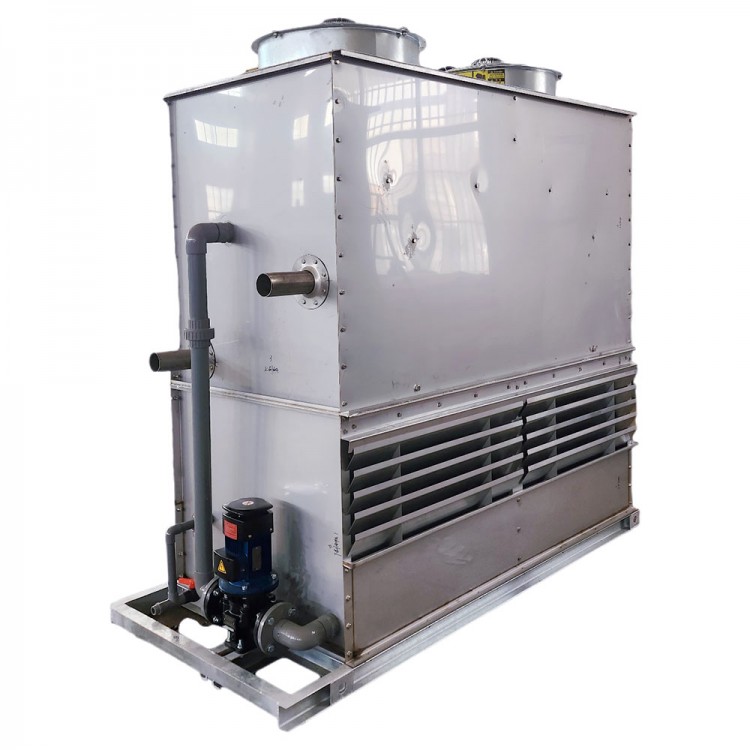
This product employs a two-stage cooling method: the first stage uses air cooling, relying on wind to cool the coils of the cooler; the second stage utilizes both air cooling and spray, which is activated in higher ambient temperatures. During air cooling, the spray system sprays water onto the cooler surface, removing heat from the coils as the water evaporates. The moist air is then exhausted outside the machine after being recycled through a dehumidifier by the fan at the top, achieving cooling. In lower ambient temperatures, only the first-stage cooling is used. The water consumption for the spray is as low as 0.1-0.2‰ of the flow rate.
Application Scope:
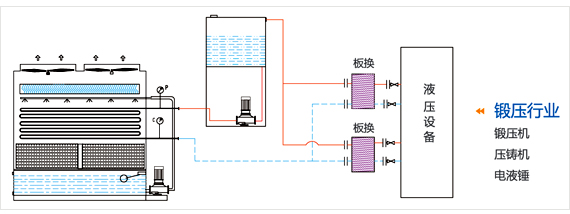
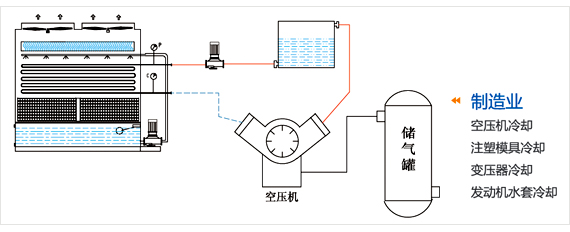
As a primary auxiliary equipment in the heat treatment industry, used in heat treatment quenching media, controlled atmosphere furnaces, induction heating furnaces, vacuum furnaces, and more; in fields such as central air conditioning, forging, casting, chemicals, food, injection molding, printing, generator sets, power plants, and glass melting furnaces.

Structural Diagram
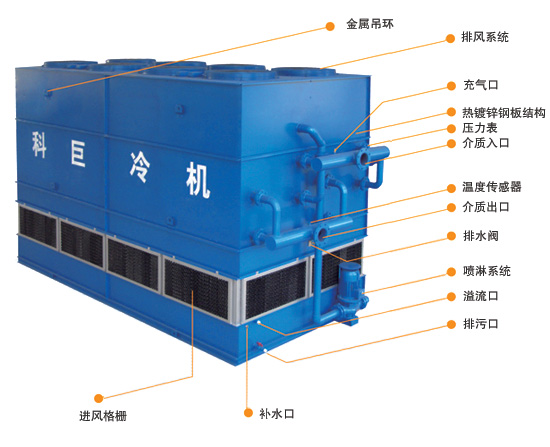
▲ Exhaust System
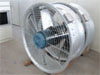
Utilizing a three-proof aluminum shell fan, installed within a custom induction duct, protected by a hot-dipped galvanized wire mesh cover at the top. The fan motor features a corrosion protection level of IP55 and an insulation grade of F.
▲ Sprinkler System
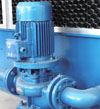
The vertical centrifugal pump is utilized to provide sufficient sprinkler water volume, ensuring the entire coil assembly is fully encompassed in the water flow. The sprinkler pipes are manufactured from standard PVC material for their corrosion-resistant properties. The sprinkler water is uniformly dispersed over the coil surface by precision-molded ABS nozzles.
▲Cooling Coil
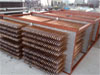
Manufactured from T2 de-acidified copper tube with a purity of 99.8%, offering high thermal efficiency. Cross-arrangement design enhances thermal efficiency and reduces air pressure drop through the unit. After assembly, the coil is tested with 1.2 MPa air pressure in water to ensure no leaks.
▲ (Dehydrator) Waterstop
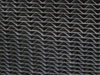
Made of PVC material, grouped and installed within the unit. The dehydrator features a three-shift design to block water carried in the exhaust gas flow. It ensures the water drift rate is less than 0.1% of the circulating water volume.
▲ Air Inlet Grille

Constructed of PVC material, mounted on a frame around the unit for easy disassembly, facilitating maintenance and repair of the water trays. The grating features two air turns to prevent splashing and direct sunlight on the trays. It includes an air deceleration zone, effectively directing the air intake towards the fan.
▲Watering hole
Stainless steel float ball valve control
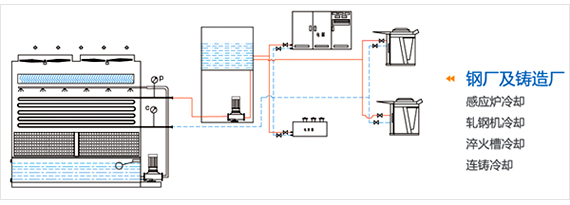
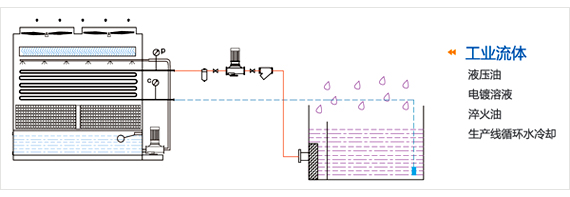
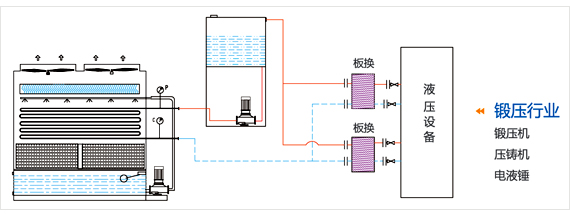
Cooling Tower Applications

Performance Advantages
▲Stable
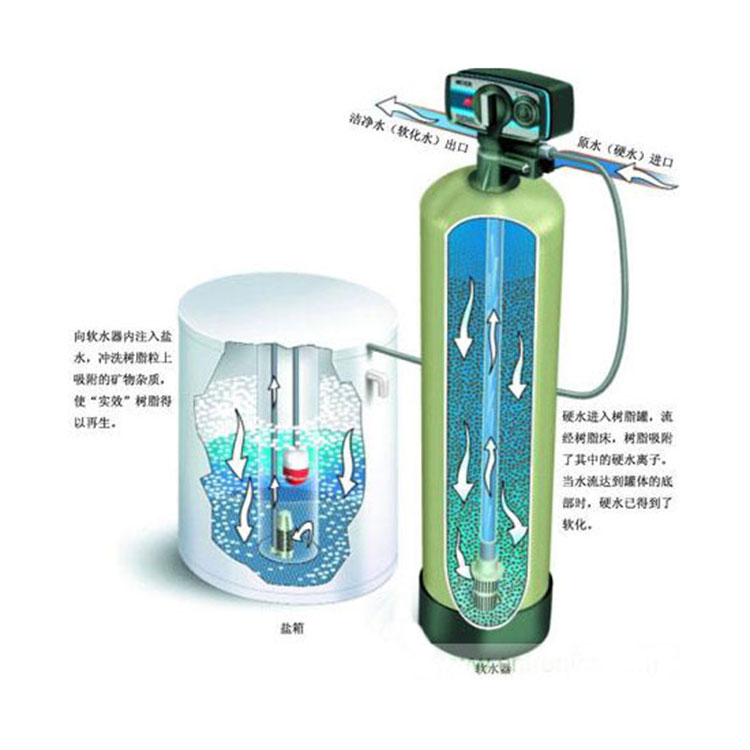
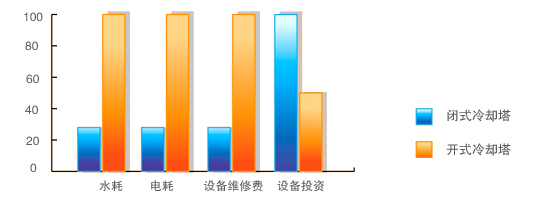
Closed-loop cooling towers typically use soft water in a closed circuit, preventing scale formation at high temperatures and effectively preventing gradual damage to electric furnaces due to overheating. Parameter settings and an alarm system ensure a smooth cooling process and clear cooling effect.
▲ Water-saving
Closed-loop cooling towers achieve a fully enclosed internal circuit for cooling water (pure water) compared to traditional open cooling towers, eliminating the need for a pond and allowing for easy relocation. Particularly suitable for areas with water scarcity.
▲ Energy-saving
Closed-loop cooling towers can adjust the airflow and spray quantity in response to ambient temperature changes, control the start and stop of the fan and spray system, achieving an efficient and energy-saving cooling process.
▲ Eco-friendly
Closed cooling towers protect the circulating water from contamination through a fully enclosed internal circuit, ensuring sustainable use. Due to the low evaporation of the spray water, they greatly protect the atmospheric environment. They do not pose a health threat to the surrounding population through water-based bacteria.
▲ Longer service life
The closed cooling towers designed and manufactured by our company, utilizing metal structural materials, significantly enhance the equipment's corrosion resistance. Proper maintenance typically extends their lifespan to 8-10 years, with minimal upkeep and low costs.

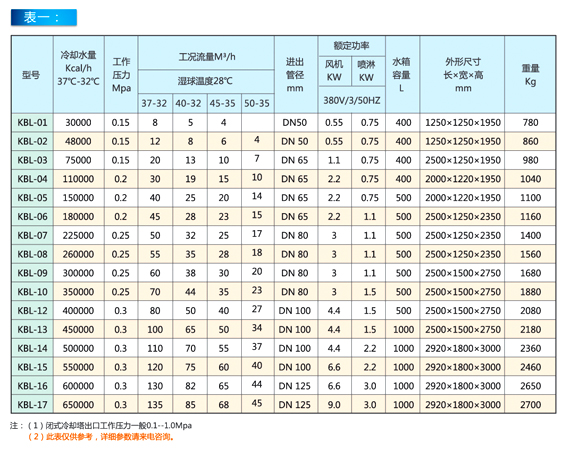
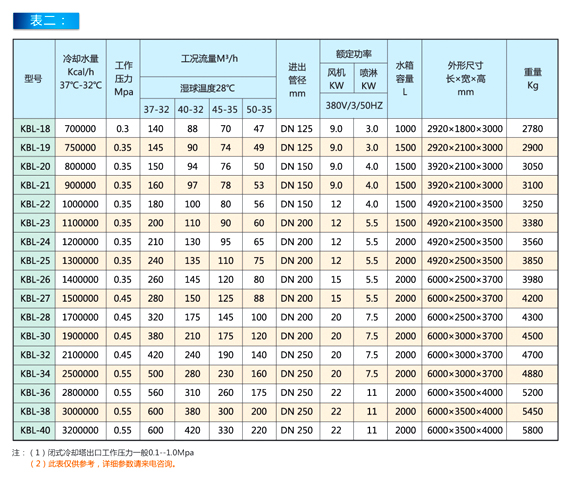
Parameter table
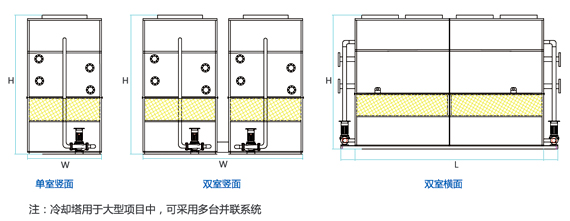
The internal coil material of the KBL series closed cooling tower can be brass tube, stainless steel tube, or carbon steel tube.
▲ Watering Port: DN25-50mm
▲ Overflow Port: DN50-125mm
▲ Drainage outlet: DN50-125mm
Important Notes
▲ Environmental Requirements
Avoid acidic exhaust, explosive dust, severe coking coal, and excessive steam environments.
· Located beside the building, it should be kept at a sufficient distance from the air intake (0.5-3M, depending on the model).
· Located within a well-type fence, be cautious of heat and humidity air recirculation causing heat dissipation failure; consider wind induction equipment in special environments.
▲ Tube fitting issues
·Pipe and valve installations should be below the cooling tower's operating water level to prevent overflow and air intake.
·When considering the equipment placement, ensure there is sufficient pump head, and take into account the pressure loss along the pipeline and the pressure loss in the cooling coils.
·The pressure design of the fluid-cooled interface flange is set at 1 MPa; all pipelines should consider hangers or supports.
▲ Maintenance Requirements for Spray Systems
With the operation of closed cooling towers, minerals and other impurities in the water will settle and accumulate in the sump. Therefore, it is necessary to regularly inspect water quality and carry out periodic drainage and cleaning to better control water quality and prevent scaling.
· Spray Irrigation Water Quality Requirement: Refer to GB50050-95 "Code for Design of Industrial Recirculating Cooling Water Treatment," in areas with particularly poor water quality, consider purification (softening) treatment.
▲Make-up water for recirculated water
· Makeup water for the sprinkler system
Steam consumption ≤ 0.8% of flow rate + Bleaching water consumption ≤ 0.1% + Effluent water consumption ≤ 0.3% = Recirculating flow rate ≤ 1.2%
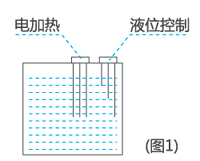
·Recirculating water in closed-loop systems should meet the quality requirements of the production process and can be softened water or purified water, etc. The closed-loop system is equipped with a liquid level control system, which emits an alarm message indicating that the level of the recirculating water is low and additional water needs to be added. (As shown in Figure 1)
▲Drainage
·When the equipment is not in use, the circulating water inside the pipes should be drained to prevent the freeze-thawing of the pipes in cold weather.
▲Anti-freezing issue of closed-loop cooling towers
· Methods to consider for anti-freezing of sprinkler systems:
Heaters are installed in the spray trough, typically using submersible electric heaters.
②When the system stops running, all water in the coils and spray nozzles must be drained.
· Anti-freezing method for cooling coils:
When the environment is ≤ -7°C, the main pump must maintain the system water circulation.
② In northern regions during winter when temperatures are low, even with recirculating water flowing, freezing can occur. To maintain a certain thermal load for this, immersion electric heaters (as shown in Figure 1) can generally be installed in the piping system, while ensuring the recirculating water in the closed system maintains a certain flow rate.
③ An effective method is to add antifreeze to the sealed system, using ethylene glycol or propylene glycol liquid. Refer to the table below for the dosage ratio. Please work with our company to formulate a specific antifreeze plan.