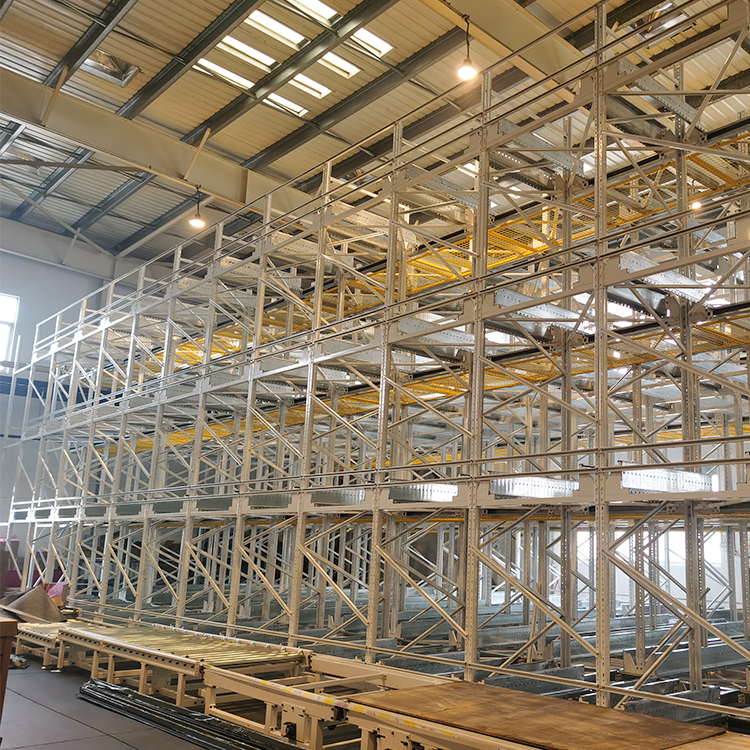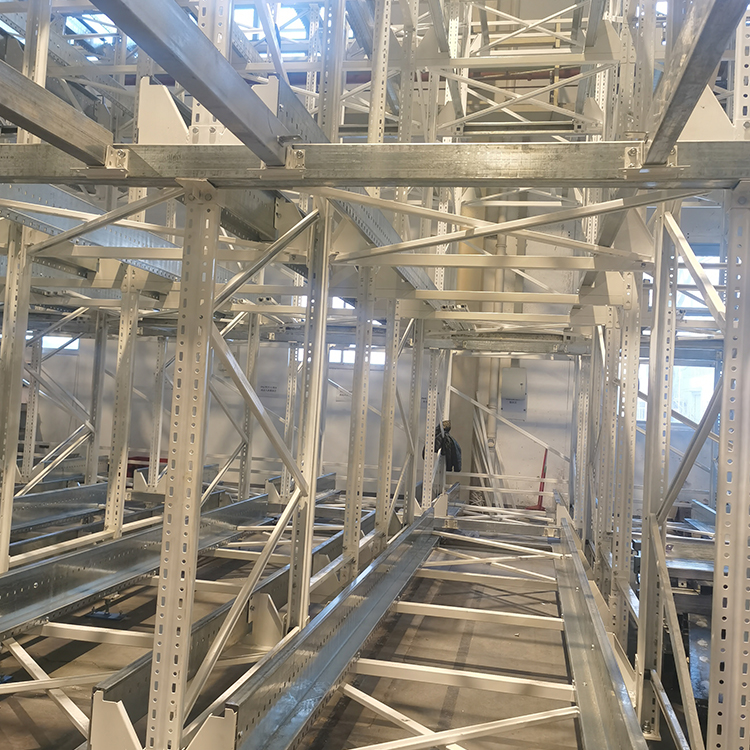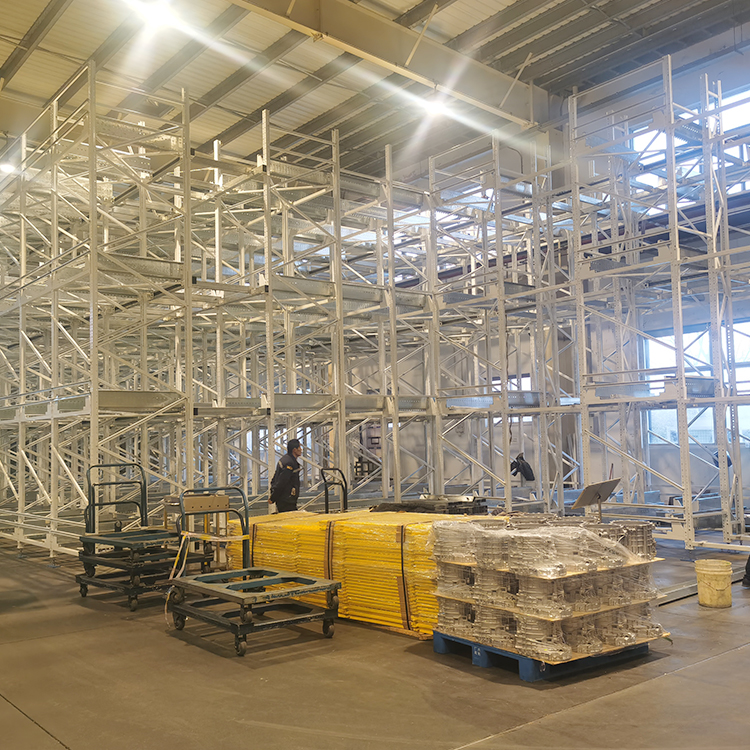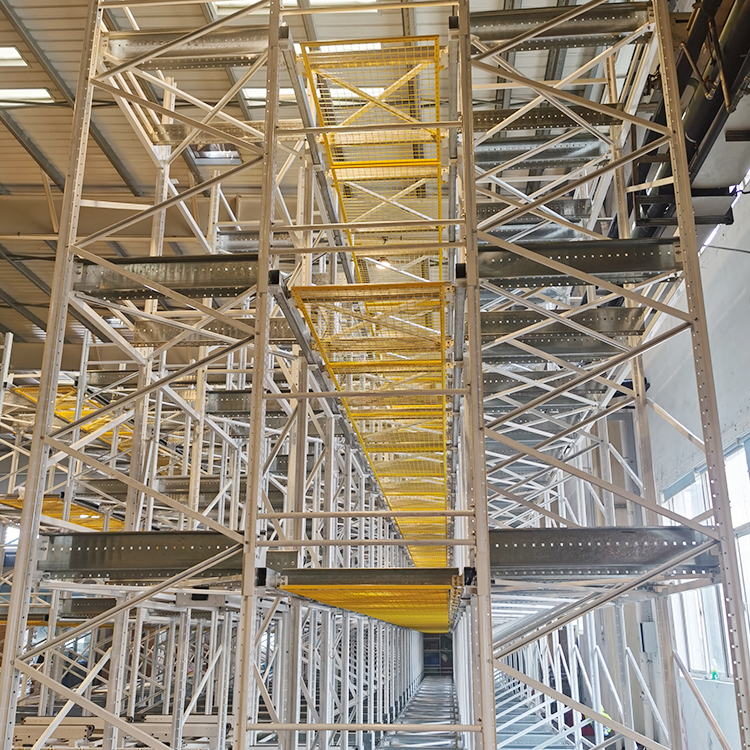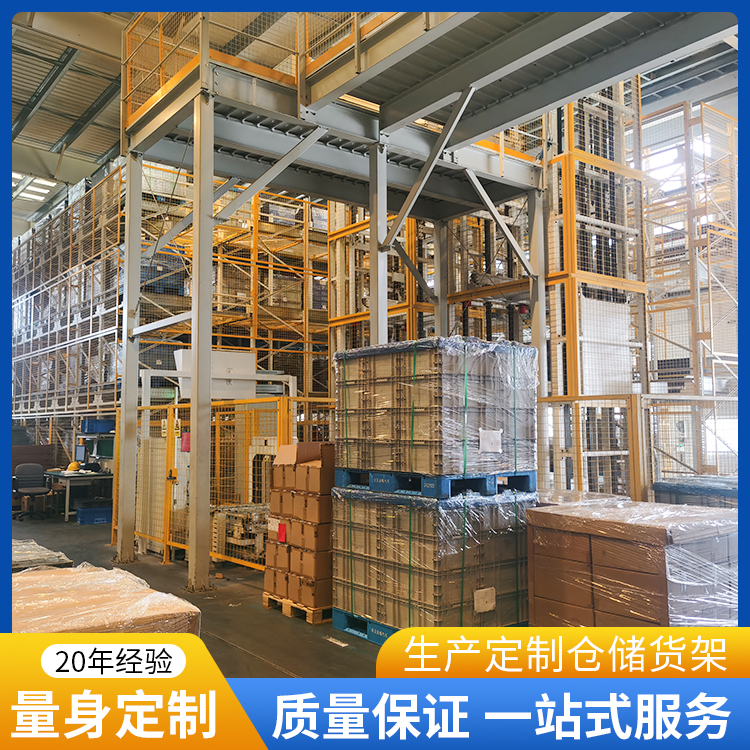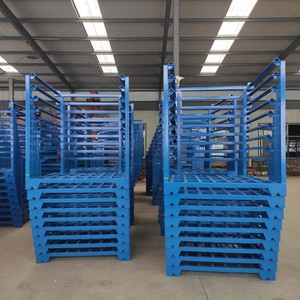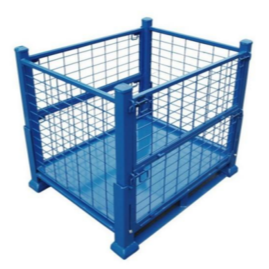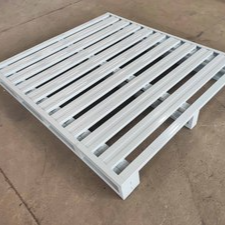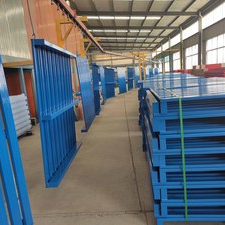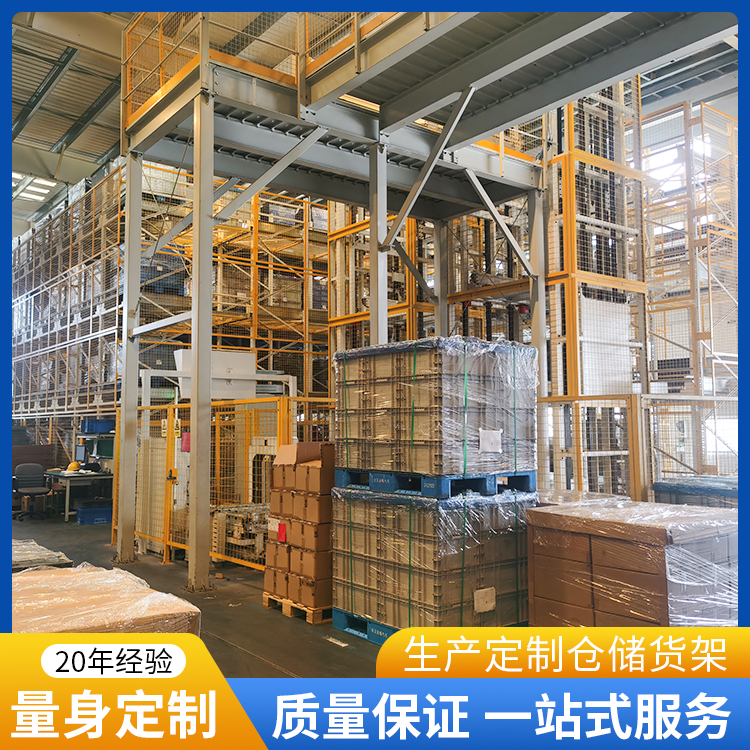


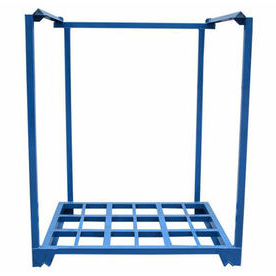
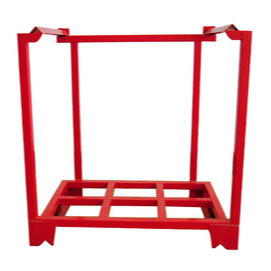
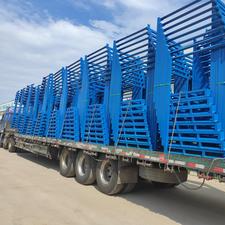
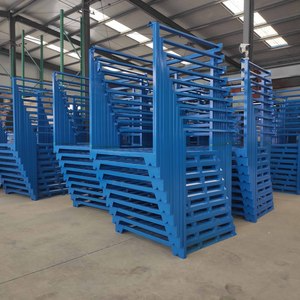
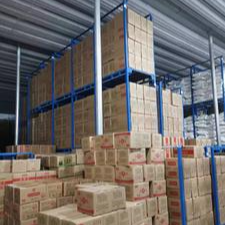





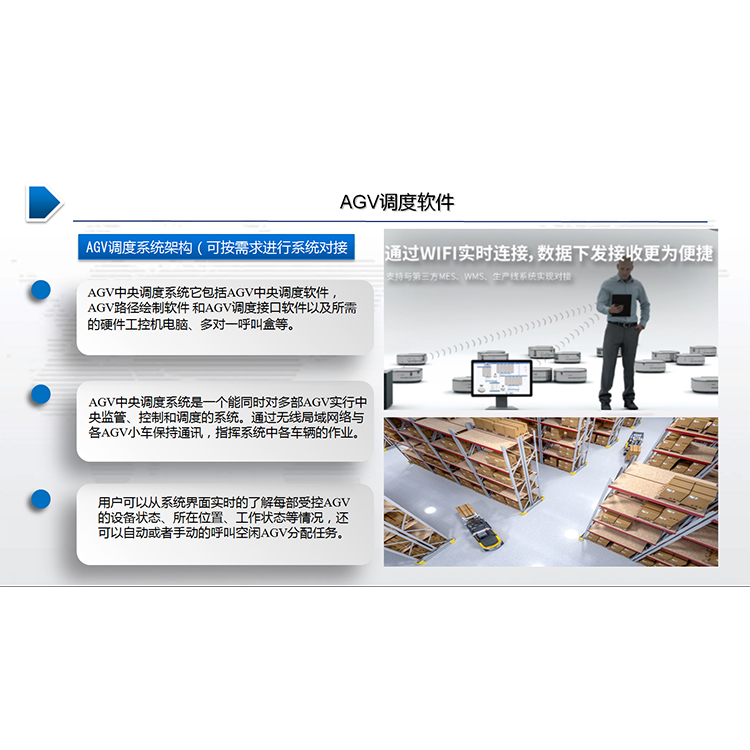

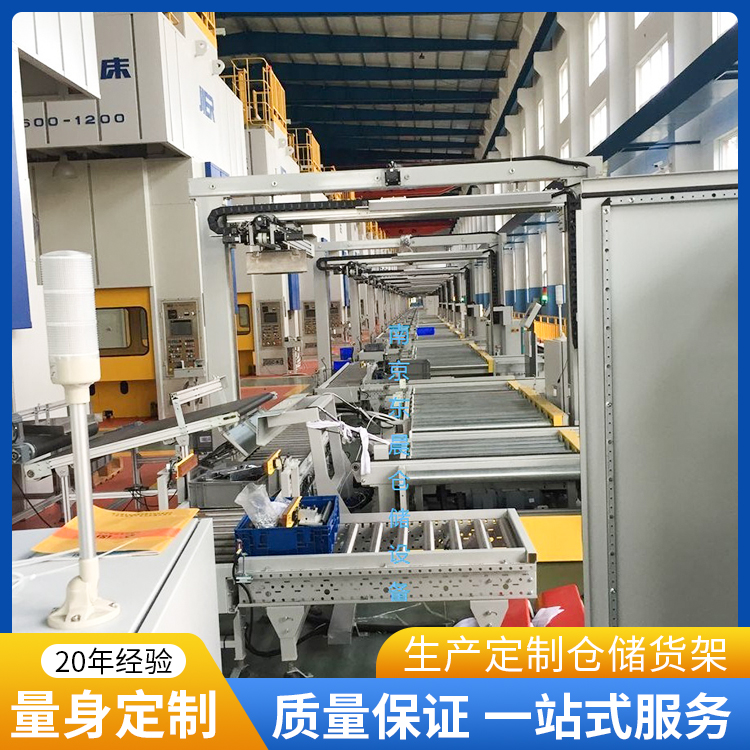
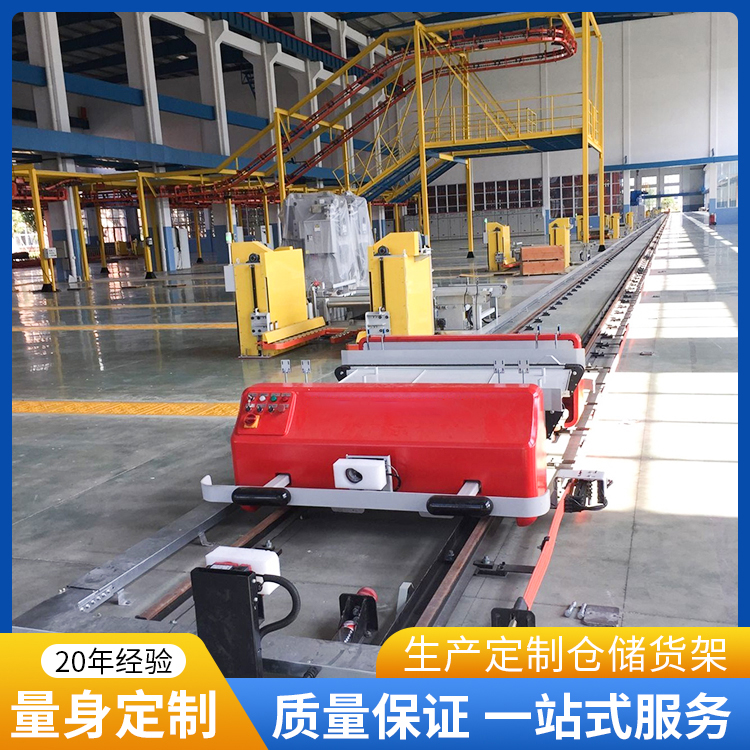
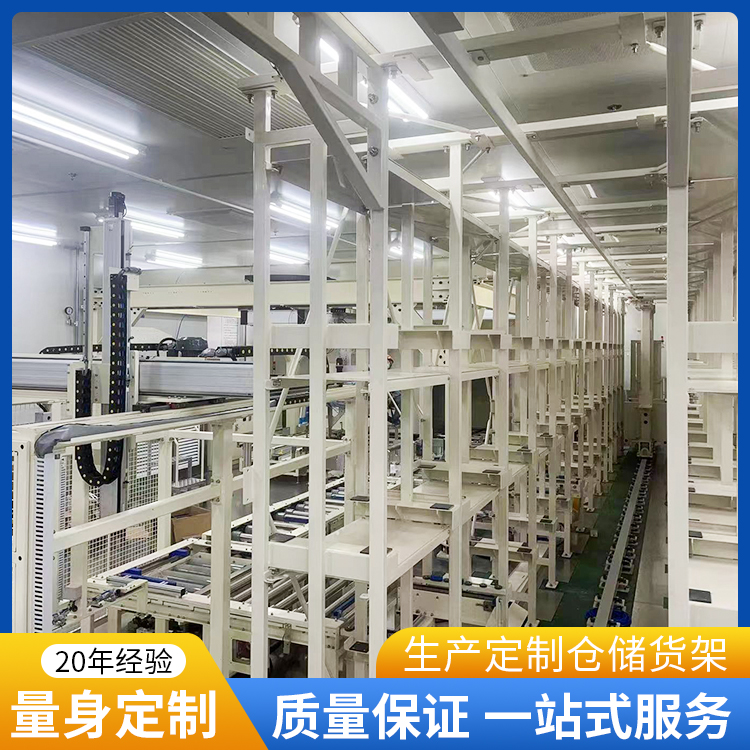
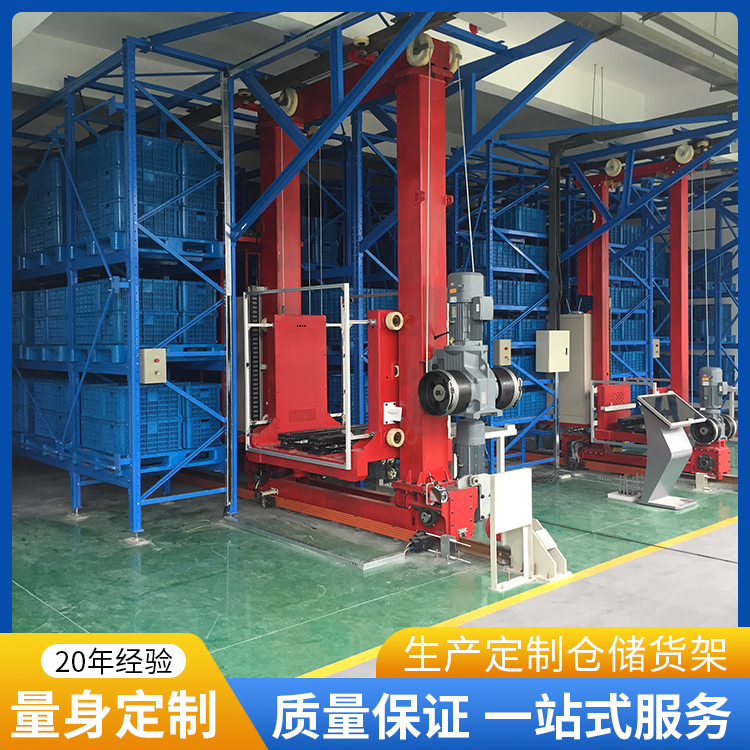
The two-way/four-way shuttle racking system consists of shuttle racks, shuttles, and forklifts/lifters. The shuttles, which are small carts that run back and forth on specific tracks of the racks, can lift or lower their bodies or platforms to elevate and deposit pallets in an orderly manner, creating a high-density storage system. This efficient storage method offers a new choice for maximizing warehouse space utilization.
The trolley is controlled by radio remote control. The trolley operated via radio remote control can easily transport palletized goods along the guide tracks; the onboard battery provides power for continuous operation, primarily moving forward and backward with its four wheels. Multiple alleys can share a single trolley. The number of trolley cars is determined by a combination of factors including alley depth, total cargo volume, and dispatch frequency.
The shuttle racking system, composed of an aisle racking and shuttle vehicles, achieves high-density semi-automatic storage for palletized goods. Depending on the arrangement of the storage and retrieval ports, it can be categorized into First-In-First-Out (FIFO) and Last-In-First-Out (LIFO) modes.
First-in, first-out (FIFO) system, where the trays are loaded at one end and removed at the other, ensuring FIFO operation. This allows for sequential logistics handling, meets standard logistics requirements, enables zoning for logistics operations, and optimizes on-site management.
Disadvantages: Both ends of the shelves require forklift aisles, resulting in lower dynamic storage utilization than FIFO (First-In, First-Out) systems. In FIFO systems, forklift aisles are only arranged on one side of the shelves, with goods accessed from one side of the aisle only.
Advantages: Channels are arranged on only one side, maximizing storage area utilization and more suitable for environments with low requirements for material entry and exit sequence.
Main Function of穿梭式:
1. High efficiency, significantly reducing operation time.
2. Enhanced safety, reducing shelf collisions, and improving safety production rates.
3. High-density storage, with a space utilization rate of 80% and high warehouse efficiency.
4. Flexible work methods.
5. Goods can be retrieved using the First Out, First In (FIFO) method.
The application scope of the shuttle racking:
Product Features: Ideal for storing large quantities of goods with limited variety.
Industry: Highly applicable in raw material warehouses of manufacturing enterprises in industries such as fast-moving consumer goods, cold chain storage, food and beverage, pharmaceuticals, tobacco, and more.
Bulk orders with limited variety: Industries such as food, beverages, chemicals, and tobacco, characterized by large quantities of a single product type and relatively simple items.
Refrigerated Storage Operations: Minimize time spent in low-temperature environments, enhance work efficiency and safety.
Increase Storage Capacity: With limited storage space, a warehouse that maximizes space utilization is an excellent choice for manufacturers with smaller warehouses.