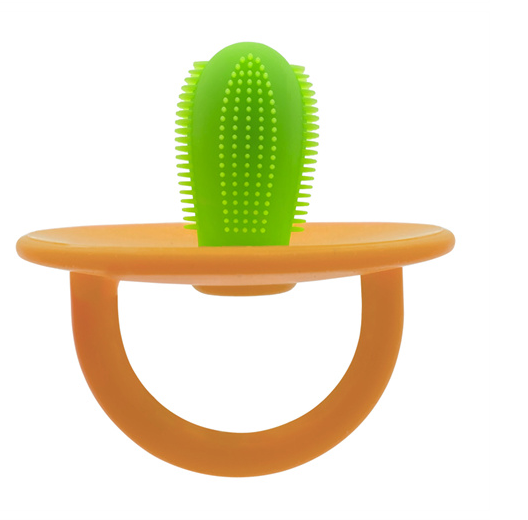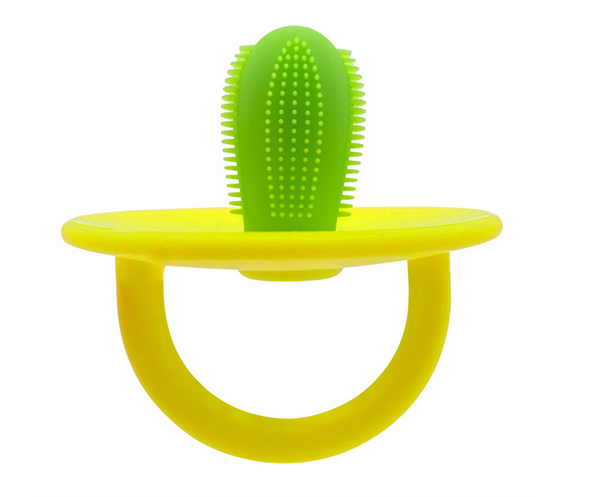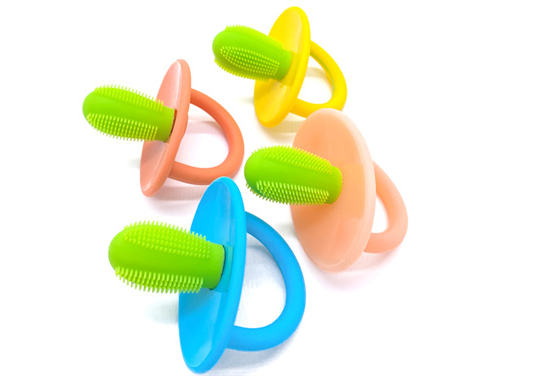

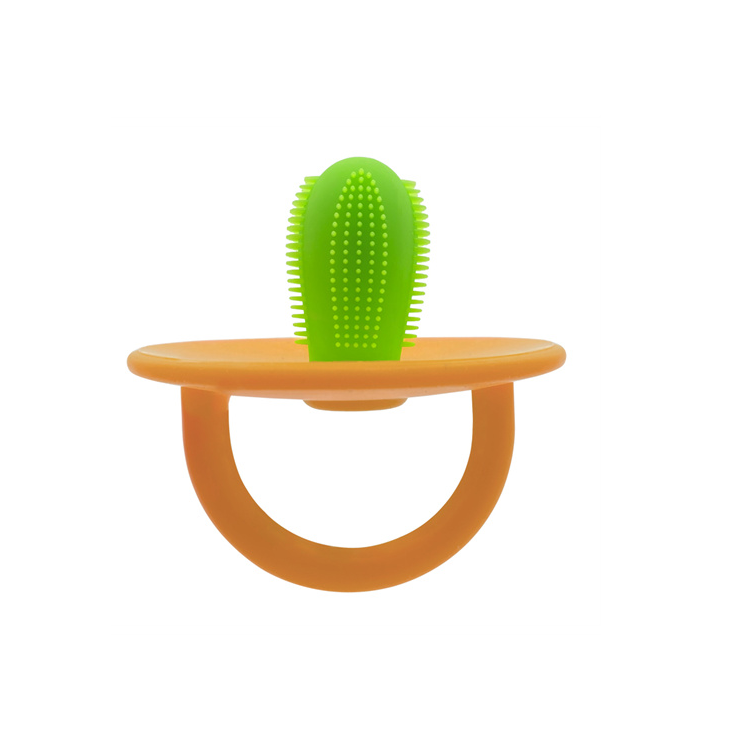

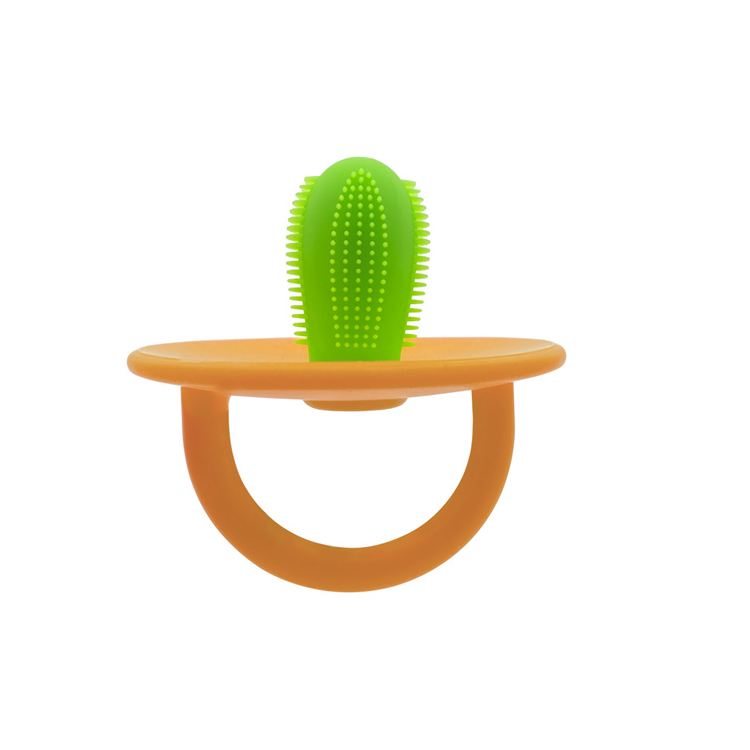
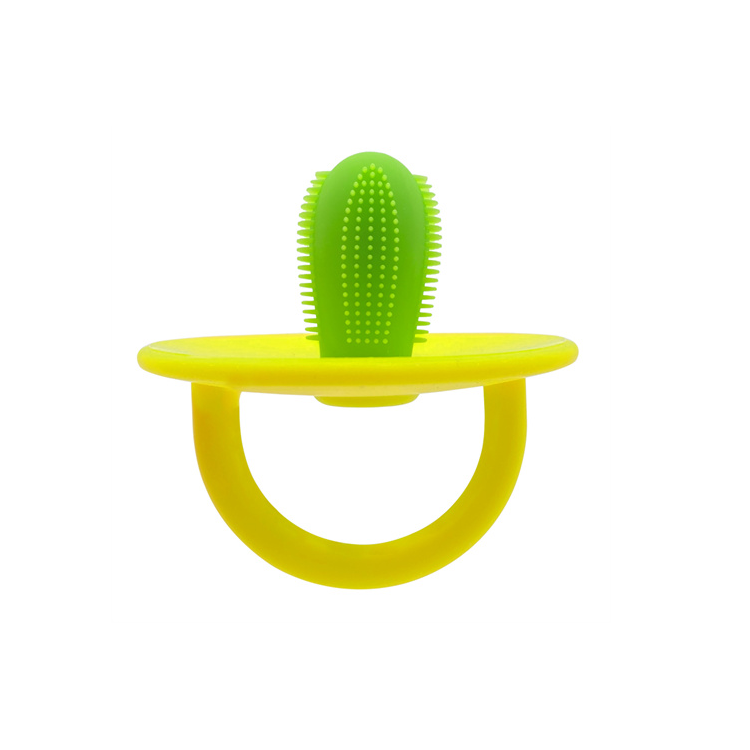











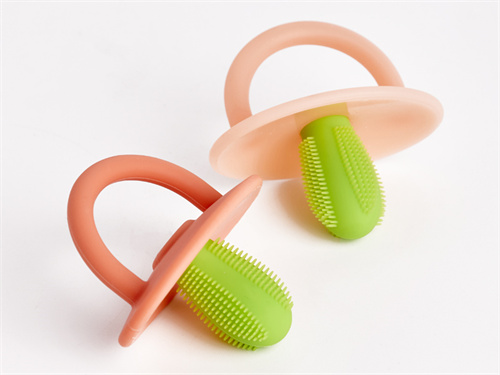
【Product Name】: Plant GumsPalmate rubber teether
Product Weight: 50 grams
Product Hardness: 60+30°
Product Material: Food Grade Silicone
【Outer Carton Size】: 300PCS/CTN, 400×400×450MM
Product Colors: Green + Yellow, Green + Pink, Green + Blue (colors can be customized according to international Pantone color codes)
【Overall Dimensions】: 80×55×28mm (Customized processing available upon customer's request)
【Application Range】: Designed for children aged 0-3 years, baby silicone teether, baby chewable rubber toy
【Appearance Treatment】: Drape trimming, secondary assembly, high-temperature sulfurization, cleaning and drying, VOC testing, visual quality inspection
【Product Packaging】: Individually packaged, mixed packaging, OPP bags, blister boxes, luxury boxes; also available for custom packaging upon customer's request.
【Product Features】: Enhance children's healthy tooth growth, promote tooth root activity, and develop brain and manual dexterity skills
【Qualifications & Certifications】: All Ebo Silicone Teether manufacturers meet the environmental and food-grade testing standards, including "FDA, ROHS, SGS, LFGB," and have passed various environmental certifications.


● Product Advantages:
The cactus silicone teether is custom-made from food-grade silicone material, which is formed through a high-temperature secondary vulcanization process. It is soft, odorless, and safe to chew. The product's main advantage is to cater to children's gnawing and biting during teething. This silicone product features an original design, combining the structure of a baby pacifier with the shape and color of a cactus for a second molding. The product is removable for cleaning and can also be replaced with different colors.
Material Advantages:
Vegetable-shaped, designed to enhance infants' interest in biting and the quality of materials. Custom-made from high-density silicone, the material features an excellent molecular structure of silicon that can be bent, stretched, and rebound without deformation, ensuring good stability and usability in various environmental conditions.
● Production Process:
Raw material extraction - colorant blending - rubber blending - standard cutting - high-temperature molding - hood trimming - self-tearing repair - secondary vulcanization - performance testing - appearance inspection - IQC inspection - packaging and storage
Product Shortcomings:
Not recommended for use with most thickened solvents, oils, thickened acids, and diluted sodium hydroxide. Silicone has its own吸附 power and is prone to stick to impurities. Do not use open flame, keep away from sharp and pointed tools, and areas with a lot of hair and dust are easy to attract dust.

Silicone Baby TeetherHandling Instructions
1. When infants are using silicone teething rings, it's best to have parental supervision to ensure there are no safety hazards in the mouth.
2. During the use of the teether handle, sterilize it by boiling in hot water as often as possible before use. Subsequent cleaning can be done with plain water.
3. Baby items prioritize safety above all, never hang a teether around the baby's head with a rope or string to avoid accidents.
4. Before use, carefully read the product's instructions and warnings, and clean or disinfect as directed to achieve a good disinfection condition.
5. Thoroughly inspect the teether for any cracks or liquid leakage. Discontinue and discard immediately if found. Parents should be extra cautious when a baby with erupted teeth uses a teether, as they should be careful to prevent them from biting through it.
6. Do not freeze liquid-filled teething rings in the refrigerator as they can injure your baby's mouth due to the extreme cold. Additionally, both excessively low and high temperatures can cause the outer material of the teething ring to crack.

Understanding Baby Teething Toys
Gum massagers are currently mainly categorized into the following types: silicone, water-filled, EVA, PP, latex, wooden, thermoplastic material, and others. Each material has its own advantages and disadvantages. For instance, the harmful substances emitted by thermoplastic materials and silicone do not meet the GB 6675.2-2014 standard. The testing structures for different materials are also varied, primarily including 19 heavy metals such as polycyclic aromatic hydrocarbons and bisphenol A.