








I. Introduction:
2PCG Type Permanent Magnet High Gradient Dry Magnetic Separator has broken through the mechanism and structural patterns of various electromagnetic and permanent magnet iron separators currently used in the market. It innovatively develops the magnetic fluid principle and structural design, selects high-performance permanent magnet materials, generates a high background magnetic field and soft magnetic magnetic separation rods, producing a high magnetic gradient force to capture the very fine particles of weakly magnetic hematite impurities within the material. The magnetic system is designed as a horizontal half-closed short magnetic circuit structure, with adjustable working spacing in the sorting chamber. When adjusted to 8mm, the background magnetic field is 950-1060mT, and the magnetic induction intensity at the sharp angle of the power magnetic separation rods on both drums can reach 1.98-2.1T, to meet the requirements of varying properties of different ore materials. Currently, this equipment has been applied in iron removal and purification operations for various non-metallic minerals (10-200 mesh), such as high-purity and refined quartz sand (powder), andradite, stishovite, andradite, andesine, dolomite, potassium feldspar, magnesite, pumice, bauxite refractory materials, etc. User feedback confirms the excellent iron removal effect, significantly improving product quality grades, reducing production costs, and enhancing environmental protection.
Section II: Equipment Structure
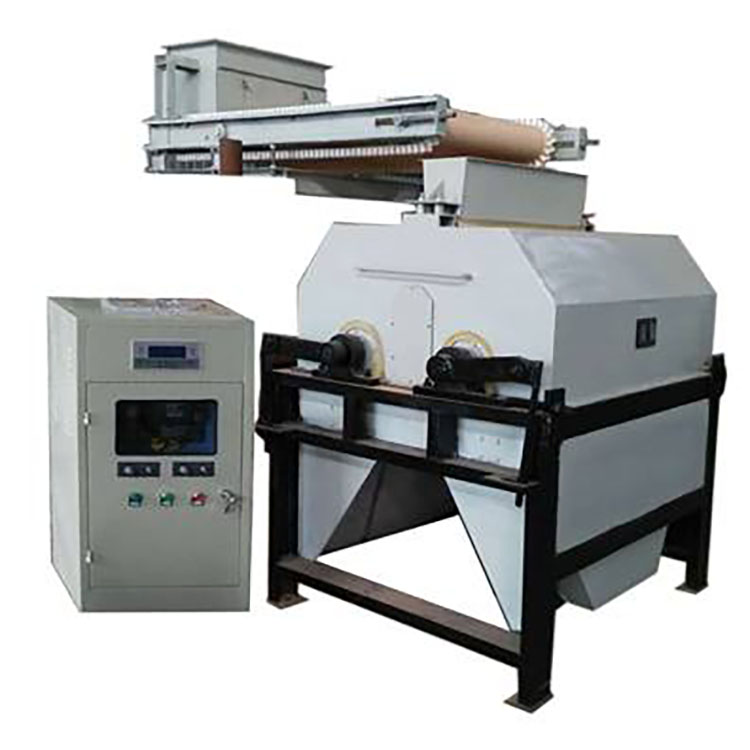
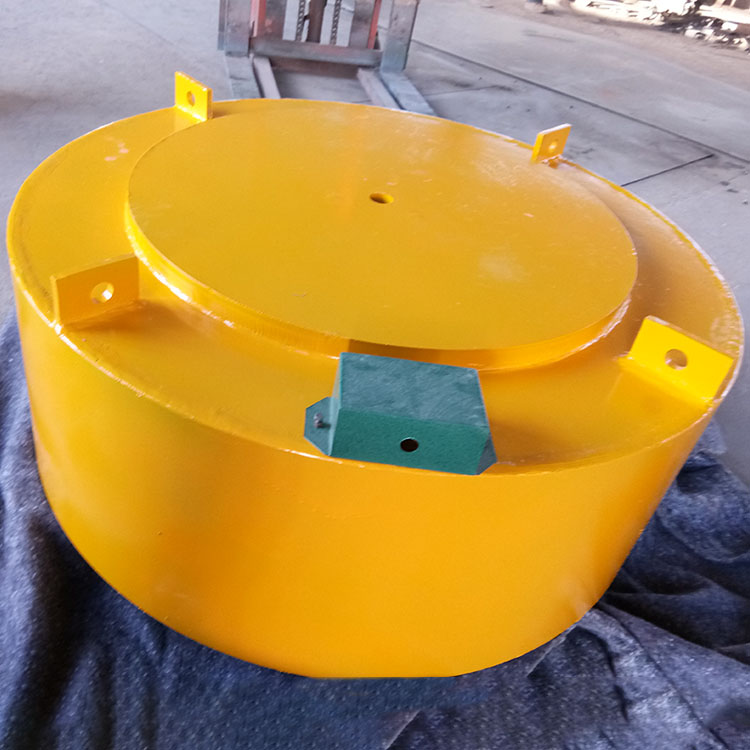
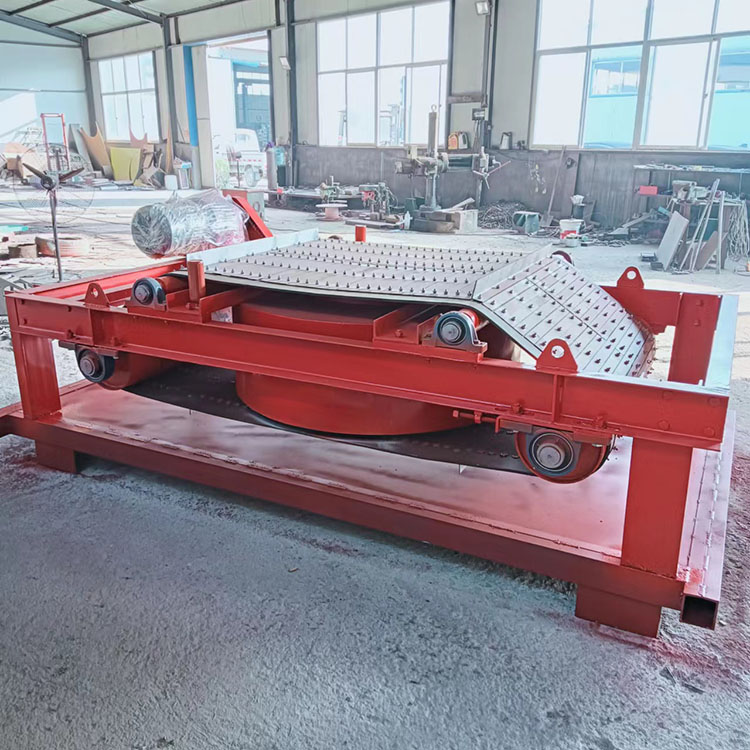
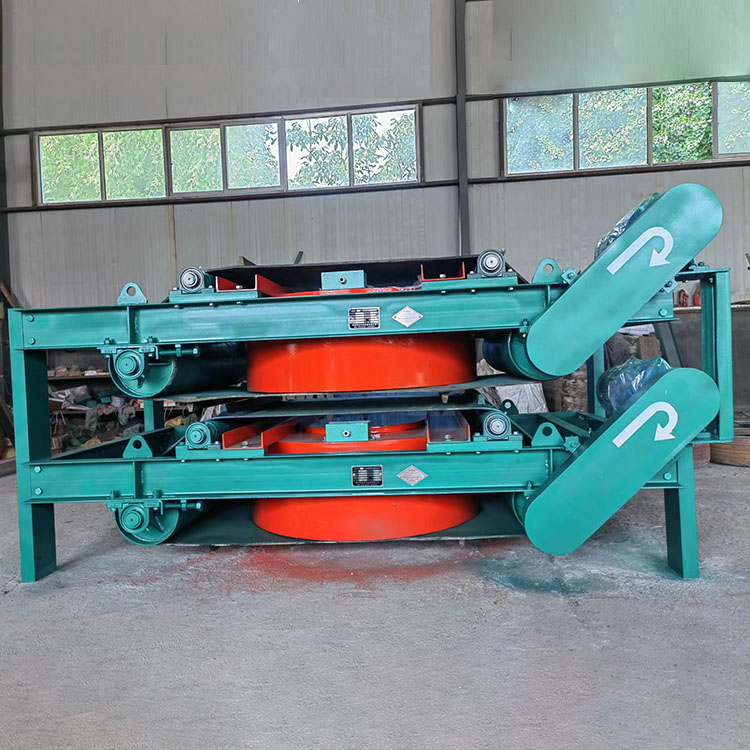
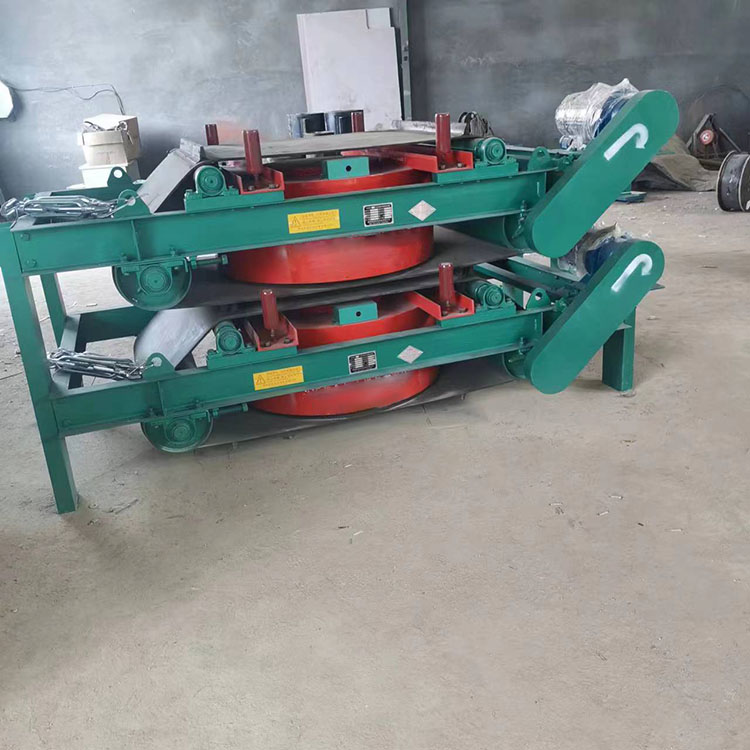
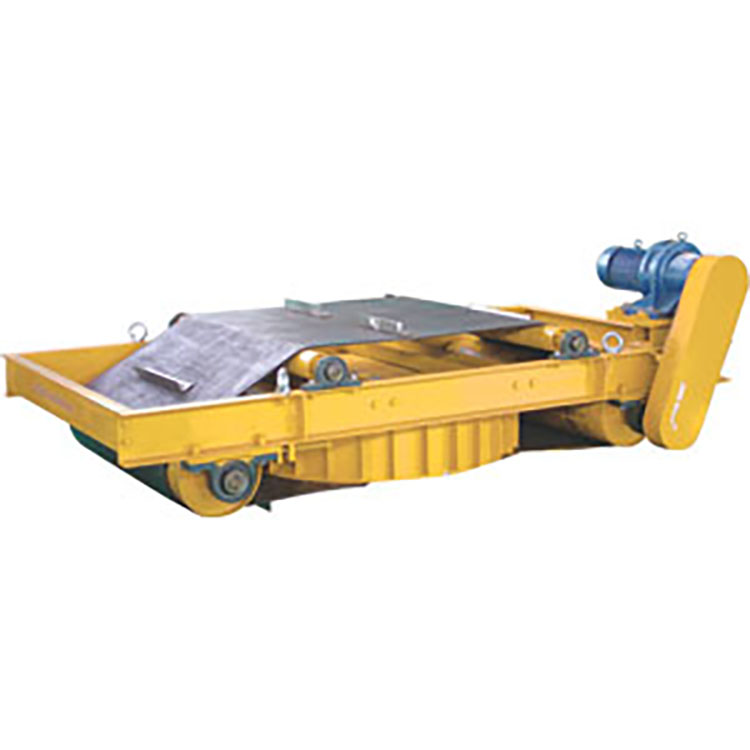
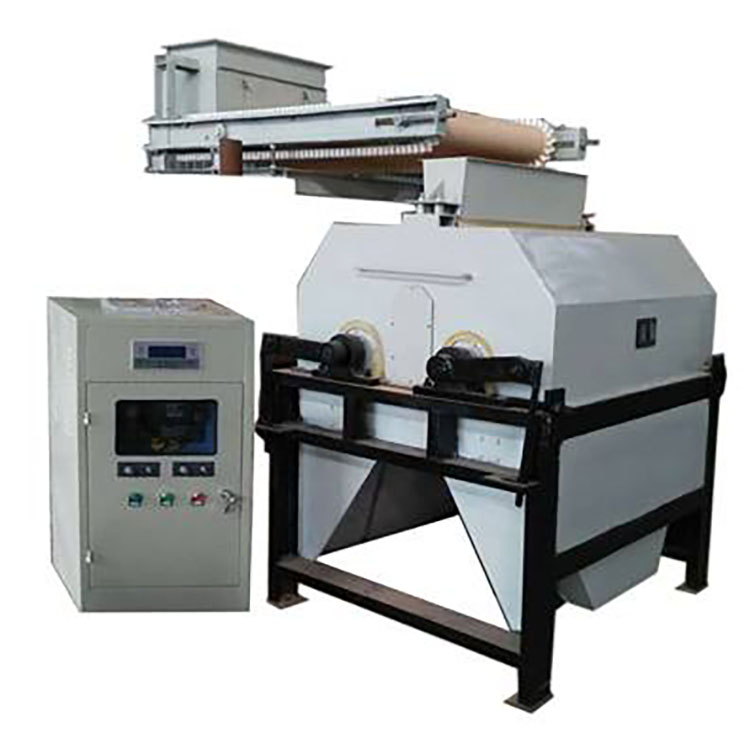
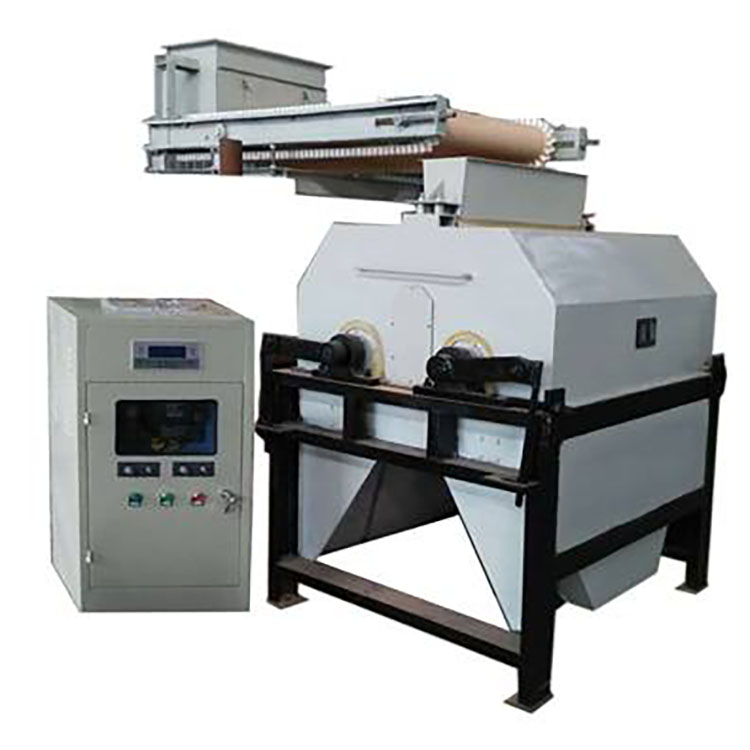
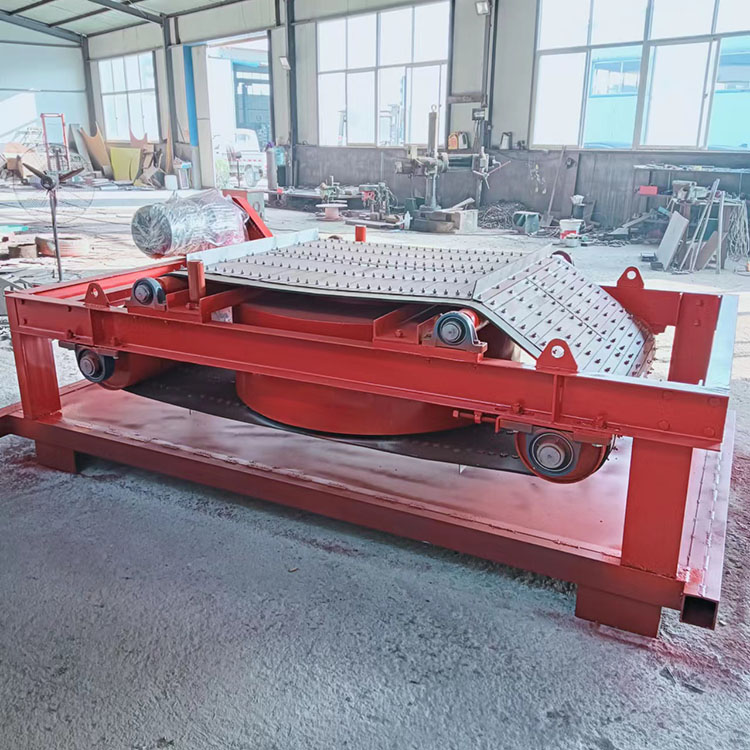
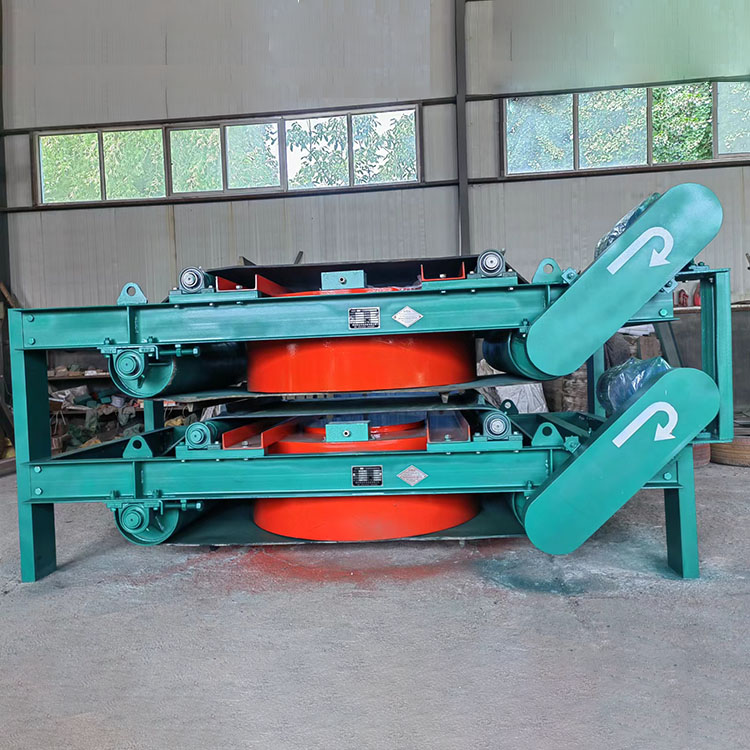
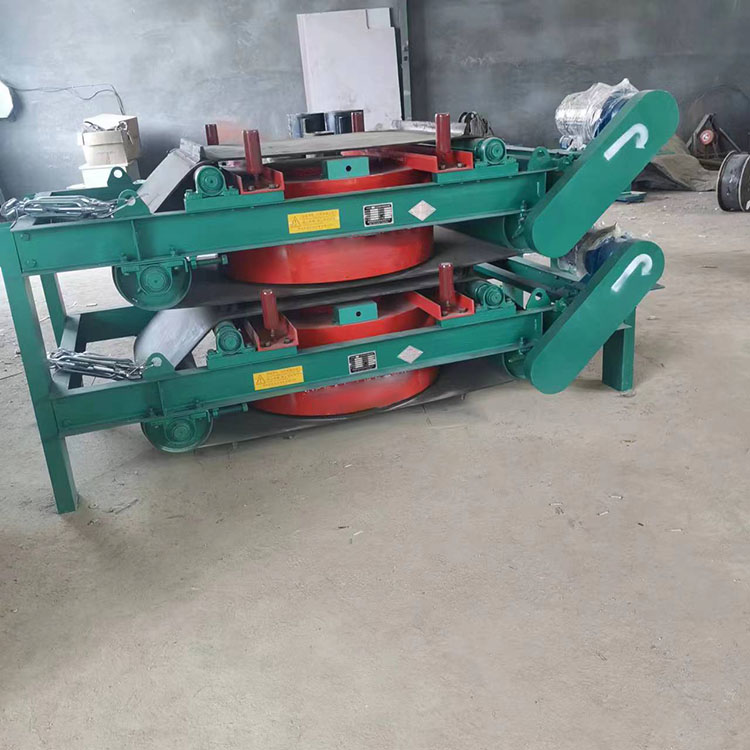
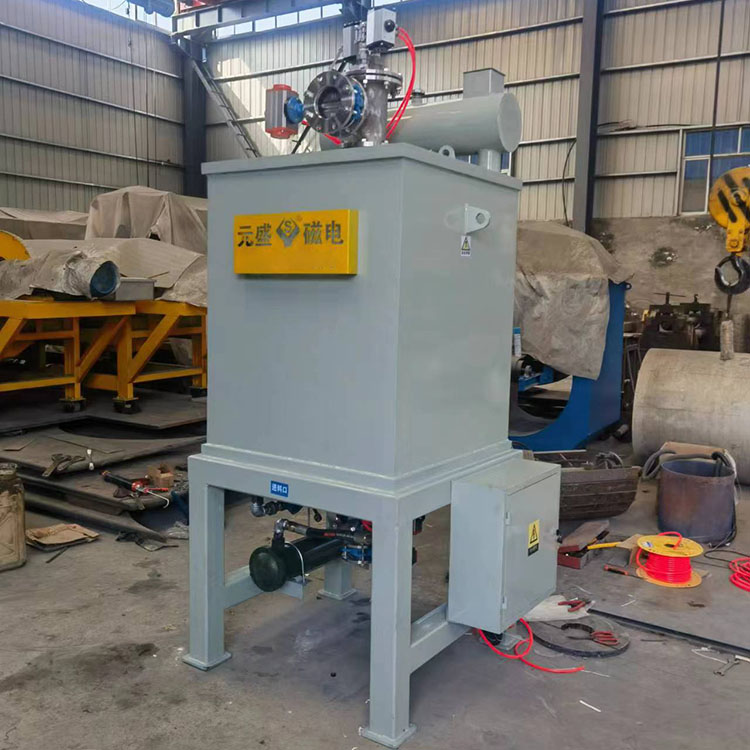
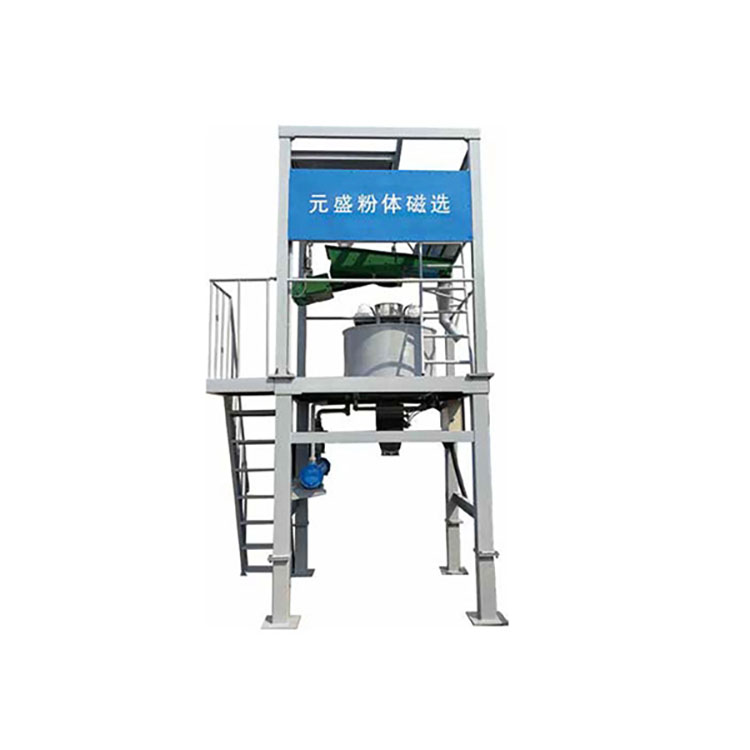
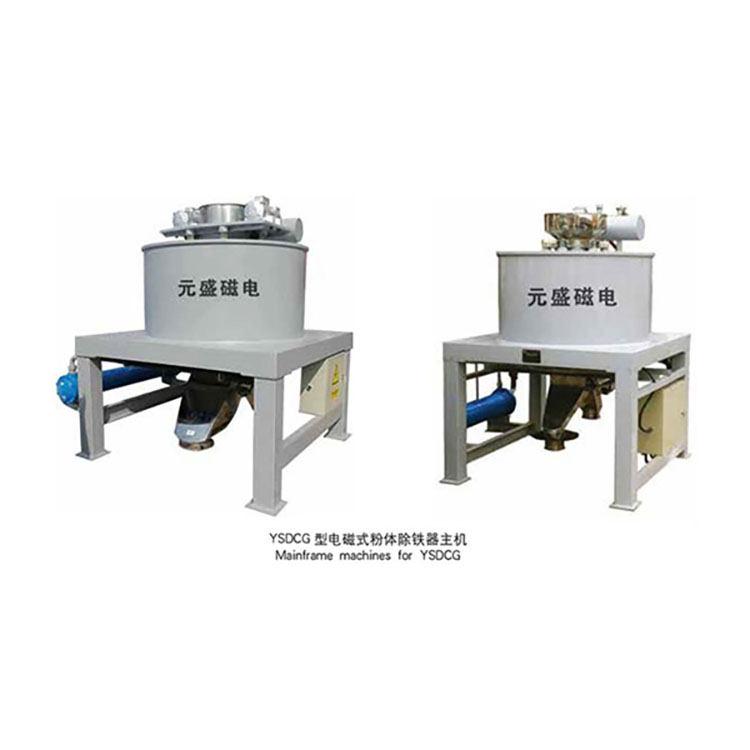
The machine is equipped with two drums and their internal magnetic system, horizontally mounted on the frame, driven by an electric motor to synchronize the relative rotation of the two drums. On the outer surface of the drums are evenly spaced, rowed cylindrical non-magnetic separator rods. On both sides of the two drums on the frame are protective boxes, with micro-vibration sensors, feeding slots, and negative pressure dust collection interfaces on the top surfaces of the boxes. The feeding slot is connected to a variable-frequency automatic weighing and batching feeder. Below the frame is a refined ore material channel baffle, and a brush roller with a debris iron bucket.
III. Working Principle:
The待processed ore material is drawn out from the low discharge outlet of the storage bin by an automatic weighing and dosing machine. It is then fed into the receiving hopper of the equipment in a quantitative manner. Under the action of the micro-vibrator, the powdered material falls into the two roller working chambers in a loose, uniform, and suspended state (the spacing between the working chambers can be adjusted). The iron oxide impurities in the material are selectively captured and adsorbed at the end face by the sorting rods on the roller. As the roller rotates, the material carrying it leaves the working area. Instantly losing magnetism in the non-magnetic sorting medium rod, it falls into the iron receiving bin under the action of the brush roller, achieving an automatic and continuous iron removal and descaling process.
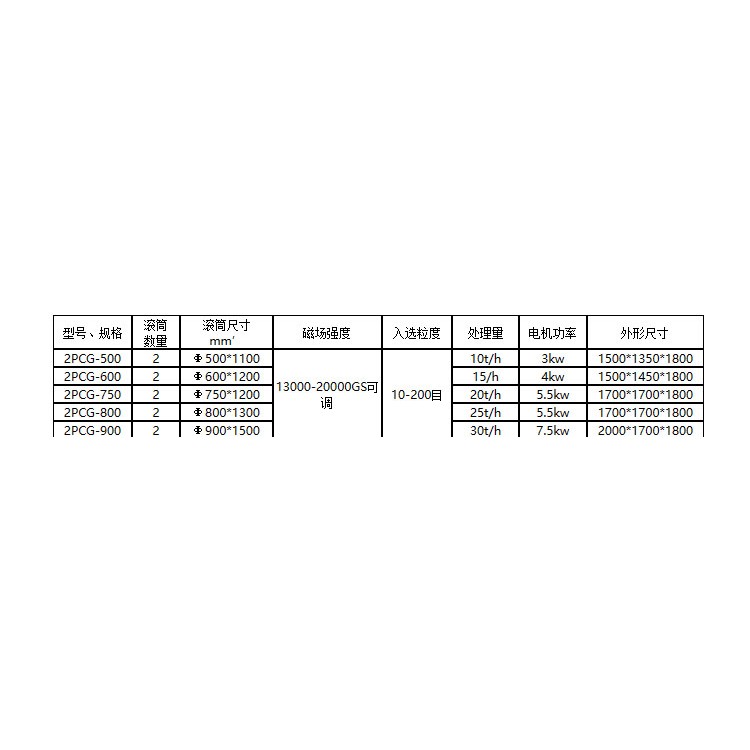
IV. Specifications and Main Technical Parameters:

V. User Selection Considerations:
Due to the differences in mineral properties of non-metallic ore products from various regions, users can select and determine the corresponding equipment specifications and technical parameters based on the iron oxide content, occurrence state, distribution rate in different particle sizes, specific magnetic susceptibility, individual liberation particle size, ore dressing screening particle size, iron removal rate requirements, and hourly processing capacity of their ore products.
Note: For the old wet grinding process production lines, regardless of the number of iron removal stages beforehand, only one beneficiation process is required by installing the equipment before the ore material is dried or dried, and before the raw material is packaged. For customers requiring ultra-fine products, the subsequent process can be continued after iron removal by this equipment.
Our products come with a quality guarantee. Welcome customers to bring materials and test the equipment on-site to iron removal, ensuring it meets your requirements for raw material iron removal.
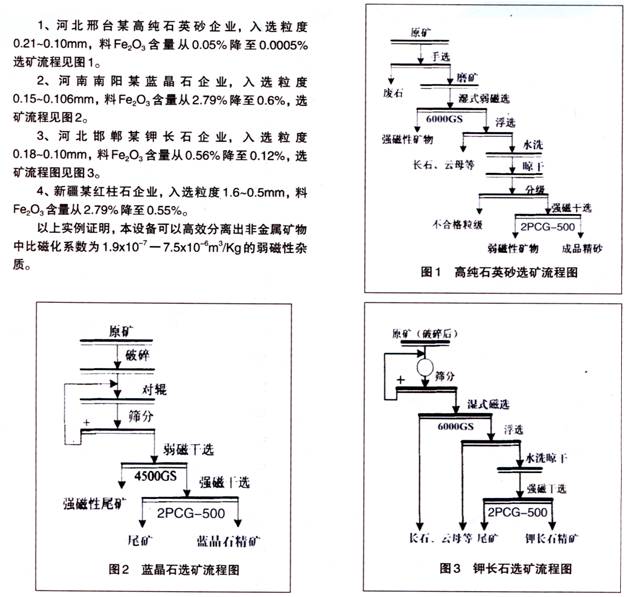
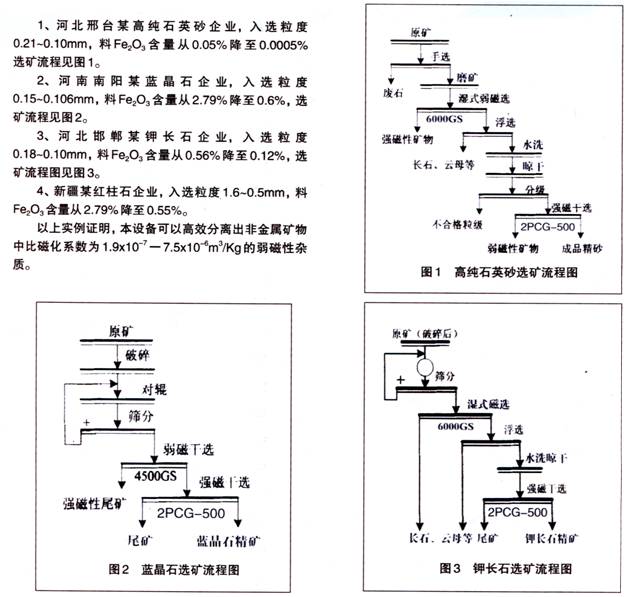
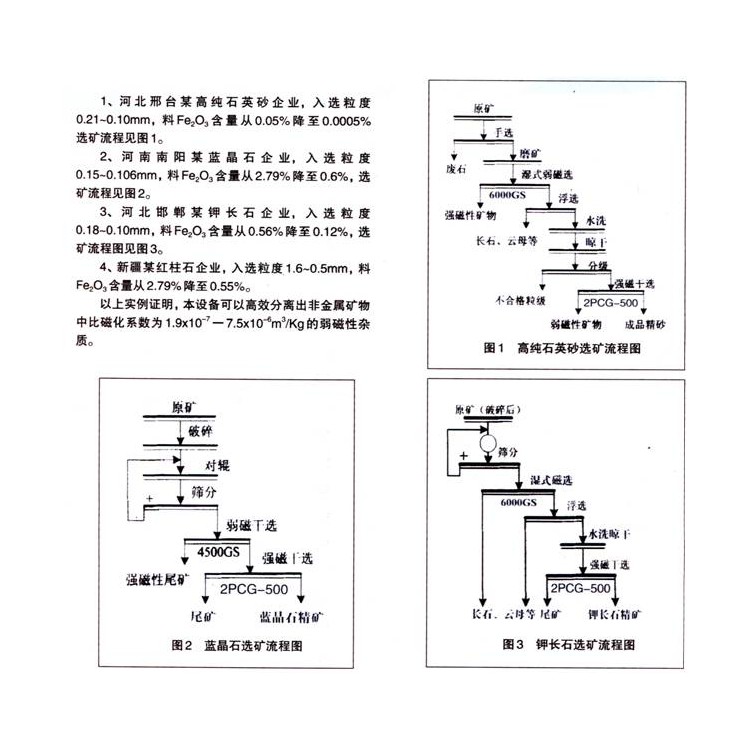
Section 6: Application Examples and Process Introduction: