









Queue Numbering Machine CNAS CMA Inspection Report Application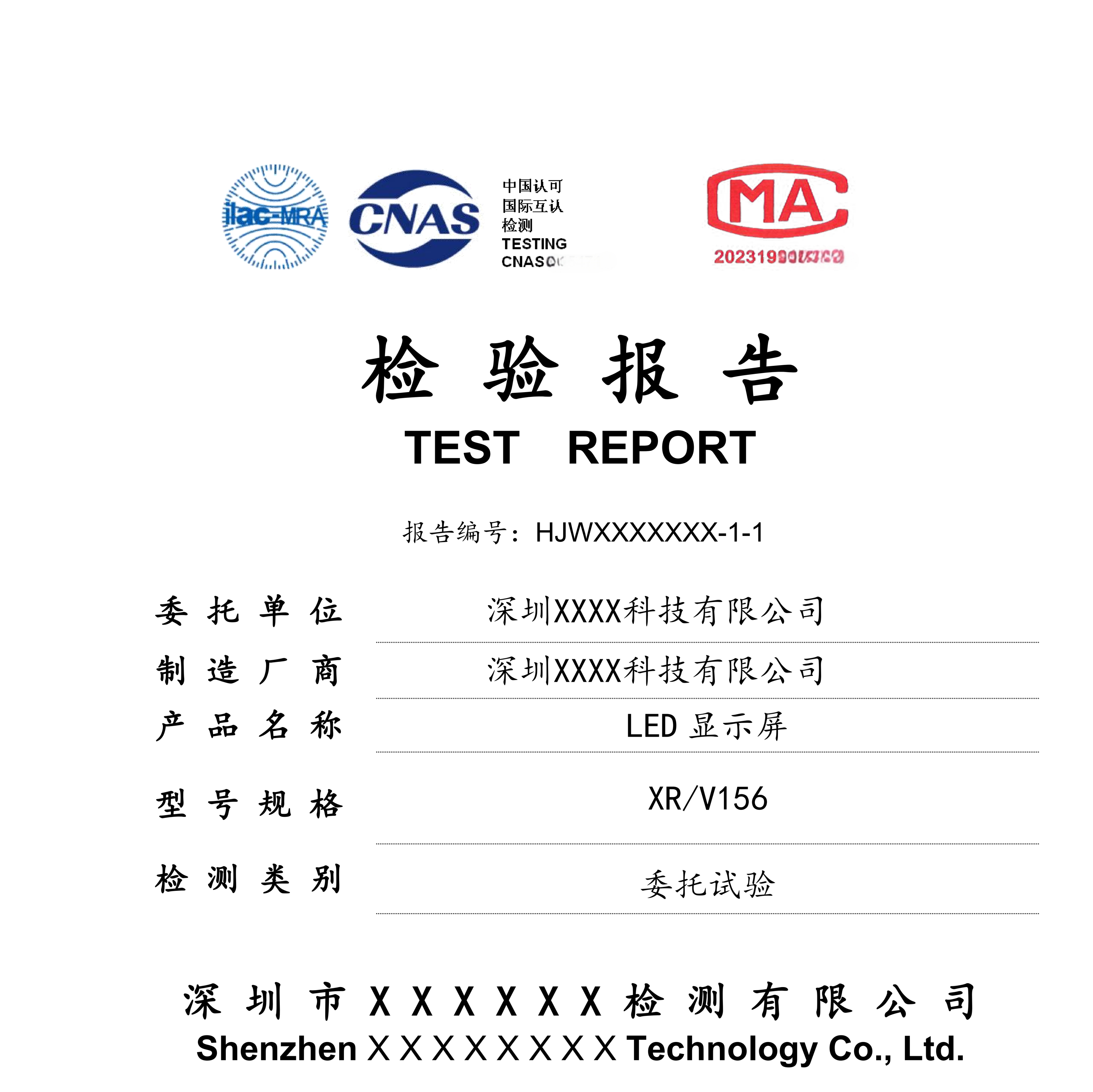
CNAS Report, issued by the China National Accreditation Service for Conformity Assessment (CNAS), is a proof document that assesses the capabilities of institutions or laboratories and confirms their compliance with specific standards. This report not only reflects the technical level and management capabilities of the relevant institutions or laboratories but also serves as a crucial credential for their participation in international conformity assessment activities. In today's increasingly globalized world, the CNAS Report plays a significant role in enhancing China's international credibility in certification and recognition, promoting trade facilitation, and optimizing the business environment.
Firstly, we need to clarify the basic functions and positioning of CNAS. As a national institution in China responsible for the recognition of certification bodies, laboratories, and inspection agencies, the mission of CNAS is to promote the improvement of management systems and testing technology capabilities of certification bodies, laboratories, and inspection agencies, and to facilitate the standardized development of recognition activities. Through recognition, CNAS not only assists certification bodies, laboratories, and inspection agencies in enhancing their operational levels according to internationally accepted criteria but also fosters international trade and cooperation. Therefore, a CNAS report is essentially a qualification certificate and capability recognition obtained by an institution or laboratory after undergoing strict CNAS review.

So, what does a CNAS report specifically include? Generally, a CNAS report will detail the basic information of the certified entity or laboratory, such as name, address, and contact information. It will also clearly list the scope of certification or recognition, including the specific projects and fields of testing, calibration, or certification services that the certified entity or laboratory can undertake. Additionally, the report will evaluate the technical capabilities, management systems, and personnel quality of the certified entity or laboratory, and provide corresponding conclusions and recommendations. These contents are a significant part of the CNAS report and are also important for outsiders to understand the capabilities and levels of the institution or laboratory.
The significance of the CNAS report is self-evident. For institutions or laboratories, having a CNAS report signifies they possess internationally aligned technical capabilities and management skills, enabling them to offer more reliable services to clients. Additionally, it is a crucial condition for institutions or laboratories to compete internationally and expand their markets. For clients, the CNAS report is a key basis for assessing the capabilities and credibility of institutions or laboratories, helping them choose more reliable services. Moreover, the CNAS report contributes to the healthy development of the certification and accreditation industry, enhancing the overall service quality and level of the sector.
In practical applications, CNAS reports play a broad role. Firstly, in international trade, many countries and regions regard CNAS reports as a necessary condition for importing products. Only inspection reports or certification certificates issued by institutions or laboratories recognized by CNAS are accepted by these countries and regions. Therefore, having a CNAS report is of great significance for businesses and organizations to expand into international markets and participate in international competition. Secondly, in the domestic market, CNAS reports are also a crucial basis for enterprises to choose partners and evaluate suppliers.
By reviewing the CNAS report of an institution, companies can gain insights into their technical capabilities, management levels, and service quality, thereby making more informed partnership decisions. Additionally, the CNAS report plays a crucial role in regulation and industry self-regulation, contributing positively to enhancing the overall certification and recognition standards of society.
Gaining a CNAS report is not an easy feat. Institutions or laboratories must undergo a rigorous review process, including document audits and on-site evaluations. They also need to meet a series of CNAS requirements, such as personnel qualifications, equipment conditions, and management systems. These requirements are designed to ensure that the institutions or laboratories have sufficient technical capabilities and management levels to provide high-quality services to clients. Therefore, for those institutions or laboratories that successfully obtain a CNAS report, it is undoubtedly a high recognition of their technical strength and management level.
Furthermore, it's noteworthy that the CNAS report is not static. As technology continues to advance and markets evolve, CNAS also adjusts and updates its recognition requirements and standards. Therefore, institutions or laboratories must regularly undergo CNAS' reevaluation and supervision to ensure ongoing compliance with recognition requirements. This is also one of the key means by which CNAS ensures the effectiveness and authority of its recognition system.
In summary, the CNAS report serves as an authoritative certification and proof of an organization or laboratory's technical capabilities and management levels. It not only helps enhance the competitiveness and credibility of the institution or laboratory but also plays a vital role in promoting the healthy development of the certification and recognition industry. In the future, as the field of certification and recognition continues to evolve and improve, the CNAS report will play an even more significant role, providing robust support for the sustained development of China's economy and society.
CNAS inspection reports generally include the following content:
1. Description and identification of the object to be inspected.
2. Testing Methods and Standards
3. Test results and data
4. Test Conclusion and Recommendations
5. Date of Inspection and Date of Report
6. Name, address, and contact information of the testing institution.
7. Report Number and Version Number of the Inspection Report
8. Inspector's and auditor's signatures.
CNAS testing reports hold high credibility and authority and are widely used in quality control, product certification, environmental monitoring, food safety, and other fields. It is important to note that CNAS testing reports are only responsible for the test results of the tested objects under specific conditions and do not represent a comprehensive evaluation of the product or service.

The process for obtaining the CNAS CMA inspection report for queue number machines is as follows:
1. Prepare materials for laboratory accreditation application, ensuring the documents are sorted and bound according to the relevant requirements.
After preparing the materials, deliver them to the testing lab promptly.
3. Pending review, which usually takes some time, depending on the preparedness of your business and the schedule of the reviewer.
4. Upon approval, you will receive a certification delivery document. You can collect the approval certificate at the corresponding address.
If you need to process CNAS CMA inspection reports for queuing machines and number calling machines, please contact Mr. Li on the right for a phone number or scan the QR code to get reference reports or more information.













